






Details
Watch the full session
Prefer to watch on YouTube directly? Open this video on KAS Youtube
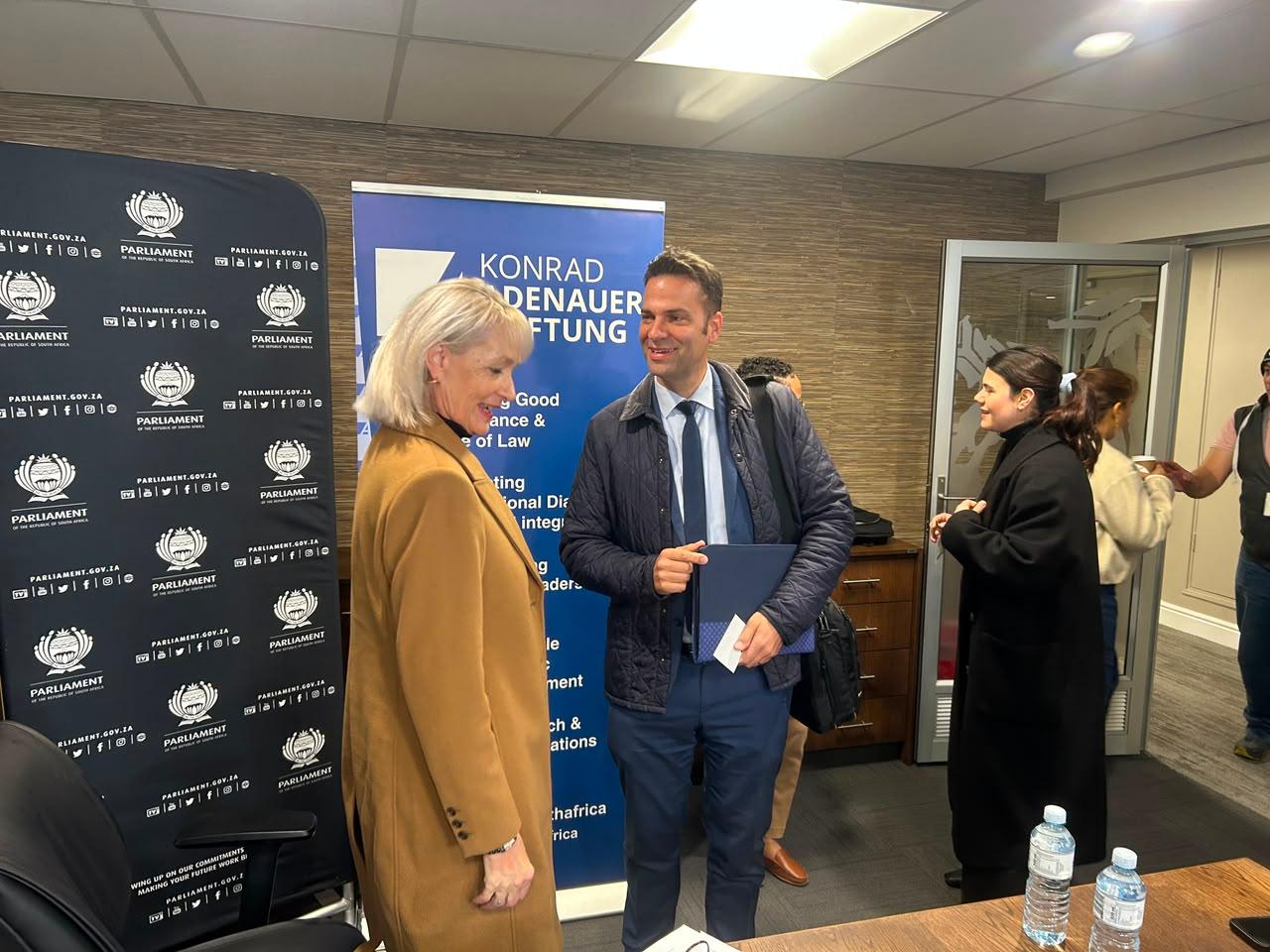
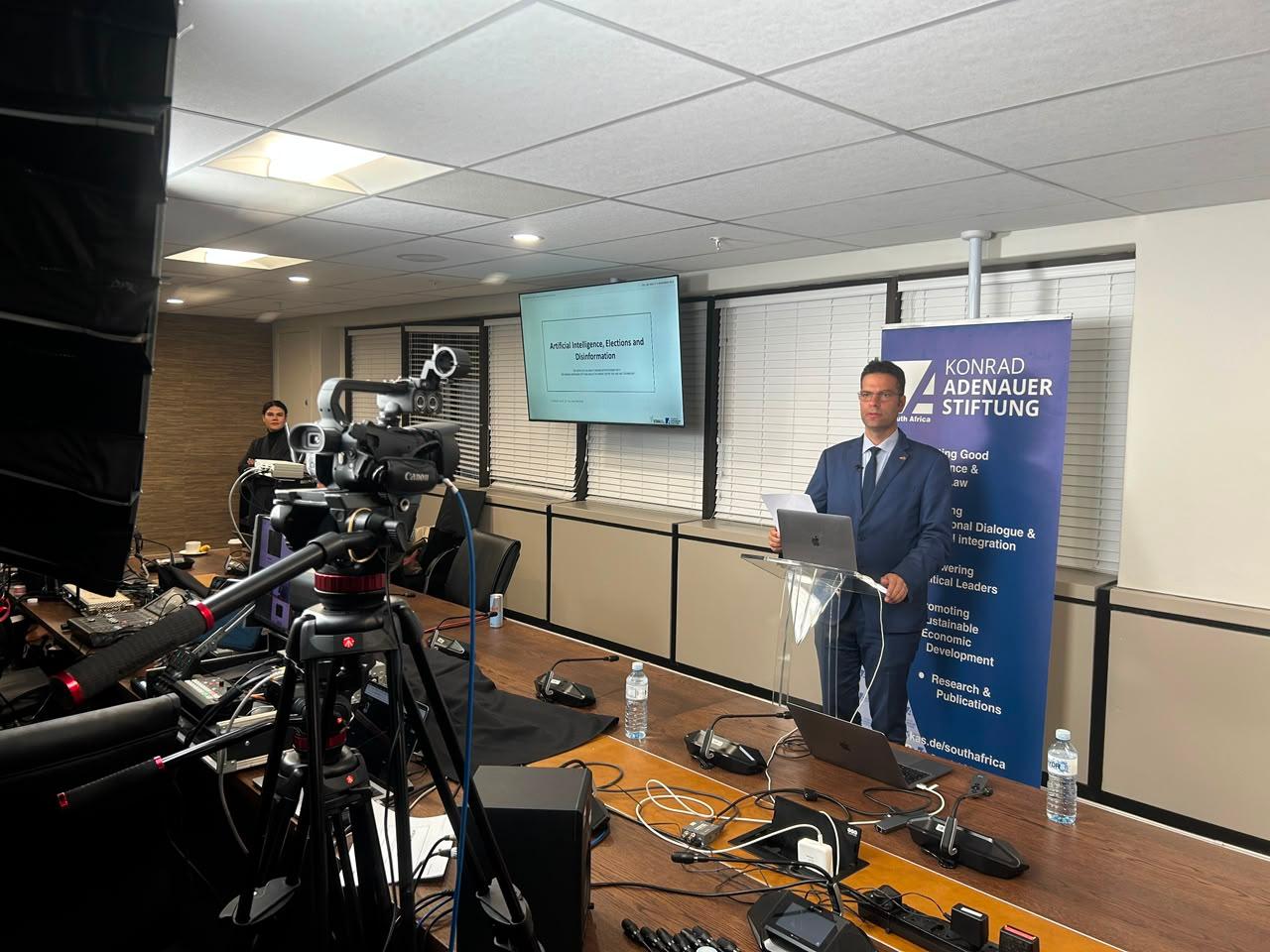
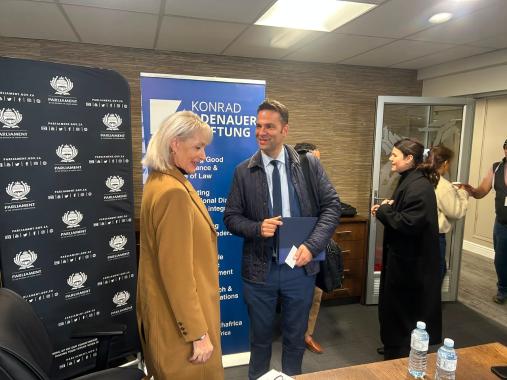
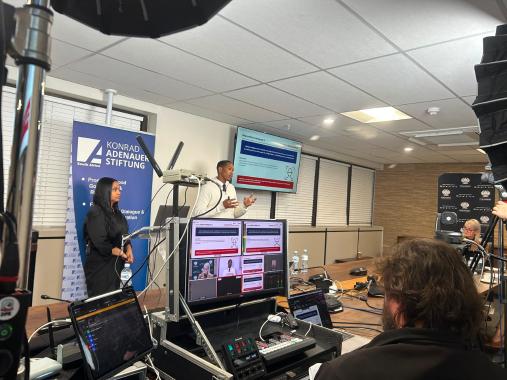
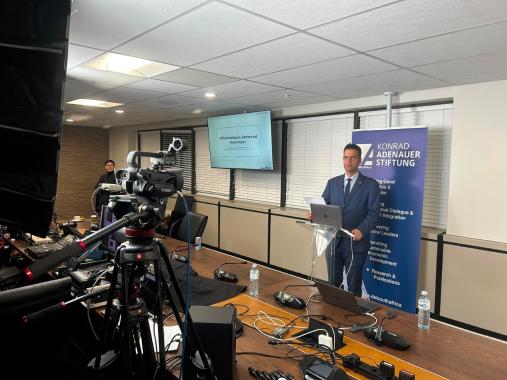
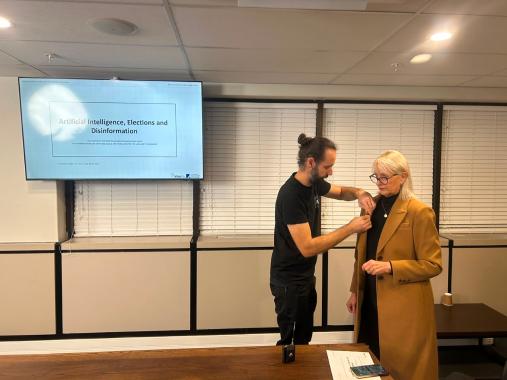
With South Africa's local government elections on 4 November, the Office of the Deputy Speaker brought together Members of Parliament, Ministers, Deputy Ministers, and staff for a session on artificial intelligence, elections, and disinformation.
Live countdown · Local Government Elections
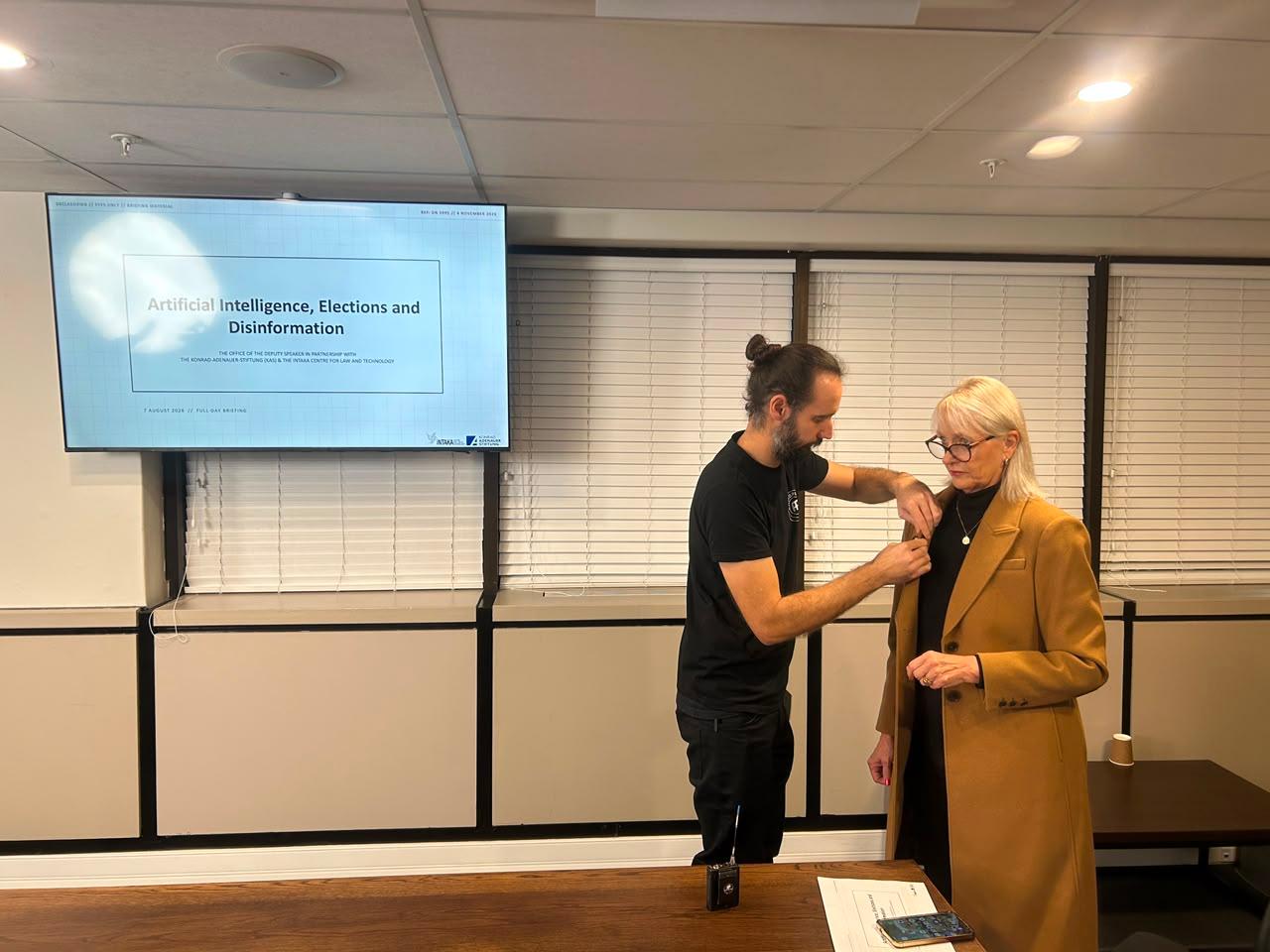
Dr Annelie Lotriet, Deputy Speaker of the National Assembly, opened by explaining that generative AI now makes it easier and cheaper to clone a public figure's voice, face, or words. She pointed out that MPs are direct targets, and that sexualised deepfake content often targets women, including women parliamentarians. She reminded everyone that parties have a responsibility to use these tools lawfully, since the same technology can be used by both attackers and campaigns.
Gregor Jaecke, KAS South Africa's resident representative welcomed participants on behalf of the Foundation, noting that AI already shapes how citizens access information and make decisions, and that South Africa's upcoming local elections make the timing of the session particularly relevant. Dr Tobias Schönwetter, director of UCT's Intaka Centre for Law and Technology, added that if voters can't trust what they see and hear, public confidence in elections will suffer. However, he noted that AI can still be valuable for constituency work if used responsibly. The Intaka Centre delivered the session, which was sponsored by the Konrad-Adenauer-Stiftung (KAS) South Africa.
Seeing isn't believing anymore
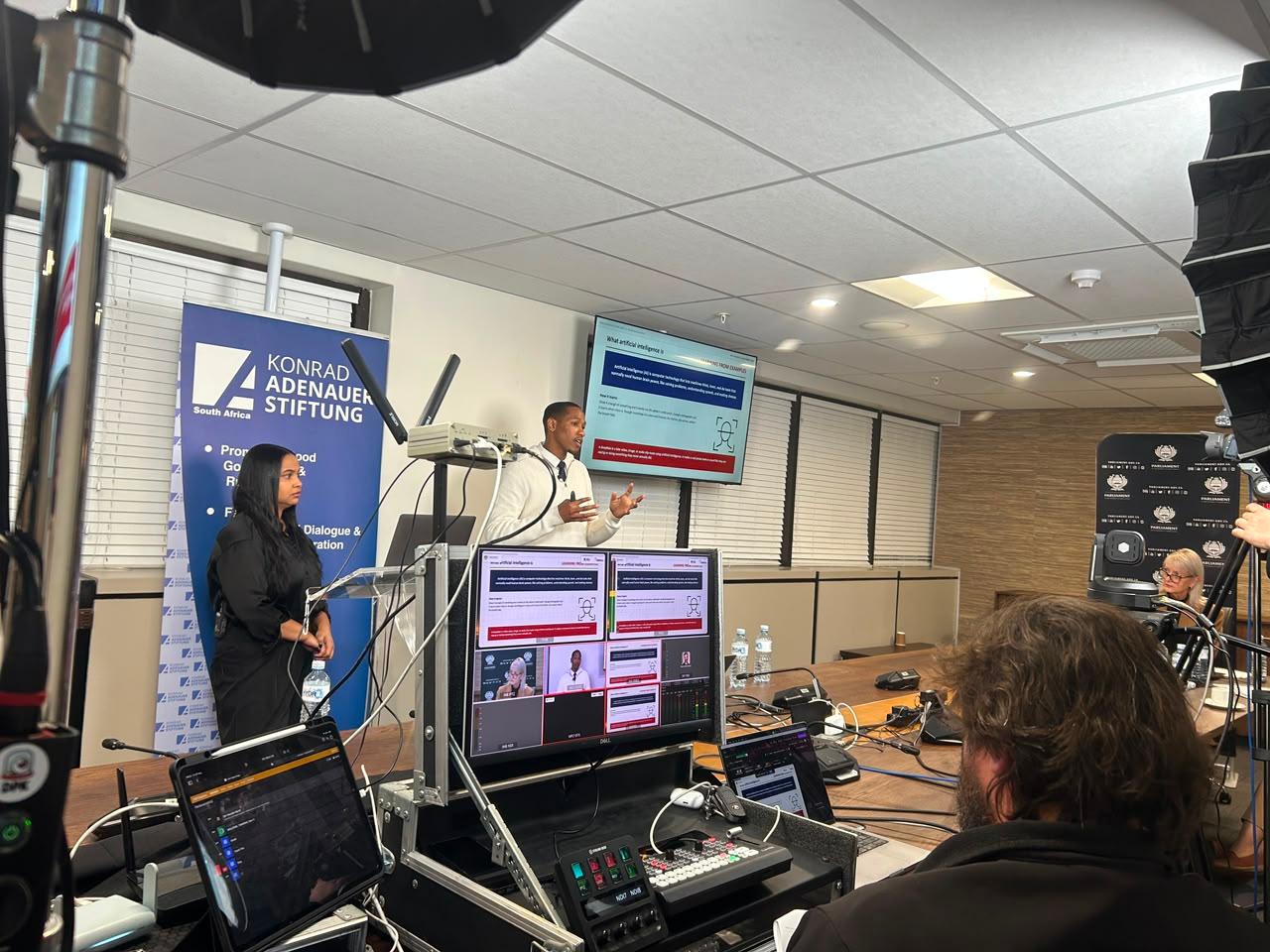
Attorneys and legal engineers Tayla Pinto and Wandile Mpisi led the technical sessions. Mpisi started by showing a deepfake video of the President promoting an investment scam, telling viewers to "invest just R4 200 to secure a stable and high passive income." MPs noticed the signs, like the lip-sync being off and the eyes not tracking properly. Still, Mpisi warned, "This technology is advancing at such a fast rate where in the next few months, not even years, we won't be able to distinguish what's real and what's not."
Pinto made an important distinction: disinformation is false content shared on purpose to cause harm, while misinformation happens when people pass it along thinking it is true. "Disinformation is your spark," she said, "and then it goes further into your misinformation." She pointed out that closed WhatsApp groups are especially risky because fake news spreads there through trusted contacts. In these groups, false content can reach many people in about five hours, but platforms usually need a whole day to fix it after it is reported.
Who pays the price
This problem affects many groups. Candidates face what Pinto called the "liar's dividend," where real wrongdoing is dismissed as fake. Political parties lose time and credibility trying to fight false claims. Voters are also affected, 73% say they cannot always tell what is real and what is fake. Even the electoral system is at risk. There were some positive examples, like a candidate in India whose speech was translated live into several languages by AI, and a jailed candidate in Pakistan who used AI, with permission and transparency, to stay in touch with voters. But there were also troubling cases, such as a Biden robocall in the US that told voters not to go to the polls.
Preparing before the crisis
Pinto was direct about the courts: "If you're looking at a legal proceeding, good luck trying to get that done in five hours." She encouraged everyone to have a response plan with named spokespeople, a clear sign-off process, correction templates, and direct contacts for fact-checkers, platforms, and the IEC. When false information appears, she recommended making one calm, factual correction and then stopping. "You want to starve it out," she said, explaining that more engagement only helps the algorithm.
The session closed with questions on spotting bot accounts and AI-specific legislation. Pinto's closing line set the tone: "You've got a real opportunity, the way you choose to respond to this sets us up for the future." The Konrad-Adenauer-Stiftung remains committed to supporting Parliament's efforts to safeguard the integrity of South Africa's democratic processes in the face of emerging technological challenges.
Partners