Details
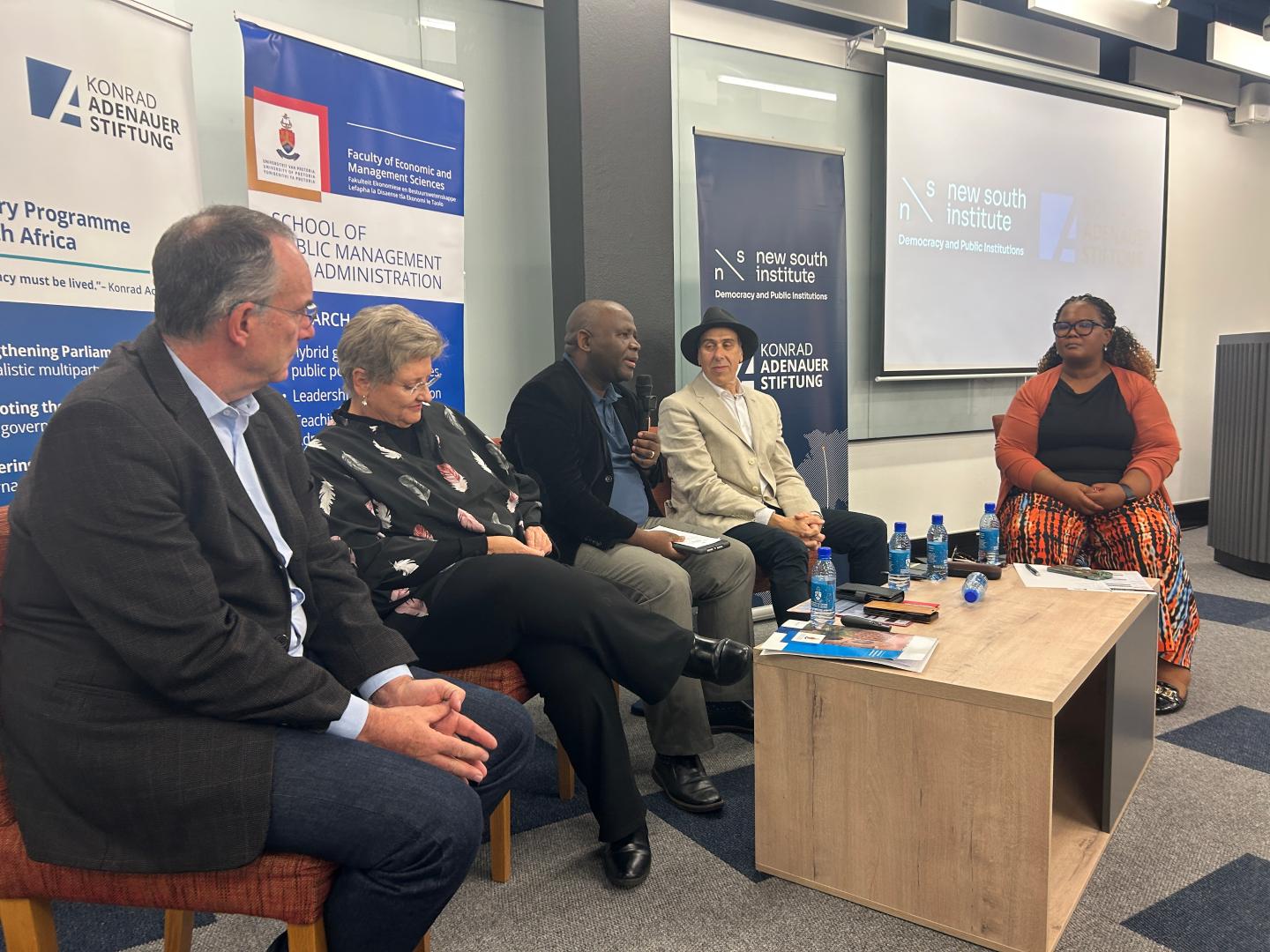
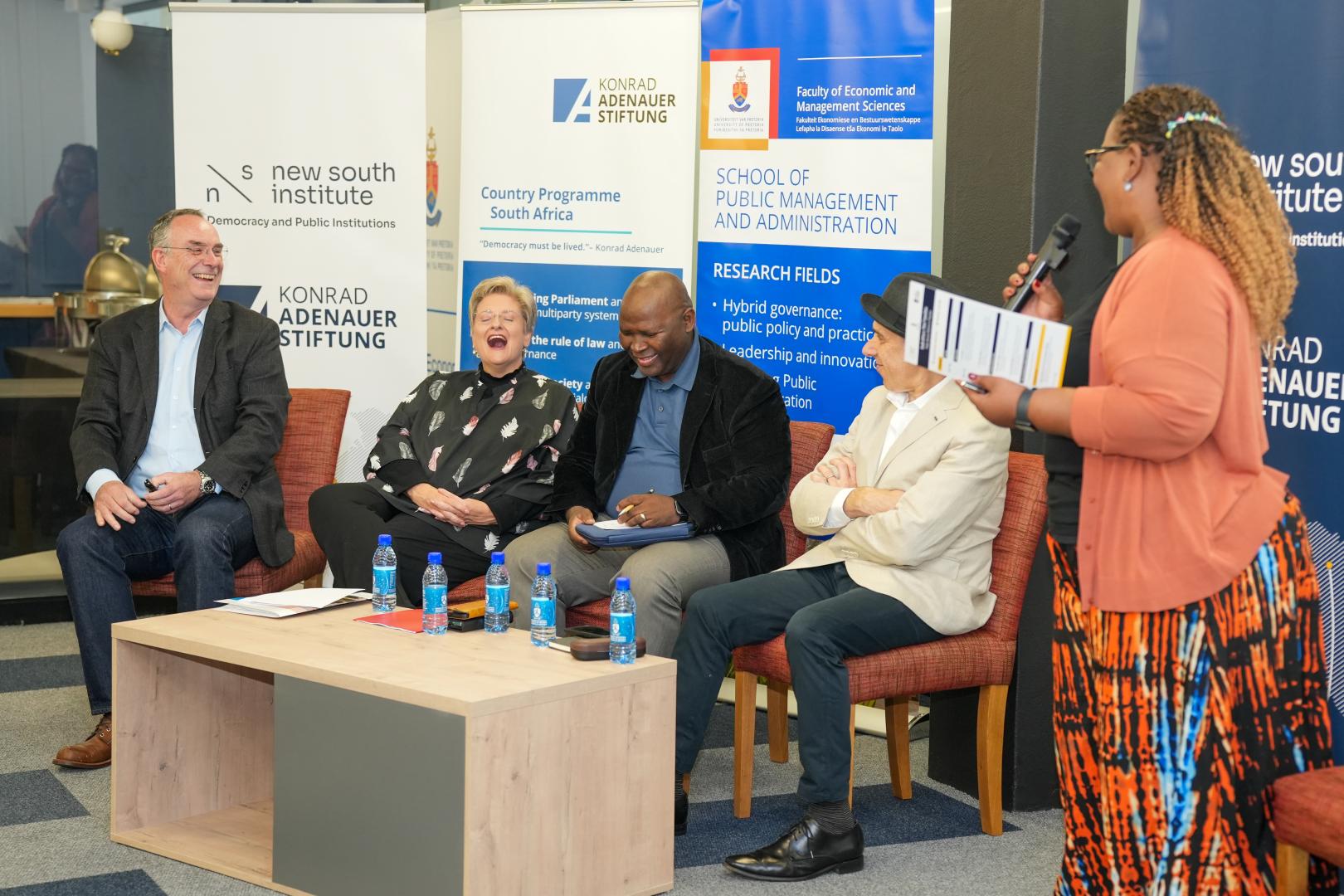
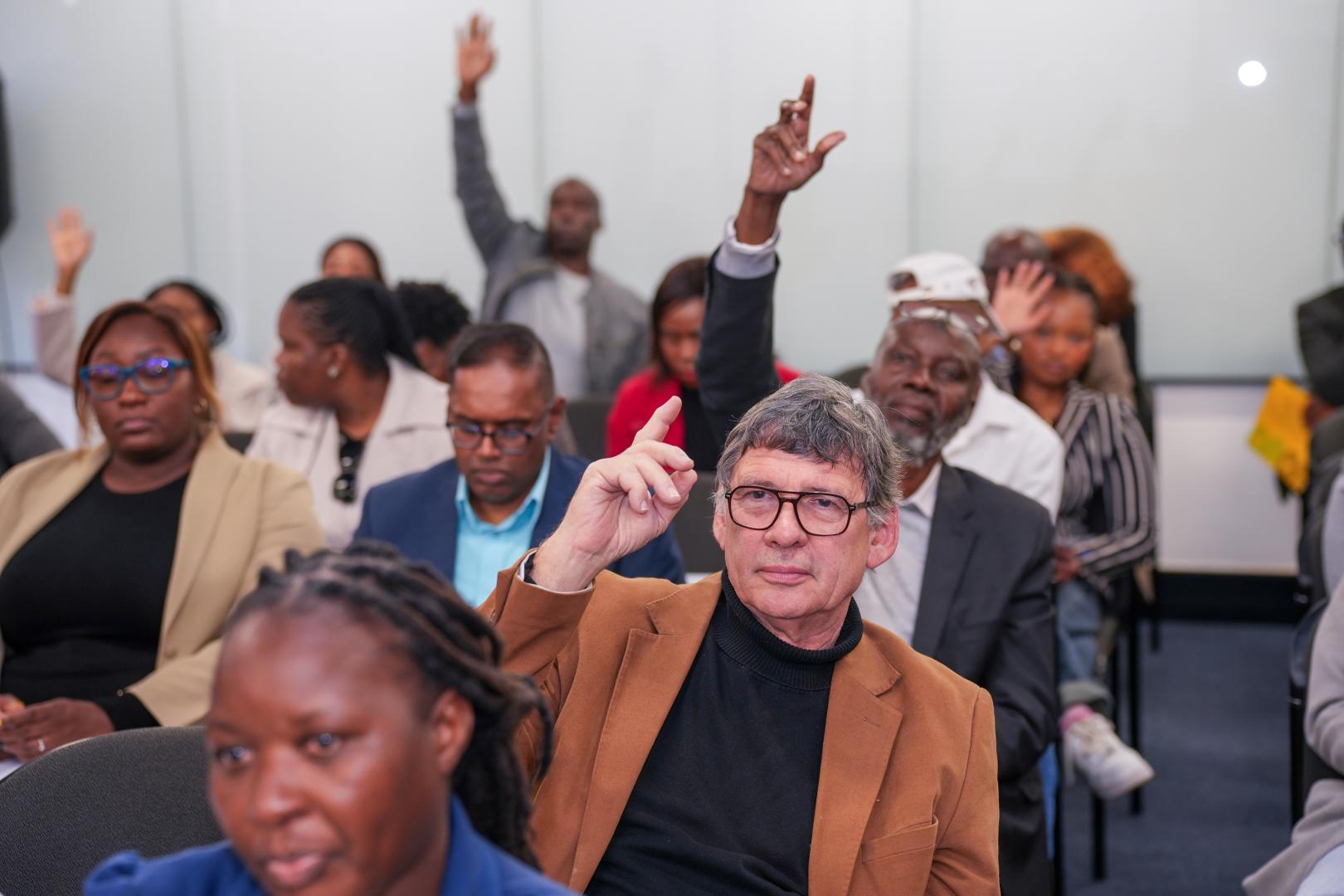
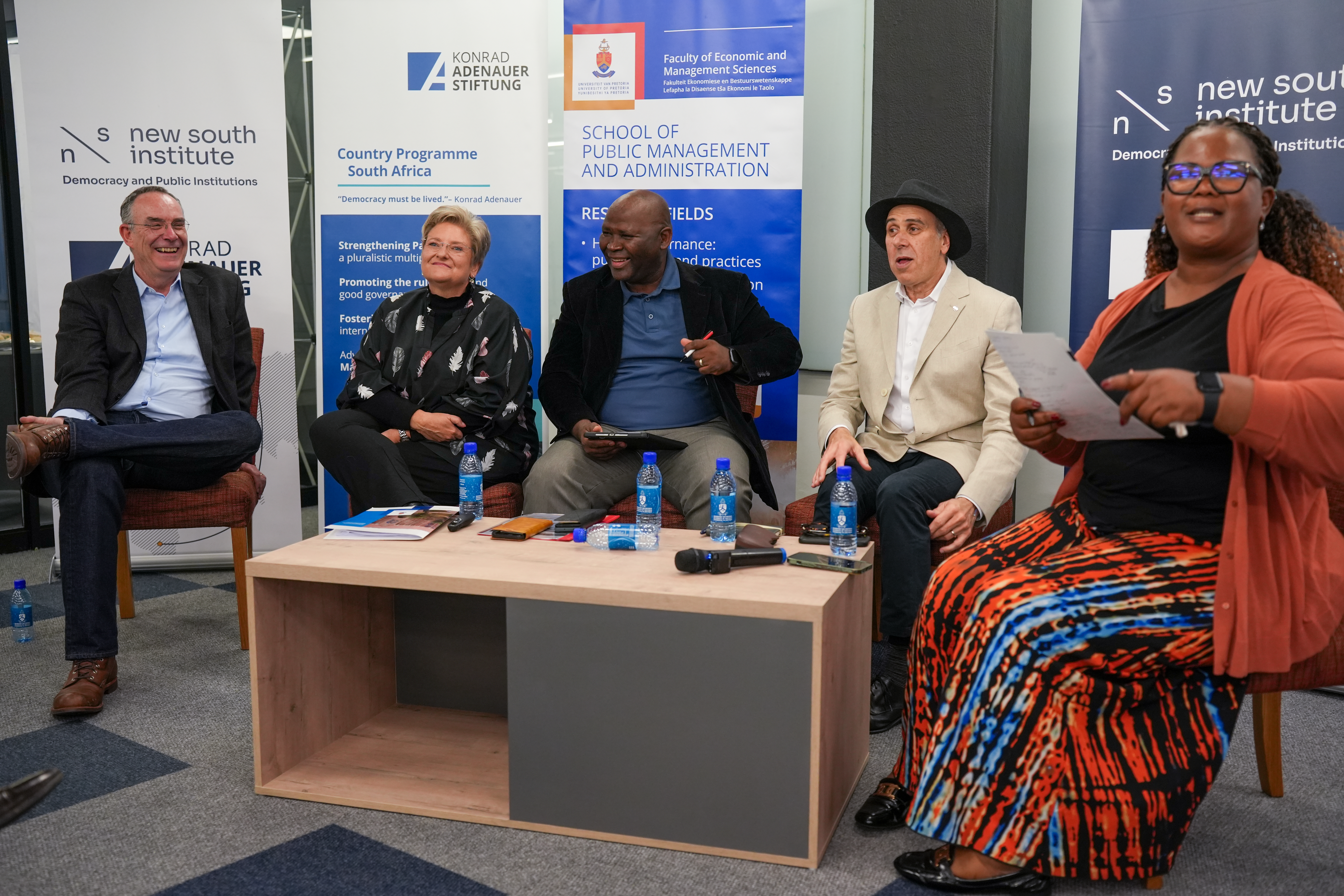
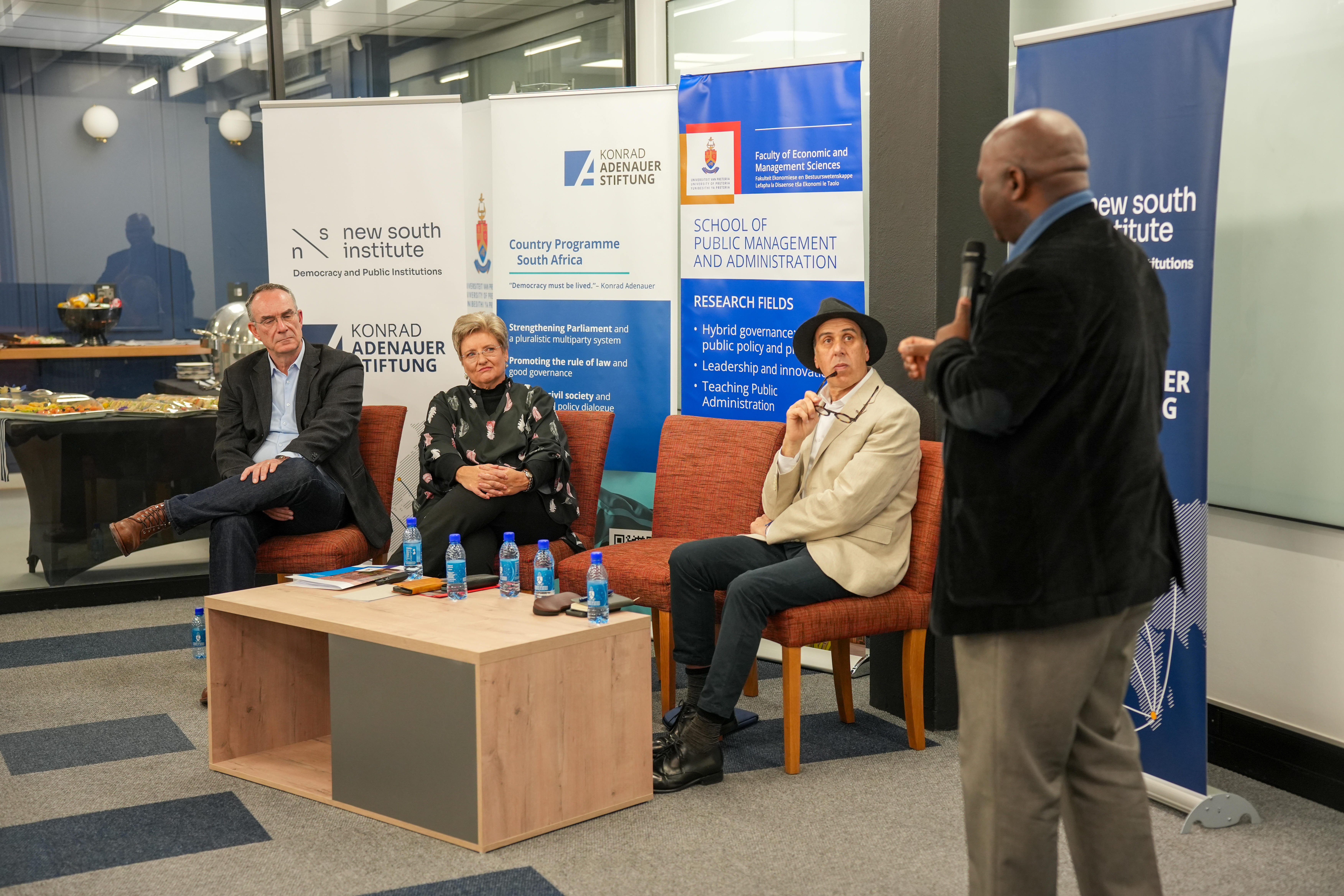
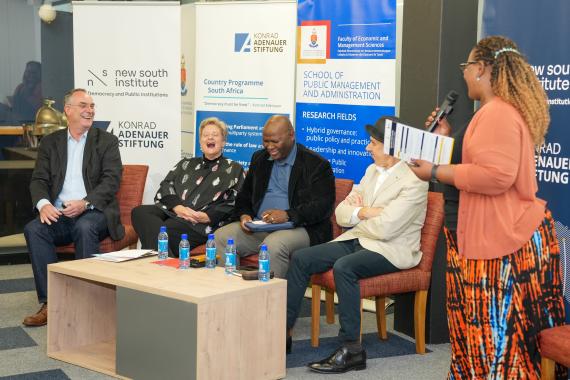
On 27 May 2026, the New South Institute (NSI), in partnership with the Konrad-Adenauer-Stiftung (KAS), convened a seminar examining the practical implications of public service reform in South Africa.
The discussion centred on the Public Service Amendment Act and its impact on the relationship between political and administrative authority. The legislation introduces a clearer separation between political office and administrative management, notably by removing operational and human resource responsibilities from political office-bearers. NSI characterises this reform as a significant institutional shift in South Africa’s democratic development, describing it as the country’s “third transition,” following the democratic transition of 1994 and the constitutional settlement of 1996.
Bringing together academics, practitioners and public officials, the seminar moved beyond legal and policy considerations to focus on the institutional conditions required for effective implementation. Discussions emphasised that successful professionalisation depends on the state’s organisational capacity and not solely on legislative change.
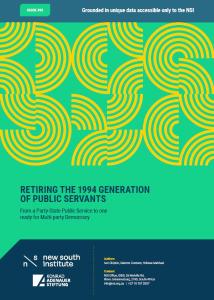
A key input was provided by NSI Director, Dr. Ivor Chipkin, who presented recent analysis based on PERSAL data. The findings highlight a substantial demographic challenge in the public service, with approximately 76% of employees aged over 50. This raises concerns regarding institutional memory, continuity and succession planning. At the same time, the anticipated turnover presents an opportunity to recruit and develop a new generation of public servants, provided the state can establish credible talent pipelines and strengthen its strategic personnel management.


Watch the recording on YouTube
Presentation slides: South Africa’s Third Transition – Dr. Ivor Chipkin
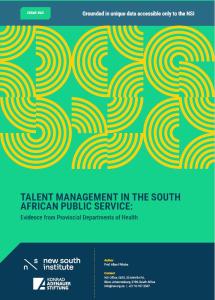
Presentation slides: Talent Management in the SA Public Service – Prof. Albert Wöcke
A key input was provided by NSI Director, Dr. Ivor Chipkin, who presented recent analysis based on PERSAL data. The findings highlight a substantial demographic challenge in the public service, with approximately 76% of employees aged over 50. This raises concerns regarding institutional memory, continuity and succession planning. At the same time, the anticipated turnover presents an opportunity to recruit and develop a new generation of public servants, provided the state can establish credible talent pipelines and strengthen its strategic personnel management.
The panel discussion explored structural constraints that may influence reform outcomes. Prof. Albert Wöcke (Gordon Institute of Business Science) highlighted shortcomings in public sector talent management, noting that compliance-driven systems often limit departments’ ability to plan succession and allocate skills effectively. Using the health sector as an example, he pointed to a decline in the numbers of professional nurses alongside a notable increase in administrative staff, underscoring broader weaknesses in workforce planning.
Prof. Gerda van Dijk, Director of the School of Public Management and Administration at the University of Pretoria, cautioned against assuming sufficient institutional capacity, particularly at the local government level. She stressed that professionalisation requires enforceable standards and practical implementation mechanisms, rather than remaining a general normative objective.
Prof. Somadoda Fikeni, Chairperson of the Public Service Commission, situated these challenges within the broader political economy of the state. He described fragmentation in the public service as “dysfunction by design,” arguing that inefficiencies can enable patronage and weaken accountability. He called for more anticipatory governance approaches, improved use of personnel data, and closer alignment between academic research and administrative practice.
The seminar underscored that public service reform in South Africa will depend not only on legislative reforms, but also require the state to address demographic pressures, strengthen talent management systems, and rebuild institutional capability.

Partners