







Details
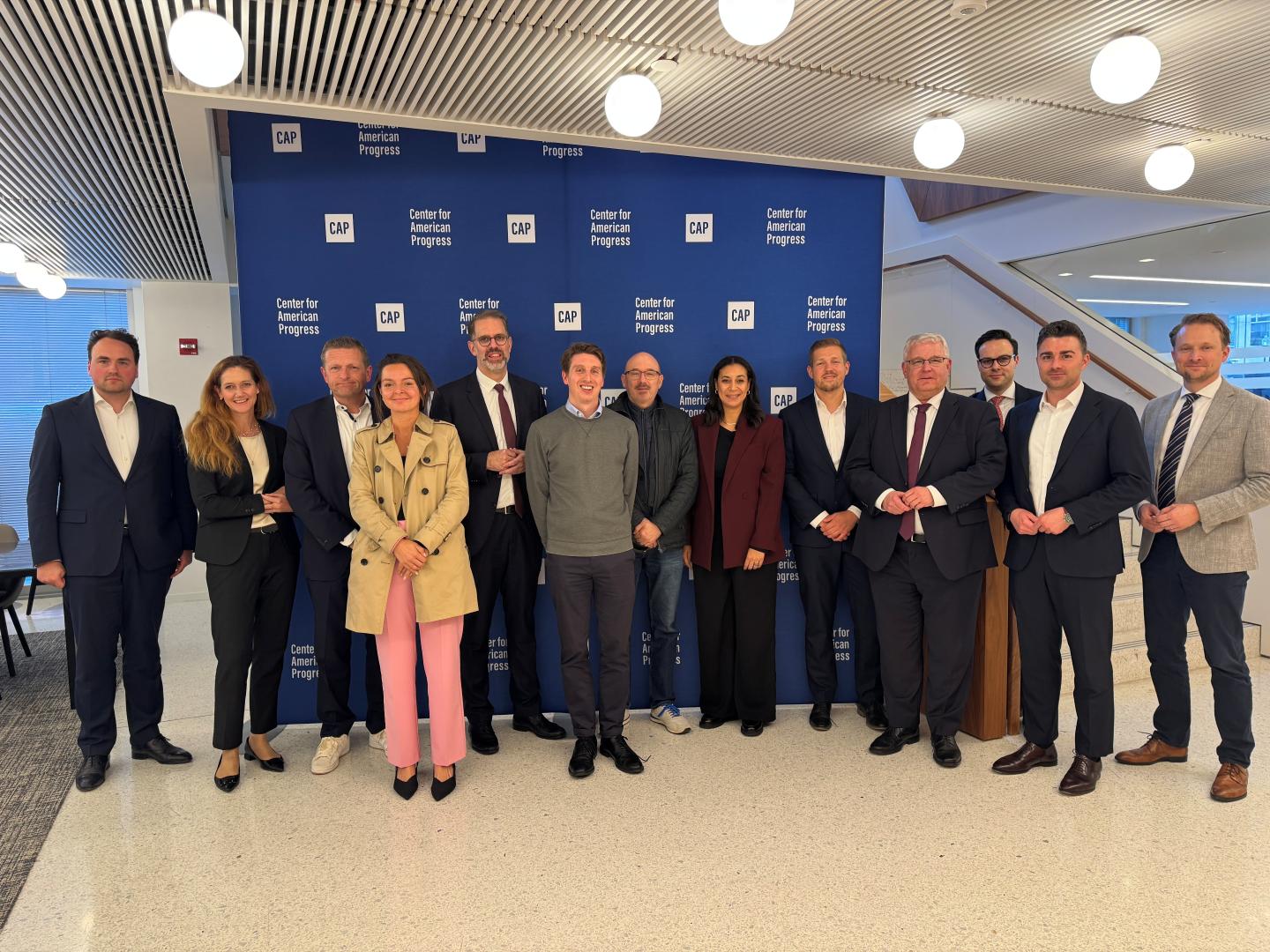
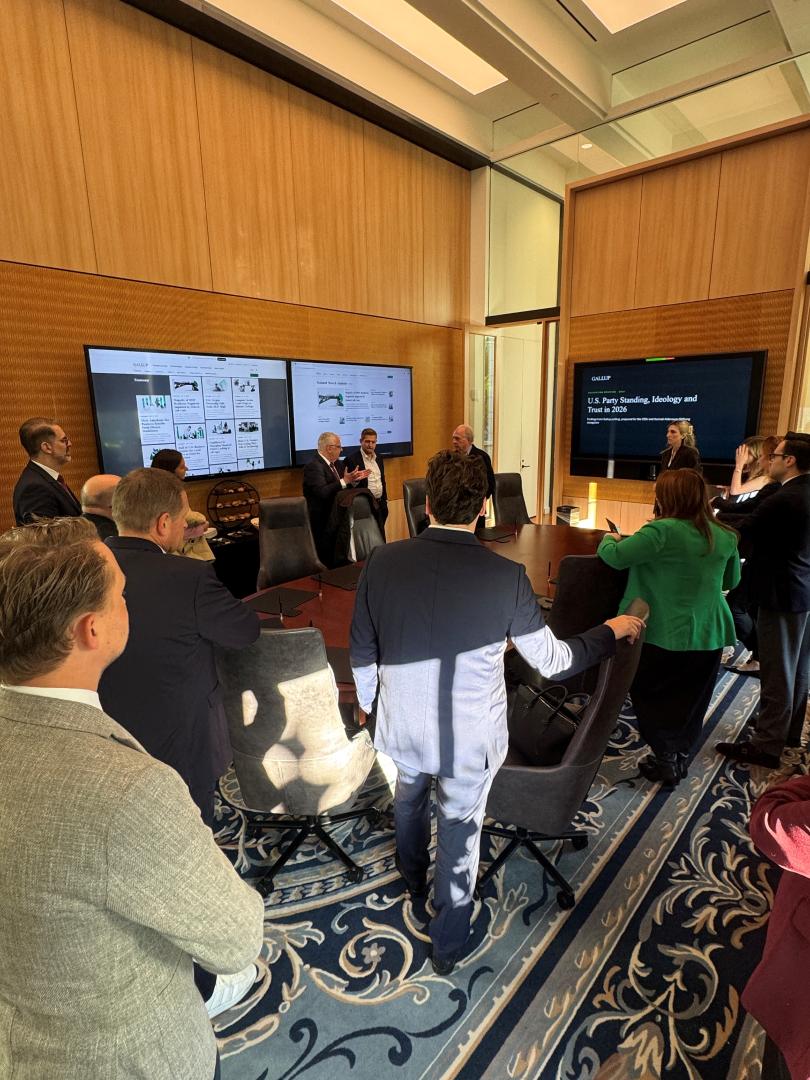
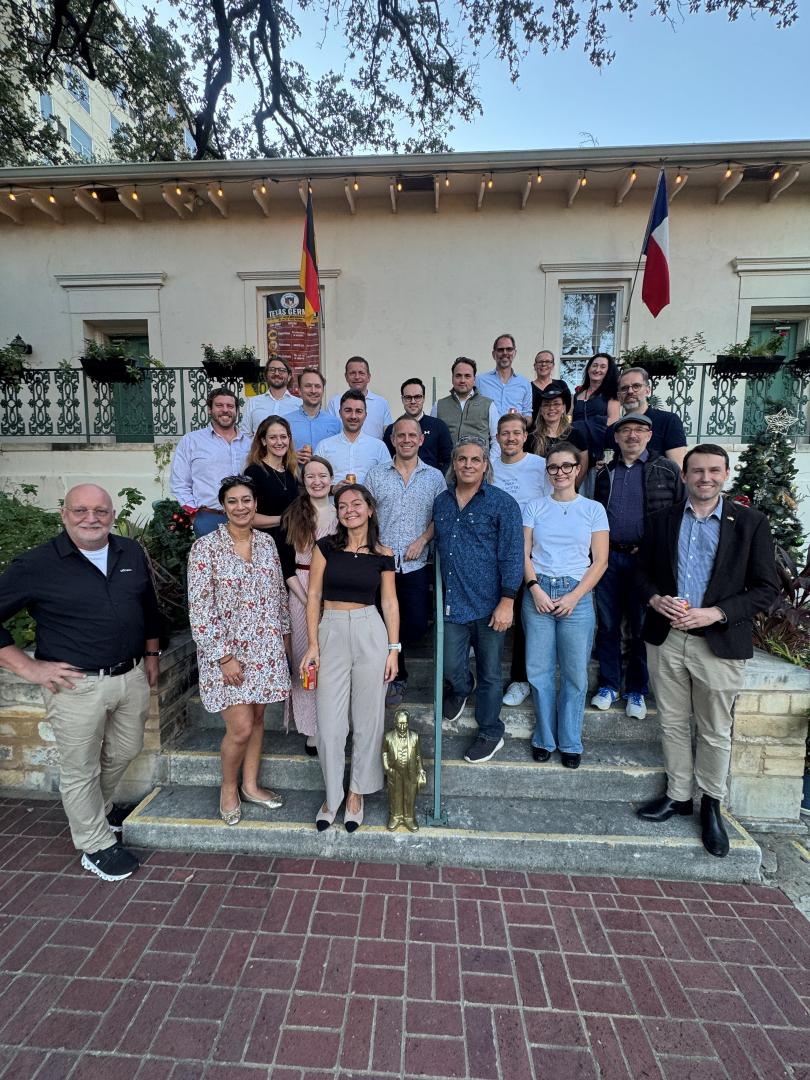
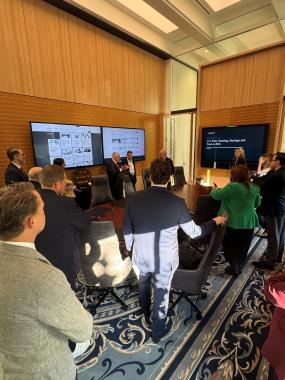
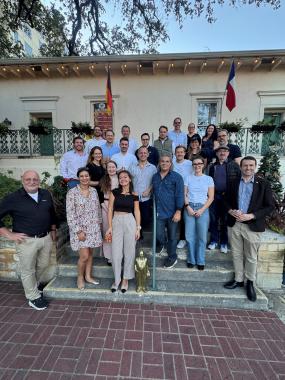
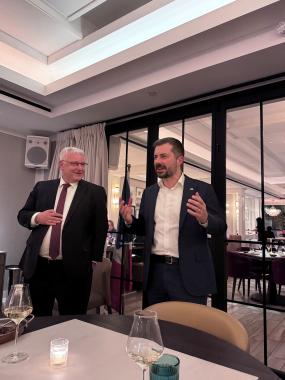
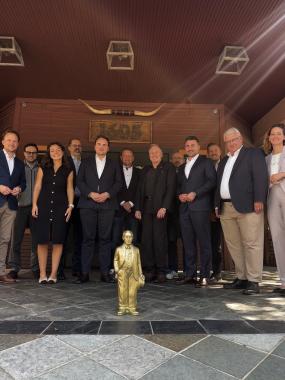
Organized by the Konrad-Adenauer-Stiftung USA, the program took place during the final stretch before election day on November 3, allowing participants to observe American politics at a particularly intense moment.
Washington provided an overview of the broader political environment in which the elections were taking place. At Gallup, Jim Clifton and his team presented data on public trust, political ideology, and voter identification. Particularly notable was that 45 percent of Americans identify as independents, making them the country's largest political group. The discussion also highlighted widespread skepticism toward political institutions and the continued importance of independent voters in determining electoral outcomes.
A lunch discussion with Laura Field focused on her book “Furious Minds: The Making of the MAGA New Right”. Rather than looking at MAGA solely as an electoral phenomenon, Field explored the intellectual roots of the movement and the broader political networks that helped shape it.
The program also included exchanges with representatives of the Center for American Progress, providing a Democratic perspective on party strategy and leadership ahead of the next election cycle.
The role of technology in campaigning was a recurring theme throughout the week. During a discussion with Eric Wilson of the Center for Campaign Innovation, participants examined how algorithms, short-form video content, and artificial intelligence are reshaping political communication. Particular attention was given to the rapid growth of platforms such as TikTok, especially among younger voters, and the increasing role AI plays in how political information is produced and consumed.
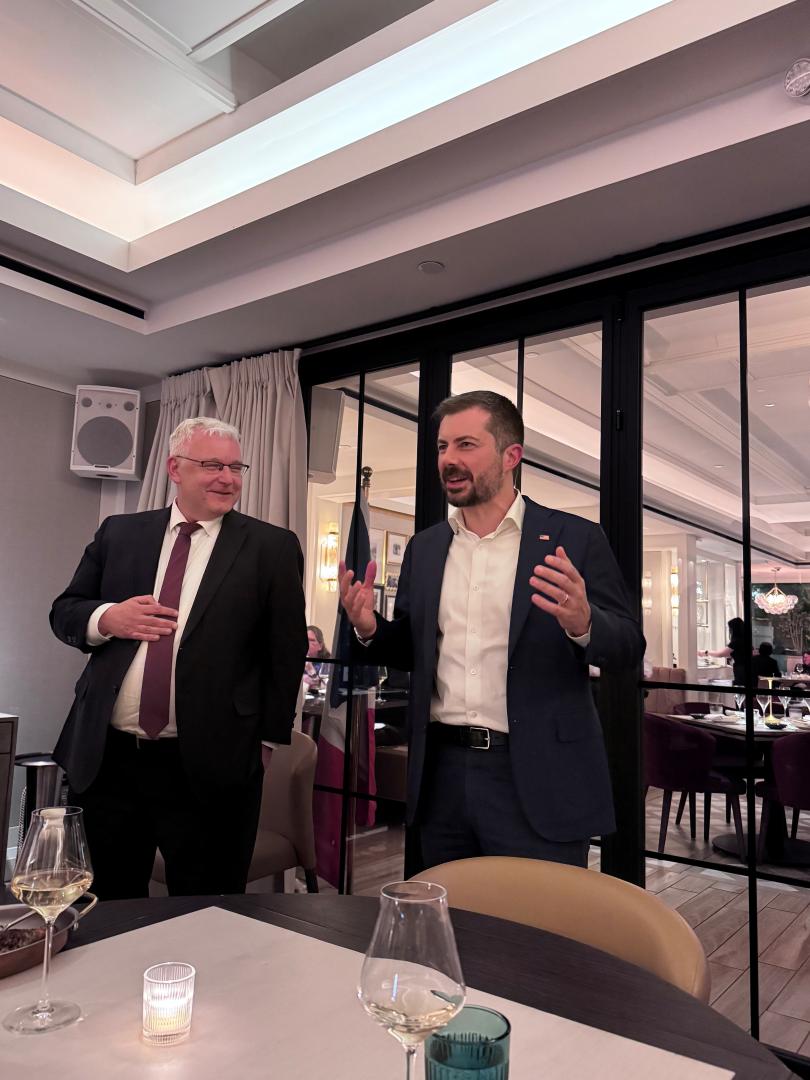
The evening concluded with a dinner together with the Alexander Hamilton Society, which brought together young foreign policy professionals, academics, and practitioners for an informal exchange. A particular highlight was the opportunity to briefly meet former U.S. Secretary of Transportation and former presidential candidate Pete Buttigieg, who stopped by the delegation's table to greet participants and exchange a few words before the evening concluded.
Meanwhile, at PLUS Communications, former Bush campaign strategist Terry Nelson analyzed the latest polling data and battleground races, offering a practitioner's view of the electoral landscape just days before voters headed to the polls.
A subsequent discussion with Andrew Bleeker of Bully Pulpit International provided additional insights into voter targeting and data-driven campaigning.
While Washington offered insights into national trends, the Texas leg of the program focused on one of the most closely watched races in the country: the Senate contest between Democrat James Talarico and Republican Ken Paxton. For more than three decades, Republicans have held both U.S. Senate seats from Texas, making the possibility of a Democratic victory politically significant far beyond the state itself. Even before election day, Talarico's campaign had attracted national and international attention and raised questions relevant to campaign practitioners on both sides of the Atlantic: how can a candidate become competitive in a state long considered safely Republican, and what role do grassroots organizing, volunteer mobilization, and coalition-building play in that process?
These questions formed the backdrop for discussions at the University of Texas at Austin, where political scientists Joshua Blank and Daron Shaw discussed the demographic and political developments shaping Texas elections.
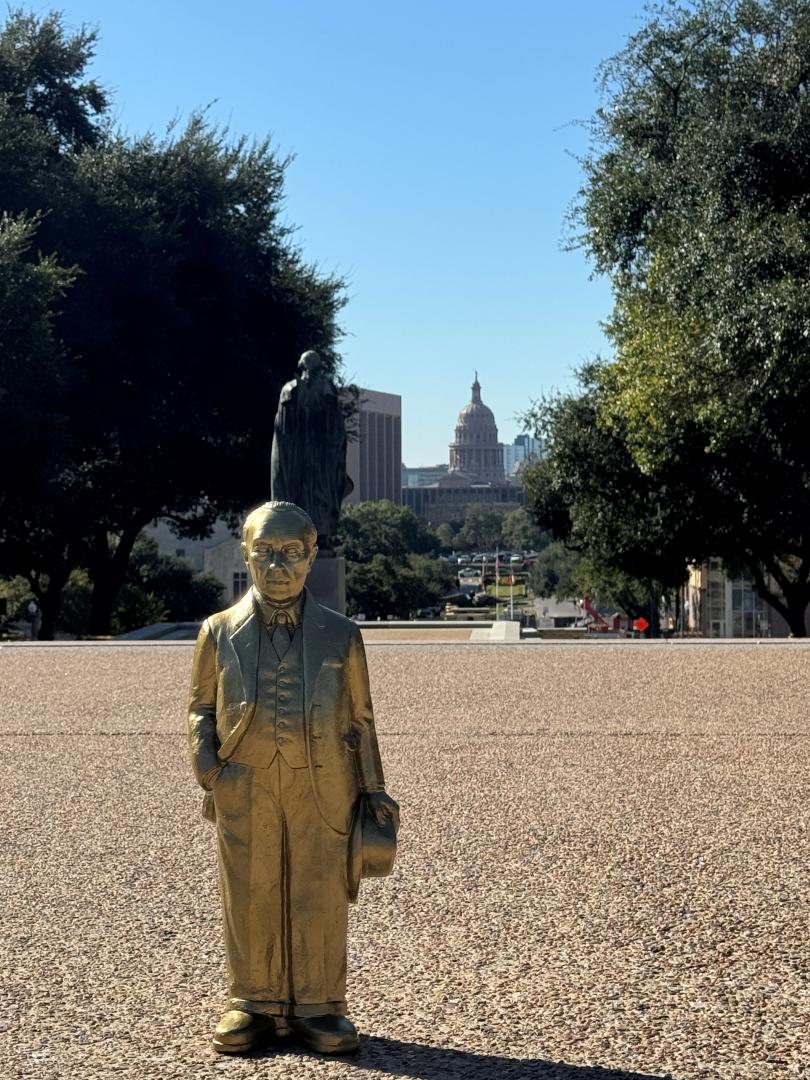
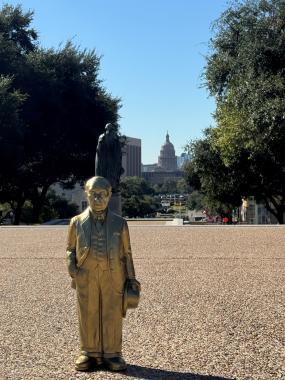
The program in Austin also included a guided tour of the Texas State Capitol, followed by a meeting with Democratic State Representative John Bucy III and members of his team. The discussion focused on voter outreach, campaign organization, and the practical realities of campaigning in one of the country's fastest-changing states.
A media perspective came from Matthew Watkins of the Texas Tribune, one of the state's leading nonprofit news organizations. The conversation explored how political journalism has adapted to growing national attention on Texas politics and elections.
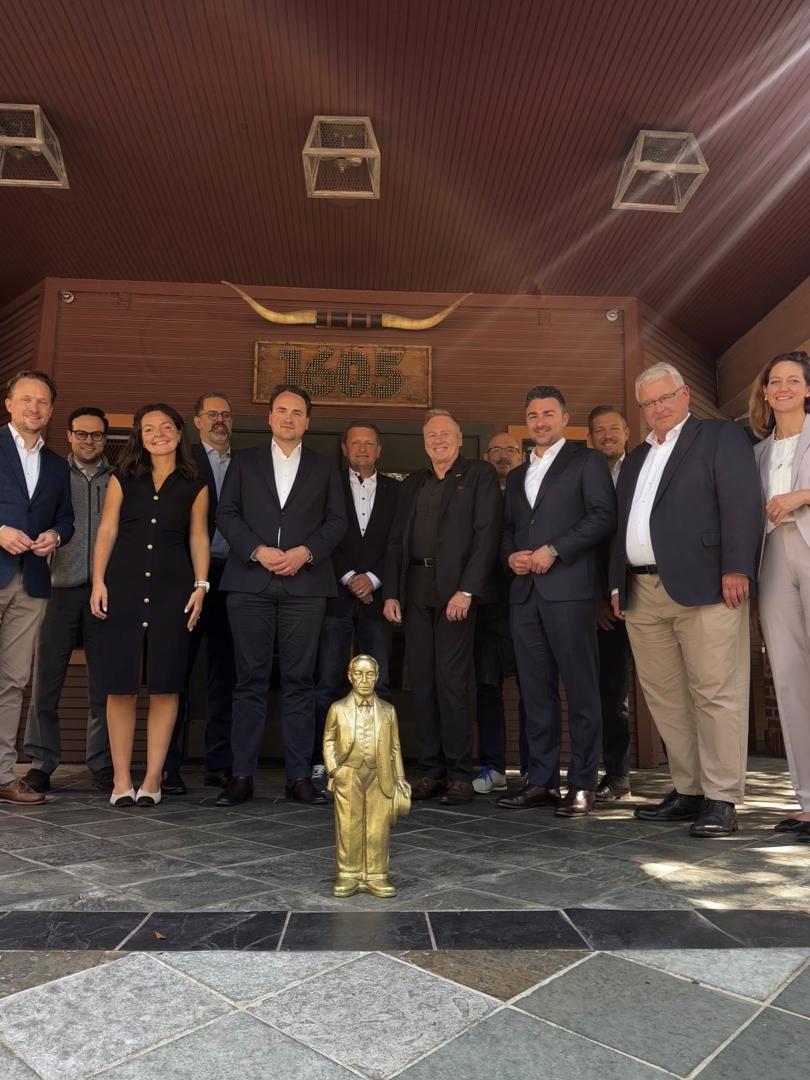
The day concluded with a reception hosted by the German-Texan Heritage Society, where delegation members exchanged views with locals on politics, campaigning, and the changing political landscape in a more informal setting.
The journey from Austin to Houston also included a stop at Buc-ee's, a Texas institution often described as being part gas station, part convenience store, and part cultural experience. If nothing else, it provided further evidence that “Everything is bigger in Texas”.
In Houston, discussions broadened beyond elections alone. During a luncheon with Kai Hennig, Consul General of Germany, participants discussed Texas' growing strategic importance as an energy producer. As the leading U.S. producer of oil and natural gas and a national leader in wind and solar power, Texas increasingly plays a role in debates about energy security, industrial competitiveness, and transatlantic cooperation. The exchange also explored the state's potential as a partner for Germany in both conventional and renewable energy sectors.
The Houston program also brought together voices from different parts of the political spectrum. Discussions with former Houston Mayor Annise Parker, former Congressman Nick Lampson, and former U.S. Ambassador David Satterfield offered perspectives from local government, Congress, and diplomacy.
The program concluded with an opportunity to observe Republican campaigning first-hand through a campaign rally for State Representative Jessica Steinmann. Coming after meetings with Democratic elected officials and campaign practitioners earlier in the week, the event provided a useful reminder that while political priorities may differ, both parties devote significant attention to turnout operations, volunteer engagement, and direct voter contact in the closing days of a campaign.
One of the clearest takeaways from the week was that, despite substantial differences between the German and American political systems, successful campaigns ultimately depend on organization at the local level. Campaign financing in the United States operates on a scale that has no real equivalent in Germany. Yet across conversations with strategists, elected officials, journalists, and academics, the importance of “grassroot work”, such as volunteer networks, community engagement, and direct voter contact emerged repeatedly.
For the CDU delegation, observing these dynamics just days before election day provided a unique opportunity to experience American campaigning in real time. Regardless of the eventual election results, the program offered valuable insights into how campaigns build support, mobilize voters, and maintain political engagement in an increasingly competitive political environment.