






Details
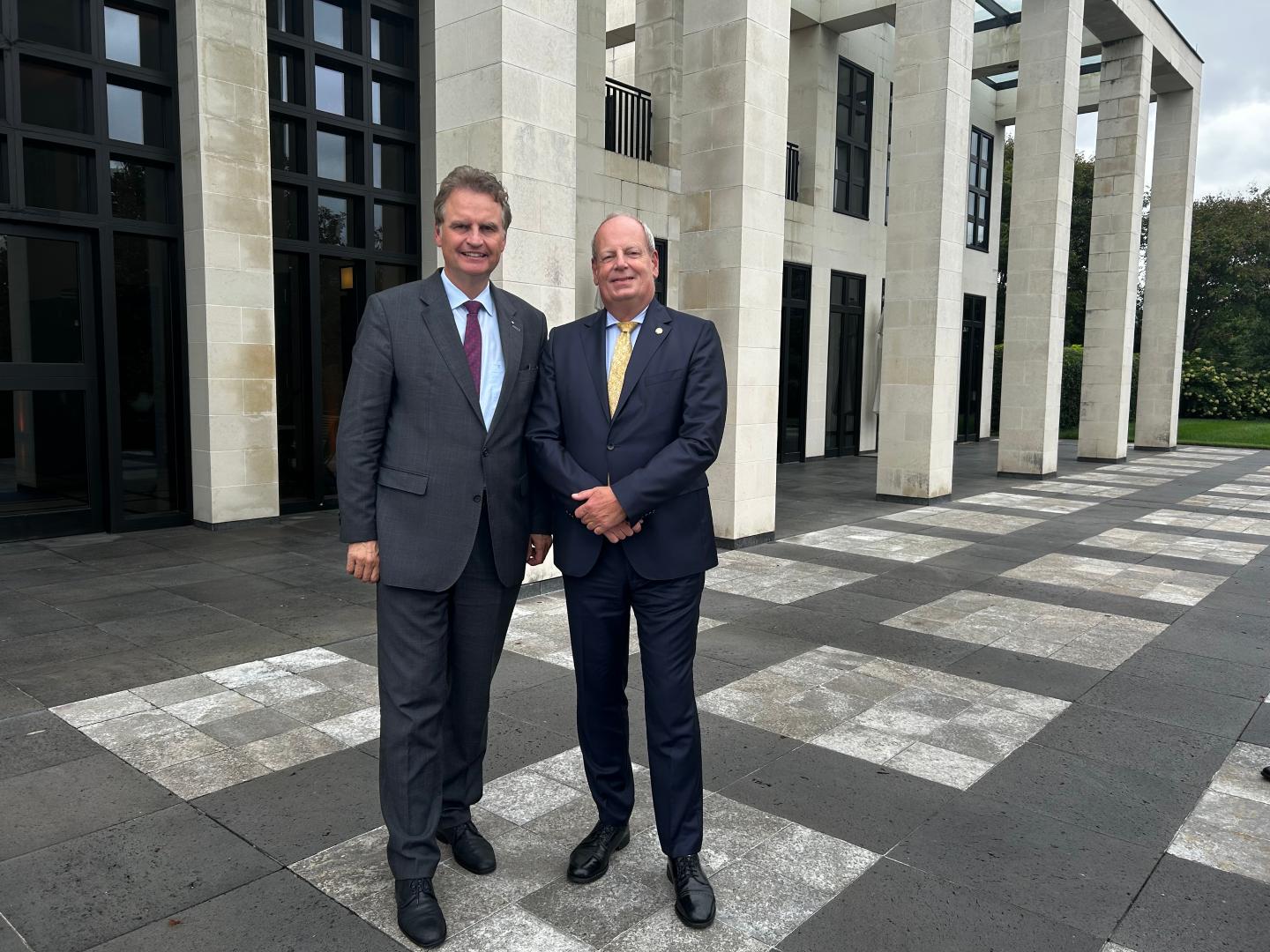
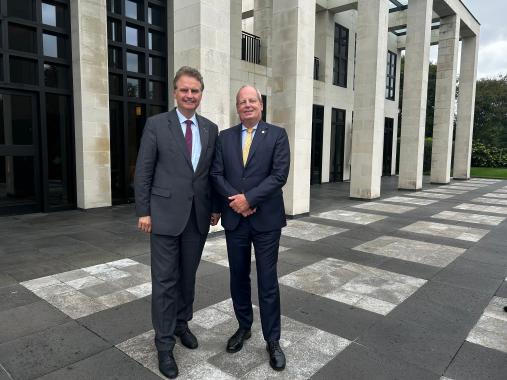
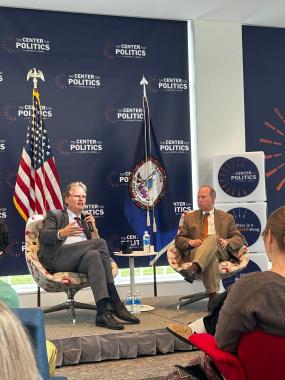
His stay in Washington was devoted first to fundamentals. Over dinner, Krings spoke with Robin Quinville, Senior Non-Resident Fellow at the American-German Institute, on "Anchoring Prosperity: Navigating Democratic Values and Enterprise in an Evolving Transatlantic Relationship." At the panel "The Transatlantic Partnership: A Constitutional Perspective," which KAS hosted at its offices together with the German Embassy, he exchanged views with Ambassador Nathan Sales and Judge Thomas Griffith. Both events centered on democracy, constitutions and the party system.
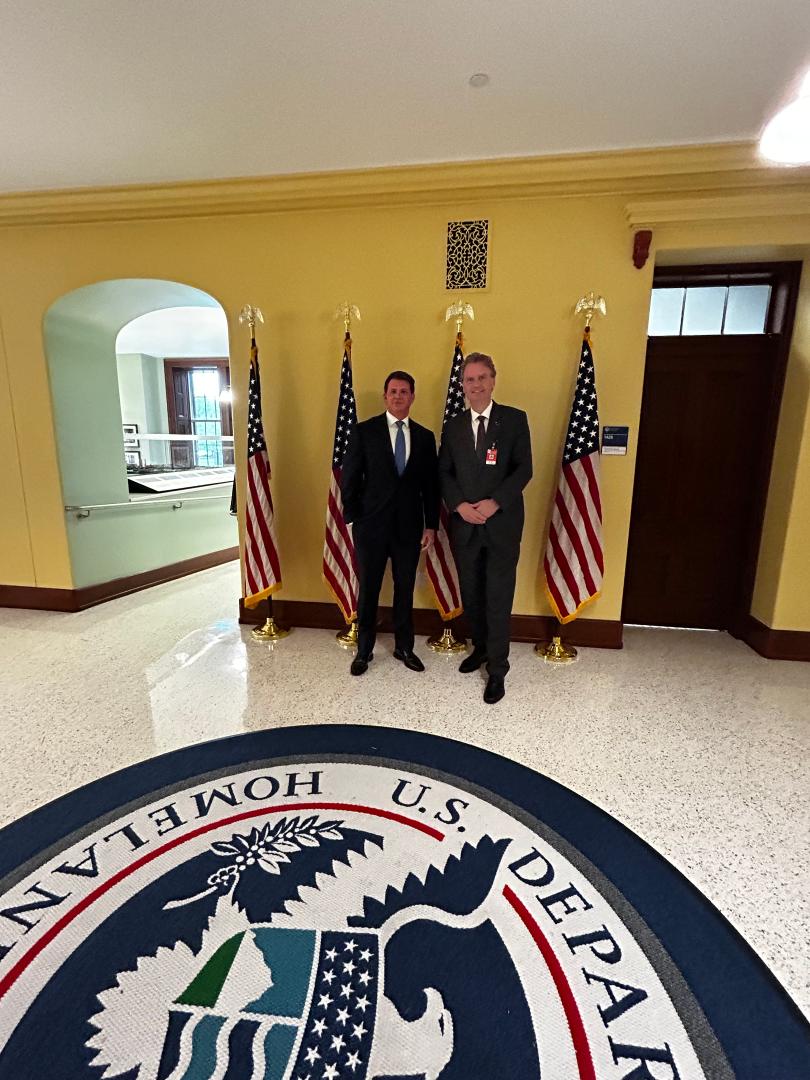
Current politics were on the agenda as well. With Jens Hanefeld, Germany's Ambassador to the United States, Krings assessed German-American relations and the political landscape ahead of the midterm elections. A highlight of the trip was the meeting with Simon Bland, Assistant Secretary for International Affairs at the U.S. Department of Homeland Security, who outlined the issues of migration and counterterrorism.
A Guest at Jefferson's University
Anyone who wants to talk about the future of democracy will find a fitting backdrop in Charlottesville. It was here that Thomas Jefferson, author of the Declaration of Independence, founded the University of Virginia in 1819, whose graduates were meant to carry the young republic forward. On September 30, Krings arrived with a German answer to a question now being asked on both sides of the Atlantic: How does a democracy remain stable?
A Look into the Crystal Ball
His host was the Center for Politics, founded in 1998 by political scientist Larry J. Sabato. It is no coincidence that its newsletter is called "Sabato's Crystal Ball": week after week, the team publishes forecasts for congressional and gubernatorial races that are picked up by media across the country. With the midterms on November 3 only weeks away, there was plenty to cover, especially as these elections are traditionally an uphill battle for the president: his party almost always loses seats in the House of Representatives.
A Stress Test for Democracy
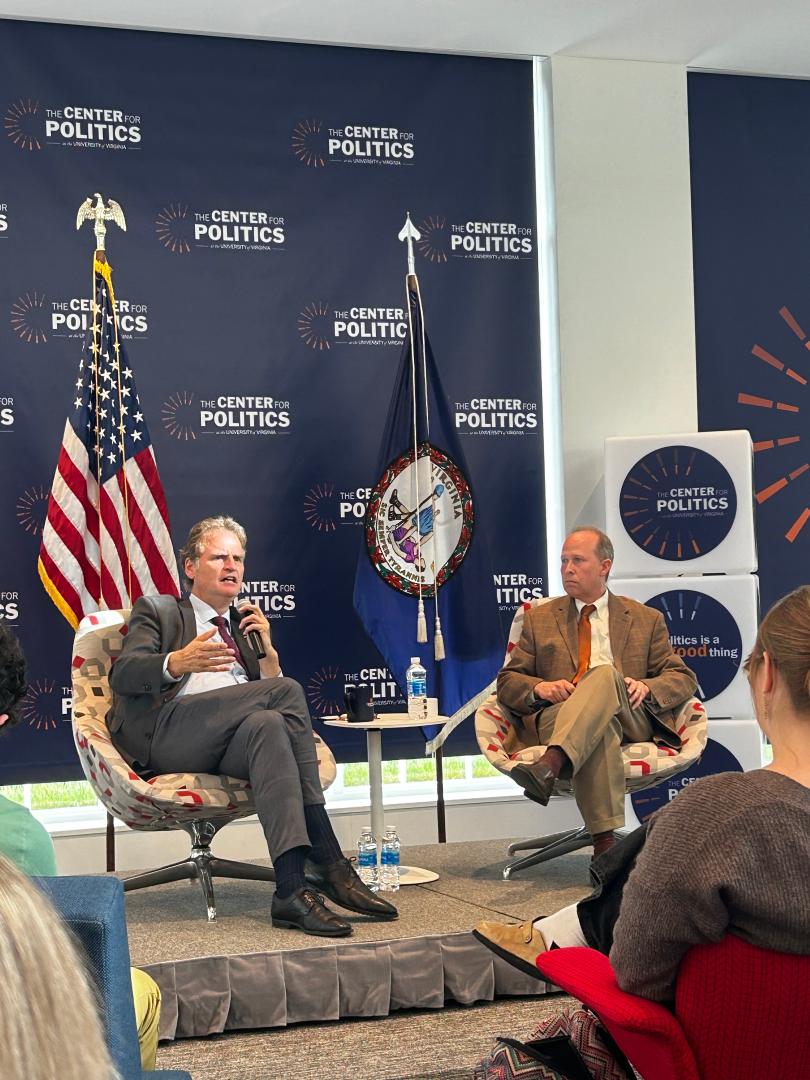
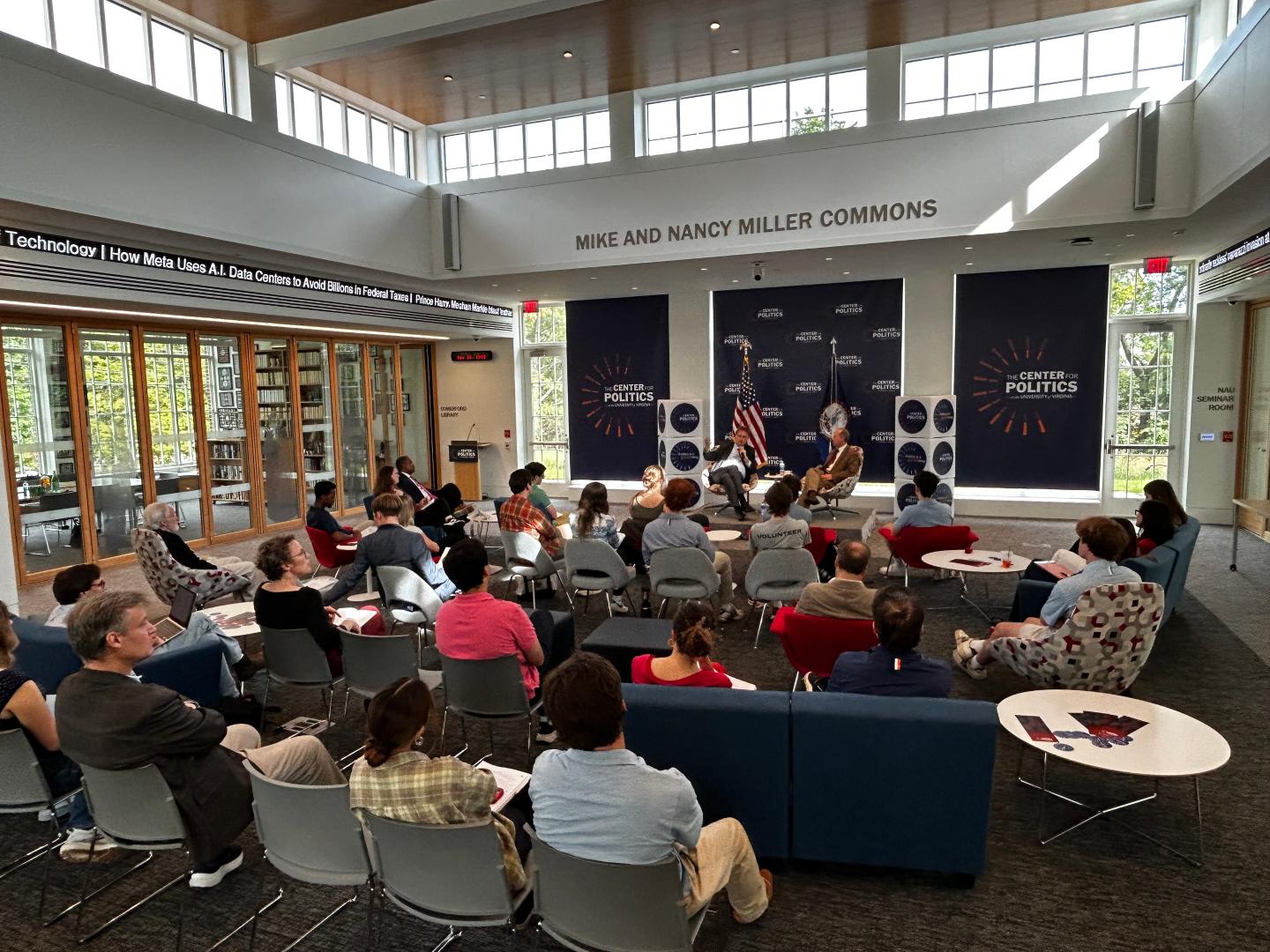
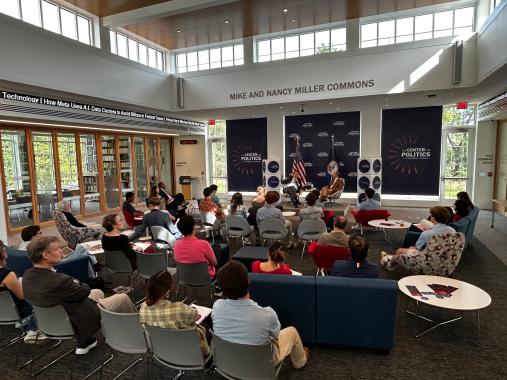
Guided by the question "Is Democracy at Risk?", Krings talked with UVA students about what the United States might learn from Germany's political system. His answer fits into three German words: Republik der Mitte, a republic of the center. After the bitter experience of the Weimar years, the Federal Republic was designed so that its institutions pull politics toward the middle: coalitions force compromise, the constructive vote of no confidence keeps governments stable, and the Federal Constitutional Court watches over it all. For young people growing up in a deeply divided two-party system, this was an unfamiliar outside view of their own democracy.
A Pantheon for Books
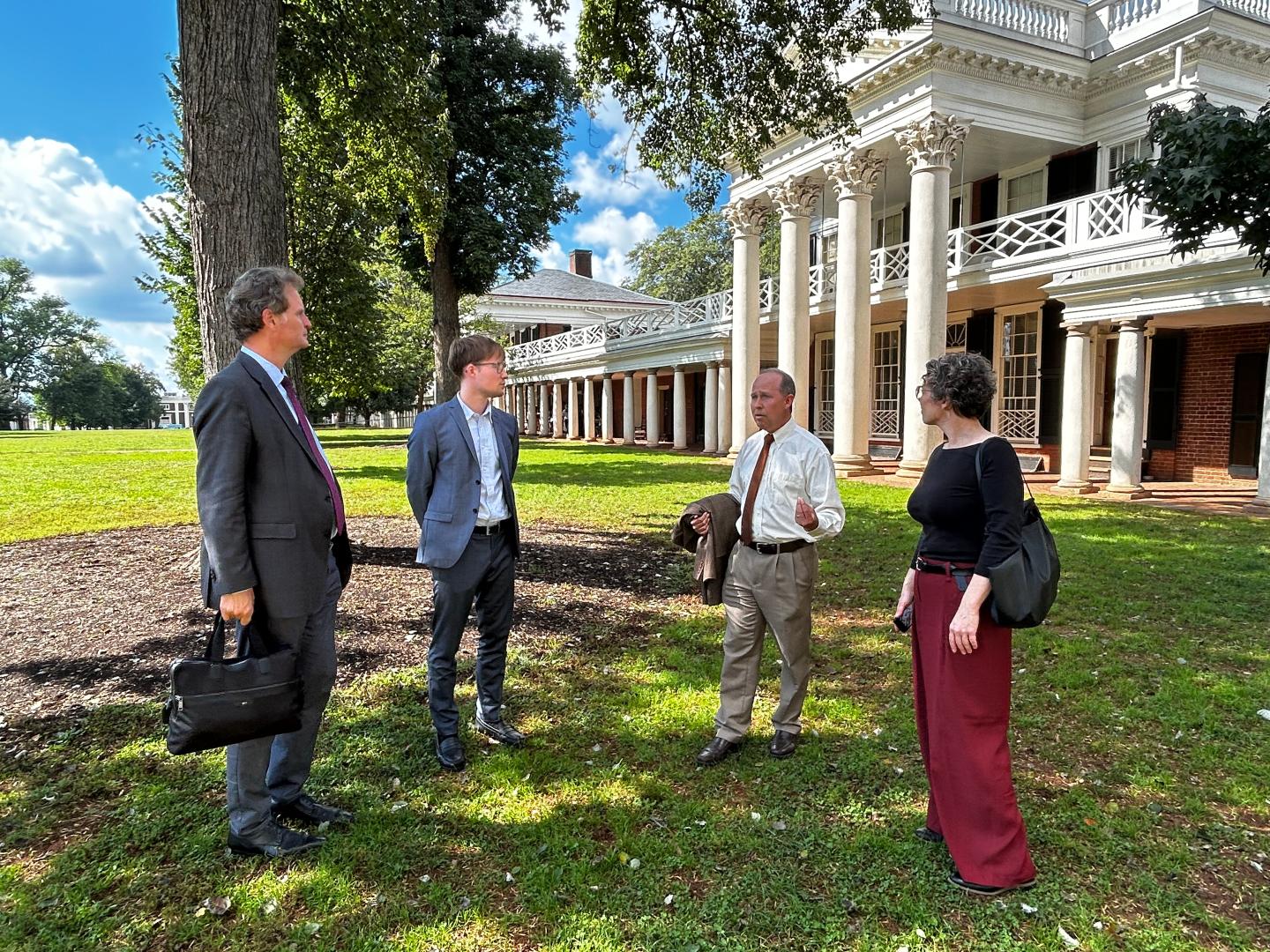
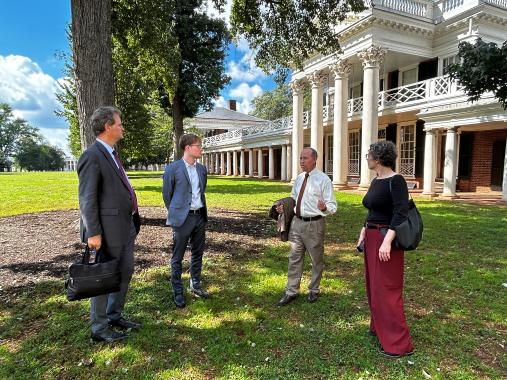
How closely education and democracy belonged together for Jefferson became clear on a walk across the university grounds. He designed the "Academical Village" at the heart of the institution himself; together with Monticello, his former estate, it is now a UNESCO World Heritage Site. The centerpiece is the Rotunda, a half-scale replica of the Pantheon in Rome. Where the Romans honored their gods, Jefferson gave pride of place to books: at the core of his university stood not a chapel but the library. And in the rooms along the Lawn, which he once planned as student quarters, 54 fourth-year undergraduates still live each year, next door to their professors.
The visit closed in another language: a conversation with German-speaking students at UVA showed how much interest in Germany and Europe exists well beyond Washington. Krings knows from personal experience what such encounters can achieve, having studied in Philadelphia himself as a Fulbright scholar.
Perhaps that is another part of the answer to how democracies stay stable: by continuing to talk to one another.