





アセットパブリッシャー

出版物

アセットパブリッシャー

DX: Japan’s Digital Transformation Strategy

Digitalization of state, industry and administration

This report outlines both structural hurdles and standout success stories of Japan’s digital transformation strategy – from the early days of mobile internet to the current shift toward SaaS and AI.

4 I’s Explanation of Korea’s ODA Policy

Identity, Interests, Ideas, and Institutions

IMAGO / AFLO

Doppelte Zäsur

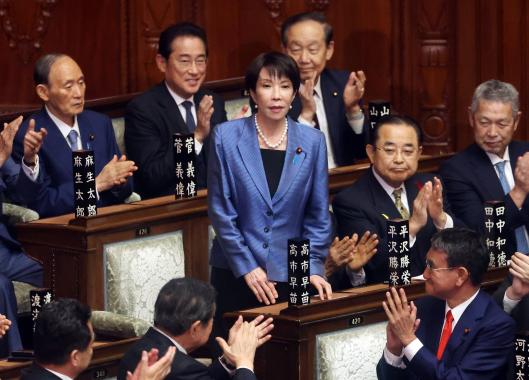
Das japanische Unterhaus wählt Sanae Takaichi zur Premierministerin

Zum ersten Mal in der japanischen Geschichte steht eine Frau an der Spitze der Regierung des Inselstaates. Takaichi gilt als konservative Hardlinerin, die erst Anfang Oktober im dritten Anlauf zur LDP-Parteivorsitzenden gewählt worden war. Die Erwartungen innerhalb der Partei an sie sind ebenso groß wie zahlreich. Zusätzlich muss sie die LDP nach 26 Jahren auf einen neuen Koalitionspartner, die Innovationspartei, einschwören.

IMAGO / Anadolu Agency

Japan: Herbe Niederlage für Regierung

Zum ersten Mal seit zwölf Jahren verliert die Regierungskoalition aus LDP und Kōmeitō ihre Mehrheit im japanischen Oberhaus.

Japan steht vor einer Phase politischer Unsicherheit: Nach der deutlichen Niederlage bei der Unterhauswahl 2024 verliert die regierende Koalition aus Liberaldemokratischer Partei (LDP) und Kōmeitō nun auch ihre Mehrheit im Oberhaus. Steigende Lebenshaltungskosten, ein sich zuspitzender Zollkonflikt mit den USA und eine zunehmend polarisierte Debatte über Einwanderung prägten den Wahlkampf.

Nguyen Dang Hoang Nhu on Unsplash

The Experiences and Extent of Adopting AI among SMEs in Southeast Asia

This publication gives an overview of AI readiness and adoption in Southeast Asia, with an emphasis on the potential benefits and obstacles for SMEs, followed by a qualitative study that gathers insights on AI adoption among Philippine manufacturing SMEs. It aims to understand general perceptions of AI, identify key factors influencing its adoption and impact, and explore how AI has affected their operations.

The New Geopolitics and South Asia’s Trade Architecture – What Next?

This paper critically analyses South Asia’s trade architecture in the sluggish world economy in the 2020s and makes recommendations for closer regional economic integration.

IPEF Regulations and their Impact on the Economic Security of the Indo-Pacific Region

KAS SOPAS – ISAS NUS Joint Publication

The publication provides insights into the evolving rules that govern the IPEF and examines their potential to shape the region’s economic landscape.

Asia’s Future Workforce

Shaping Responsive Education and Employment Policies for Youth and Beyond

Building on accumulated insights over the past few years, the Konrad-Adenauer-Stiftung’s Regional Economic Programme Asia (SOPAS) and the Taiwan-Asia Exchange Foundation (TAEF) present a comprehensive analysis of the future of work across selected countries in East, South and Southeast Asia.

Bridging the Gender Gap

Work, Wealth, Welfare and Well-being for Women

This research publication by the Konrad-Adenauer-Stiftung’s Regional Economic Programme Asia (SOPAS) and TalentNomics India, through Thought Arbitrage Consulting (TAC), looks at four dimensions of economic empowerment of women in the formal sector in Bangladesh, India, Sri Lanka, and Thailand.

HONG FENG on Unsplash

Tax Policy in Germany and Japan

A Comparative Study of VAT Reform Policies

This study analyzes the peculiarity of Japanese tax policy by comparing it with Germany. Germany is characterized by high government spending in relation to GDP and at the same time a comparatively low national debt, which indicates effective tax collection. The VAT rate in Germany, which is 19%, clearly exceeds the Japanese rate of 10%, which also leads to differences in VAT revenues. How do the political dynamics regarding VAT in Japan differ from those in Germany? This question is answered by analyzing its introduction and the (failed) increase in tax rates.