

Six Decades of Partnership and Democratic Dialogue
For sixty years, the Konrad-Adenauer-Stiftung has been part of Ghana’s political, social and economic development. Established in 1966, the KAS office in Ghana was one of the Foundation’s first offices in Sub-Saharan Africa – and its history reflects many of the changes the country has undergone since then.
Over these six decades, our work has taken many different forms. In the early years, activities focused strongly on strengthening social structures, vocational training and economic self-organisation, especially in rural areas and in Northern Ghana. During periods in which conventional political cooperation was hardly possible, KAS and its partners worked closely with local communities, churches, women’s groups and other civil society organisations to strengthen opportunities for participation and self-determination.
With Ghana’s return to multiparty democracy in the early 1990s, new avenues opened up. Decentralisation, political participation and party cooperation became increasingly important, alongside efforts to strengthen democratic institutions, the rule of law and peaceful conflict resolution. Over time, our work expanded further to include economic participation, evidence-based policymaking, social cohesion, youth leadership, digitalisation and the opportunities and challenges created by technological change.
The activities may have changed considerably, but many of the underlying questions have remained remarkably consistent over the decades:
-
How can people participate meaningfully in shaping their communities and their country?
-
How can democratic institutions and peaceful, cohesive societies be strengthened?
-
And how can people, institutions and economies respond to change and create new and inclusive opportunities?
Looking back at sixty years therefore means looking at both change and continuity. It also means looking at the people and institutions with whom this work has been carried out. KAS has never worked in Ghana alone. Many of our partners have accompanied us for decades; others joined as Ghana itself changed and new challenges emerged.
The photographs in this digital exhibition offer glimpses into this shared history. They show only a fraction of the countless activities, encounters and partnerships that have shaped six decades of KAS in Ghana – from grassroots programmes and political dialogue to research, leadership development and international exchange.
Together, they tell the story not simply of Konrad Adenauer Stiftung working in Ghana, but of partnerships that have evolved over sixty years – and continue to evolve today.
Democratic participation depends on the ability of all citizens to make their voices heard and influence the decisions that shape their lives. KAS Ghana is committed to broadening political inclusion, particularly for young people and groups whose interests remain underrepresented, thereby contributing to a more representative and responsive democracy.
EU-WYDE – Women and Youth Democratic Engagement
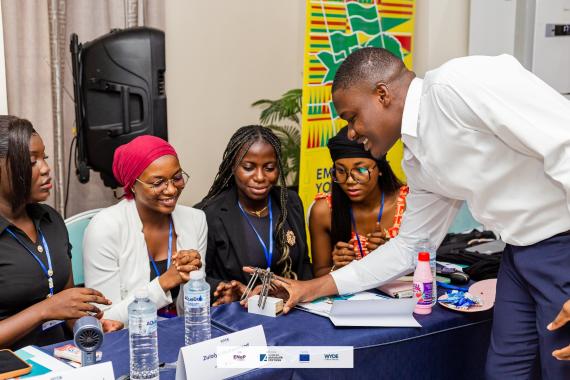
As part of the EU-funded Women and Youth Democratic Engagement (WYDE) initiative, implemented in cooperation with the European Network of Political Foundations (ENoP), KAS Ghana brought together young representatives of Ghana's two major political parties, the New Patriotic Party (NPP) and the National Democratic Congress (NDC), for a six-month mentoring and capacity-building programme.
Through political education, leadership training, personal development and mentoring by experienced representatives from politics, civil society and academia, the programme sought to strengthen the next generation of political leaders. Beyond individual skills development, it created a cross-party platform for dialogue, networking and relationship building, encouraging young political actors to engage constructively with shared democratic challenges despite their political differences.
KAS Scholarship and Fellowship Programme
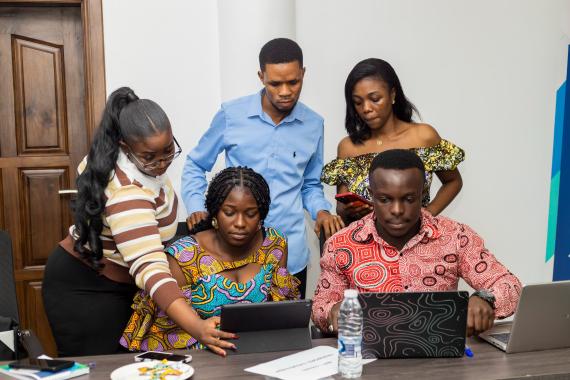
For decades, the Konrad-Adenauer-Stiftung has supported talented and socially committed young people in Ghana through its scholarship and fellowship programmes. Beyond financial assistance for academic studies, the programme places particular emphasis on personal development, leadership skills, civic responsibility and exposure to professional and societal experiences.
Through seminars, mentoring, networking opportunities and a comprehensive accompanying programme, KAS encourages its scholars to become responsible and engaged members of society. Over the years, this commitment has contributed to an extensive alumni network whose members have assumed important roles in politics, business, academia, civil society and other areas of public life.
Democratic Participation

Democratic participation extends far beyond casting a vote. It requires citizens who understand their rights, engage with political issues and recognise their ability to influence decisions affecting their communities and their country's future. KAS Ghana therefore places particular emphasis on encouraging young people to become active participants in democratic processes rather than passive recipients of political decisions.
Through political education, voter sensitisation, youth engagement initiatives and participatory dialogue formats, the Foundation creates opportunities for young citizens to develop their political awareness, articulate their interests and engage with democratic institutions. These activities seek to foster a culture of active citizenship and sustained political engagement.
Inclusion of Persons with Disabilities

Despite existing legislation and policy frameworks, persons with disabilities in Ghana continue to face significant barriers to meaningful political, economic and social participation. Limited accessibility, insufficient implementation of legal protections and persistent societal prejudices often prevent them from fully exercising their rights and making their voices heard.
KAS Ghana works with local partners to promote disability inclusion and strengthen the participation and representation of persons with disabilities. Through public awareness forums, advocacy platforms, networking opportunities and evidence-based assessments of policy implementation, these initiatives seek to increase visibility, identify persistent gaps and encourage more inclusive political and societal structures.
Informed political decisions and effective reforms require a strong foundation of evidence and constructive debate. KAS Ghana promotes the connection between knowledge and political action, helping to ensure that public policy responds to real societal needs and contributes to democratic and sustainable development.
Research
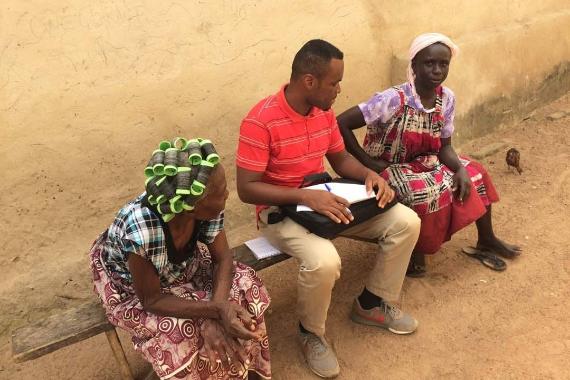
Effective policymaking begins with a thorough understanding of political, economic and societal realities. Research provides the evidence needed to identify emerging challenges, assess existing policies and move public debate beyond assumptions, individual perceptions or short-term political interests.
KAS Ghana commissions and supports a broad range of research activities, including public opinion surveys, political and socioeconomic studies, policy analyses and thematic research papers. By bringing together academic expertise, empirical data and practical insights, these publications contribute to informed public discourse, provide orientation for decision-makers and create a stronger foundation for democratic debate and policy reform.
Policy Development

Well-designed policy frameworks are essential for translating political objectives into effective and sustainable action. They establish priorities, clarify responsibilities, provide guidance for implementation and create the institutional and regulatory conditions necessary for long-term development. Equally important is ensuring that policies are responsive to societal needs, grounded in evidence and developed through inclusive consultation.
KAS Ghana supports policy development by bringing together political decision-makers, experts, civil society and other relevant stakeholders to discuss challenges and formulate practical approaches to reform. Through technical dialogue, comparative perspectives, capacity building and policy-oriented research, the Foundation contributes to the development and improvement of frameworks that strengthen democratic governance, economic opportunity, freedom and the rule of law.
Traditional leadership remains an important part of Ghana’s governance landscape, alongside the institutions of modern democracy. KAS Ghana’s longstanding engagement with traditional authorities seeks to strengthen their contribution to inclusive development and explore how customary leadership and democratic principles can reinforce one another.
Chiefs and Traditional Governance
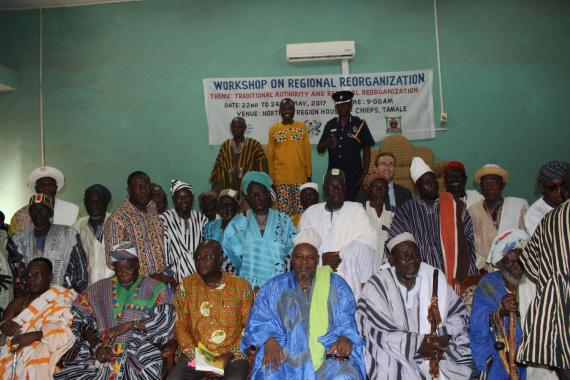
Chiefs hold a constitutionally recognised position within Ghana’s traditional governance system. Through their roles in customary affairs, community leadership, land-related matters and conflict resolution, they remain important interlocutors in local development and public life. The National House of Chiefs and Regional Houses of Chiefs provide institutional structures for consultation, coordination and the articulation of traditional authorities’ perspectives.
For more than three decades, KAS Ghana has engaged with chiefs and their representative bodies on questions of leadership, governance, decentralisation and peaceful conflict resolution. This cooperation creates opportunities to address tensions between customary practices and constitutional principles and to strengthen constructive engagement between traditional leaders, elected institutions and the communities they serve.
Queen Mothers
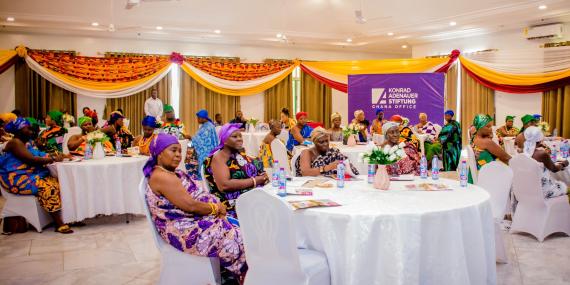
Queen mothers are an integral part of Ghana's traditional governance system and play important roles in community leadership, social welfare, cultural preservation and conflict mediation. Yet, compared with their male counterparts, they have historically faced greater limitations in institutional representation, access to resources and opportunities to influence decision-making.
KAS Ghana works to strengthen the capacities, networks and public visibility of queen mothers, recognising their important contribution to women's empowerment and inclusive governance. By creating platforms for exchange, leadership development and engagement with political and traditional institutions, the Foundation supports their ability to advocate for community interests, promote women's participation and contribute to local development and social cohesion.
Dialogue creates opportunities to bridge political and societal differences, exchange ideas and build mutual understanding. As a central element of its work, KAS Ghana promotes spaces for constructive discussion and lasting connections within Ghana and across national borders.
Public Dialogue Forums

Open and inclusive public dialogue is essential to a vibrant democratic society. It enables citizens to engage with political developments, express their concerns, challenge prevailing perspectives and contribute to discussions that shape public decisions. Such platforms are particularly important for individuals and communities whose voices are often underrepresented in formal political processes.
Through public forums, conferences, community dialogues and thematic discussions, KAS Ghana brings together citizens, experts, political representatives and civil society actors to exchange perspectives on current issues. These activities combine political education and public awareness with opportunities for participation, while also helping to identify societal concerns, stimulate informed debate and bring important policy questions into the public sphere.
International Dialogue Programmes
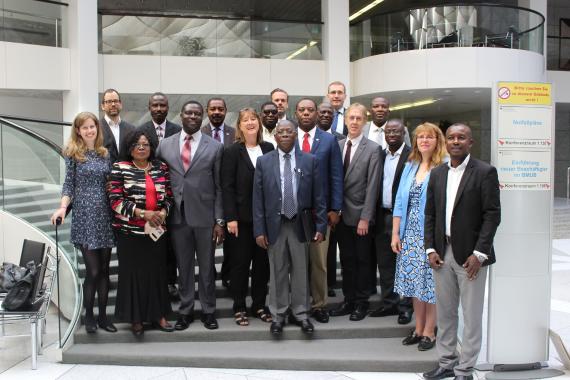
International dialogue and personal exchange are central to building lasting partnerships and mutual understanding across borders. KAS Ghana facilitates dialogue programmes that connect political leaders, institutional representatives, civil society actors and experts with their counterparts in Germany, Europe, other African countries and beyond.
Through delegation visits, professional exchanges and joint discussions, participants gain first-hand insights into different political systems, institutional practices and societal realities. These encounters broaden perspectives, encourage mutual learning and strengthen personal and institutional relationships. By building bridges between countries and regions, KAS contributes to international cooperation grounded in trust, shared experiences and constructive dialogue.
The rule of law protects fundamental rights, limits arbitrary power and provides the legal certainty on which democracy depends. KAS Ghana regards strong constitutional principles and accessible, impartial justice as essential foundations for accountable governance and public trust.
Legal and Constitutional Cooperation

In practice, effective rule-of-law institutions depend on professional expertise, functioning judicial and prosecutorial systems, sound legislation and constitutional safeguards. Strengthening these capacities requires continuous learning, institutional cooperation and careful engagement with evolving legal and governance challenges.
KAS Ghana supports the strengthening of legal and constitutional institutions through capacity building, professional training, policy dialogue and national and international exchange. Its activities bring together legal practitioners, prosecutors, judicial representatives, policymakers and experts to share experiences, strengthen professional competencies and discuss legal and institutional reforms. By accompanying constitutional reform processes, facilitating dialogue on legislative and judicial developments, and promoting cooperation across institutions and borders, the Foundation contributes to a more effective, accountable and resilient rule-of-law system.
Economic opportunity and democratic participation are closely connected. Guided by the principles of the Social Market Economy, KAS Ghana promotes entrepreneurship, economic inclusion and a framework in which market freedom and social responsibility reinforce one another, contributing to sustainable and broad-based prosperity.
Start-up Promotion and Entrepreneurship
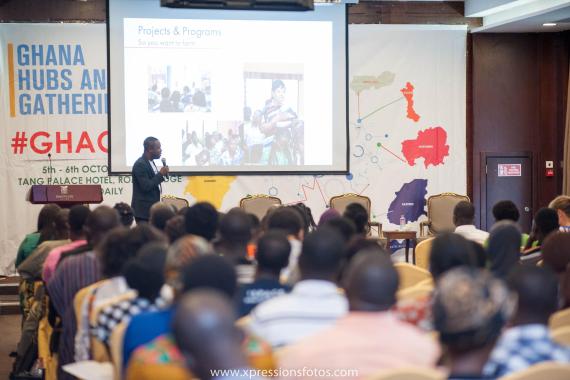
Entrepreneurship and innovation are important drivers of economic development, job creation and social mobility, particularly for Ghana's growing young population. However, emerging businesses frequently face considerable challenges, including limited access to finance, complex administrative procedures, insufficient business support structures and difficulties entering competitive markets.
KAS Ghana has supported start-up ecosystems and entrepreneurial initiatives to help young entrepreneurs develop viable business ideas, strengthen their professional capacities and access networks and opportunities. By encouraging entrepreneurship and promoting more favourable conditions for business development, these activities seek to unlock economic potential and enable greater participation in Ghana's private sector.
Private Sector Development

A strong and dynamic private sector is essential for sustainable economic growth, job creation and economic opportunity. Private enterprises drive innovation, generate employment and contribute to economic diversification and prosperity. In line with the principles of the Social Market Economy, KAS recognises that entrepreneurial freedom, fair competition and social responsibility are fundamental to inclusive and sustainable development.
KAS Ghana supports private sector development by promoting constructive dialogue between businesses, policymakers and other stakeholders, advocating for an enabling regulatory and institutional environment, and encouraging entrepreneurship and economic participation. By addressing structural barriers, strengthening business representation and contributing to market-oriented policy reforms, the Foundation seeks to create conditions in which businesses can thrive and economic opportunities become accessible to broader segments of society.
Sustainability Education and Innovation
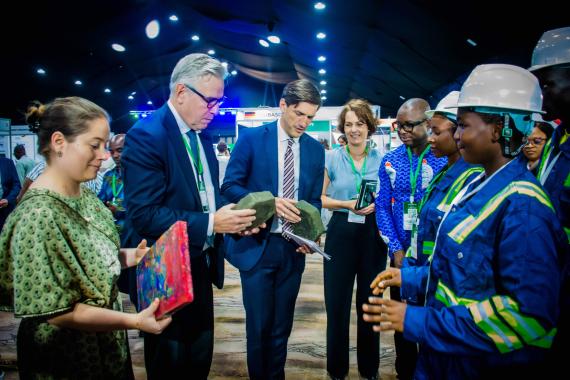
Sustainable economic development requires new approaches to resource management, production and consumption. Environmental challenges such as plastic pollution also present opportunities for innovation, entrepreneurship and the development of circular economic models that reduce waste and make better use of available resources.
KAS Ghana encourages young people to explore the connections between environmental responsibility, sustainability and economic innovation. Through educational initiatives and creative competitions, the Foundation promotes awareness of sustainable practices while inspiring young people to develop practical ideas for recycling, resource efficiency and innovative solutions to environmental challenges.
Churches and faith-based organisations have been important partners of KAS Ghana since its earliest years. Their deep roots in communities and commitment to social responsibility make them valuable partners in promoting democratic values, civic engagement and inclusive development.
Christian Mothers Association (CMA)
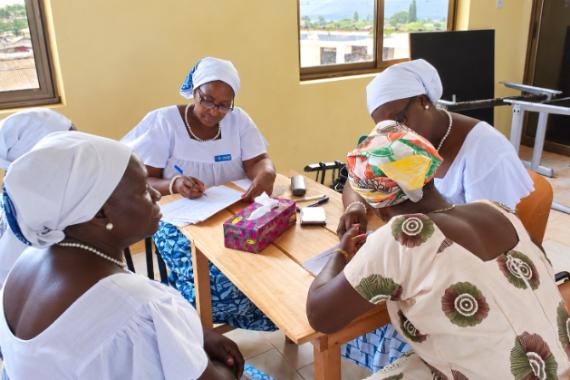
The Christian Mothers Association (CMA) is one of the Konrad-Adenauer-Stiftung's oldest institutional partners in Ghana, with a relationship dating back to the Foundation's earliest activities in the country in the 1960s.
Rooted in local communities, particularly in rural areas, the association has played an important role in strengthening women's participation in political, economic and social life. Over the decades, KAS and CMA have worked together to promote women's empowerment, civic engagement and opportunities for women to take an active role in shaping their families, communities and society.
Ghana Catholic Bishops' Conference
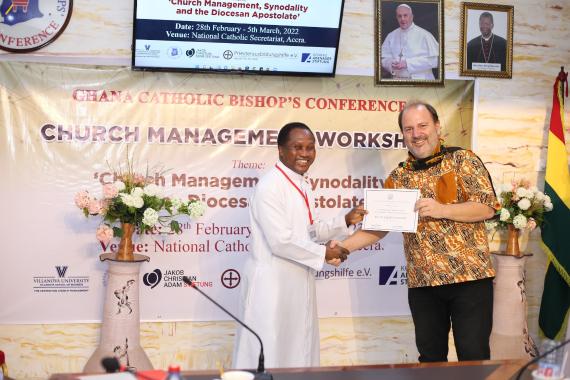
The Catholic Church has long been an influential institution in Ghanaian society, extending its role far beyond religious life. Through its extensive network of dioceses, parishes, schools, healthcare facilities and social organisations, the Church reaches communities across the country and contributes significantly to education, social development and public discourse.
The Ghana Catholic Bishops' Conference brings together the country's Catholic bishops and provides an institutional framework for addressing matters of national and societal concern. Its engagement in questions of justice, peace, governance and social responsibility makes it an important partner in democratic development. KAS Ghana's longstanding cooperation with Catholic institutions has built on this societal reach, combining political education, civic engagement, dialogue and the promotion of democratic values.
Peace and security are indispensable to democratic stability and sustainable development. Recognising the increasingly interconnected nature of security risks, KAS Ghana approaches peacebuilding as a shared responsibility that links institutional resilience with the wellbeing and cohesion of communities.
Security Challenges and Conflict Prevention

Ghana faces a diverse range of security challenges that extend beyond conventional threats and require cooperation across institutions and borders. These include violent extremism and terrorism, organised crime, arms and human trafficking, illicit trade, illegal resource extraction and emerging threats related to digital technologies and cybersecurity. Regional instability, cross-border movements and developments in neighbouring countries further underline the importance of effective security cooperation and institutional resilience.
At the community level, KAS Ghana also addresses challenges related to social cohesion, migration, local and regional conflicts, and disputes over land and natural resources. Working with governmental and security institutions, civil society organisations and local stakeholders, the Foundation promotes dialogue, capacity building, conflict prevention and regional cooperation. Its activities seek to strengthen peaceful coexistence, improve responses to evolving security threats and contribute to long-term stability and democratic resilience.
Democracy depends not only on elections but also on institutions capable of representing citizens, exercising authority responsibly and holding power to account. KAS Ghana’s work seeks to support the long-term resilience and legitimacy of Ghana’s democratic system.
Institutional and Democratic Development

In Ghana’s multiparty democracy, political parties, parliament and executive institutions perform different but closely connected functions. Their organisational capacity, internal processes, leadership and relationships with citizens shape the quality of representation, oversight and political decision-making.
KAS Ghana supports this process through cooperation with political parties, parliamentary and executive institutions, and other stakeholders within Ghana's democratic system. Its activities focus on institutional and organisational development, political leadership, capacity building and the exchange of experiences and best practices. Particular attention is given to strengthening political parties as essential intermediaries between citizens and the state, improving institutional effectiveness and encouraging democratic accountability. Through dialogue and long-term partnerships, KAS contributes to institutions that can respond constructively to changing political and societal challenges.