








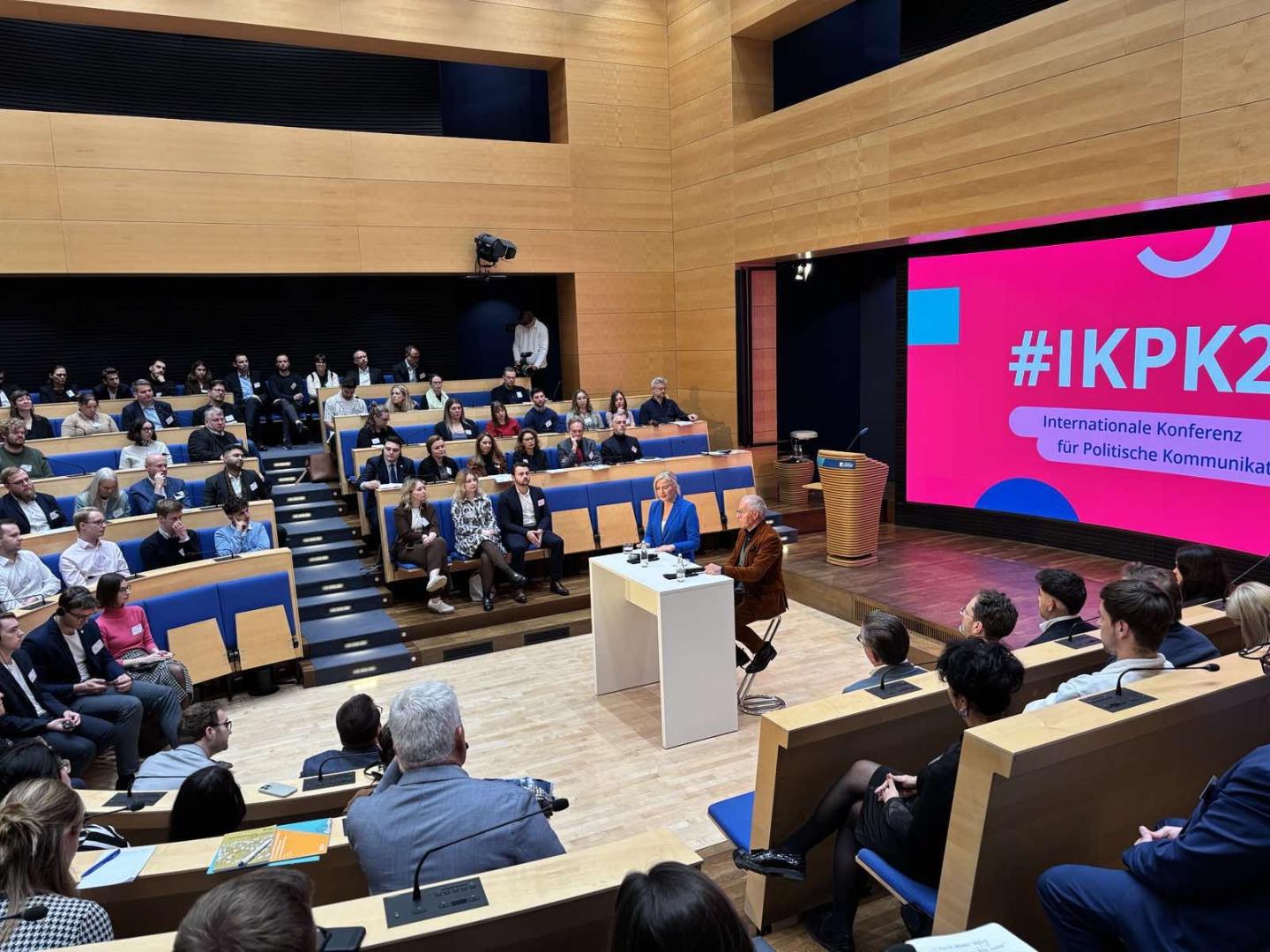
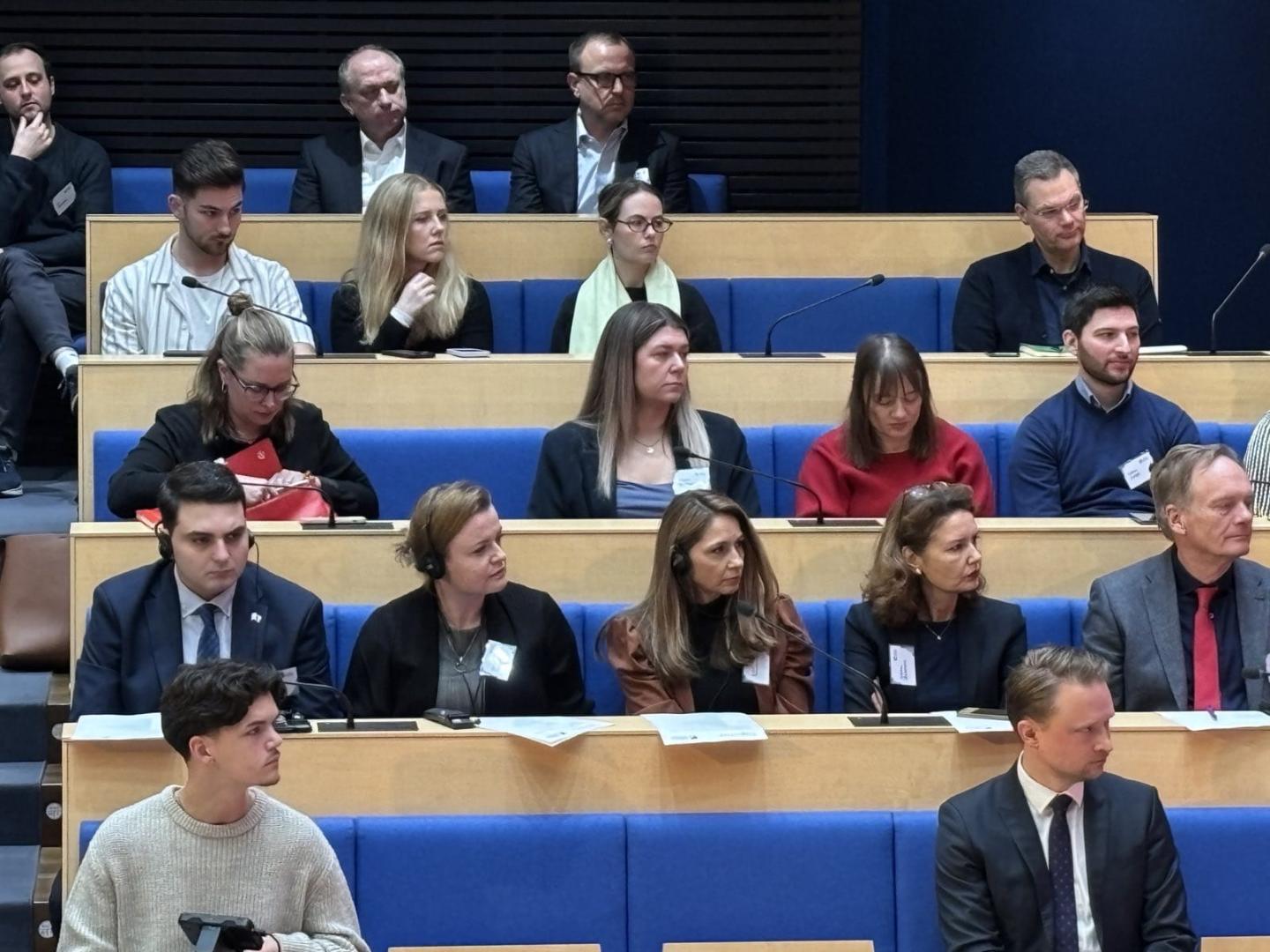
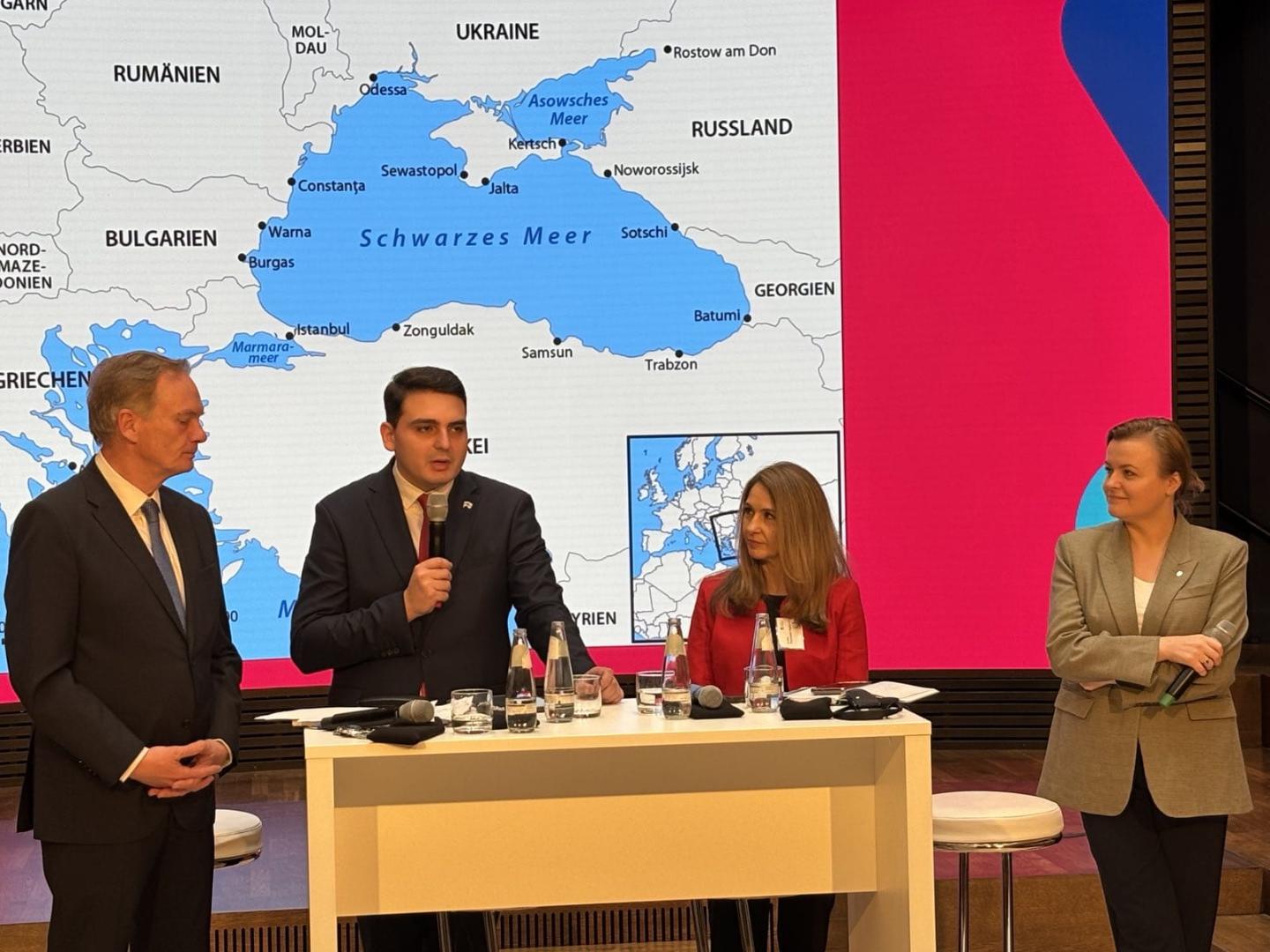

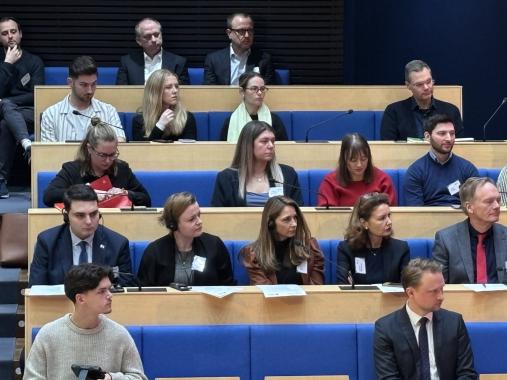
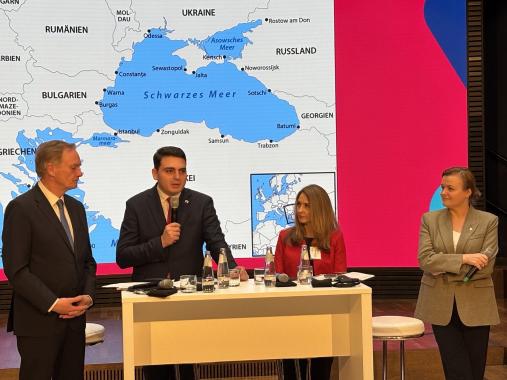
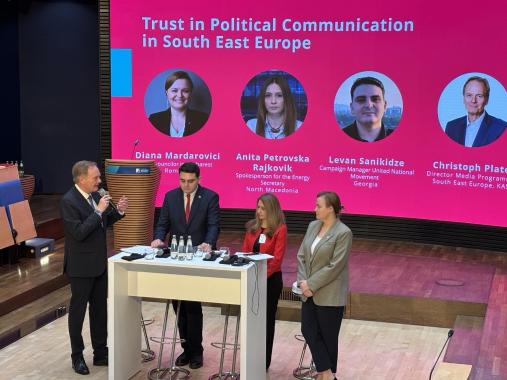
During the panel participants from Romania, North Macedonia, and Georgia presented insightful perspectives from Southeast Europe and the Black Sea region and discussed how trust in political communication can be built and maintained.
They emphasized that credibility is the cornerstone of democratic legitimacy, yet in many countries of the region it remains fragile or has been eroded. Key challenges identified included a lack of transparency, institutional weakness, media polarization, and the spread of disinformation.
The regional comparison showed diverse realities and face major challenges in establishing stable structures and communication cultures. In the area of the political communication, Romania faces polarized media and frequent misinformation. Diana Mardarovici emphasized that “decisions stands at the end of every communication, and if they are not good, then communication alone will not fix them“. In North Macedonia the main challenge is the political polarization and the difficult media situation. In the field of political communication Anita Petrovska Rajkovik pointed out that „politics should be courageous enough to try new things, rather than relying on the familiar“. The situation in Georgia is particularly worrying, where democracy is increasingly under threat, with sustained pressure for freedom, trust and institutional balance.
Moderated by Christoph Plate, the panel concluded that lasting trust cannot be achieved through short-term campaign tactics alone, but requires authentic, transparent, and respectful communication as part of everyday political practice. The discussion thus offered valuable insights into how political communication can contribute to strengthening democratic culture in transition societies across South East Europe.