








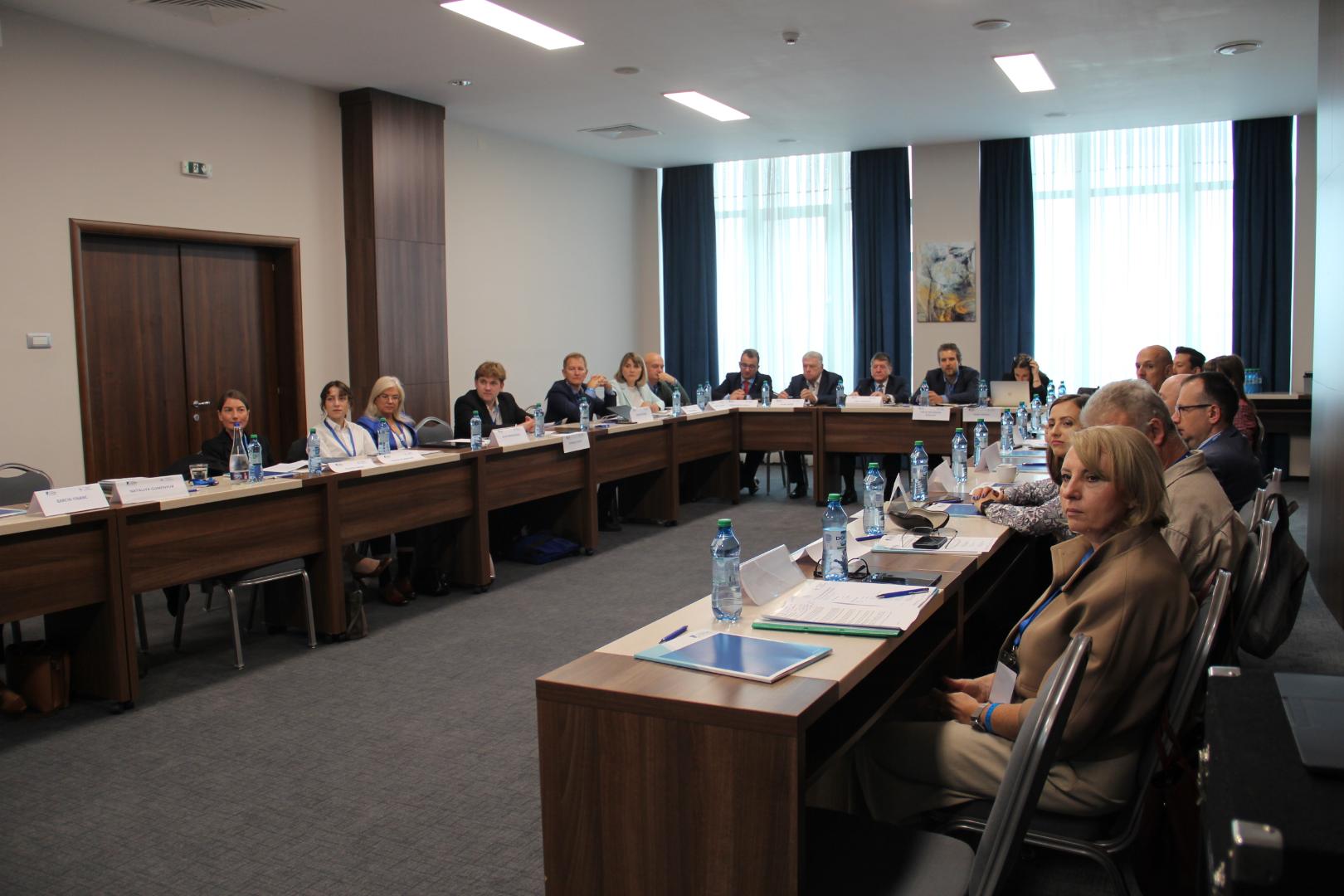
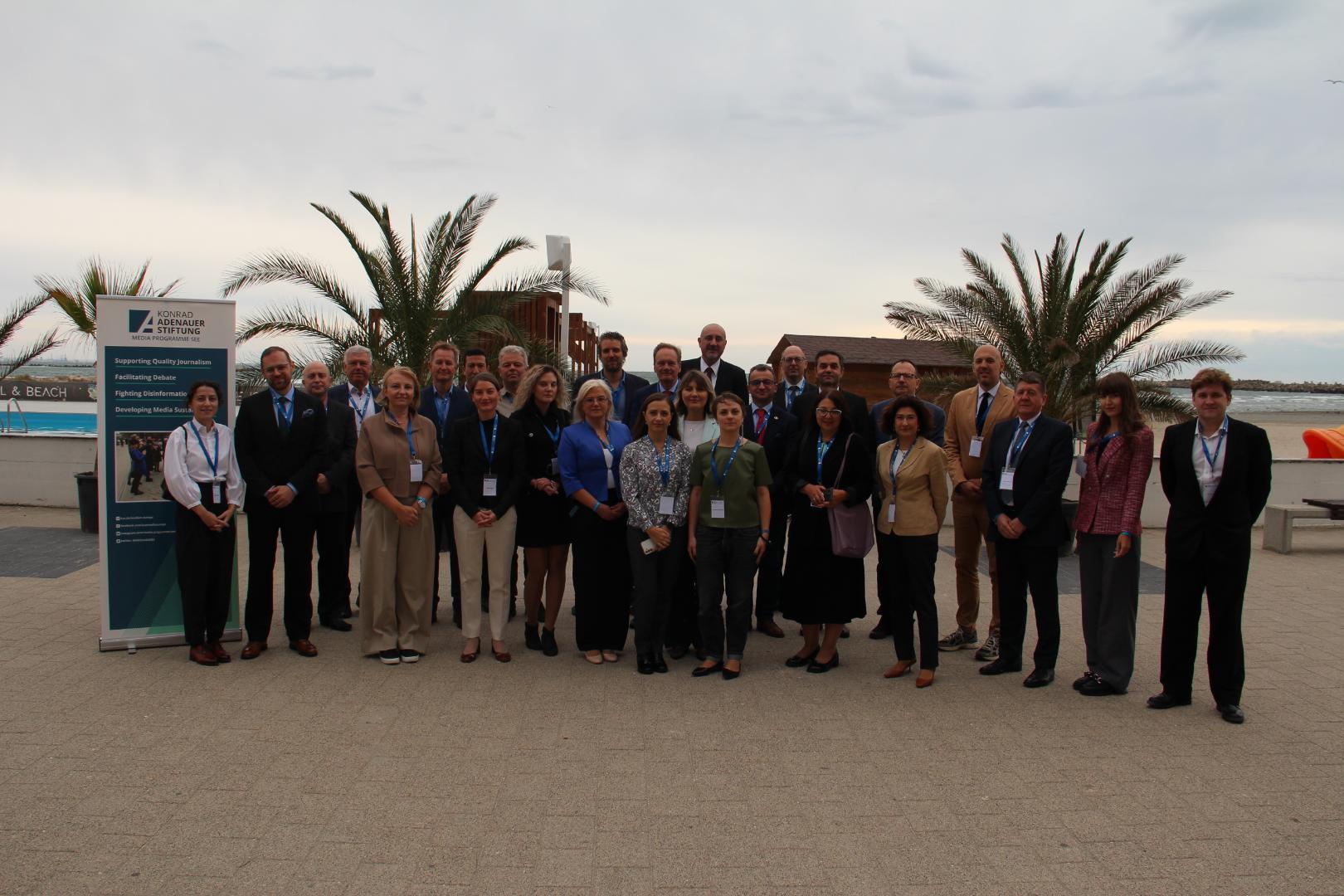
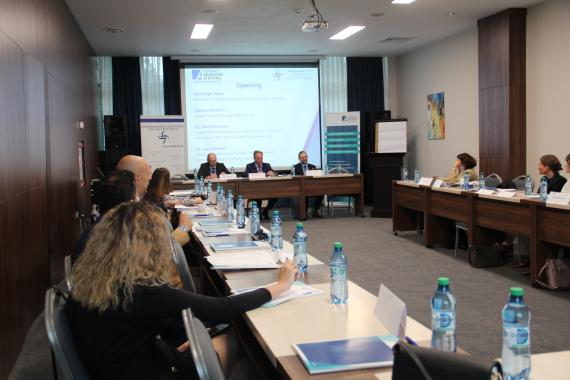
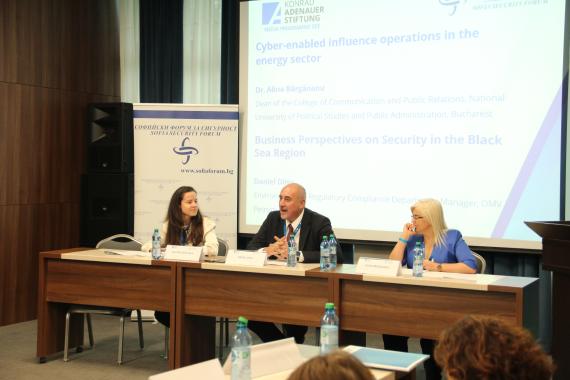
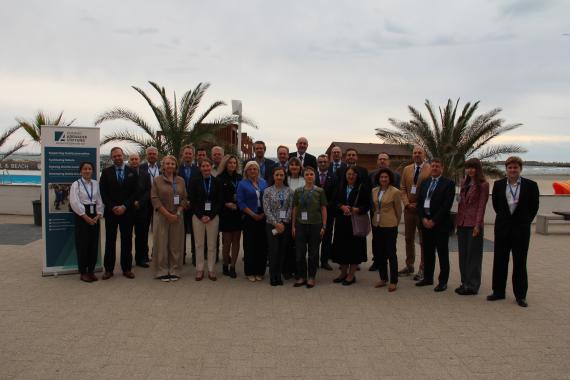
Our event "The Growing Importance of the Black Sea" took place from 28 September to 1 October 2025 in Constanta, Romania, bringing together journalists, academics and security experts.It provided an opportunity for representatives from eight different countries in the region to meet and discuss the Black Sea's growing strategic importance. Beyond that the event opened vital lines of communication between the media and the military - two communities that had not spoken so directly to each other before.
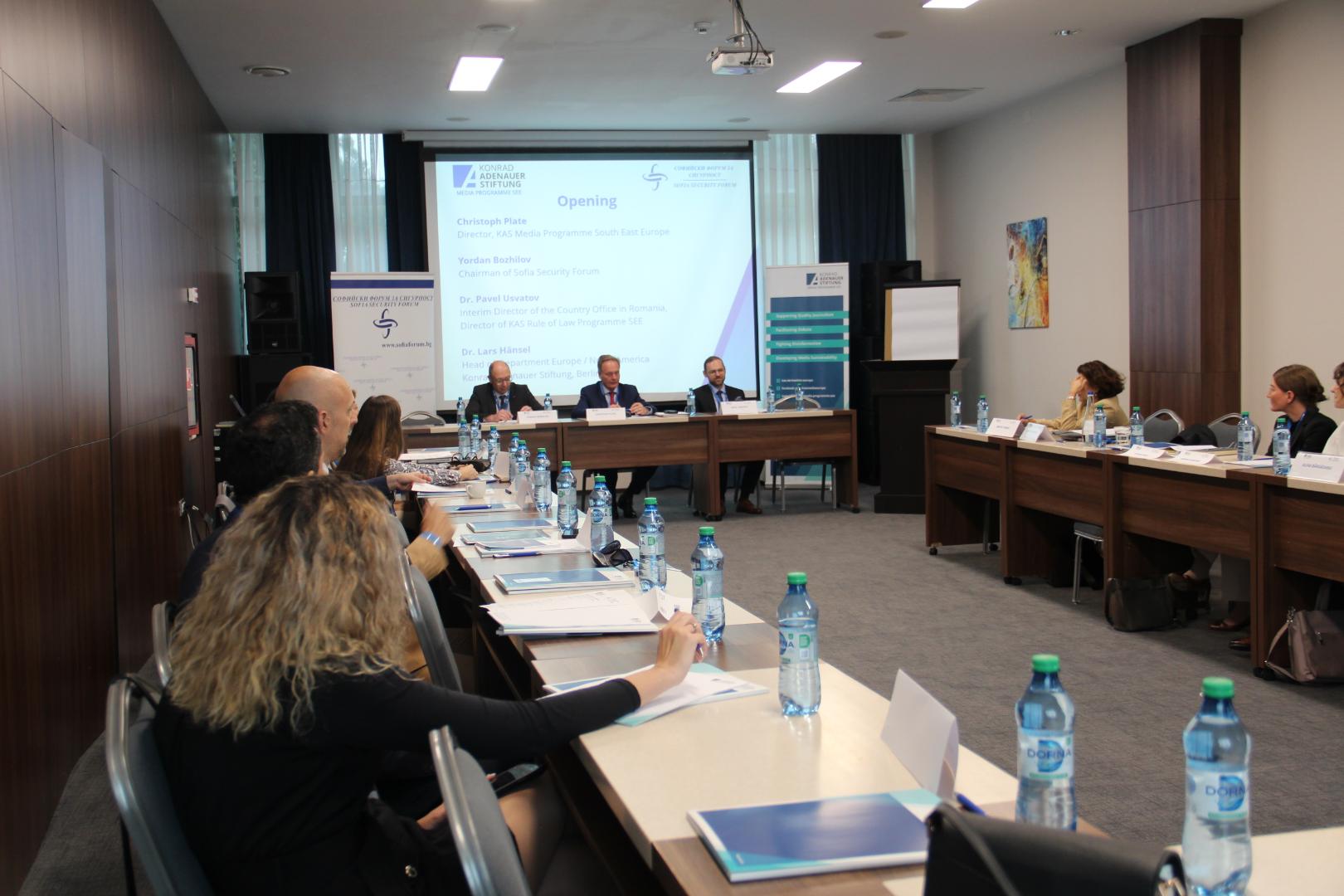
Opening the conference, Christoph Plate, Director of the KAS Media Programme South East Europe, together with Yordan Bozhilov, Chairman of the Sofia Security Forum, and Pavel Usvatov, Director of the Rule of Law Programme South East Europe of the Konrad-Adenauer-Stiftung, framed the conversation ahead. „For years, the relationship between the military and the media in the region has been marked by mistrust“, said Christoph Plate. „But the war of aggression unleashed by Vladimir Putin against Ukraine has proven to both sides that communication is now a matter of strategic importance.“
Over the following days, discussions moved across themes that revealed how deeply the Black Sea now shapes Europe’s security, economy, and political thinking.
The question of security and deterrence ran through the first round of panels. Simona Cojocaru, Director for Defense Policy at Romania’s Ministry of National Defence, described how the Black Sea has become central to NATO’s posture on its eastern flank. She was joined by Rear Admiral (Ret.) Iuri Covaleov, Commander Krasimir Angelov of the Bulgarian Naval Academy and Major-General (Ret.) Constantin Spinu, Romania’s former Defense Ministry spokesperson, each pointing to the growing complexity of deterrence in the region.
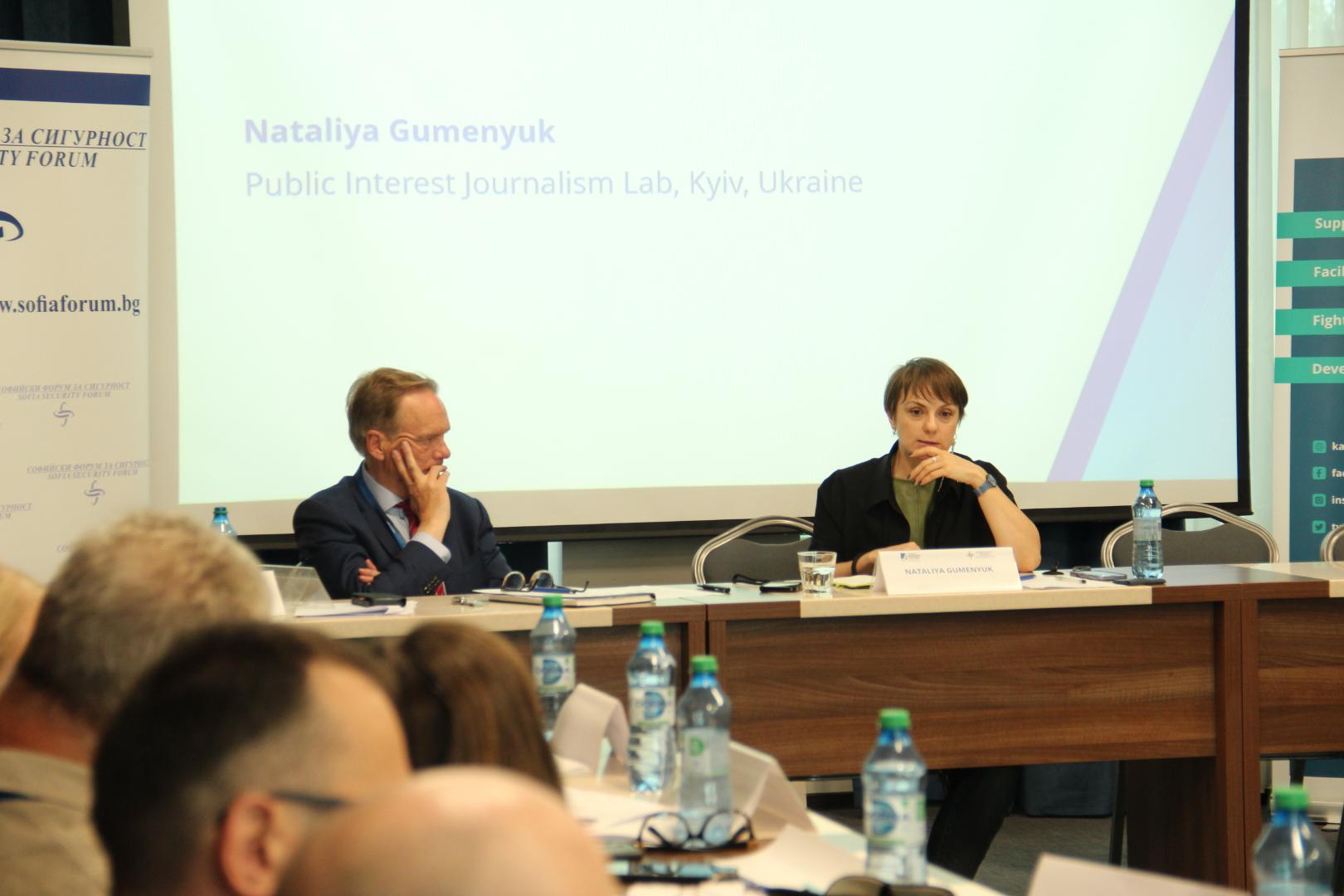
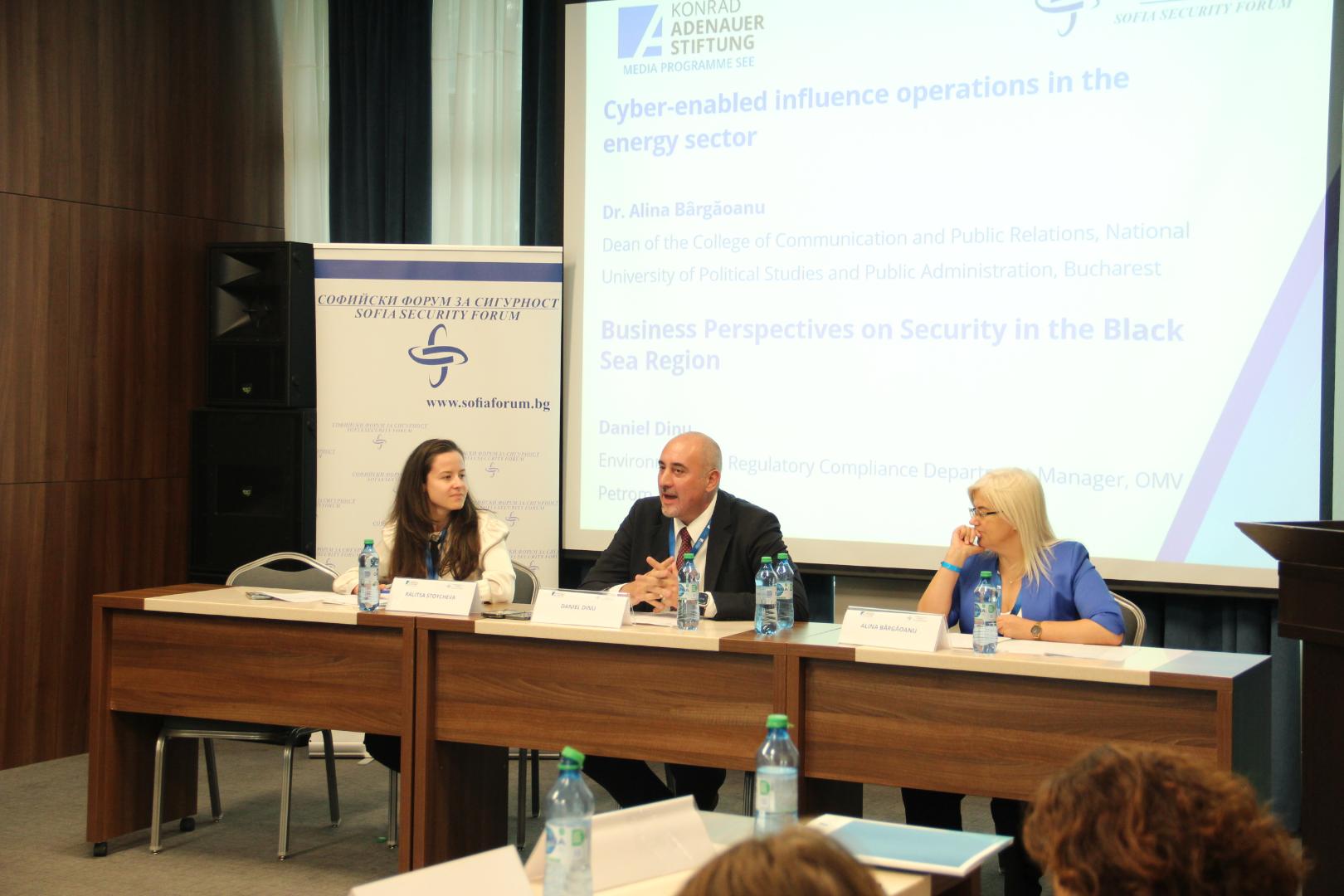
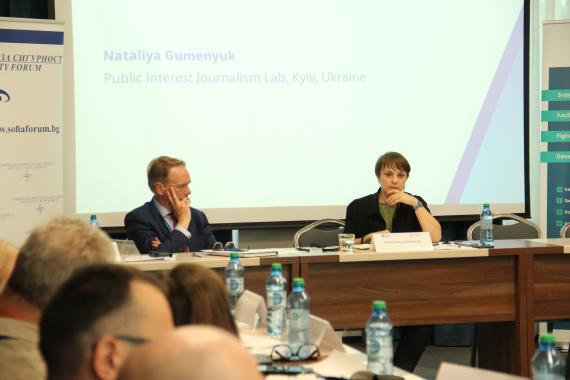
From there, the focus turned to technology. Nataliya Gumenyuk, founder of the Public Interest Journalism Lab in Kyiv, outlined how drones have transformed the battlefield in Ukraine and beyond, becoming an integral part of strategy and defense. On a different but related front, Alina Bârgăoanu, Dean of the College of Communication and Public Relations in Bucharest, examined the rise of cyber-enabled influence operations in the energy sector - reminder that digital manipulation and hybrid threats now affect everything - from infrastructure to public perception.
The conference also opened space for an economic perspective. Daniel Dinu, Environmental & Regulatory Compliance Manager at OMV Petrom, spoke about the business side of security, stressing how stability and regulatory predictability are crucial for investment and energy development in the region.
Beyond military and economic considerations, some of the discussions circled back to one common thread - disinformation. Journalists from the region like Irina Nedeva (Bulgarian National Radio and AEJ, Bulgaria), Barçin Yinanç (T24, Istanbul), Oleksandra Predushchenko (Suspline Mykolaiv), Dimitar Vatsov (HSS Foundation Sofia), Elena Marzac (PISA, Chisinau), and Daniel Sunter (Balkan Security Network, Belgrade), shared their experiences of reporting in environments where information is weaponized and facts are often contested. Their exchanges showed how regional cooperation among media professionals has become essential to counter false narratives.
A series of brief interventions added further depth and diversity to the debate. Kornely Kakachia, from the Georgian Institute of Politics, presented Georgia’s Black Sea Security Agenda, focusing on the country’s political, media, and economic priorities. Metin Omer, from the Institute for Black Sea Studies at the University of Constanta, explored the topic “Minorities, Crimea and Romanian-Turkish Relations.” Vladimir Zlatarsky, representing the KAS Media Programme South East Europe, reflected on “The significance of the Black Sea during the Cold War” - a reminder that today’s tensions echo long-standing historical conflicts.
The programme also looked at the political and strategic dynamics shaping the wider region. Ellinor Zeino, Director of KAS Turkiye, and Leonard Schulz, Security Expert at Table Media (Berlin), explored Turkiye’s role and ambitions in the Black Sea.
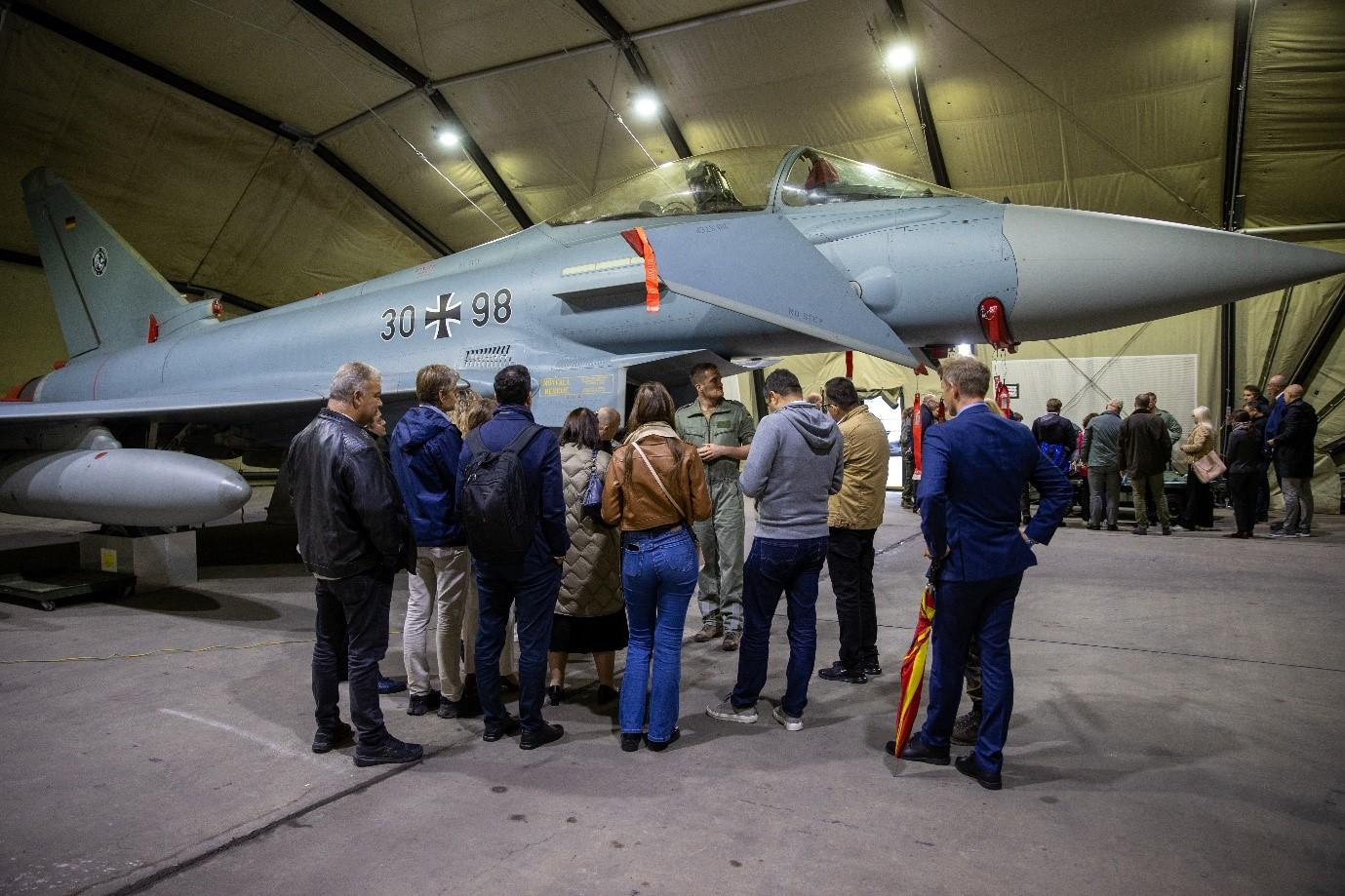
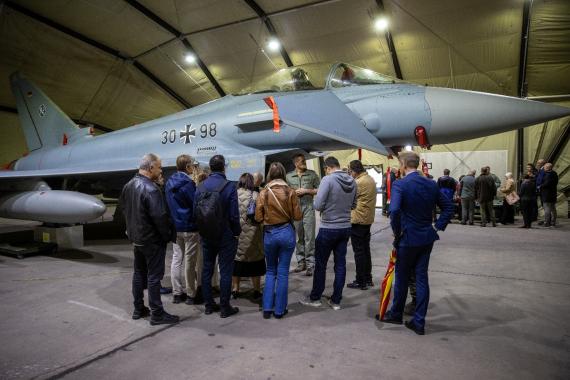
One of the highlights of the conference was a visit to the Mihail Kogălniceanu Air Base, one of NATO’s most important installations on the Black Sea. Standing on the runway as fighter jets cut across the sky, participants saw how Romania’s role in regional defense has grown in a reminder that this coastline is now a key point in Europe’s strategic map.