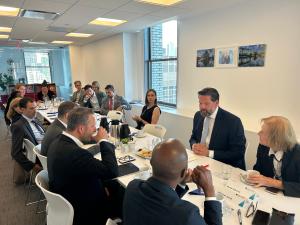
The discussion highlighted the following takeaways:
- Overall progress on the SDGs reveals a mixed picture – only 35% of the SDG targets are on track with 5 years remaining. This trend puts multilateralism at stake, and it must be defended given its importance for small and medium sized states in particular. Europe must renew its commitment to the Goals and act as a bridge builder to strengthen political backing for the SDGs. Germany also plays a special role in driving sustainability across energy, agriculture, and technology sectors.
- Parliaments act as bridge builders between constituents and the UN. They are key to ensuring accountability, representation and a whole of government approach achieve the SDGs with less resources. More must be done to enhance parliamentarian engagement in international fora, build capacities and support legislators with implementation of multilateral agreements.
- The best development cooperation is economic ties. Trade, rather aid, will be key for the future of the SDGs. Looking ahead, the UN should prioritize bread-and-butter issues such as poverty, health, and employment as key social issues. By delivering on basic issues, trust can be rekindled in the UN.
- In a post-aid development paradigm, how do we drive forward the SDGs? A new phase of economic growth driven by education and advances in science and technology, as well as multistakeholder collaboration with the private sector is needed. The European Union (EU) Global gateway provides a holistic approach to development as a positive example.