





The Solomon Islands 17 April election was the 12th since independence in 1978. This was the first ever election in which the entire outgoing cabinet contested unified as a single party: the Ownership, Unity and Responsibility (OUR) Party, led by four-time Prime Minister Manasseh Sogavare.
The outcome was not as expected either by the outgoing government itself, or by diplomats and media commentators in Australia and New Zealand. Sogavare, and the OUR Party, failed to secure a legislative majority, although the setback was not so large as to prevent that party reconfiguring itself under new leadership and reassuming office. More than half of the outgoing ministers and other OUR incumbents lost their seats and none of that party’s newer candidates were successful. Nevertheless, OUR remained the largest party, with 15 seats, while former opposition leader Matthew Wale’s Solomon Islands Democratic Party (SIDP) obtained only eleven MPs and Peter Kenilorea’s United Party secured six. Ahead of the post-election contest for the prime ministerial portfolio, Sogavare stepped aside as the OUR Party candidate. Buoyed by the support of independents and smaller parties, the previous foreign minister Jeremiah Manele became Prime Minister with 31 votes as compared to Matthew Wale’s 18 (one MP was absent).
About the Author
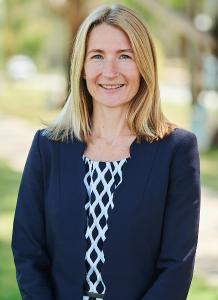
Prof. Jon Fraenkel
Jon Fraenkel is a Professor in Comparative Politics in the School of History, Philosophy, Political Science and International Relations at Victoria University of Wellington. He formerly worked at the Australian National University (2007-12) and the University of the South Pacific in Fiji (1995-2007). He is the author of The Manipulation of Custom; from uprising to intervention in the Solomon Islands and co-editor of The 2006 Military Takeover in Fiji; A coup to end all coups? He is the Pacific Islands correspondent for The Economist.