Gabriel Sjöblom-Fodor (GSF) is a researcher who specializes in the study of religious community work in the countering of violent extremism and extremist narratives, and how this work impacts national security. His focus is on deradicalization and prevention of violence using theological and psychological counseling, as well as the specific politico-religious and social roots of modern violent extremism. He has a background in journalism and in politics, and has also previously consulted political parties on the topic of countering extremism in Sweden, such as the Center Party and Christian Democrat Party. Gabriel has also consulted and assisted in several research projects on the topics of religious extremism, Salafism and radicalization. His work is informed by interviewing religious leaders and actors who witnessed close-up the call to violent extremism during the rise and peak of the ISIS “Caliphate” and were able to witness first-hand these processes and engage with radicalized individuals, recruiters and FTFs. This way, a particular strength of Gabriel’s work is to shed light on how various phenomena and processes are lived and experienced on a grassroots level among affected populations, communities or groups.
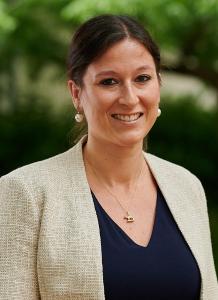
He is interviewed for this Paper by Katja Theodorakis (KT), Head of the Counterterrorism Program at the Australian Strategic Policy Institute (ASPI). Before joining ASPI, Katja was Senior Program Coordinator for Research and Analysis (Foreign/Security Policy) at KAS’ Regional Program Australia and the Pacific where she coordinated a portfolio of terrorism/extremism, European defence/security matters, cybersecurity and the wider strategic relations in the Indo-Pacific. Katja has previously lived in the Middle East, where she was engaged in educational projects, and NGO work in Syria during the early years of Bashar al-Assad’s presidency. She has also taught and tutored on Middle East politics, Islam and International Terrorism at the Australian National University.
Additional questions are addressed to Gabriel by the Director of KAS Regional Program Australia and the Pacific, Bertil Wenger (BW), who is particularly interested in how the issues raised by Gabriel’s research compare to developments in Germany, and what could be done to counter those challenges.