



September 15, 2020 was a historic day: The foreign ministers of Bahrain and the United Arab Emirates (UAE), Rashid Al-Zayani and Al Nahyan, together with Prime Minister Netanyahu and U.S. President Trump, signed the Abraham Accords. Bahrain and the UAE officially recognized Israel and established diplomatic relations with it. Morocco followed in December 2020, and Sudan in January 2021. Recognition of Israel enabled trade, exchange, and cooperation between Israel and the Arab countries. This recognition was not tied to a solution of the Middle East conflict and is considered Israel’s greatest regional achievement of the past decade.
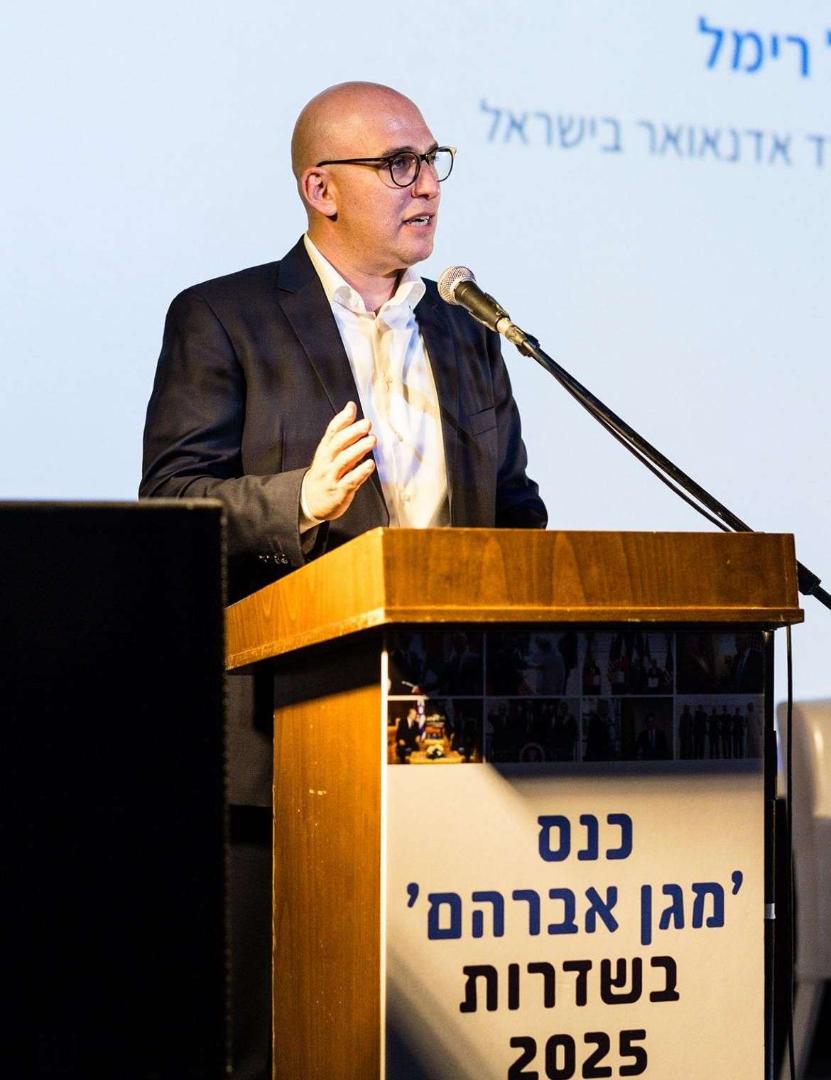
Today, five years later, the Konrad Adenauer Foundation Israel and the Coalition for Regional Security organized the “Abraham Shields” Conference in the southern city of Sderot. The aim was to take stock: How has the region changed since the signing of the Abraham Accords?
Through a range of formats, the Abraham Accords were analyzed in terms of achievements and challenges in the context of the region’s complex environment. Following the opening of the conference by Dr. Michael Rimmel, head of the Konrad Adenauer Foundation in Israel, who highlighted the role of the international community—and especially Germany—in stabilizing the region in the future, the mayor of Sderot, Alon Davidi, reported on the impact of the agreements at the municipal level. As someone leading a city on the border with the Gaza Strip that has been under fire for many years, he emphasized the importance of conducting dialogue not only at the national level but also including local leadership. He highlighted the significance of shared interests and mutual recognition of partners’ security needs as the basis for regional agreements.
Representatives of the Coalition for Regional Security, Lianne Pollak-David and Gen. (res.) Udi Dekel, reflected on Israeli society. A public opinion survey they conducted shows that a stable majority of Israelis support the Abraham Accords and their expansion. They stressed the central question for Israel: Who will lead the Middle East in the future? The moderate camp, of which Israel can be part, or the extremist forces with which Israel must always contend.
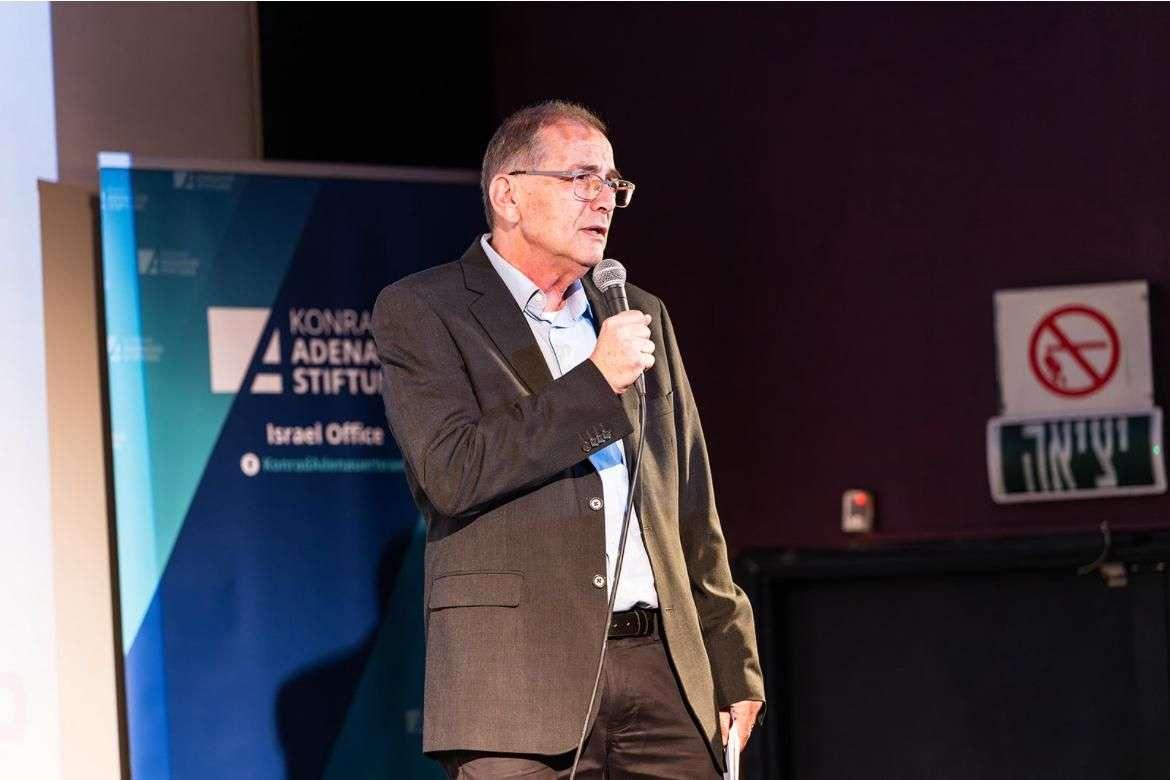
Meir Ben-Shabbat, who served as Israel’s National Security Advisor during the signing of the Abraham Accords, explained how the agreements came about, what obstacles existed, and what role the U.S. under President Trump played. When asked about the future of relations and the expansion of the accords, he said that the will is still there, but the timing is unfavorable.
The first panel of the evening, consisting of Nira Shpak, Avi Kalo, MK Sharon Nir, and Zvika Haimovic, focused on geopolitical changes and the regional opportunities that the Abraham Accords created for Israel.
The second panel, consisting of Avi Ben Assayag, Ellinor Behar, and Gigi Levi, analyzed the economic dimension and discussed how trade and investment have changed since the Abraham Accords.
Afterwards, former Israeli ambassador to the UAE, Amir Hayek, described his time there following the Abraham Accords, how he was received, and which issues were relevant in Abu Dhabi.
The third panel of the evening, consisting of Ahmed Alkhuzaie, Marc Sievers, Einat Levi, and Dan Feferman, discussed the perspectives of the Abraham Accords countries on the future of the agreements, on Israel, and on developments in Gaza. The participants agreed that a deep and patient process, along with a smarter diplomatic strategy, is required.
The evening concluded with the fourth panel, consisting of Tal Ohana, Ofir Tubul, Lior Zimche, and Yahaloma Zchut. This panel discussed the cultural dimension of the Abraham Accords and the role that exchange has played over the past five years in shaping culture in the region.
The various discussions made it clear that the existing problems are too complex to be resolved in a single evening. Nevertheless, the event was marked by great optimism. Despite October 7 and the war in Gaza, all participants agreed that the Abraham Accords are a milestone in the region’s history, contribute to peace and prosperity, and must be preserved and expanded after the war in Gaza.