Details
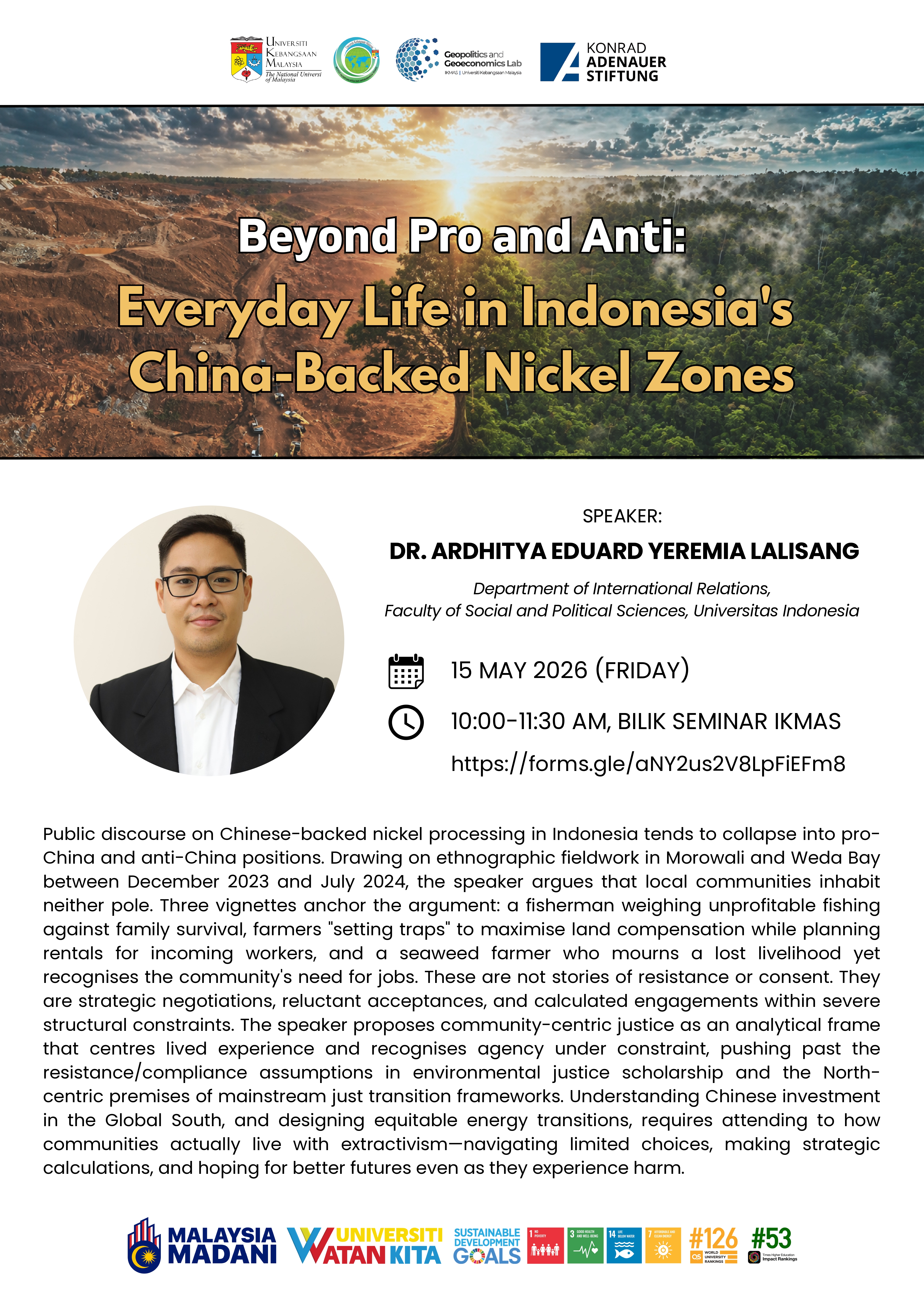
Public discourse on Chinese-backed nickel processing in Indonesia tends to collapse into pro China and anti-China positions. Drawing on ethnographic fieldwork in Morowali and Weda Bay between December 2023 and July 2024, the speaker argues that local communities inhabit neither pole. Three vignettes anchor the argument: a fisherman weighing unprofitable fishing against family survival, farmers "setting traps" to maximise land compensation while planning rentals for incoming workers, and a seaweed farmer who mourns a lost livelihood yet recognises the community's need for jobs. These are not stories of resistance or consent. They are strategic negotiations, reluctant acceptances, and calculated engagements within severe structural constraints. The speaker proposes community-centric justice as an analytical frame that centres lived experience and recognises agency under constraint, pushing past the resistance/compliance assumptions in environmental justice scholarship and the North centric premises of mainstream just transition frameworks. Understanding Chinese investment in the Global South, and designing equitable energy transitions, requires attending to how communities actually live with extractivism—navigating limited choices, making strategic calculations, and hoping for better futures even as they experience harm.Download the agenda: IKMAS_GeoGeoLab Talk #42026_page-0001.jpg