



Asset Publisher

Country Reports

Short political reports of the KAS offices abroad

Publications

IMAGO / Xinhua

7th AU-EU Summit

A fresh start for a partnership on equal terms

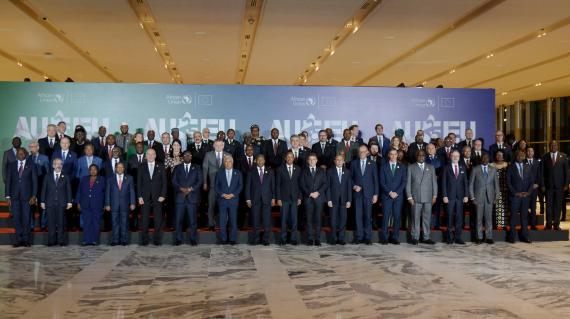
The 7th Joint Summit of the African Union (AU) and the European Union (EU) on November 24-25 in the Angolan capital Luanda took place under complex circumstances: On the one hand, the summit marked the 25th anniversary of the strategic partnership between the EU and the AU. On the other hand, the summit took place at a time when relations between the two continents are not free of tensions. In a global environment in which political and economic power is shifting worldwide and fundamental rules of the world order are being questioned and undermined, the summit offered a window of opportunity to restart relations in a way that does justice to the roles and expectations of both sides. Overall, the summit succeeded in sending out initial positive signals for such a fresh start, the sustainability of which will of course depend on the implementation of the promises made. Existing differences and dilemmas – including on the issues of migration and dealing with democratic backsliding – will not disappear overnight, however.

IMAGO / Anadolu Agency

Global Gateway Summit - New impetus for pragmatic partnerships

The second summit of the EU's Global Gateway infrastructure initiative courts partner countries and the private sector

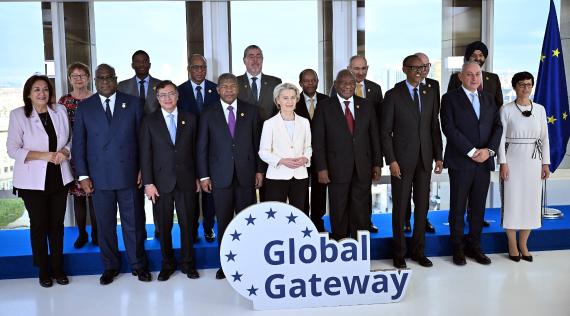
The second Global Gateway Forum on 9/10 October provided the EU with an opportunity to publicly promote the infrastructure initiative “Global Gateway”, launched in December 2021, announce initial successes and unveil several new projects with various partner countries around the world (including in the areas of infrastructure, renewable energies and electricity grids). At the same time, the Commission wanted to address some of the criticisms that had been voiced since the initiative's inception, including through a demonstratively strong presence of the private sector, which had been less involved at the start of the initiative. Despite the initiative's bumpy start, the high-level participants from numerous third countries showed great interest in closer cooperation with the EU within the framework of the initiative. Other partner countries, however, were irritated by the rules for participation.

SmarterPix / symbiot

More flexibility, less control?

Reorientation of the financial instrument for the EU's future partnership policy

On July 16, the European Commission presented a first draft of the next Multiannual Financial Framework (MFF), the seven-year EU budget for 2028-2034. The initial proposal allocates €1.98 trillion for the next seven years. The package also includes a first draft regulation for the so-called “Global Europe Instrument” : this is to become the central financial instrument in the new MFF for shaping the EU's relations with its global partners. In many respects, the regulation represents the paradigm shift in European development policy that has been gradually taking place over the past few years towards a partnership policy that places greater emphasis on the EU's own interests. At the same time, the first draft also reflects the awareness that the EU finds itself in a different geopolitical environment than it did at the beginning of the current MFF (2021). Accordingly, the draft contains numerous innovations that attempt to take these circumstances into account. Some of these are nevertheless controversial and are likely to meet with opposition in some cases, particularly regarding the European Parliament's (EP) and Member States' limited powers of oversight. In any case, the negotiations between the Commission, the EP, and the Member States on the MFF, which are expected to last another year and a half, are likely to result in a number of fundamental changes that will also affect the Global Europe Instrument.

IMAGO

25th EU-China Summit in Beijing

A Sobering Anniversary

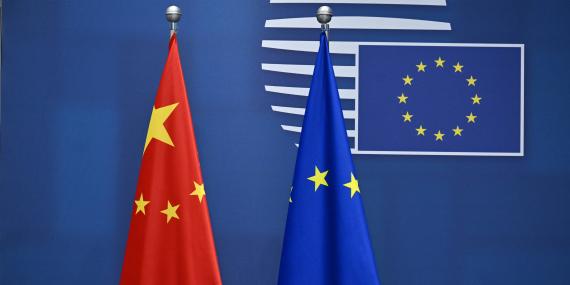
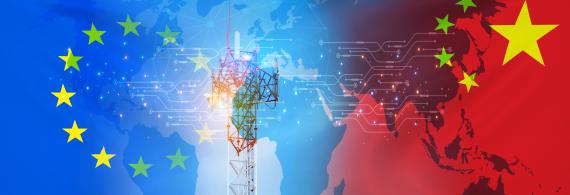
The 25th EU-China Summit on 24 July in Beijing took place under difficult circum-stances: although it marked the 50th anniversary of diplomatic relations between the EU and China, there was little sign of enthusiasm in the run-up to the event. The dif-ferences are too great – both in geopolitical terms and in economic and trade policy. As generally expected, no major breakthroughs were achieved on the numerous con-tentious issues. There were hardly any signs of a readjustment of relations, as desired by the EU. Nevertheless, both sides adopted a joint statement on climate issues and agreed to find a solution to the impact of Chinese export controls on rare earths.

IMAGO / photothek

Third EU-AU ministerial meeting in Brussels

New impetus for the anniversary?

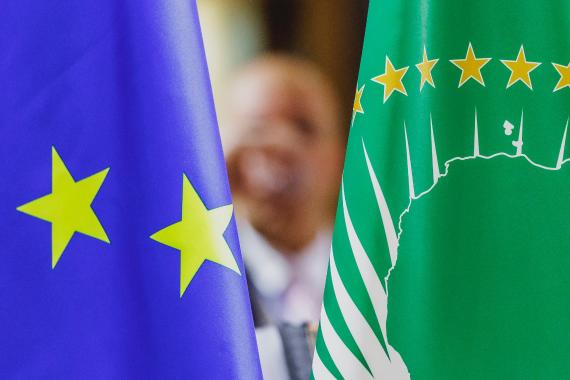
On May 21, the foreign ministers of the European Union and the African Union met for the third time in Brussels. The aim of the meeting was to take stock of the progress made since the sixth EU-AU summit in February 2022 [1] . Both sides also wanted to explore how the partnership can be further deepened in the face of global challenges. The adopted declaration gives an idea of the potential for cooperation. However, it cannot hide existing differences on key issues such as migration. To ensure that cooperation is not limited to solemn declarations and ambitious announcements at summit meetings, it was agreed to set up a monitoring mechanism.

IMAGO / Xinhua

A renewed dynamic in Central Asia-EU relations

Samarkand Summit

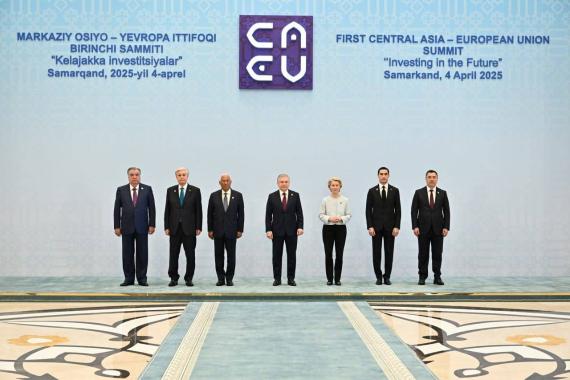
The first joint summit of the EU leadership with the heads of state and government from five Central Asian countries on 3 and 4 April in Samarkand (Uzbekistan) sent a strong political signal to enhance relations between both sides. The high-level meeting was the culmination of increased efforts by the EU in the past years and months to re-engage with the region. The joint declaration is an example of the more pragmatic and (primarily economic) interest-based approach of the EU in its partnership policy following the start of the new European Commission end of 2024.

Lessons from China’s Belt and Road Initiative: Strategic Pathways for the EU’s Global Gateway

by Jacob Mardell

Over a decade since its launch, China’s Belt and Road Initiative (BRI) remains widely misunderstood. This report cuts through the noise: the BRI is less a grand strategy, more a decentralised, narrative-driven vehicle for advancing Chinese interests. The report asks what the EU can learn—and what it should avoid—as it shapes its own Global Gateway.

IMAGO / Le Pictorium

The EU and its global partners in a new legislative period

Leveraging its power or struggling to deliver?

When it comes to the relations with its global partners, the re-elected Commission President Ursula von der Leyen has formulated high ambitions: the goal is to “leverage” the EU’s “power and partnerships”. When in 2019 she dubbed her first commission as a “geopolitical” one, this appeared as a bold and – for some – controversial choice of words. With two major conflicts in the EU’s immediate neighborhood and an increasingly fragile global environment, strengthening ties with global partners seems no longer to be a choice, but a vital necessity of the EU. While the EU is only at the very beginning of the new legislative period, policy guidelines, hearings, interviews and not least the new setup of Commission, Parliament and Council allow an idea about the future priorities and strategies from Brussels towards the world. While a complete turnaround of the EU’s strategy with its global partners seems unlikely, some shifts are to be expected: more (interest-driven) pragmatism, more prioritization and an attempt to forge more equal partnerships.

Geopolitics and Connectivity Take the Center Stage at the First EU-GCC Summit

The first ever EU-GCC Summit on 16 October 2024 served as a pivotal moment for both the European Union and the Gulf Cooperation Council (GCC), emphasiz-ing mutual interests in economic growth, security, and energy cooperation. Two areas dominated the discussion: on the one hand finding common ground on pragmatic cooperation, particularly in the field of energy and connectivity, on the other hand finding common language on a number of current regional conflicts. While the number of concrete deliverables of the meeting has been limited (which was to be expected) and much work still lies ahead, the summit as such is remarkable signal. Both sides decided to meet every two years at heads of state level, the next meeting is to take place in Saudi-Arabia in 2026.

Fostering Security: NATO’s Reflection on the Southern Neighbourhood

In its 75th anniversary year, NATO is gearing up for its next Summit in Washington D.C this July, gathering leaders from all 32 Allies alongside presumably a large contingent of dignitaries from partner countries. The agenda promises a diverse array of discussions, with an expected significant focus on Russia’s aggressive war in Ukraine. However, beyond these pressing matters, other crucial issues will also be addressed. At the previous Vilnius Summit, held last summer, NATO Allies initiated a process to launch a comprehensive reflection process of the Alliance's relationship with the ‘Southern Neighbourhood.’ This reflection process aims to produce tangible proposals in time for the upcoming Summit. The reflection pro-cess is partly consistent of an external report written by experts that have been appointed by the Secretary General. However, this report is merely a part of the larger reflection process taking place internally.

Asset Publisher

About this series

The Konrad-Adenauer-Stiftung is a political foundation. Our offices abroad are in charge of over 200 projects in more than 120 countries. The country reports offer current analyses, exclusive evaluations, background information and forecasts - provided by our international staff.

Order details

Editor

Konrad-Adenauer-Stiftung e.V.