




Asset Publisher

Publications

Asset Publisher

IMAGO / Xinhua

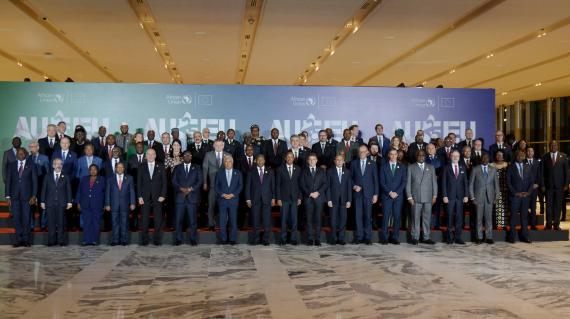
7th AU-EU Summit

A fresh start for a partnership on equal terms

The 7th Joint Summit of the African Union (AU) and the European Union (EU) on November 24-25 in the Angolan capital Luanda took place under complex circumstances: On the one hand, the summit marked the 25th anniversary of the strategic partnership between the EU and the AU. On the other hand, the summit took place at a time when relations between the two continents are not free of tensions. In a global environment in which political and economic power is shifting worldwide and fundamental rules of the world order are being questioned and undermined, the summit offered a window of opportunity to restart relations in a way that does justice to the roles and expectations of both sides. Overall, the summit succeeded in sending out initial positive signals for such a fresh start, the sustainability of which will of course depend on the implementation of the promises made. Existing differences and dilemmas – including on the issues of migration and dealing with democratic backsliding – will not disappear overnight, however.

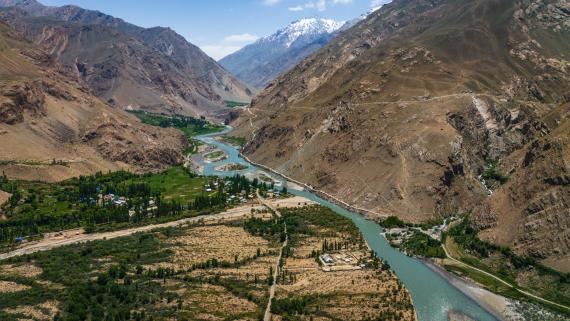
The Nexus Between Climate Change, Labour Migration, And Radicalisation Among Tajik Labour Migrants

RUSI Project Report

This report examines the interplay between climate change, labour migration, and radicalisation among Tajik labour migrants. As Tajikistan grapples with the dual pressures of environmental degradation and socio-economic challenges, understanding these dynamics has never been more critical.

IMAGO / Anadolu Agency

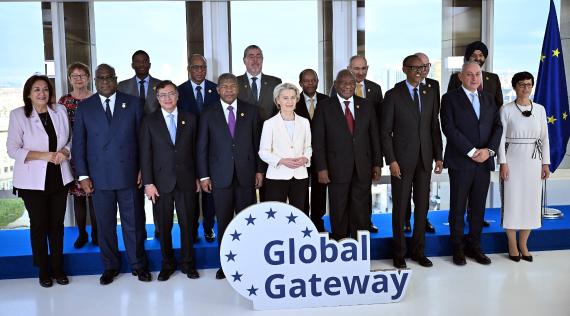
Global Gateway Summit - New impetus for pragmatic partnerships

The second summit of the EU's Global Gateway infrastructure initiative courts partner countries and the private sector

The second Global Gateway Forum on 9/10 October provided the EU with an opportunity to publicly promote the infrastructure initiative “Global Gateway”, launched in December 2021, announce initial successes and unveil several new projects with various partner countries around the world (including in the areas of infrastructure, renewable energies and electricity grids). At the same time, the Commission wanted to address some of the criticisms that had been voiced since the initiative's inception, including through a demonstratively strong presence of the private sector, which had been less involved at the start of the initiative. Despite the initiative's bumpy start, the high-level participants from numerous third countries showed great interest in closer cooperation with the EU within the framework of the initiative. Other partner countries, however, were irritated by the rules for participation.

SmarterPix / symbiot

More flexibility, less control?

Reorientation of the financial instrument for the EU's future partnership policy

On July 16, the European Commission presented a first draft of the next Multiannual Financial Framework (MFF), the seven-year EU budget for 2028-2034. The initial proposal allocates €1.98 trillion for the next seven years. The package also includes a first draft regulation for the so-called “Global Europe Instrument” : this is to become the central financial instrument in the new MFF for shaping the EU's relations with its global partners. In many respects, the regulation represents the paradigm shift in European development policy that has been gradually taking place over the past few years towards a partnership policy that places greater emphasis on the EU's own interests. At the same time, the first draft also reflects the awareness that the EU finds itself in a different geopolitical environment than it did at the beginning of the current MFF (2021). Accordingly, the draft contains numerous innovations that attempt to take these circumstances into account. Some of these are nevertheless controversial and are likely to meet with opposition in some cases, particularly regarding the European Parliament's (EP) and Member States' limited powers of oversight. In any case, the negotiations between the Commission, the EP, and the Member States on the MFF, which are expected to last another year and a half, are likely to result in a number of fundamental changes that will also affect the Global Europe Instrument.

Making Global Gateway Work: Reflections on the Impact so far and the Future of the Initiative Towards the Indo-Pacific

by Hildegard Bentele MEP, Dr. Zsuzsa Anna Ferenczy, Olimpia Kot, Marcin Jerzewski and Jacob Mardell

Launched in 2021, the EU’s Global Gateway aims to combine strategic ambition with sustainable partnerships worldwide. The initiative seeks to turn Europe’s financial and regulatory tools into instruments of global influence while adhering to principles of transparency and cooperation. This compendium examines its implementation, regional engagement, and lessons from global infrastructure initiatives to inform Europe’s strategic presence.

Less paperwork, greater presence. Why Global Gateway disappoints on the ground.

By Zsuzsa Anna Ferenczy

This study, written by Zsuzsa Anna Ferenczy and commissioned by the Multinational Development Policy Dialogue of the Konrad-Adenauer-Stiftung in Brussels, examines why the Global Gateway falls short on the ground in ASEAN countries. It looks more closely at case studies from Indonesia, Malaysia, and the Philippines.

Chasing Convergence: The EU's partnerships in the Indo-Pacific and implementation of the GG Initiative

Marcin Jerzewski and Olimpia Kot from the European Values Center for Security Policy Taiwan Office

This study examines the concept of Global Gateway and its implementation in Fiji and Vietnam, analyzing connectivity, development partnerships, and opportunities for EU engagement. It also explores Indo-Pacific convergence with key partners and provides targeted policy recommendations to enhance regional collaboration and strategic visibility.

IMAGO

25th EU-China Summit in Beijing

A Sobering Anniversary

The 25th EU-China Summit on 24 July in Beijing took place under difficult circum-stances: although it marked the 50th anniversary of diplomatic relations between the EU and China, there was little sign of enthusiasm in the run-up to the event. The dif-ferences are too great – both in geopolitical terms and in economic and trade policy. As generally expected, no major breakthroughs were achieved on the numerous con-tentious issues. There were hardly any signs of a readjustment of relations, as desired by the EU. Nevertheless, both sides adopted a joint statement on climate issues and agreed to find a solution to the impact of Chinese export controls on rare earths.

IMAGO / photothek

Third EU-AU ministerial meeting in Brussels

New impetus for the anniversary?

On May 21, the foreign ministers of the European Union and the African Union met for the third time in Brussels. The aim of the meeting was to take stock of the progress made since the sixth EU-AU summit in February 2022 [1] . Both sides also wanted to explore how the partnership can be further deepened in the face of global challenges. The adopted declaration gives an idea of the potential for cooperation. However, it cannot hide existing differences on key issues such as migration. To ensure that cooperation is not limited to solemn declarations and ambitious announcements at summit meetings, it was agreed to set up a monitoring mechanism.

IMAGO / Xinhua

A renewed dynamic in Central Asia-EU relations

Samarkand Summit

The first joint summit of the EU leadership with the heads of state and government from five Central Asian countries on 3 and 4 April in Samarkand (Uzbekistan) sent a strong political signal to enhance relations between both sides. The high-level meeting was the culmination of increased efforts by the EU in the past years and months to re-engage with the region. The joint declaration is an example of the more pragmatic and (primarily economic) interest-based approach of the EU in its partnership policy following the start of the new European Commission end of 2024.

Asset Publisher

Country Reports

Short political reports of the KAS offices abroad

The Konrad-Adenauer-Stiftung is a political foundation. Our offices abroad are in charge of over 200 projects in more than 120 countries. The country reports offer current analyses, exclusive evaluations, background information and forecasts - provided by our international staff.

Event Reports

The Konrad-Adenauer-Stiftung, its educational institutions, centres and foreign offices, offer several thousand events on various subjects each year. We provide up to date and exclusive reports on selected conferences, events and symposia at www.kas.de. In addition to a summary of the contents, you can also find additional material such as pictures, speeches, videos or audio clips.

European Union Climate and Energy

Prospects of Cooperation with (Re)emerging Powers

“European Union Climate and Energy” is a section with a series of reports and other publications designed to provide insight into the EU’s ambitions in the field of climate and energy policy development. Each publication in this series focuses on the EU’s global engagement in a clean transition or on how partner countries’ climate and energy ambitions relate to the EU. This series aims to provide a comprehensive understanding of the EU’s engagement strategies in the field of sustainable energy cooperation, climate change adaptation and mitigation as well as its partnership policies in the field of climate and energy.

Global Europe Illustrated

Spotlights on the EU´s engagement with the world

“Global Europe Illustrated” is a section with a series of published maps designed to provide an insight into the EU's foreign policy ambitions in various regions. Each thematic map in the series focuses on the EU's global engagement in the context of EU election observation missions, global gateway projects and bilateral and multilateral EU summits and ministerial meetings with participating partner countries. In addition, each map is accompanied by a brief political analysis that provides nuanced views on what the map says about the EU's foreign policy objectives in the respective region and how these efforts are perceived. This combination of visual representation and analytical commentary provides a comprehensive understanding of the EU's engagement strategies and their impact on regional political realities.

Asset Publisher