








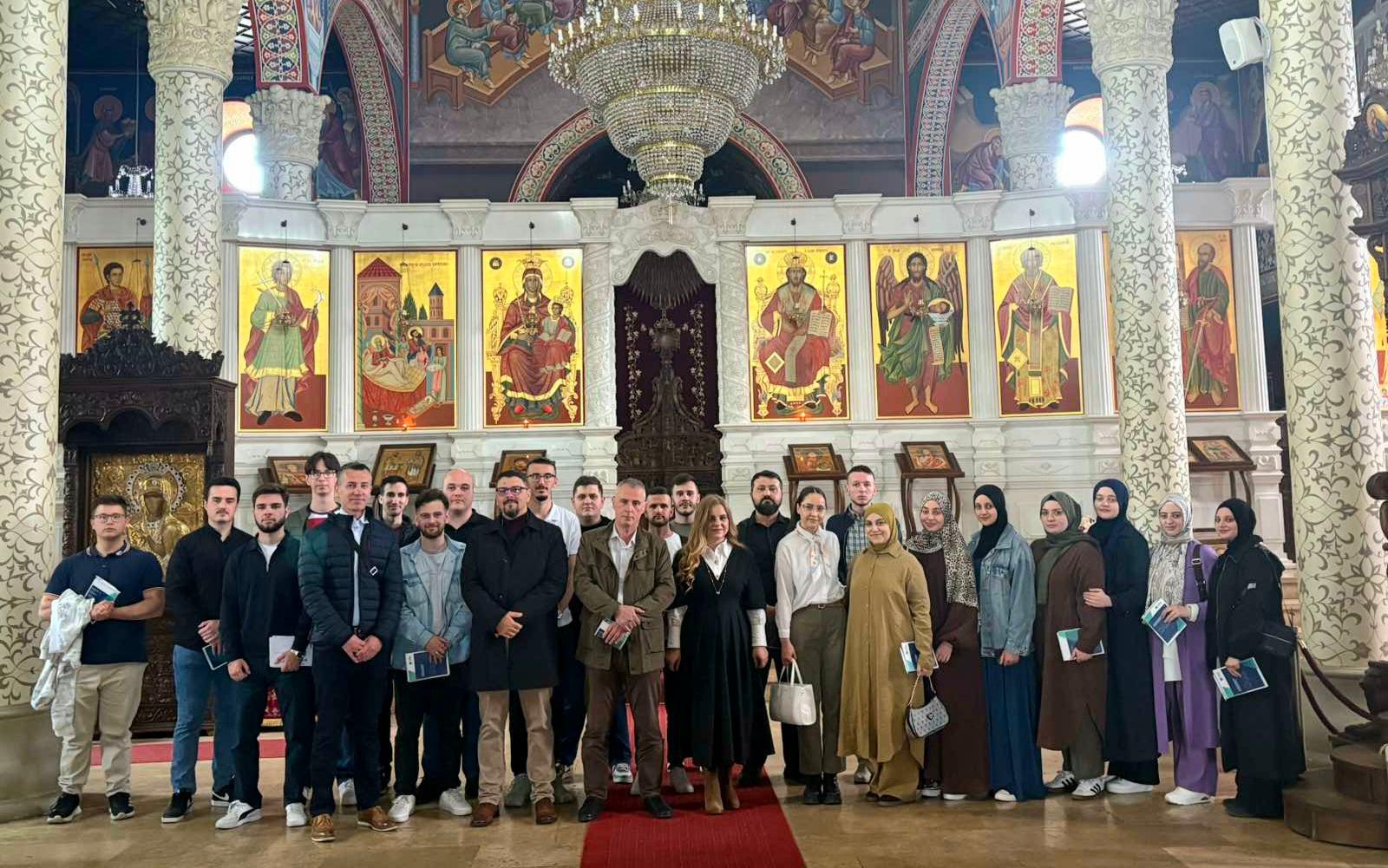
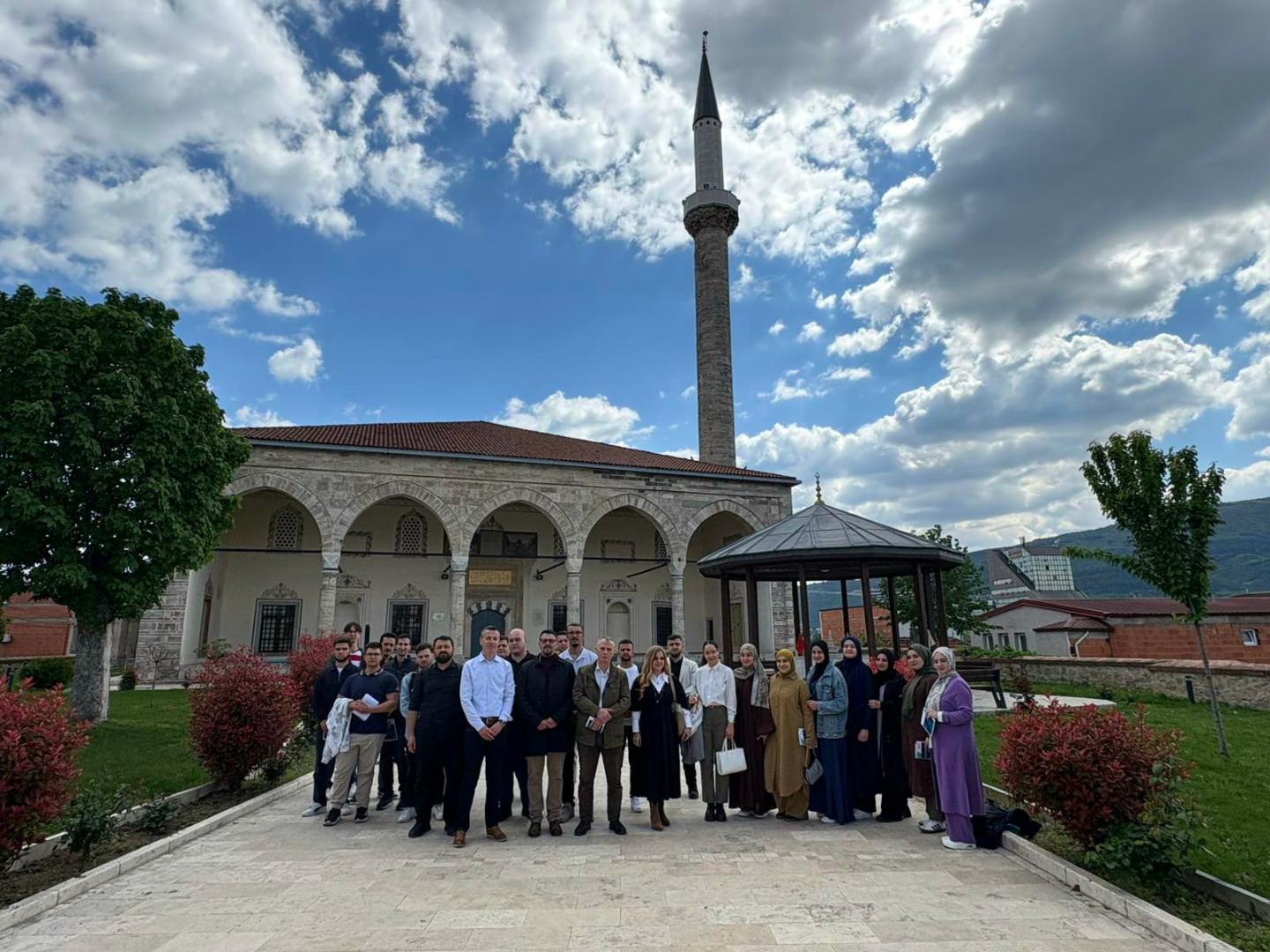
Students from the Faculty of Orthodox Theology “St. Clement of Ohrid” and the Faculty of Islamic Sciences participated in the study visit gaining firsthand insight into the spiritual, historical and cultural significance of the Orthodox Christian and Islamic religious traditions. These visits were not only informative but also served as a symbolic act of mutual respect and as an opportunity to open space for dialogue.
A key segment of the event was the joint discussion on the topic “The Role of the Theologian in the 21st Century: Challenges and Competencies,” which took place in an open atmosphere characterized by mutual respect. The discussion was led by Prof. Dr. Aneta Jovkovska and Prof. Dr. Muhamed Mustafi, whose academic and practical expertise made a significant contribution to the depth and quality of the discussion.
The conversation addressed issues related to contemporary societal challenges, the need for an active role of theologians in the public sphere as well as the importance of ethical values, communication and interreligious cooperation. Students had the opportunity to actively participate, ask questions and share their own reflections and experiences.
The event once again confirmed the importance of non-formal education as a powerful tool for connection, exchange of ideas and building mutual understanding. Through such activities, students not only expand their academic knowledge but also develop social and intercultural competencies essential for their future professional roles.
Particularly significant is the fact that the project “Interreligious Classroom” creates opportunity where young people from different religions can meet, overcome stereotypes and build relationships based on dialogue and cooperation. These experiences serve as a foundation for the long-term strengthening of interreligious dialogue and social cohesion in the country.
Through the realization of this study visit, the project “Interreligious Classroom” once again reaffirmed its mission to promote mutual understanding, respect and cooperation among young theologians. Such initiatives are especially important in a multiethnic and multireligious society like that of North Macedonia, where dialogue and mutual respect are key to a stable and inclusive future.
The project continues to serve as a platform for learning, connection and inspiration, with a clear vision of a society in which diversity is perceived as a strength rather than a barrier.