





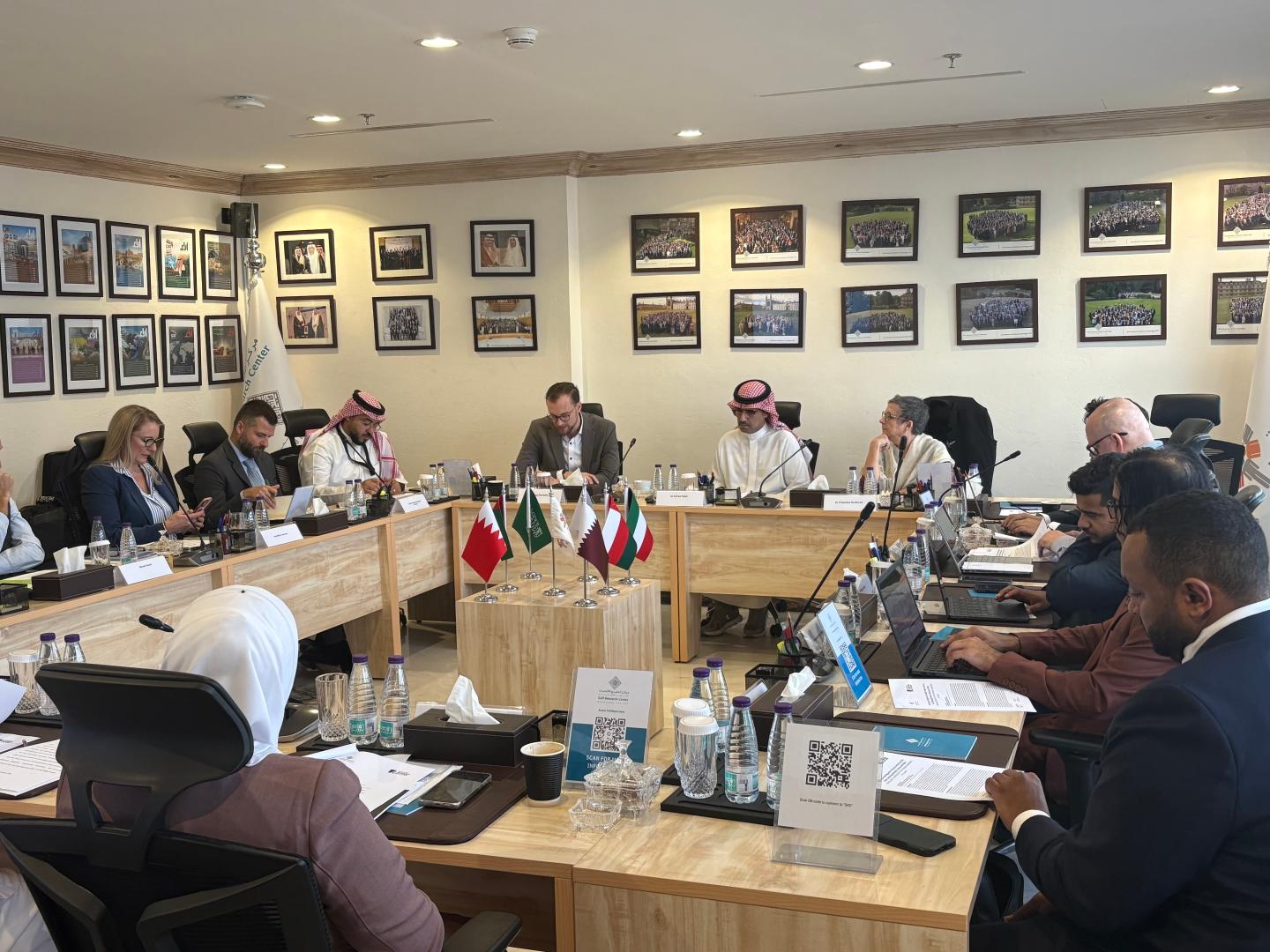
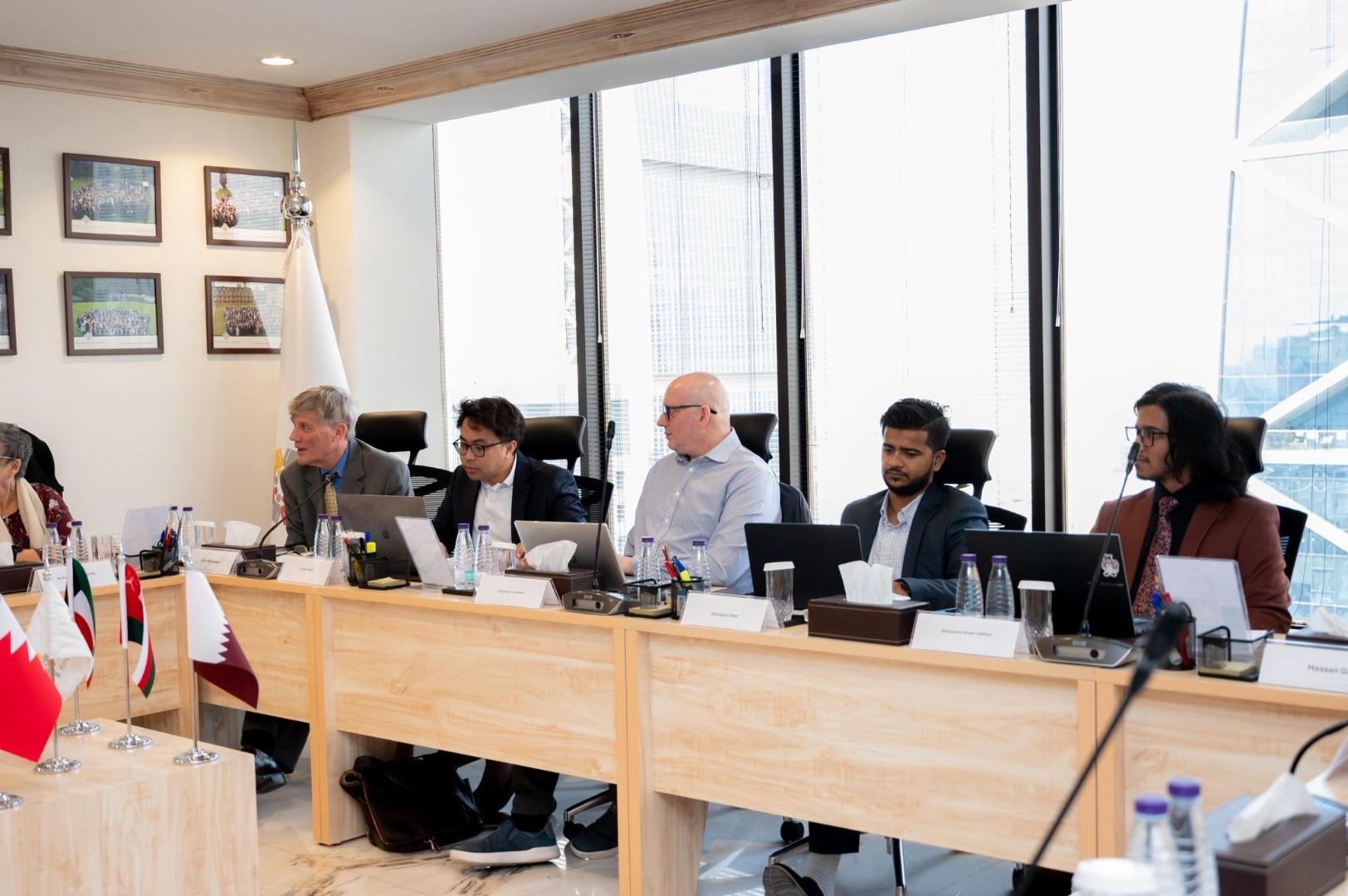
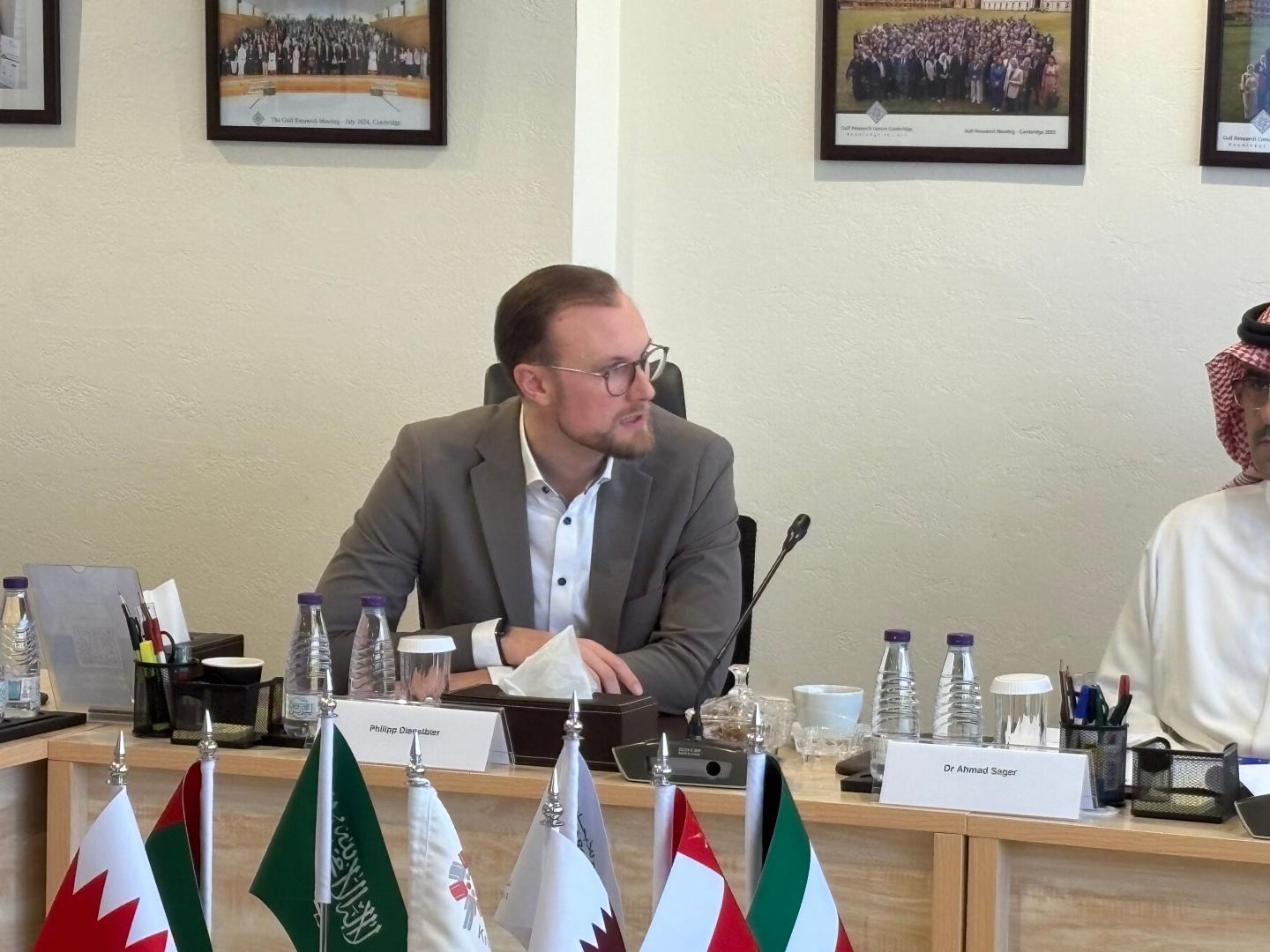
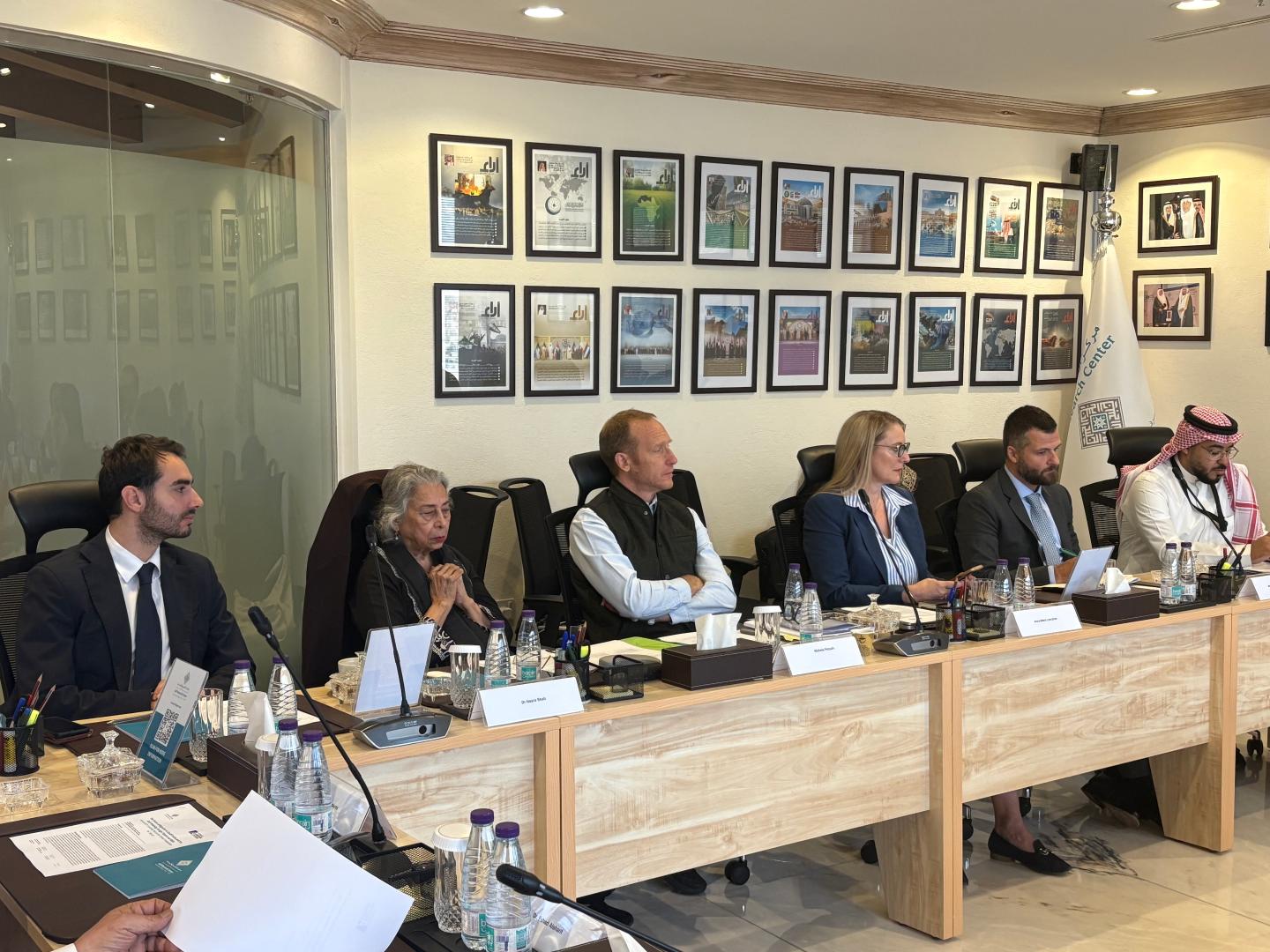
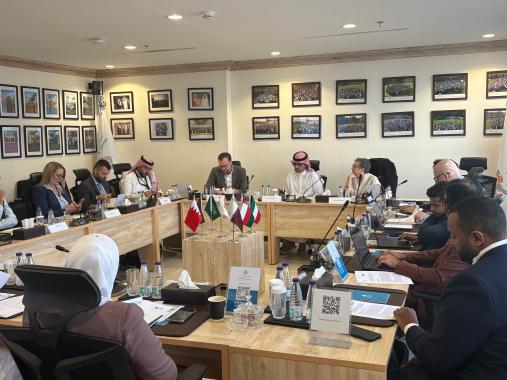
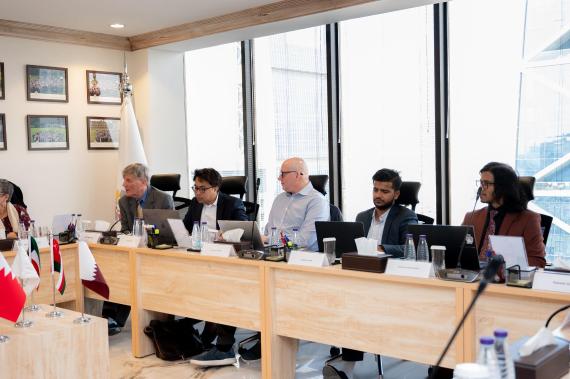
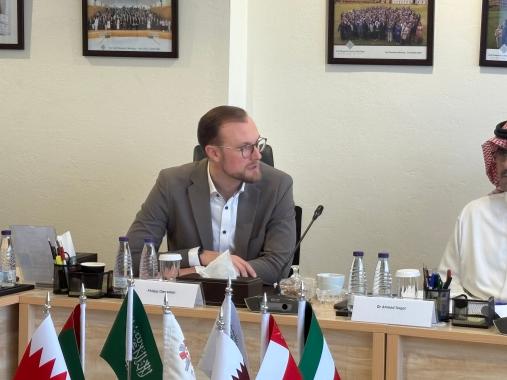
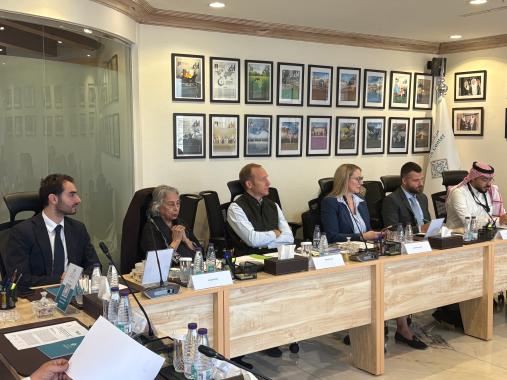
As Gulf economies pursue ambitious diversification agendas and expand knowledge-based sectors, attracting and retaining highly skilled international labour has become a strategic priority. Against this backdrop, experts gathered at the Gulf Research Center in Riyadh on 2 December 2025 to discuss emerging mobility patterns linking the Gulf with Europe and North America, with particular attention to the phenomenon of stepwise and return migration among highly skilled migrants.
The workshop formed part of the joint research project, “Highly Skilled Migration to the Gulf States: How do GCC Countries Fare in the Global Competition for Talent?”, conducted in cooperation with the Gulf Research Center (GRC)’s Gulf Labour Markets, Migration and Population (GLMM) programme. The meeting served as an opportunity for authors contributing to the project’s research to present and discuss their papers, examining the drivers of onward migration from the Gulf and the broader implications for talent retention across the region.
Drawing on policy reports, synthesis papers, and survey findings produced within the framework of the project, the discussions explored how highly skilled migrants navigate global labour markets and how their mobility decisions intersect with the Gulf states’ broader economic transformation strategies.
The Gulf as a Talent Hub but Not a Final Destination?
Across the workshop discussions and research findings presented, a recurring observation was that the Gulf remains an attractive destination for international professionals due to competitive salaries, safety, high-quality infrastructure, and dynamic labour markets. These advantages have allowed Gulf states to emerge as major migration hubs within the Global South and important participants in the global competition for talent.
However, many highly skilled migrants still view the region as a temporary stage rather than a long-term home. Despite professional opportunities and relatively high living standards, long-term settlement in the Gulf remains limited for many migrants. The absence of predictable pathways to permanent residency or citizenship creates a condition described as ‘permanent temporariness’ shaping the migrants’ long term life strategies and mobility decisions.
The research presented during the workshop focused particularly on the experiences of highly skilled migrants originating from countries in the Global South, many of whom constitute a significant share of the expatriate workforce in the Gulf labour markets. For this group, migration decisions are often shaped by structural conditions that influence both professional mobility and long-term settlement prospects. As a result, migrants often come to view the Gulf as one stage within broader transnational career trajectories, where professional experience is gained before considering longer-term migration options elsewhere.
Structural Drivers of Onward Migration
Presentations during the workshop highlighted several factors influencing why many highly skilled migrants from the Global South working in the Gulf consider relocating to Europe and/or North America after spending years in the region.
One central issue concerns the limited availability of long-term residency naturalisation pathways for migrants. Although recent policy initiatives (including long-term residency schemes introduced in several Gulf states) have sought to provide greater legal stability, access to such programmes remains selective and tied to specific professional or financial criteria.
A key concept highlighted in the research discussions was the ‘citizenship penalty’, referring to the way nationality or passport strength can shape labour market outcomes in the Gulf. In practice, this may influence wage levels, promotion opportunities and career mobility, creating nationality-based glass ceilings for certain groups of workers despite comparable qualifications and experience. Participants noted that while these dynamics vary across sectors and countries, nationality-based hierarchies can affect migrants’ long-term professional prospects and therefore influence their decisions about whether to remain in the Gulf or pursue opportunities elsewhere.
In addition, labour market governance and employment regulation were highlighted as influencing migrants’ perceptions of job security and professional mobility. Although several Gulf states have implemented reforms aimed at improving labour market flexibility and employment protections, implementation gaps and institutional constraints may still affect how migrants evaluate long-term career prospects in the region.
Brain Drain or Brain Circulation?
Rather than representing a simple case of ‘brain drain’, many participants emphasised that migration patterns increasingly reflect circular or stepwise mobility strategies. In these trajectories, migrants presented an intention to initially work in the Gulf to gain professional experience before relocating to Europe or North America in pursuit of permanent residency, citizenship, or internationally recognised qualifications. For some migrants, these moves do not necessarily represent a permanent departure from the Gulf. Instead, they form part of a long-term strategy in which individuals seek legal security or professional credentials abroad and later return to Gulf labour markets under more favourable conditions. This process has increasingly been described as ‘brain circulation’, reflecting the multi-stage and transnational nature of contemporary skilled migration.
Looking Ahead: Policy Responses and Emerging Reforms
Workshop participants also examined how Gulf states are responding to these evolving migration dynamics. Recent policy initiatives including long-term residency programmes such as the Golden Visa or premium residency schemes represent attempts to improve the retention of highly skilled professionals and provide greater legal stability. These initiatives have introduced greater flexibility into Gulf migration systems, particularly by allowing some migrants to decouple residency from a single employer and by offering longer-term residency permits for select groups of professionals. However, participants noted that such programmes remain highly selective and may not fully address the broader structural drivers of onward migration.
Several participants, therefore emphasised the importance of more comprehensive approaches to talent retention, including expanding merit-based residency pathways, improving labour market transparency, strengthening labour protections and recognising the long-term contributions of expatriate residents.
The insights generated during the workshop therefore contribute to ongoing policy and academic debates on how Gulf states can better attract and retain international talent. The workshop formed part of the ongoing GLMM/GRC-KAS Regional Programme Gulf States research collaboration examining highly skilled migration to and from the Gulf region, providing contributing authors with an opportunity to present and discuss their analytical findings and receive feedback from experts and stakeholders.
Publications emerging from the project are expected to be published in the coming weeks.