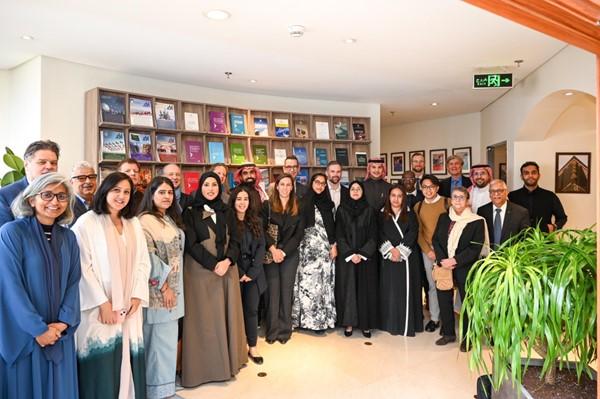
The first day of the workshop “The Future of Labour Migration in Saudi Arabia and the Gulf” co-organised by the Gulf Research Center (GRC) and the Konrad-Adenauer-Stiftung (KAS) Regional Programme Gulf States centred on research papers addressing Saudi Arabia’s Vision 2030. Authors presented their findings on the profound impact of economic diversification strategies and technological change, especially automation and artificial intelligence, on the region’s labour markets. Saudi Arabia’s reforms under Vision 2030, including investments in renewable energy, healthcare, and ICT, were discussed as key drivers of the shift towards a knowledge-based economy. Participants highlighted the importance of preparing young citizens for future labour market needs by enhancing training systems, fostering adaptability and soft skills, and advancing gender inclusivity to boost productivity and innovation.
The second day broadened the discussion to the wider Gulf and focused on highly skilled migration. Authors presented their research on national policies designed to attract global talent, while debates explored how Gulf states can strengthen their position as competitive destinations for foreign professionals. Measures such as the Labour Reform Initiative, the Premium Residency Programme, and more flexible visa options were recognised as important incentives. At the same time, participants emphasised persisting challenges, including short-term contracts, localisation pressures, nationality-based wage disparities, and questions about the sustainability of migrant rights reforms. The discussions underlined that addressing these barriers is essential not only to attract international expertise but also to facilitate knowledge transfer and support long-term competitiveness.
The workshop concluded that attracting international expertise while nurturing local talent will be decisive for the success of Gulf transformation agendas. Ensuring a sustainable and inclusive labour market will require closer cooperation between education and industry, greater transparency and stability in labour policies, and a continued commitment to inclusivity. By tackling these challenges, Saudi Arabia and the wider GCC can consolidate their position as leaders in economic diversification and workforce innovation.