








Summary
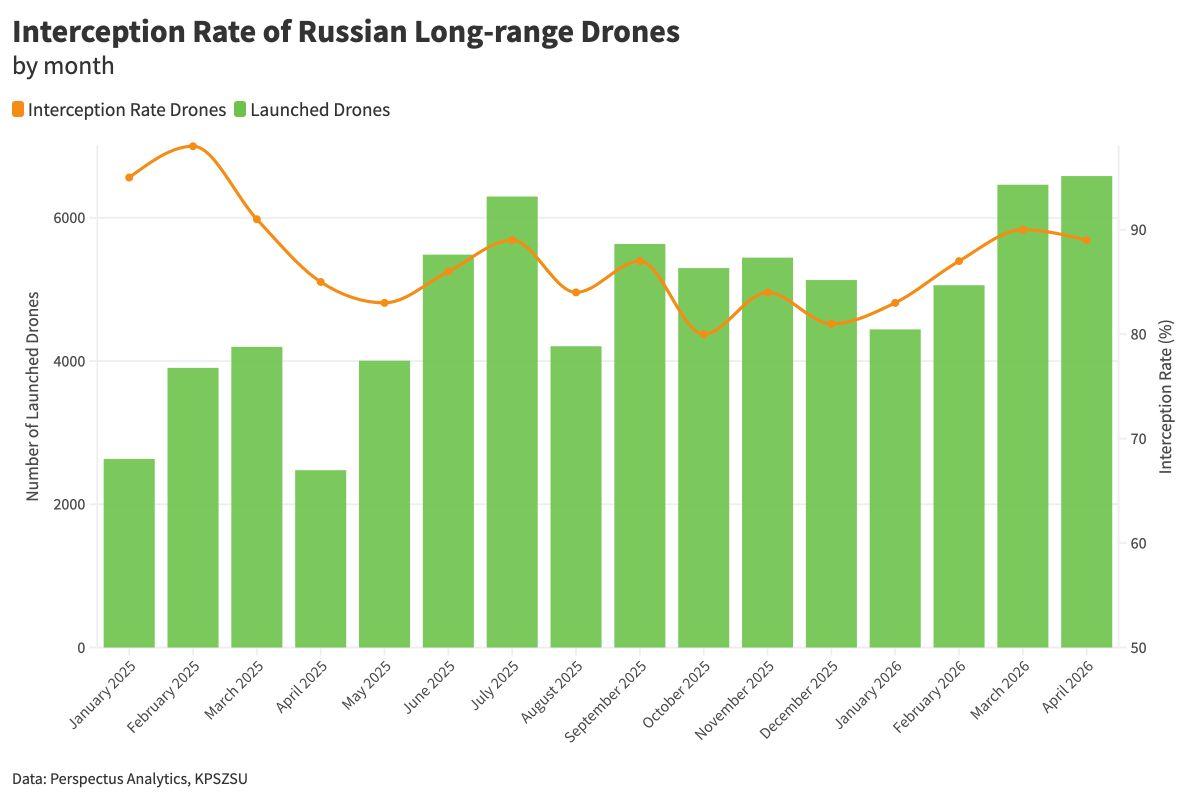
Russia’s air war against Ukraine remains at a high level, with new record figures. In April, the Russian military attacked civilian targets with 6,722 drones and missiles—the highest figure since the full-scale invasion began in February 2022. Of these, 6,583 were long-range drones (2% more than the previous month), 91 were cruise missiles, and 48 were ballistic missiles.
The attacks continue to follow a pattern of about four high-intensity waves per month, each involving more than 500 drones. The scale of these waves will continue to increase due to rising Russian production figures.
Interception rates for drones and cruise missiles remain roughly at the high level of the previous month (89% each). For ballistic missiles, the interception rate dropped significantly to 17% (average for the first quarter of 2026: 37%).
A lack of replenishment of U.S. interceptor missile stocks due to high consumption during the Iran conflict could be a contributing factor.
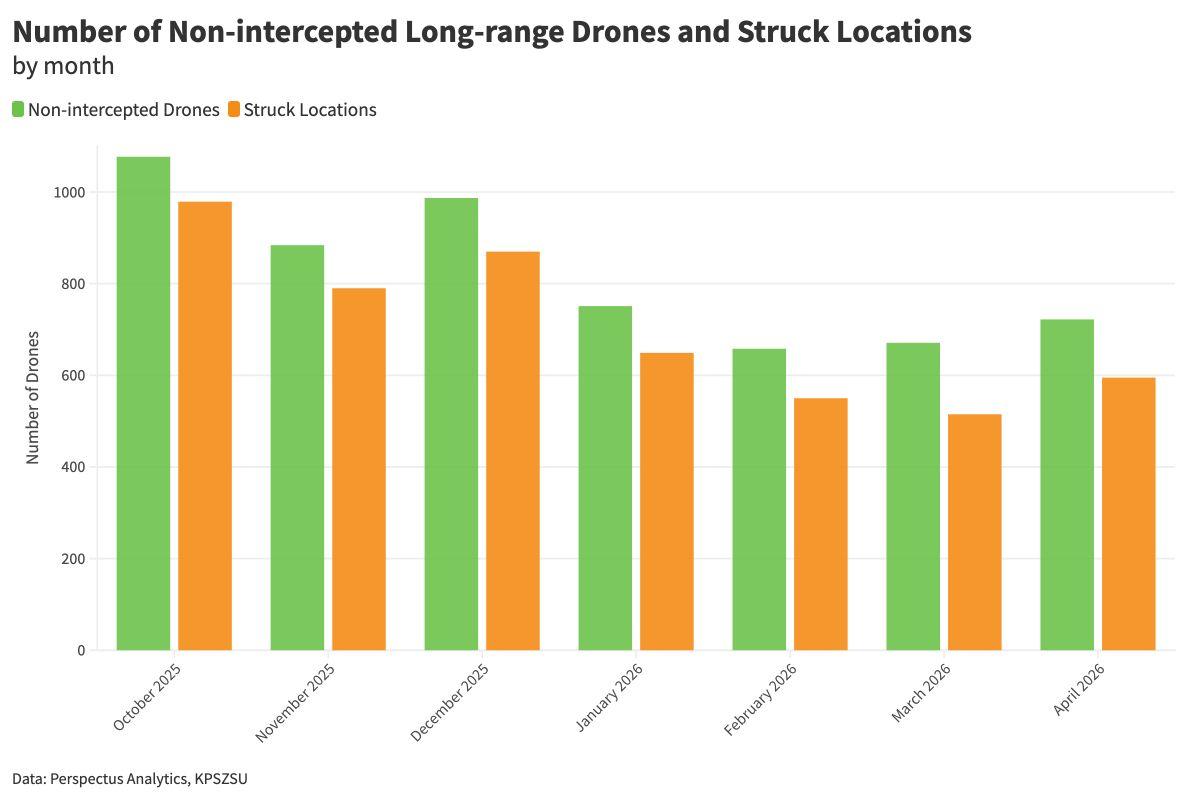
The number of non-intercepted drones increased slightly in April to 722 (March: 671), while the number of targets actually hit rose to 595 (previous month: 515). The effectiveness of interceptor drones and the tracking of Russian long-range drone flight routes remain crucial.
Trend: Drone-based air warfare will continue to expand and affect a growing number of Ukrainian regions, both near the front line and in western Ukraine. The approach corridor via Belarus continues to gain importance, as reflected in the intensified attacks on Chernihiv Oblast in April.
Attacks on railway infrastructure, particularly on locomotives (+36%) and freight cars (+115%), continued to rise in 2026. In total, approximately 17,300 damage reports have been recorded since 2022.
The consequences of the Iran conflict threaten both the current security posture of Ukraine’s Western supporters and the credibility of existing deterrence mechanisms. A coordinated European strategy to end the war in Ukraine is therefore more important than ever.
Positive developments, such as Ukraine’s technological advantages and the Russian military’s localized territorial setbacks, should not obscure the fact that Russia is likely to continue its war of attrition. At the same time, the Russian military has recently made progress in areas such as autonomous strike systems, making the trajectory of the war in 2026 increasingly difficult to assess.
SITUATION IN APRIL
Russia’s air campaign against civilian targets in Ukraine has entered a temporary lull. Although the number of deployed drones increased slightly in April, the campaign has not further intensified since March, neither in terms of munitions volume nor in terms of effective impact, measured by the non-intercepted payload of drones and missiles. This suggests that Russia may be reserving its more destructive missile systems for larger-scale strike packages, consistent with patterns observed in previous years.
Drone record in April: Highest figures since the start of the war
A total of 6,583 long-range drones were launched against civilian targets in April (2% more than in March)—the highest figure since the start of Russia’s full-scale invasion in February 2022. 65% of these were Shahed drones, while the remainder consisted of decoy drones. In addition, there were attacks involving 91 cruise missiles and 48 ballistic missiles (roughly in line with the previous month). In total, Russia deployed 6,722 drones and missiles against civilian targets—also a record high since February 2022.
 Perspectus Analytics, KPSZSU
The interception rate for drones fell slightly in April (from 90% to 89%). For cruise missiles, it remained at the high level of the previous month (89%). In April, the Ukrainian army received a mobile training simulator for F-16 fighter jets, which play a central role in defending against cruise missiles (↗ Ukrainian Ministry of Defense, 30.4.2026).
For ballistic missiles, however, the interception rate fell to 17% (Q1 2026 average: 37%). This decline is likely linked to shortages of key interceptor munitions, including Patriot PAC-3 missiles, following high expenditure rates during the Iran conflict. As a result, Ukraine’s ability to intercept ballistic threats has become increasingly constrained (↗ Monitor Vol. XV).
There is a risk that the air war could deteriorate for Ukraine in the short term. This is indicated by a slight increase in April in the number of drones that were not intercepted (722; March: 671) and targets hit (595; March: 515). While this is significantly lower than during the winter months, when Ukraine’s energy infrastructure was under sustained large-scale attack, it indicates that air defense performance is stagnating, while the number of deployed drones continues to increase slightly.
 Perspectus Analytics, KPSZSU
Consistent patterns in drone strike activity
The attacks follow a similar pattern to the previous month, when the Russian Air Force began extending the duration of its strike waves. Instead of being concentrated within a single night, attacks now often span one night and the following day, resulting in a very high number of drones being deployed against Ukrainian cities and infrastructure within a 24-hour period (record on March 23–24: 948 drones, ↗ Monitor Vol. XV).
In April, four intense strike waves involving more than 500 drones were recorded within 24-hour periods, compared to four waves involving over 400 drones in March. As Russian production capacities are likely to continue increasing, the Russian military could further intensify the scale of such attacks.
Overall, the frequency and composition of drone attack waves have changed only marginally over the past twelve months. The number of deployed drones appears to be constrained primarily by production capacity, with little evidence of significant stockpiling prior to their use.
Missile attacks: Russia stockpiles for winter campaign
In the case of missiles, however, the Russian military leadership appears to vary both the intensity and scale of strike packages over the course of the year. During the winter months, significantly higher intensity profiles are evident both in the monthly totals and in the scale of individual strike waves—with more than 50 missiles per night. The current phase suggests a replenishment of missile stocks. At the same time, in recent years, there has typically been one month between May and August in which attack intensity reaches levels comparable to those observed during the winter months.
Use of glide bombs near the front lines escalate
For regions near the front lines, the sharp resurgence in the use of glide bombs in particular places a significant additional burden also on the civilian population. In 2026, Russia significantly expanded its use of guided glide bombs, recording nearly 8,000 drops in March and around 7,000 in April—the highest monthly figures since the start of the full-scale invasion (↗ Ministry of Defense of Ukraine, 5.5.2026).
SPOTLIGHT
Outlook for the War of 2026
Railway Infrastructure Increasingly in the Crosshairs
It is expected that Russia will continue its strategy of attrition in the air war against Ukraine, targeting primarily regions near the front lines and borders. In April, a broad distribution of attack targets continues to be evident: the focus remains on both energy and railway infrastructure.
Attacks on trains, stations, and railways had already increased significantly by 2025. An analysis of 17,300 instances of damage to Ukraine’s railway infrastructure since February 2022 shows that attacks on locomotives and freight cars in particular (approx. 75 attacks per month) have risen sharply compared to the second half of 2025 (approx. 42 per month) (↗ Interfax, 24.4.2026).
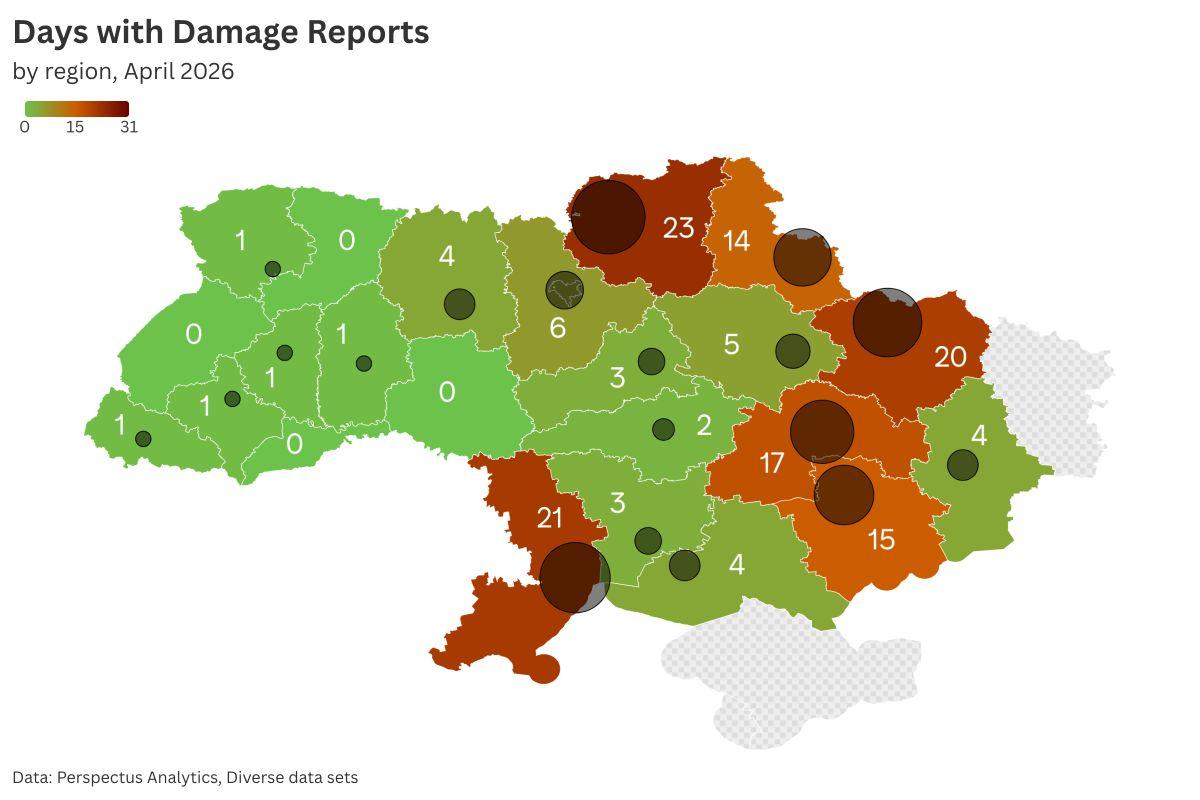
As in previous months, Russia targeted army supply routes and infrastructure for goods exports in the Odesa region in April (↗ Monitor Vol. XIV, Vol. XV). The Chernihiv region on the border with Belarus was also subjected to increased shelling.
 Perspectus Analytics, Diverse data sets
Russia will attempt to expand its air campaign over Belarus to include the western parts of Ukraine to a greater extent. As early as 2025, Belarusian airspace was increasingly used for Shahed drone routes. In February, the Ukrainian Air Force destroyed newly established relay stations in Belarus used to control drones (↗ United24, 27.2.2026). Nevertheless, there is reason to fear that the Russian army will once again attempt to use Belarus as an expanded theater of operations in the drone war.
Ukraine’s Technological Edge, Russia’s Capability Upgrades
In terms of technological advancements in aerial warfare, Ukraine has now gained a significant lead in drone development, as even Russian Defense Minister Andrei Belousov has acknowledged internally (↗ ISW, 9.4.2026). Nevertheless, Russia continues to rely on attrition tactics and seeks to overwhelm Ukraine’s air defenses to the point of failure. According to Austrian military expert Gustav Gressel, Russia has also made progress in reconnaissance capabilities (↗ Die Presse, 25.4.2026), particularly in target acquisition and battle damage assessment of its airstrikes. In addition, the Russian military has optimized strike planning and streamlined command chains, enabling attacks to be executed within shorter timeframes.
Following persistent criticism of Russia’s inadequate air defense capabilities and the accuracy of its air operations in Ukraine, the Russian Ministry of Defense appointed Aleksandr Chayko as the new Commander-in-Chief of the Russian Aerospace Forces (VKS). Chayko had previously played a key role in Russian military operations in Syria, including attacks on civilian targets and infrastructure, and later held responsibility for Russian troops in the Kyiv area, who are blamed for the mass killings of civilians in Bucha (↗ ISW, 4.5.2026).
Race against time: Preparing for the coming winter
Military expert Gustav Gressel warns that Ukraine must effectively disrupt missile and drone production in Russia over the course of the year. Otherwise, there is a risk of renewed large-scale missile strikes against energy infrastructure this coming winter, potentially under conditions of even more limited availability of interceptor munitions than in previous years (↗ ORF, 24.4.2026).
Preparations to protect against the next Russian winter campaign are already in full swing. Work to protect critical infrastructure as part of regional energy resilience plans is 46% complete (↗ DiXi Group, 15.4.2026).
Of the 9 gigawatts (GW) of generation capacity damaged last winter, approximately 4 GW has already been restored. In addition, 600 MW of new storage capacity has been connected, and technical specifications for an additional 1.4 GW have been issued (↗ DiXi Group, 5.5.2026).
During the German-Ukrainian government consultations, the BMZ announced a new financing package worth 233 million euros to support the Ukrainian energy sector, industrial recovery, and social infrastructure. The IMF and the World Bank, together with the U.S. Export-Import Bank, have agreed on a US $300 million financing mechanism for the purchase of energy equipment for the Naftogaz Group (↗ DiXi Group, 21.4.2026). The European Commission and the European Investment Bank (EIB) announced a reconstruction package worth over 600 million euros for energy, housing, and infrastructure.
Expansion of Ukraine’s air defense
Interceptor drones (↗ Monitor Vol. XI) will remain crucial for the immediate protection of cities in the coming months. For these interceptor drones to engage incoming Shahed drones, Ukraine must conduct highly complex prior reconnaissance to calculate their flight paths. Unlike missile defense systems, interceptor drones operate with a significantly smaller speed differential relative to their targets. This makes interception technically more challenging: even minor errors in flight-path estimation can result in a missed intercept (↗ Talk4Ukraine, 20.4.2026).
The deepened cooperation between Germany and Ukraine in air defense, for example involving the company Diehl Defence (↗ United24, 15.4.2026), raises hopes that new interception systems will be developed beyond drone defense. According to Gustav Gressel, the German-Ukrainian agreement on the exchange of military data, concluded in April, supports the further development of missile defense systems and is an enormous advantage for the German defense industry (↗ Talk4Ukraine, 20.4.2026).
Ammunition shortage worsens: Iran conflict hits Ukraine hard
The Iran conflict has significantly exacerbated the security situation in Europe as well, due to the heavy use of U.S.-made anti-aircraft missiles and other systems (↗ Monitor Vol. XV).
A survey by the Center for Strategic and International Studies (CSIS) in Washington indicates that shortages of anti-aircraft missiles resulting from the Iran conflict are more severe than previously assumed. For some missile types, the United States has already expended up to half of its stockpiles during operations related to the Iran conflict. This particularly affects Ukraine in relation to PAC-3 interceptor missiles used in the Patriot system. For the United States and other allies, however, the limited stockpiles and low production capacity of THAAD interceptor missiles represent the most significant constraint (↗ CSIS, 21.4.2026).
Bottlenecks in stockpiles, production, and resupply have also constrained the military capabilities of Western allies and weakened deterrence postures, for example in the Indo-Pacific vis-à-vis China and in Europe, from which Russia in particular stands to benefit. This places US-led alliances under broader pressure, while the Russia–Iran–China axis is likely to intensify the exchange of intelligence and technology, thereby increasing the complexity of future conflicts (↗ CSIS, 9.4.2026).
Ukraine is capitalizing on Russian exhaustion—but the pressure remains high
Ukraine is in a better position today than it was in 2025, when there were fears of major Russian breakthroughs on the front lines. In March, for the first time in a long while, the Russian army lost more territory than it was able to capture (↗ Monitor Vol. XV). In April as well, the Russian army suffered territorial losses in some sections of the front (↗ ISW, 2.5.2026). Furthermore, in March, Ukraine carried out more attacks with long-range drones on Russian territory than Russia did on Ukraine for the first time (↗ ABC, 6.4.2026).
Russia has had to postpone its plans to fully occupy the Donbas for the third time this year, emphasizes Dmytro Korniienko, an OSINT analyst at the Resurgam platform. The Russian army’s losses exceed the number of contract soldiers Russia can recruit, while the Kremlin does not currently want to risk a mobilization.
At the same time, according to Korniienko, pressure on the Ukrainian army remains high around the defensive belt in the Sloviansk-Kramatorsk area and along the Russian-Ukrainian border in Sumy and Chernihiv. Added to this is the threat of a new offensive against Ukraine from Belarus (↗ FAZ, 29.4.2026).
Military expert Gustav Gressel notes that Ukraine holds a technological advantage, while Russia’s army is showing increasing signs of exhaustion and suffering correspondingly high casualties. He points to improvements within Ukraine’s Ministry of Defense, where Mykhailo Fedorov, as the new minister, has not only streamlined internal processes, procurement, and personnel policy but has also implemented a system for systematically analyzing combat operations using AI. Since then, medium-range attacks (30 to 100 km) against Russian troops have become significantly more successful, according to Gressel (↗ Talk4Ukraine, 20.4.2026).
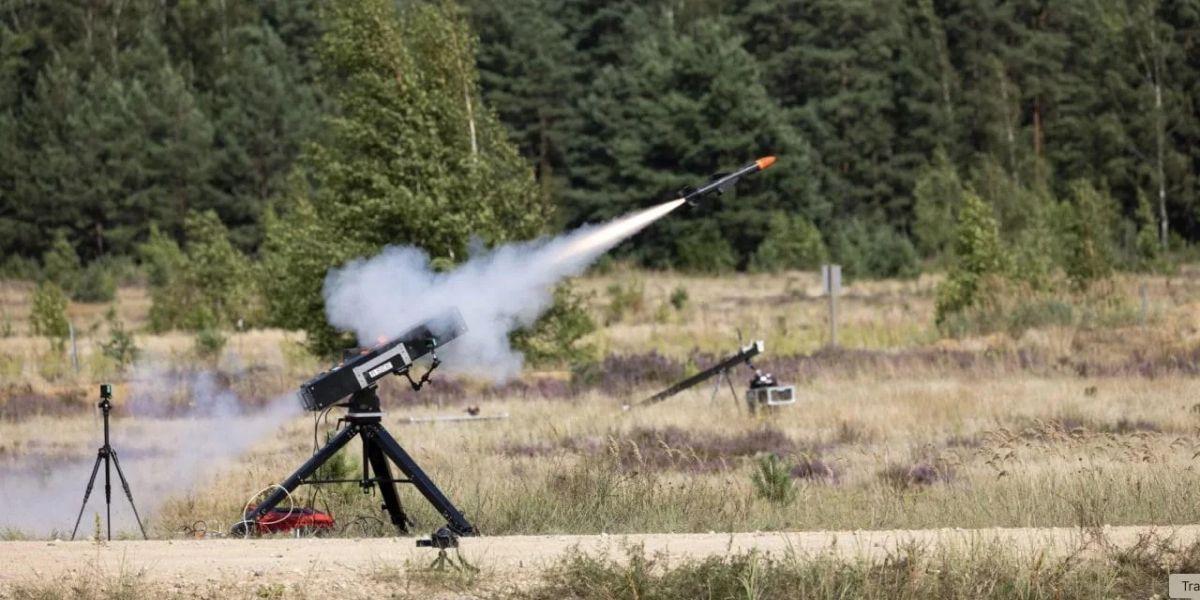
The potential of technical innovations currently under discussion in Ukraine includes the introduction of a next-generation “deep-strike architecture” based on new sensor fusion, resilient navigation matrices, autonomy technologies, and cooperative swarm behaviour. By expanding the drone defense system (C-UAS) with cost-effective precision-guided missile systems (similar to the Estonian Mark 1 interceptor missile), interceptor drones featuring autonomous terminal guidance (including jet-powered variants), or semi-autonomous laser-guided turrets, Ukraine could gain further advantages (↗ Sahaidachnyi Security Center, 1.2026).
 Frankenburg Technologies
Do Not Underestimate Russia’s Adaptation Capability
While the Ukrainian army currently holds a significant technological advantage, Gustav Gressel warns against overestimating this development. So far, the Russian army has responded to every challenge by adapting (↗ Die Presse, 25.4.2026).
Kateryna Bondar, a fellow at the Wadhwani AI Center at CSIS and former advisor to the Ukrainian government, also warns in the New York Times against underestimating the Russian army’s adaptability: “Russia did not enter the war against Ukraine as a technological pioneer, but it has learned quickly.”
After four years of war, Russia has developed an increasingly pragmatic approach to military innovation, focused primarily on practical effectiveness, industrial scalability, and immediate battlefield utility, according to Bondar. Unmanned systems and artificial intelligence have been designated strategic priorities. By 2030, the unmanned sector is expected to grow to around one million skilled workers, while up to 95 percent of priority industries sectors are intended to be capable of leveraging AI. The Russian defense industry, weapons testing, and operational deployment are now more closely integrated, enabling faster adoption cycles, as illustrated by the continuous evolution of Shahed-type drones (↗ NYT, 4.4.2026).
Western partners of Ukraine are also increasingly concerned about keeping pace with these emerging threats and avoiding a growing technological gap.
Equally Dangerous: Russian Underestimation of Europe
Gustav Gressel also warns, however, that Russia could conversely underestimate Europe’s capabilities and seek to exploit the current transitional phase in European security policy to surprise NATO with a rapid offensive—potentially against the Baltic states—and thereby undermine the alliance’s cohesion.
At the same time, even if Europe currently lacks sufficient forces to withstand a Russian attack in the short term, it retains significant industrial and innovation potential that is likely to become a decisive factor over time. Ultimately, what will matter is whether European societies sustain support for a prolonged conflict, and whether Europe succeeds in effectively constraining external enablers, such as China’s support for Russia (↗ BR, 19.4.2026).
Deterrence could succeed if we take Ukraine’s lessons from this war seriously and learn to leverage the advantage of experience that Ukraine has paid for at a very high price: “Ukraine’s integration into Europe is a security imperative of the moment” according to Gustav Gressel (↗ Talk4Ukraine, 20.4.2026).
Strategies for a Possible End to the War
In its analytical report “Stratagems for the Victory of Ukraine,” the Kyiv-based think tank Sahaidachnyi Security Center argues that ending the war requires a fundamental departure from traditional concepts of victory. Unlike classical notions such as maneuver warfare, which centers on decisive battles and territorial control, or more limited frameworks such as strategic deterrence or functional defeat, victory is defined here as terminal defeat—a condition in which the Russian Armed Forces irreversibly lose their combat and offensive capabilities.
This objective is not to be achieved through generalized military superiority, but through a highly selective operational logic, including deep precision strikes aimed at systematically degrading critical military infrastructure within Russia. In addition, a “deterrence vector” is intended to buy time and stabilize Ukraine’s own force posture, with an emphasis on automation, AI integration, force generation, and the expansion of the industrial base. Victory is ultimately conceived as a systemic tipping point at which Russia’s ability to conduct warfare collapses irreversibly and becomes strategically non-viable (↗ Sahaidachnyi Security Center, 1.2026).
Valerii Zaluzhnyi—the former Commander-in-Chief of the Ukrainian Armed Forces and now Ukraine’s ambassador to the United Kingdom—warns against placing excessive expectations on a potential military collapse of Russia. He emphasizes the structural constraints facing the Ukrainian Armed Forces (personnel, resources, and time) and frames the war less as a controllable process leading to a defined strategic endpoint and more as a prolonged struggle for survival.
Both sides are effectively locked in a strategic stalemate, in which every action entails high costs. The outcome therefore depends less on a clear-cut victory than on which side exhausts its strength first, as well as on the behavior of external actors such as China and the United States. Above all, adaptability, endurance, and resource management are likely to be decisive in shaping the political endgame of the war (↗ KShDU Media, 22.4.2026).
Europe, on the other hand, lacks a strategy to end the war, criticizes security expert Claudia Major. “Now we just try to keep the Ukrainians in the game until something in Moscow changes—someone dies or is thrown out the window or the economy collapses,” she said. “But it’s not a strategy.” As a result, the war continues, with no ceasefire or negotiated settlement in sight (↗ NYT, 25.4.2026).
The course of the war makes this increasingly clear: despite rising economic costs and tactical setbacks, the Kremlin has not moved away from its maximalist demands and is likely to continue the war regardless of its own losses. Security expert Gustav Gressel argues that expecting a genuine ceasefire—one that Moscow has so far treated primarily as an operational tool to regroup and prepare for further offensives—remains an “unrealistic dream.” In his view, the war of attrition is more likely to end with a decisive outcome. “For Europe, the security risks of a Russian victory are severe.” By contrast, “a Ukrainian victory resulting from the collapse of the Russian state” represents a genuine alternative that policy should actively work toward (↗ EPIK, 6.5.2026).
Method
The air strike database is regularly cross-referenced with daily reports from the Institute for the Study of War (ISW) in Washington (↗ ISW).
The launch records originate from the Ukrainian Air Force reports (↗ KPSZSU), and data on regional targets and damage—if available—is supplemented with civilian and military administration sources.
These figures are further verified using additional OSINT sources and are considered highly reliable.
Accurately quantifying air strike damage during an active war is inherently challenging. Providing overly precise information could aid Russian military planning, which is why certain reporting restrictions apply (↗ Expro, 2.1.2025).
Consequently, this analysis focuses on attack patterns and dynamics rather than detailed damage assessments.
With over 44 months of data and around 98.500 documented attacks, robust trends have emerged. Monthly missile counts are approximate values, as irregularities have been noted in Ukraine’s reporting system. Discrepancies with other OSINT sources remain within a 10% margin, often below 3%.
A comparison with the missile and drone assessment by the Center for Strategic and International Studies (CSIS) in Washington over a period of more than two years shows a deviation of only 1.6% (↗ CSIS).
For attacks lacking definitive quantification, the lowest plausible estimates have been used. Due to possible underreporting in high-intensity phases, actual interception rates may be slightly higher, with an estimated deviation of less than 5%.
ABOUT THE AUTHOR
Marcus Welsch is a freelance analyst, documentary filmmaker, and publicist.
Since 2014, he has specialized in OSINT journalism and data analysis, focusing on the Russian war against Ukraine, military and foreign policy issues, and the German public discourse.
In cooperation with Kyiv Dialogue, he has conducted research and panel discussions on Western sanctions policy since 2023.
Since 2015, he has been running the data and analysis platform ↗ Perspectus Analytics.
ABOUT KYIV DIALOGUE
Kyiv Dialogue is an independent civil society platform dedicated to fostering dialogue between Ukraine and Germany.
Founded in 2005 as an international conference format addressing social and political issues, it has moved to support civil society initiatives aimed at strengthening local democracy in Ukraine since 2014.
Since Russia’s full-scale invasion in 2022, the focus has shifted to social resilience, cohesion, and security policy—including military support for Ukraine and Western sanctions policy.
Kyiv Dialogue is a program of the ↗ European Exchange gGmbH.


You need to sign in in order to comment.