








Executive Summary
- In August 2025, 4,207 drone strikes were recorded, the lowest number since April. During the presidential summit in Alaska, Russia reduced the intensity of its air war to around 90 strikes per day for three weeks. From 21 August onwards, Russia resumed air strikes at the same intensity as in July (an average of over 200 drone strikes per night).
- The ratio of cruise missiles to ballistic missiles in Russian air strikes remained unchanged in August. In 156 attacks, one third were ballistic missiles and two thirds were cruise missiles. A total of 4,363 attacks were counted in August.
- The interception rates for missiles and cruise missiles rose in August, with cruise missiles reaching 88 % and ballistic missiles 44 %. In order to maintain this rate, Ukraine needs a sufficient supply of interceptor missiles.
- The interception rate for drones fell significantly to 84 %, compared to 89 % in July. The number of unintercepted drones in August was 684 (July - 723). There were also 49 unintercepted ballistic and cruise missiles.
- As in previous months, the regions of Kharkiv, Dnipro, Sumy but now also Chernihiv, were particularly affected by attacks. Shelling of Kyiv, on the other hand, decreased slightly.
- In August, Russia once again began attacking Ukraine's energy infrastructure and logistics, including railway lines. Higher casualty figures caused by imprecise Russian weapons are to be expected.
- Due to a short-term increase in reserves in Russia, a sharp rise in drone attacks is expected in the coming weeks. With the additional expansion of its production capacities, Russia could carry out 10,000 drone attacks per month this autumn and winter. The peak of 6,300 was in July.
- Russia has significantly expanded its stockpile of cruise missiles and ballistic missiles with a range of over 350 km and could reach the 3,000 mark in September.
- Supporting Ukraine means protecting Europe. The increased missile production poses a direct threat to Europe because there will not be enough anti-ballistic missiles available over the next three years. This requires a reorientation of European countries' defence policies with a countervalue strategy that effectively deters Russian aggression.
- In addition to ensuring sufficient air defence ammunition and systems, the development and scaling up of production of direct drone defence measures in Ukraine must be financed quickly. The destruction of Ukrainian infrastructure and arms factories would have enormous follow-up costs for Ukraine's supporting countries.
- To effectively halt Russian attacks on cities and infrastructure, Ukraine’s partners must consistently expand Ukraine's deep strike capabilities. This includes the delivery of Taurus cruise missiles.
Situation in August. Analysis and Trends
Since late summer 2024, Russian forces have increasingly relied on long-range drones in their air strikes against civilian facilities, infrastructure, and cities in Ukraine (cf. ↗ Monitor Vol VII).
Around the Alaska meeting between Vladimir Putin and Donald Trump, on 15 August, Russia reduced its attacks on Ukrainian cities to an average of 90 drone attacks per night from 1 of August.
Less than a week after the summit, Russia returned to massive waves of attacks from 21 August onwards, with 614 (21 August), 629 (28 August), and 582 (30 August) missiles per night. The intensity of drone attacks rose to the average level of July, with more than 200 daily attacks.
In August, at least 4,207 drones were used against civilian targets in Ukraine. This is 33 % less than in the previous month. Russia also deployed 156 cruise missiles and ballistic missiles. This brings the total number of attacks to 4,363.
The Russian army is continuing its familiar pattern of attack: it relies on single, massive attacks with over 500 drones per night and attacks with at least 50 to 100 drones over the following nights to maintain pressure on the civilian population. In combined attack waves (over about 18 days a month since June), missiles usually follow attacks with large swarms of drones. The composition of the missile types used differs only slightly from previous months. About one-third are hypersonic ballistic missiles, and two-thirds are cruise missiles.
Improving Missile Interception Rates
The interception rates for ballistic and cruise missiles tended to increase in August. The relatively high success rate (around 88 % for cruise missiles, 44 % for ballistic missiles) shows that Russia is currently unable to overwhelm Ukraine's air defenses with its massive missile deployment, and that Western deliveries of interceptors are having an impact. This makes it all the more important that Ukraine is able to proactively build up sufficient stockpiles of interceptors.
Interception Rates of Russian Missile and Drone attacks by month
Interception Rates of Russian Missile and Drone attacks by month. Data sources: Perspectus Analytics, KPSZSU, ISW Daily Reports
The drone interception rate fell again in August, falling to 84 % compared to 89 % in July. It is particularly striking that large-scale attacks are generally better repelled (94 %) than smaller waves of attacks, where the interception rate is often only 50–80 % depending on the region. This shows that drone defense varies in effectiveness depending on the target, and some regions are less well protected than others.
Drones Pose The Greatest Threat
In August, 684 drones and 49 rockets or cruise missiles were not intercepted. With regard to the explosive payload carried by each missile type, it is clear that drones currently pose the greatest threat and destructive potential. In August, ballistic missiles delivered 13 tons of payload without interception to the target, cruise missiles six tons, and drones approximately 34 tons.
This is a new phenomenon. Until May 2025, drones delivered fewer explosives to civilian targets than cruise missiles and rockets, making them less effective than the missiles from Russia's remaining stockpiles, some of which date back to the Soviet era (cf. ↗ Monitor Vol VI). Now, the danger has increased due to the high number of drones deployed and the declining interception rates.
Strain on Frontline Regions
In addition to the strain on the civilian population caused by drone attacks, there is also the danger of glide bombs in cities near the frontline. This particularly affects cities in the unoccupied part of Donbas and in Sumy Oblast. In the city of Kramatorsk, for example, 90 % of the areas affected by the increasing glide bomb attacks in August were civilian areas. The situation in Kostiantynivka is also becoming increasingly strained, where Russia is also relying on massive shelling and glide bombs (↗ ISW, 29.8.25).
The city of Kharkiv, which has a population over one million and is a constant target of the Russian air war (cf. ↗ Monitor Vol VII), is also within range of glide bombs.
Damage Reports:
Flourish
The analysis of damage reports in the ISW's daily reports shows which regions have been most affected by attacks. In August, Kharkiv again ranked ahead of Dnipro, Sumy, and Chernihiv. Cities in the unoccupied part of Donetsk Oblast were also heavily affected, followed by Zaporizhia, Kherson, Odessa, and Kyiv. Chernihiv was attacked more intensively in August than in previous months. Poltava, Kyiv, Kirovohrad, Cherkasy, and Mykolaiv, on the other hand, were attacked on fewer nights in August than in previous months.
The previous issue provides an overview of the intensity of attack on individual oblasts since January 2025 (cf. ↗ Monitor Vol VI).
Russian Objectives in the Air War
In August, it became apparent that the Kremlin was again increasingly attacking Ukraine's energy infrastructure with drones and missiles. Russia will likely attempt to massively disrupt electricity and heat production in Ukraine this fall and winter.
Power outages occurred in the Poltava, Sumy, and Chernihiv regions at the end of August, affecting approximately 100,000 households. Ukraine's largest private energy company (DTEK) reported on August 27 that the coal enrichment plant in Donetsk Oblast, where coal is processed for heating, had been destroyed.
In addition, Russia began attacking transportation infrastructure, such as in Vinnytsia Oblast on August 28. The Ukrainian railway operator Ukrzaliznytsia reported that Russia had attacked Intercity+ high-speed train carriages and a railway junction in Koziatyn, triggering a massive power outage that disrupted rail traffic throughout Ukraine (↗ ISW, 28.8.25).
Russia will continue to attempt to destroy Ukrainian military facilities and critical infrastructure. Since, according to the Ukrainian military intelligence service (GUR), most civilian infrastructure targets are located in cities, an increasing number of civilian casualties is to be feared. Many missiles used by the Russian army in its attacks are not very precise, further increasing the risk to the civilian population (↗ Suspilne, 12.8.25).
Last winter, the Russian military leadership failed to bring energy supplies and industrial production in Ukraine to a standstill, nor did it break the population's will to resist Russian aggression (see ↗ Monitor Vol VI).
Russia is already attacking residential areas, hospitals, and other civilian targets in a particularly perfidious manner, using so-called double taps: a first attack is followed shortly after by a second one, designed to hit firefighters, rescue workers, and family members (see ↗ Monitor Vol VI).
The large-scale attacks on Kyiv on the night of August 28, which claimed more than 20 lives, also hit diplomatic facilities of the European Union and the British Cultural Institute. This show of force by the Kremlin was presumably intended to influence the political stance in Europe, as it coincided precisely with the US and European countries negotiating security guarantees for Ukraine.
Russia also reduced the intensity of air strikes before and after the summit in Alaska in mid-August to build up its drone and missile depots and attack Ukraine even more intensively in the following weeks (↗ ISW, 21.8.25).
The extent of the damage the Russian army can inflict on Ukraine in the coming months will depend crucially on the equipment of the Ukrainian Air Force and other measures (see section „Recommendations").
Spotlight. Russian Production Capacity
It is expected that the Russian military will further increase its drone attacks on civilian targets. The drones withheld in August alone, combined with ongoing new production, would make approximately 8,000 attacks possible in September. By comparison, from January to August, there were an average of 4,150 attacks per month; in the previous record month of July, almost 6,300 drone attacks were recorded
Russia Expands Drone Production
The Ukrainian military intelligence agency (GUR) estimates that approximately 79,000 drones of the modified Shahed series will be produced in Russia this year, namely 40,000 Geran-2 drones, 5,700 Harpy-1 drones, and approximately 34,000 Gerbera dummy drones (↗ Suspilne, 12.8.25).
These figures do not include newly developed drones from Russia, which have already been deployed in Ukraine but are not yet produced in large numbers.
These estimates include the largest production site in the Alabuga Special Economic Zone (Republic of Tatarstan), as well as the IEMZ Kupol plant in Izhevsk (Udmurt Republic), which was damaged in a Ukrainian attack on 1 July (↗ Defence Blog, 24.7.25).
Production at Alabuga is expected to increase further in the second half of the year, when the new production lines come online.
10,000 Drone Attacks Per Month
These production figures indicate that drone attacks on civilian targets could increase dramatically this fall. Subtracting actual consumption this year from Russia's maximum planned annual production, results in potential attacks of well over 10,000 drones per month. These figures are a serious warning sign.
The decisive factor will be whether Russia succeeds in actually scaling its production capacities. Satellite images show that the drone factory in the Alabuga Special Economic Zone is currently undergoing extensive expansion and development.
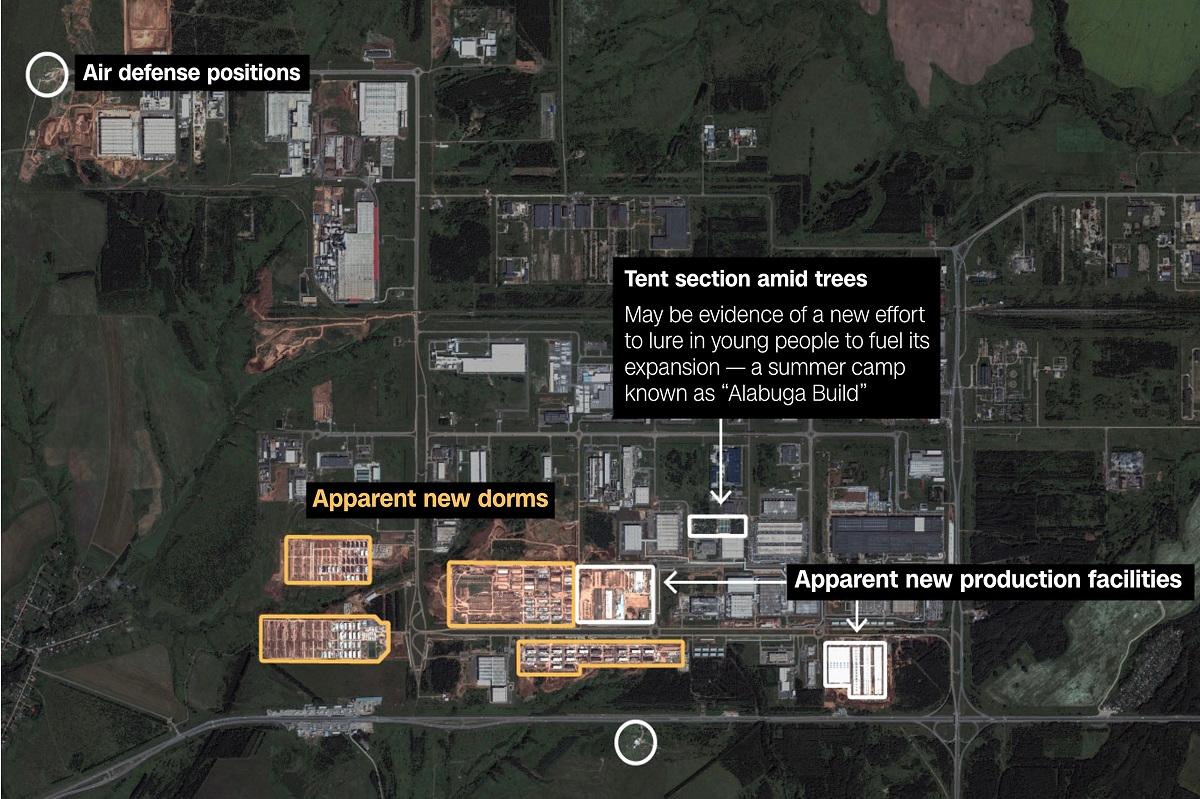 Satellitenbilder zeigen neue Gebäude der Drohnenfabrik Alabuga vom 12.7.25 CNN, 25.7.25
Satellite Images Show Expansion
According to analyses by US analysts, at least eight new warehouse-like buildings were built near drone production facilities in Alabuga between the end of 2024 and July 2025. Between March and July 2025, almost 100 new buildings were also built – some of them still under construction – which are presumably intended to serve as accommodation and could host up to 40,000 workers (↗ CNN, 25.7.25).
Russia is struggling with a massive shortage of skilled workers. However, the recruitment of students, workers from other production sectors, and increased cooperation with North Korea suggest that the Russian leadership is trying to achieve its targeted production capacities at any cost.
Russia Is Not Only Producing For The War In Ukraine
The massive expansion of long-range drone production cannot have been designed solely for the war in Ukraine. Regardless of how long the war in Ukraine lasts, there will ultimately be large production capacity available, which Russia will, in all likelihood, use to assert its power claims in Europe.
Ukraine appears to be a testing ground for Russia to develop new offensive weapons and improve their integration into existing conventional systems. Russia could also use these systems against other adversaries in the future to achieve its geostrategic goals.
European defence policy should therefore urgently integrate innovations in drone technology into the European NATO armies. The British think tank RUSI (The Royal United Services Institute) makes it clear that integrating these innovations into existing structures is a challenge (↗ RUSI Disorder podcast, 12.8.25). We cannot rely on beating Russia in the field of drone technology. Rather, a more comprehensive integration of new technologies into existing systems is necessary, for example, in the area of deep strike capabilities, where we are currently completely dependent on the US. The air war in Ukraine remains one of the key areas for better preparation for future wars – especially in Europe.
Missile Production On The Rise
Russia will continue to expand its combined air strike concept in the coming months. Drones are often used as the vanguard to reconnoiter and wear down Ukrainian air defences. Other missiles with a much higher destructive potential attack shortly afterwards. What are the stocks and production capacities for these missiles?
Over the past three years, we have compared all quantitative data from the Ukrainian military intelligence service GUR on Russian missile production capacities with consumption figures from the air war in Ukraine for the Air War Monitor. We only report production figures that appear plausible based on this calculation. However, the GUR's data, particularly on remaining stocks in Russian stockpiles, cannot be independently verified.
However, Russia's production capacities in missile and cruise missile manufacturing have certainly increased significantly. Between 50 and 100 attack-capable missiles with a range of over 350 km per month were still being manufactured in 2023. This figure rose to between 100 and 200 in 2024.
Russia's target production rate for 2025 is 3,000 long-range missiles and cruise missiles. This corresponds to approximately 250 missiles per month. The GUR also estimates Russia's current monthly production rate at 200 to 250 of these missiles (↗ Kyiv Independent, 3.6.25).
Missile Arsenals Are Growing
If you compare production figures over time with actual consumption, it is clear that Russia produces more than it consumes. This leads to a constantly growing arsenal of operational missiles.
In recent years, the GUR has repeatedly revised its estimates of Russia's stockpiles upwards. In January 2024, the total number of operational long-range missiles was estimated at 900. By November, that number had already risen to 1,470. In June 2025, Russia's remaining stockpiles were estimated at 2,760 units. According to our calculations, this figure will exceed 3,000 in the course of September.
Looking at the two most commonly used types of weapons, the question arises as to why Russia is overproducing and stockpiling them. Two years ago, 35–40 Kh-101 cruise missiles were manufactured per month. Now, 70 per month is considered plausible. The current production rate for Iskander-M missiles is estimated to be similarly high.
The production of Iskander-K, Kh-101, and Kalibr cruise missiles is probably not intended to build up reserves. These types are used regularly. Their reserves range between 300 and 400 units each. In August, more Kh-101 missiles were used than were newly produced. An additional reserve of the less frequently used P-800 (Onyx) missiles and the currently rarely used Kh-22/32 missiles is likely to total a further 1,000 units.
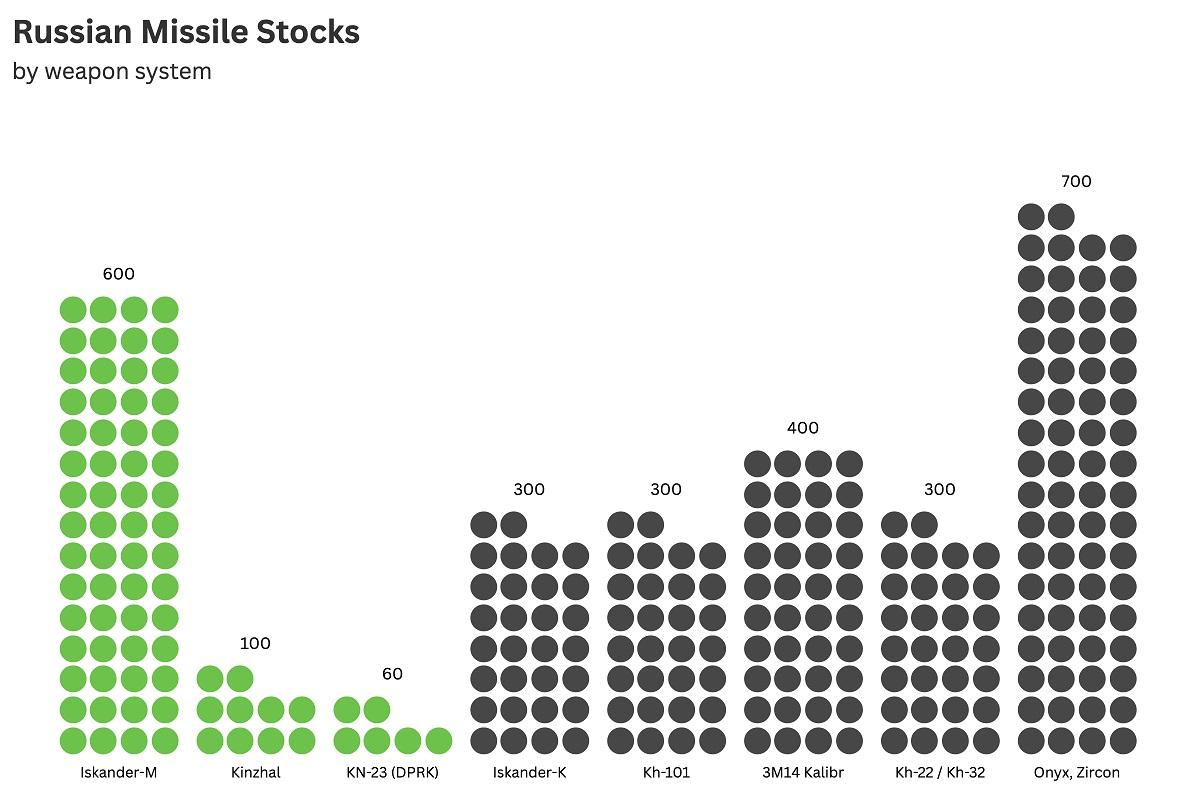 Russian Missile Stocks by weapon system. Graphic and data according to: Kyiv Independent, 3.6.25
Strategic Threat To Europe
Particularly striking in recent months has been the steadily growing stockpile of ballistic missiles. The stockpile of Iskander-M missiles is now likely to exceed 700. In addition, there are over 100 Kinzhal hypersonic missiles.
These remaining stocks of missiles could also be used in further wars against other adversaries of Russia. In its daily assessments of the war in Ukraine, the ISW (Institute for the Study of War) repeatedly refers to intelligence services warning that Russia's industrial rearmament is no longer focused solely on the war in Ukraine, but is serving to arm itself for a future conflict with NATO countries.
Critical Gap In European Air Defence
Europe does not have enough suitable interceptor systems and missiles against ballistic missiles, such as the Patriot type. In addition, even in two or three years' time, it will not be possible to produce the necessary number of interceptor missiles in sufficient quantities worldwide. In view of increasing global conflicts, the US, as the licensor, could also consider deliberately withholding these scarce interception resources in the future to keep them available for other conflict regions outside Europe.
The threat potential of the 840 to 1,040 Iskander-M and Kh-47M2 missiles produced annually by Russia is high. According to an analysis by Fabian Hoffmann, who researches missiles and nuclear strategies at the University of Oslo, European NATO countries could receive 400 to 500 Patriot interceptor missiles per year in the coming years in the best-case scenario (↗ Hartpunkt, 6.7.25).
Considering that two interceptor missiles are usually required for each ballistic missile attack, this would only be sufficient to combat 200 to 250 ballistic missiles from Russia per year.
In addition to the US Patriot defence system, the European SAMP/T system, which is equipped with Aster 30 interceptor missiles, can also intercept ballistic missiles. According to Hoffmann's assessment, European countries will have no more than 100 interceptors of this type available annually in the future.
Even in a favourable scenario, assuming that these interceptor missiles are not used for other attacks, it is clear that European countries will not be adequately protected by air defence systems such as Patriot or SAMP/T in the coming years (↗ Hartpunkt, 6.7.25).
Necessary Change In Strategy
This has huge consequences for Europe's defence strategy. Hoffmann advises that this be urgently reconsidered. European states must ‘move from a denial to a punishment stance’. This means that if NATO states cannot credibly signal to Russia that they will successfully defend themselves against an attack, ‘they must deter it by threatening unacceptable costs’.
The transition to a ‘countervalue strategy geared towards retaliation’ is a major challenge for Europe, both industrially and politically, but without credible counterstrike capabilities, Europe is at Russia's mercy.
Recommendations
Strengthen Ukrainian Air Defence
One of the most important short-term tasks for protecting Ukrainian cities is the continuous and sufficient provision of air defence ammunition and drone defence systems to ward off the expected Russian waves of attacks in autumn and winter. Although powerful but expensive systems are available from Germany (↗ Defence Express 29.8.25), the greatest potential lies in the development and scaling up of domestic defence technologies in Ukraine. This requires European partners and rapid financing with transparent allocation of funds that guarantees quality criteria, innovation and scalability: as the discussion about the company Fire Point shows (↗ Dons Weekly 1.9.25).
Ukraine has repeatedly proven that it can find innovative solutions without bureaucracy, for example, in the ‘FrankenSAM’ project, which converted old Soviet defence systems for Western missiles. Similarly, Soviet aircraft were adapted to shoot down Western missiles (↗ Dons Weekly 4.8.25).
The decisive factor now is the expansion of interceptor drones, which are increasingly regarded as the backbone of modern air defence and, at the same time, place new demands on supply chains, production, and adaptability to the enormous pace of technological development. (↗ In Defence, 28.8.25).
Another problem is the lack of prioritisation of Ukraine by Western partners in the allocation of high-quality interceptor ammunition against missiles. Without sufficient supplies for the coming winter, critical infrastructure and arms factories would be at risk. This would cost Western supporters billions more euros. Early and extensive investment in Ukrainian air defence is much cheaper & cost-efficient.
Exploiting The Potential Of Sanctions
In the medium term, sanctions remain a useful tool for limiting the capacity of the Russian war industry. The oil price cap agreed by the G7 back in 2022 has not yet been consistently implemented. Without tightening, Russia's rearmament will hardly be slowed down. Not only is there still a lack of political will to do so, but also a lack of security in the event of a direct confrontation with Russia. This was demonstrated by the inspection of an unflagged oil tanker in Estonia, to which Russia responded by sending fighter jets (↗ Reuters, 15.5.25).
Supporting Deep Strike Capabilities
The most effective measures remain Ukrainian drone and cruise missile strikes against Russian production and logistics sites. Since 2024, these have repeatedly hit airfields, ammunition depots and refineries, significantly restricting the Russian Air Force and arms production. In particular, attacks on the few Russian A50 early warning aircraft (AWACS) have minimised the operational range of the Russian Air Force.
Since then, the Ukrainian army has repeatedly attacked Russian oil refineries and production facilities for control and microelectronics, rocket fuel, fiberglass, and de-icing agents for aircraft. This has led to production restrictions on cruise missiles, ammunition, and other weapon systems. Drone production facilities have also been attacked several times.
Particularly noteworthy are the increasing attacks on Russian air defence positions in occupied Crimea since June 2024. These installations are not only central to air defence, but also serve as a launching point for attacks on civilian targets on the Ukrainian mainland.
The more successfully the Ukrainian Air Force takes out Russian air defence systems, the more replacements Russia has to pull from other front lines and the rear.
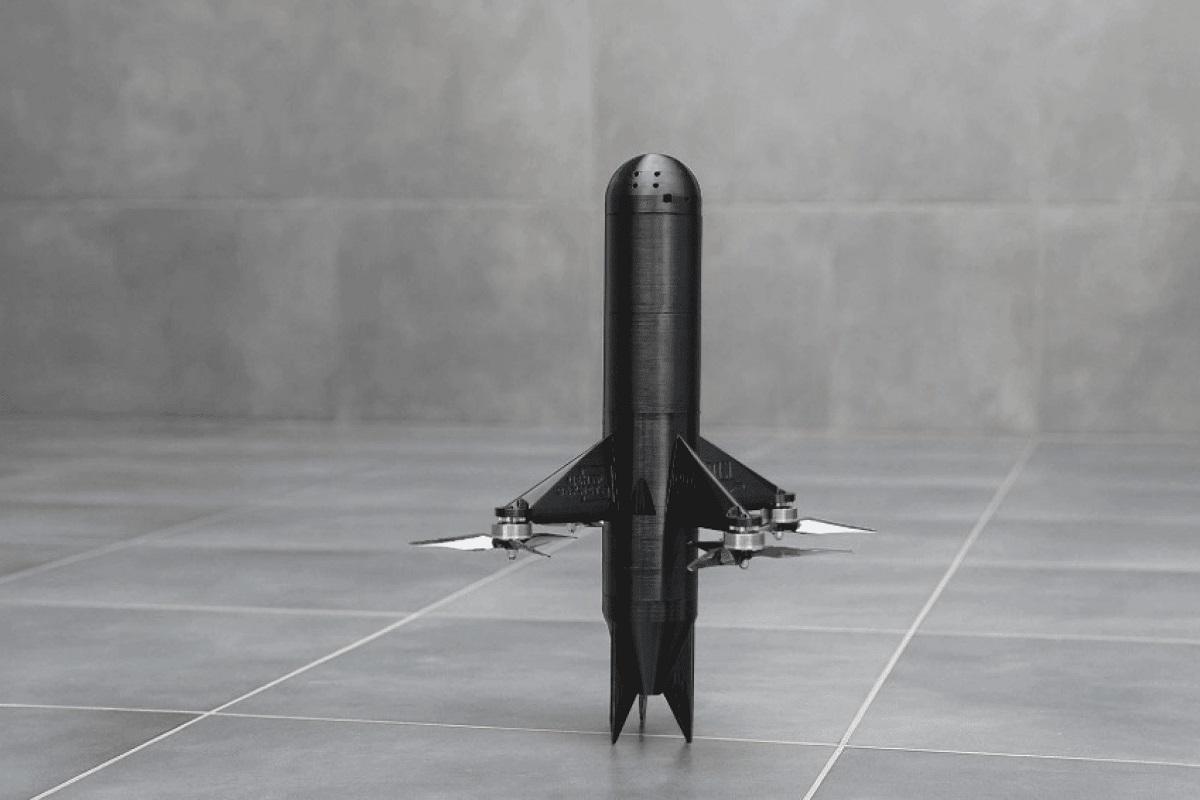
This weakens their defences, making it easier for Ukrainian drones and cruise missiles to hit production facilities and other targets in Russia. The weakening of Russian air defences is crucial to the effectiveness of the much-discussed Ukrainian FP-5 ‘Flamingo’ cruise missile, as the Flamingo is comparatively easy to intercept.
Only when there are sufficient gaps in Russian air defences, will attacks with this type of cruise missile become more successful. To achieve this, Ukraine needs modern guided missiles that are difficult to intercept in order to create the conditions for an even more effective deep strike strategy. These weapons include the Taurus cruise missile.
As already highlighted in several Monitor reports, strengthening Ukraine's deep strike capabilities is crucial to preventing further expansion of Russian attack capabilities, which could overwhelm Western defence systems and Western production capacities for air defence ammunition.
Ukraine's ability to carry out targeted deep strikes therefore serves not only its own survival, but also the security of Europe as a whole.
 Militarnyi, 16.7.2025
Method
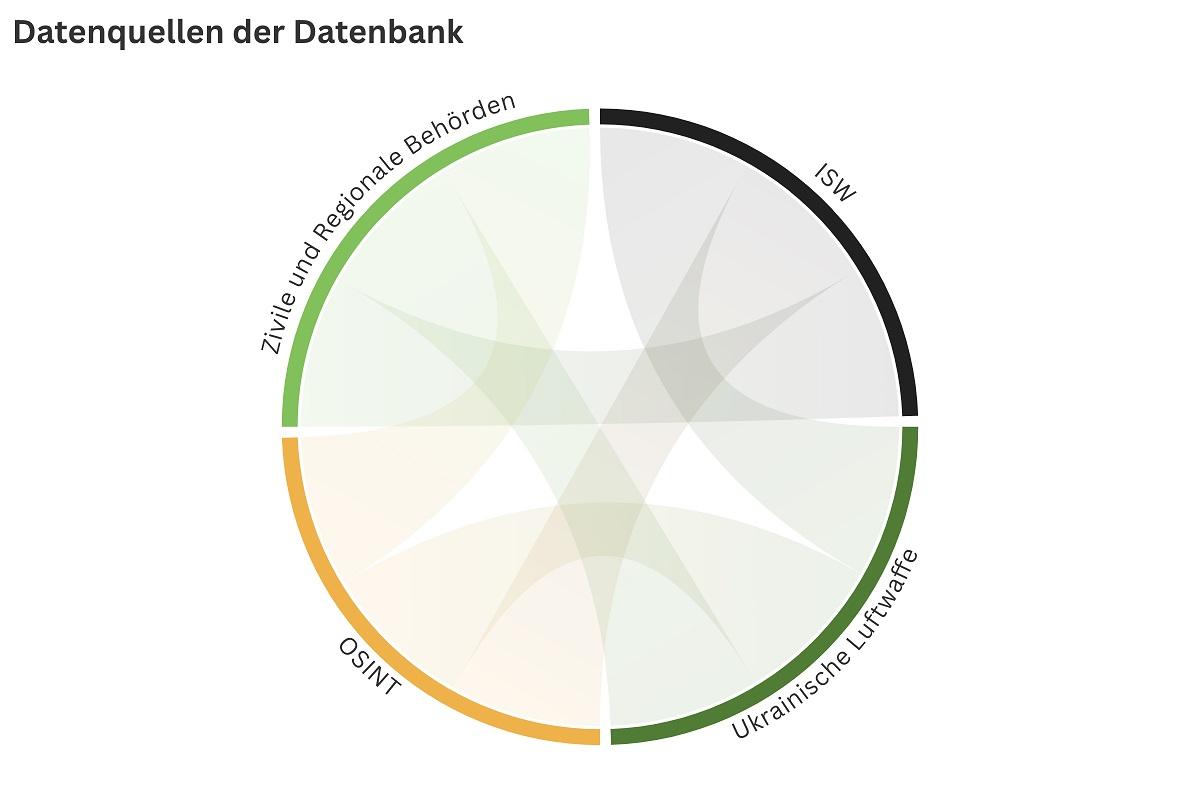
The air strike database is regularly cross-referenced with daily reports from the Institute for the Study of War (ISW) in Washington (↗ ISW).
The launch records originate from the Ukrainian Air Force reports (↗ KPSZSU), and data on regional targets and damage—if available—is supplemented with civilian and military administration sources.
These figures are further verified using additional OSINT sources and are considered highly reliable.
 Kyjiwer Gespräche
Accurately quantifying air strike damage during an active war is inherently challenging. Providing overly precise information could aid Russian military planning, which is why certain reporting restrictions apply (↗ Expro, 2.1.2025).
Consequently, this analysis focuses on attack patterns and dynamics rather than detailed damage assessments.
With over 36 months of data and around 53,000 documented attacks, robust trends have emerged. Monthly missile counts are approximate values, as irregularities have been noted in Ukraine’s reporting system. Discrepancies with other OSINT sources remain within a 10 % margin, often below 3 %.
A comparison with the missile and drones assessment by the Center for Strategic and International Studies (CSIS) in Washington over a period of more than two years shows a deviation of only 1.6 % (↗ CSIS).
For attacks lacking definitive quantification, the lowest plausible estimates have been used. Due to possible underreporting in high-intensity phases, actual interception rates may be slightly higher, with an estimated deviation of less than 5 %.
About the Author
Marcus Welsch is a freelance analyst, documentary filmmaker, and publicist.
Since 2014, he has specialized in OSINT journalism and data analysis, focusing on the Russian war against Ukraine, military and foreign policy issues, and the German public discourse.
In cooperation with Kyiv Dialogue, he has conducted research and panel discussions on Western sanctions policy since 2023.
Since 2015, he has been running the data and analysis platform ↗ Perspectus Analytics.
About Kyiv Dialogue
Kyiv Dialogue is an independent civil society platform dedicated to fostering dialogue between Ukraine and Germany.
Founded in 2005 as an international conference format addressing social and political issues, it has moved to support civil society initiatives aimed at strengthening local democracy in Ukraine since 2014.
Since Russia’s full-scale invasion in 2022, the focus has shifted to social resilience, cohesion, and security policy—including military support for Ukraine and Western sanctions policy.
Kyiv Dialogue is a program of the European Exchange gGmbH.
CONTACT
Kyiv Dialogue
c/o Europäischer Austausch gGmbH Erkelenzdamm 59, D-10999 Berlin +49 30 616 71 464-0 info@kyiv-dialogue.org www.kyiv-dialogue.org
Konrad Adenauer Foundation Ukraine
Bogomoltsja St. 5, Wh. 1, 01024 Kyiv / Ukraine
+38 044 4927443 office.kyiv@kas.de
www.kas.de/de/web/ukraine


You need to sign in in order to comment.