Historical Walking Tour: Station 7
Cadenabbia as a place for meetings and diplomacy
In general, the villa was inhabited by some animals. It was the domicile of the bats that fluttered around in the twilight under the trees of the park. In the first days of our presence, a pungent smell dominated all rooms. At night, dormice danced in the attic and also got lost from time to time in the bathrooms and bedrooms. But they are harmless, the Chancellor explained in an attempt to allay the fear of his frightened ladies. Less harmless were scorpions. Before our arrival, they had already killed three, albeit young animals, as they asserted. But where were the parents? There was an antiserum against their poisonous bites in the house, as well as the telephone number of the nearest doctor and the pharmacist, who was also allowed and able to inject.




Table of Contents
Willy Brandt visits Cadenabbia
Golo Mann as a guest at Lake Como
During his vacation, Adenauer often received guests from politics, diplomacy, journalism and culture. The first category mainly included personalities with CDU party offices and members of the government; particularly frequent guests in Cadenabbia were, for example, the long-standing chairman of the CDU/CSU parliamentary group, Heinrich Krone, Foreign Minister Heinrich von Brentano and State Secretary Hans Globke, but also at the international level Dirk Stikker, high-ranking Dutch diplomat and NATO Secretary General from 1961 to 1964, who owned his own holiday home in nearby Menaggio. Even high-ranking visitors from Asia were received in the person of former Japanese Prime Minister Shigeru Yoshida.

Willy Brandt visits Cadenabbia
There were hardly any visits by prime ministers from the federal states, with the exception of the North Rhine-Westphalian prime minister and former campaign manager of the 1957 election, Franz Meyers. The vast majority of them were "party friends" of the Chancellor, with the exception of the visit of the then Governing Mayor of Berlin, Willy Brandt, on 21 September 1962 – after the hard-fought Bundestag election campaign of 1961, which was also associated with personal accusations against Brandt, especially on the part of Adenauer, this was certainly a gesture of symbolic character.

Walter Henkels, known for his biographical sketches of Bonn politicians, was a frequent guest among journalists. Since 1962/63 and the (approaching) end of the chancellorship, more and more personalities from cultural life have joined the ranks, such as the painters Graham Sutherland and Oskar Kokoschka, who each made important portraits and sketches of Adenauer, and the photographer Will McBride.
Golo Mann as a guest at Lake Como
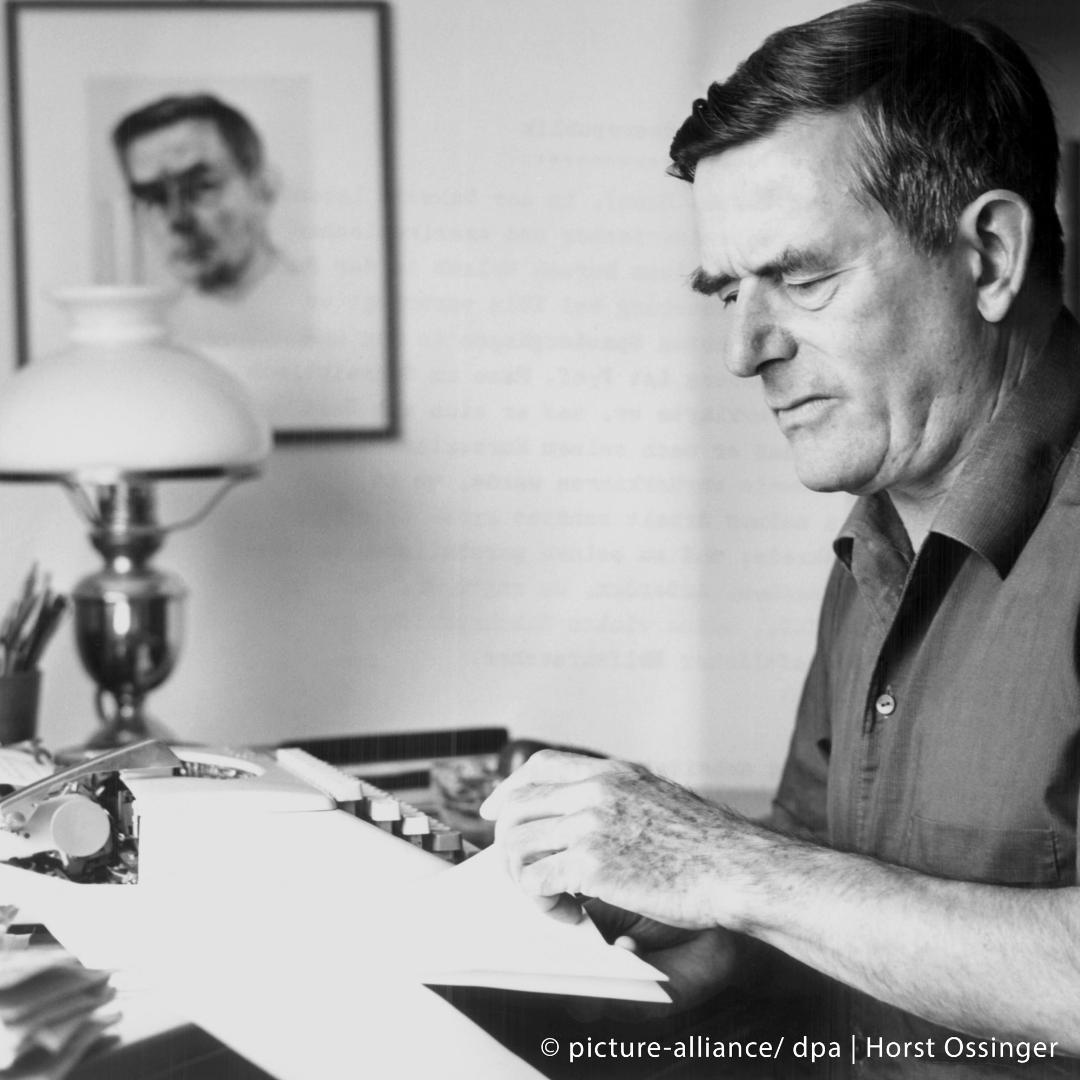
In April 1966, the historian and publicist Golo Mann, son of Thomas Mann, visited Konrad Adenauer in Cadenabbia. His "German History in the XIXth and XXth Centuries", published in 1958, had become a bestseller and testified to his special ability to combine historical facts with an appealing literary style. Mann had reviewed the first volume of Adenauer's "Memoirs" in "Die Zeit", and that's how the contact came about. First, however, the prominent visitor stood - in the truest sense of the word as if ordered and not picked up - at the train station of Lugano. His letter, in which he had announced his exact arrival and formulated the request to be picked up at the station, did not reach Adenauer until the following day due to a strike at the Italian postal service. Finally, Mann took a taxi to Cadenabbia, because of a car accident he was stuck in a traffic jam for a long time on the way. So it was already late afternoon when he arrived at the "Villa La Collina". This was followed by a conversation between him and Adenauer over tea that lasted several hours, some of which was also attended by the secretary and advisor Anneliese Poppinga. Looking back, the guest described his physical impression of Adenauer as follows: "A very slight resemblance to Metternich's last photograph; the porcelain delicacy of the highest age, the distant gaze. The laughter or smile very amiable, mischievous, the face crumpled into pleasant wrinkles".
Afterwards, Mann wanted to go back to Lugano, but Adenauer spontaneously invited him to dinner and finally persuaded him to spend the night in the guest room of the "Villa La Collina". It had to be improvised, because Mann was not prepared for a longer stay. For example, the former chancellor offered him a razor. Before dinner, he showed his guest the park of the estate during a walk. Later, Adenauer presented his guest with the draft for the table of contents of the second volume of his memoirs and discussed some tricky passages with him. They also talked about their shared preference for poetry and Adenauer complained that young people today had completely lost the ability to memorize because they lacked the necessary concentration.
In a report, Mann describes the conditions on site: "The night passed tolerably; the bed was uncomfortable, the room sparse and stylishly furnished, with a fireplace and a view of the lake." After breakfast he left, the former chancellor made his well-known official Mercedes and chauffeur available to him for the trip to Lugano. After the publication of the second volume of memoirs in the fall of 1966, Mann also discussed it in “Die Zeit”, whereupon Adenauer thanked him in writing. It was agreed that they would meet again in Cadenabbia in May 1967, but this was not to take place due to Adenauer's death on 19 April 1967.
In Adenauer's time, the interior of the "Villa La Collina" was not really a cosy holiday home. Not only did bats and dormice live in the attic, which were active at night, and there was a lack of warm water for showering – the living room was cool and due to the thick, heavy curtains and the porches of the terraces, hardly a ray of sunlight penetrated. Adenauer's travel companions therefore also referred to this room as "the crypt".