







Asset Publisher

Publikationen

Asset Publisher

IMAGO / UPI Photo

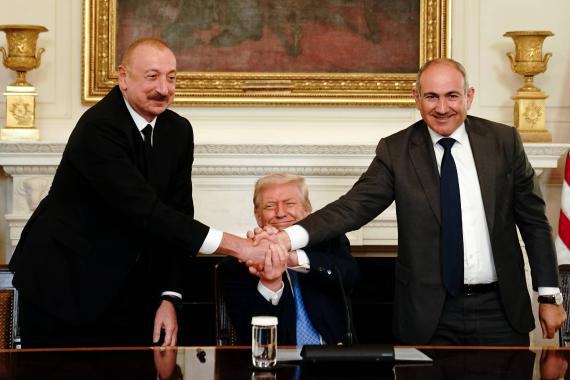
Historic Breakthrough for Peace in the South Caucasus?

Pashinyan and Aliyev sign groundbreaking agreements with Trump on peace and infrastructure projects between Armenia and Azerbaijan

On August 8, Armenian Prime Minister Nikol Pashinyan and Azerbaijani President Ilham Aliyev met with U.S. President Donald Trump at the White House for a “historic peace summit.” Both countries declared a permanent renunciation of war, endorsed 17 negotiated provisions of a future peace treaty, and formally withdrew from the OSCE Minsk Group. At the heart of the agreement lies the “Trump Route for International Peace and Prosperity” (TRIPP), an infrastructure initiative in Armenia’s Syunik region encompassing railways, pipelines, and fiber-optic networks. In exchange, the United States receives exclusive development rights for 99 years, while Armenia retains formal sovereignty over the territory. The deal diminishes Russia’s regional influence, strengthens Turkey’s strategic position, and provokes discontent in Iran. For Armenia, the agreement opens up new trade opportunities but also entails risks due to the rupture with traditional partners and domestic political criticism. Azerbaijan gains a direct land corridor to Turkey, access to new markets, and enhanced international prestige. For the United States, the deal offers economic and security benefits as well as a boost in global political standing. The European Union sees potential for regional stabilization and new trade routes but must acknowledge its diminished role as a mediator compared to Washington. If successfully implemented, the agreements could mark a historic turning point for the South Caucasus.

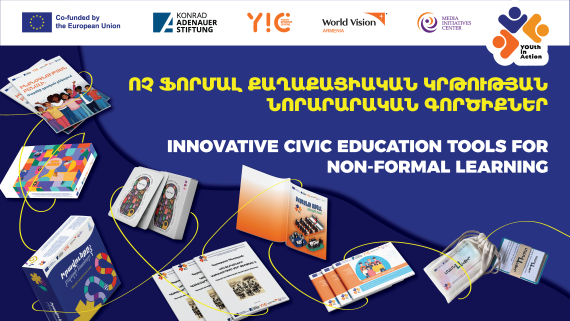
Discover 8 Innovative Civic Education Tools 

From games to simulations and educational guides - each tool offers a fresh way to learn, engage, and act.

IMAGO / ITAR-TASS

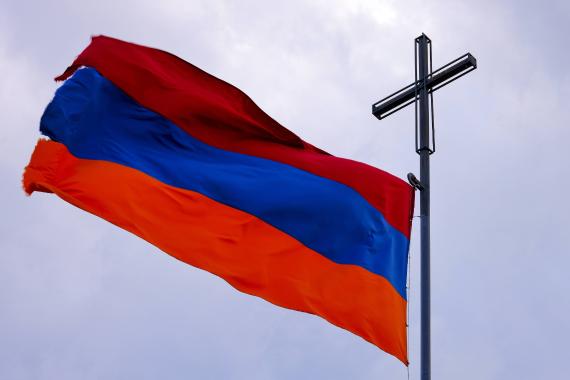
Foiled Coup in Armenia? Conflict with Church Leadership Escalates

Yerevan reports the thwarting of a violent coup with Moscow's fingerprints

On the afternoon of June 27, 2025, dramatic scenes unfolded in Etchmiadzin, the seat of the head of the Armenian Apostolic Church, located 20 km west of Yerevan. Special police units moved in to detain Mikael Ajapahyan. The archbishop, along with other church leaders, had openly opposed the government, but hundreds of people—including clergy and ordinary citizens—blocked the path until the uniformed officers withdrew. When the wanted man voluntarily turned himself in to the authorities later that evening, asserting his innocence, he became just one of fifteen high-profile arrests within a matter of days. Nikol Pashinyan’s government claims to have thwarted a violent coup attempt. Critics, however, accuse it of launching a politically motivated campaign against the Armenian Church and the opposition, and of betraying the country to its archrivals, Azerbaijan and Turkey. Societal divisions appear more entrenched than they have been in decades. One year ahead of the pivotal parliamentary elections in the summer of 2026, the current escalation is unfolding against the backdrop of an increasingly polarized debate over the country’s direction, as Armenia stands at a historic crossroads in its foreign policy.

OPEN CALL FOR PAID FELLOWSHIP

The “Youth in Action” Project invites young people from the mentioned regions of Armenia to apply for a fellowship opportunity that offers professional development through practical experience and support from sectoral experts.

OPEN CALL: ANIMATION VIDEO PRODUCTION SERVICES

The "Youth in Action: Youth Empowerment and Leadership Development in Armenia" Project, a co-funded initiative by the European Union and the Konrad Adenauer Foundation (KAS) implemented together with the World Vision Armenia (WVA), Media Initiatives Center (MIC), and Gyumri "Youth Initiatives Centre" (YIC) is seeking to engage a professional video creator to develop short animation videos aimed at promoting media literacy, critical thinking in media consumption, Ai, digital security and digital citizenship.

OPEN CALL FOR PAID INTERNSHIP

Competition

Are you a recent graduate or a current student living in one of the six listed regions? If so, this opportunity is for you!

Frieden durch Konnektivität

Studie

Einblicke der Gemeinde Meghri zur Wiedereröffnung der regionalen Verkehrsinfrastruktur Im Rahmen von Fokusgruppendiskussionen mit Bewohnern, zivilgesellschaftlichen Organisationen, der lokalen Selbstverwaltung und der Geschäftswelt wurden lokale Diskurse über die Wiedereröffnung von Transportrouten durch die Region Meghri angeregt. Die Studie ist hier abrufbar.

KAS

Special edition - Country reports with a difference

International comparison of accessibility

This publication provides research, compiled by some of our overseas offices, on the current situation of political participation for people with disabilities, in their respective countries. We hope that their reports will increase awareness of the sadly often persistent inequalities that remain and motivate all of us to pay greater heed to the issue of inclusion.

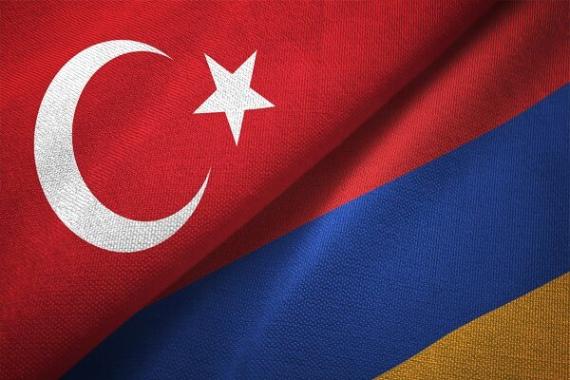
The Armenian-Turkish Normalization Process

Discussion Paper

In a historic turn, Armenia and Turkey have renewed efforts to normalize relations after decades of diplomatic estrangement and a sealed border. This process—remarkably pursued without preconditions—follows previous failed attempts like the Zurich Protocols, which collapsed under domestic and regional pressures. Amid shifting geopolitical dynamics after the 2020 Nagorno-Karabakh war, both sides have taken cautious yet meaningful steps, such as restarting air cargo transport. This paper explores the roots of this complex relationship, the evolving regional context, ongoing challenges, and offers policy recommendations to support a lasting rapprochement.

IMAGO / NurPhoto

Georgian Knot: Local Repressions and International Isolation

For weeks, Georgia has been caught in a destructive cycle of protests and repression, isolating the country on the international stage.

Even after nearly 70 days of continuous protests, the de facto government of Georgia—controlled by oligarch Bidzina Ivanishvili—remains unyielding. However, instead of the brutal crackdowns seen at the start of the demonstrations, authorities are now resorting to targeted intimidation and repression against individuals. The cases of Msia Amaghlobeli and Giorgi Gacharia starkly illustrate how the rule of law in Georgia has collapsed in recent months. Internationally, the country is increasingly isolated. Recent diplomatic visits by the new government leadership to neighboring Azerbaijan and Armenia highlight that Georgia’s path to Europe remains blocked under the rule of the Georgian Dream party.