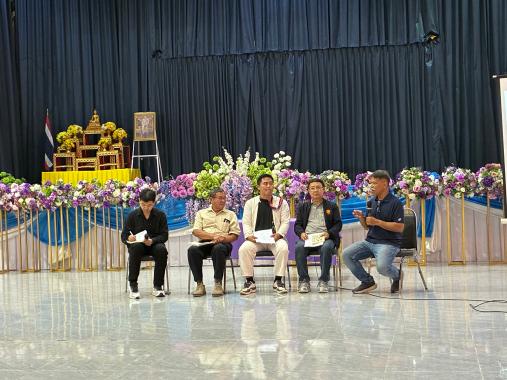
Youth Facilitator Training on Deliberative Skills and Techniques
Youth Deliberation Workshops: Shaping Our Role in Social Protection Systems
The project builds on the Youth Deliberation Hackathon model developed last year, aiming to address the limited opportunities for young people in provincial areas to participate in policymaking. This year, Ubon Ratchathani has been selected as the target province due to its relatively low civic participation and pronounced social protection gaps.
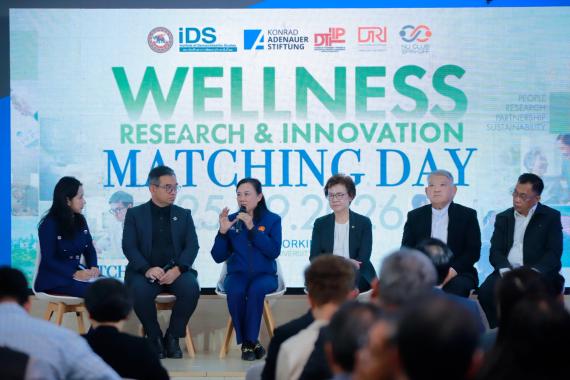
Longevity & Wellness Economy: Building a Regional Longevity Innovation Ecosystem
University-led Innovation for Regional Growth and Healthy Longevity
As Thailand moves towards becoming a super-aged society, what opportunities can this demographic change bring?
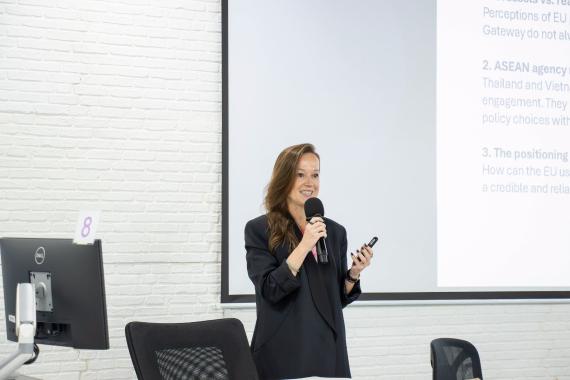
Special Lecture “The EU Global Gateway and Beyond – Aligning the EU’s Connectivity Agenda with Thailand”
Drawing on the study “A Strategic (Global) Gateway to Southeast Asia: Aligning the EU’s Connectivity Agenda with Local Realities in Thailand and Vietnam” by Dr. Zsuzsa Anna Ferenczy
Public Participation and Role of the Provincial Civic Learning and Political Development Centres 2026 in Bangkok
Advancing Food Security Public Policy toward the Food Security Bill
The convention of the project on the Citizen Council for public policy and decentralisation: enhancing public participation in democratic development and policy implementation
Second Main Workshop for the 5th OpenGov for Citizen Activity: Share the Vision, Shape the Future @Bang Kachao (Community x Expert Co-Creation Workshop)
Open Government and Policy Innovation - Integrating Citizen Insights for Regional Strategic Planning through Digital Platform
Building on the success of the “OpenGov for Citizen” initiative in the past years, the OPDC is now expanding its efforts to open more spaces for public and multi-sectoral participation on a wider range of issues, with the expectation of fruitful cooperation with Konrad-Adenauer-Stiftung Thailand Office again in this year.
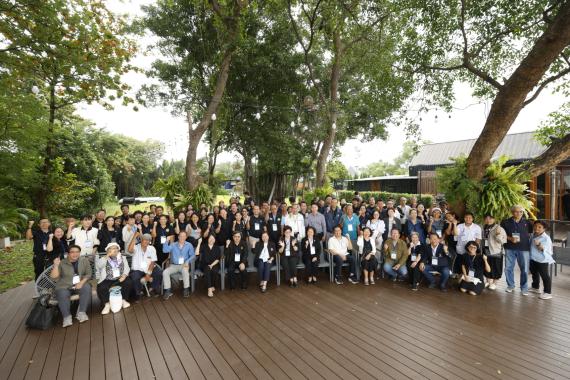
KASSID Batch 5 Scholar Orientation Meeting
Providing the new scholars with an opportunity to gain a deeper understanding of KAS Thailand’s mission, share their perspectives and explore opportunities for future collaboration with one another
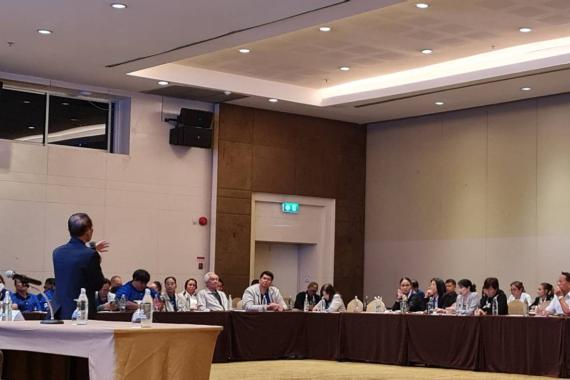
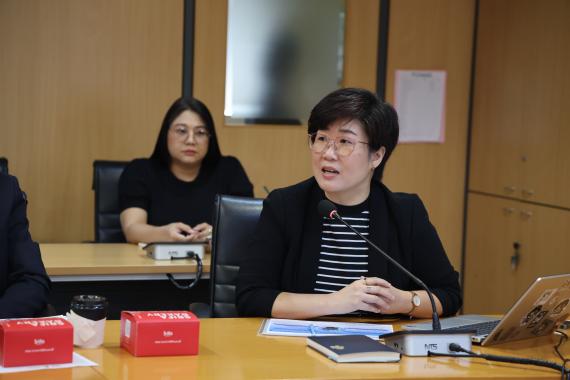
Capacity Building for Parliamentary Officials – SMART Organisation and SMART Parliament with Generative AI
Workshop and Capacity Building
Parliamentary offices are required to function as learning organisations by continuously developing and utilising internal knowledge. This training program supports the Secretariat of the National Assembly (SNA) in becoming a SMART organisation by strengthening officials’ capacity to apply generative AI in their work.
First Pre-hackathon Meeting to discuss project details of MY BETTER COUNTRY HACKATHON #15
In close partnership between the Konrad-Adenauer-Stiftung and OPDC
Kick-off Meeting and Special Lecture on Generative AI for Local Government Empowerment, Local Administrations’ Efficiency Enhancement, and Modern Public Services Development
Enhancing Local Government Capacity through Artificial Intelligence for Public Management and Service Delivery
Through on-the-job training and co-design approaches, the project will further enhance the existing “SILA Hug” digital public service platform, originally co-developed by Sila Town Municipality and COPA KKU
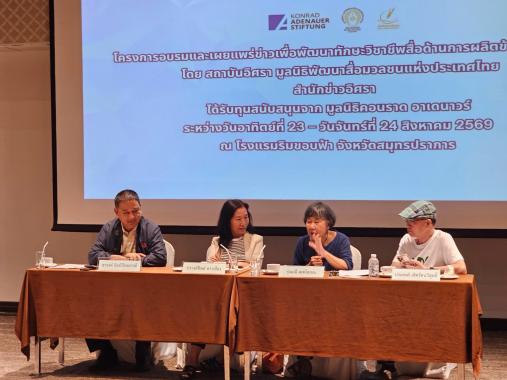
First Activity for the Capacity Building for Young Journalists on Effective and Responsible Media Roles in Democratic Participation in the Policy Process
Empowering Young Journalists for Informed and Responsible Journalism
The Capacity Building for Young Journalists training, organised by the Konrad-Adenauer-Stiftung (KAS) Thailand in partnership with Isra News Agency, aims to strengthen the professional skills and subject-matter knowledge of young professional journalists and support their role in promoting informed public discourse and democratic participation.
Public Participation and Role of the Provincial Civic Learning and Political Development Centres 2026 at Phitsanulok Province
Advancing Food Security Public Policy toward the Food Security Bill
The third provincial workshop of the project on the Citizen Council for public policy and decentralisation: enhancing public participation in democratic development and policy implementation