





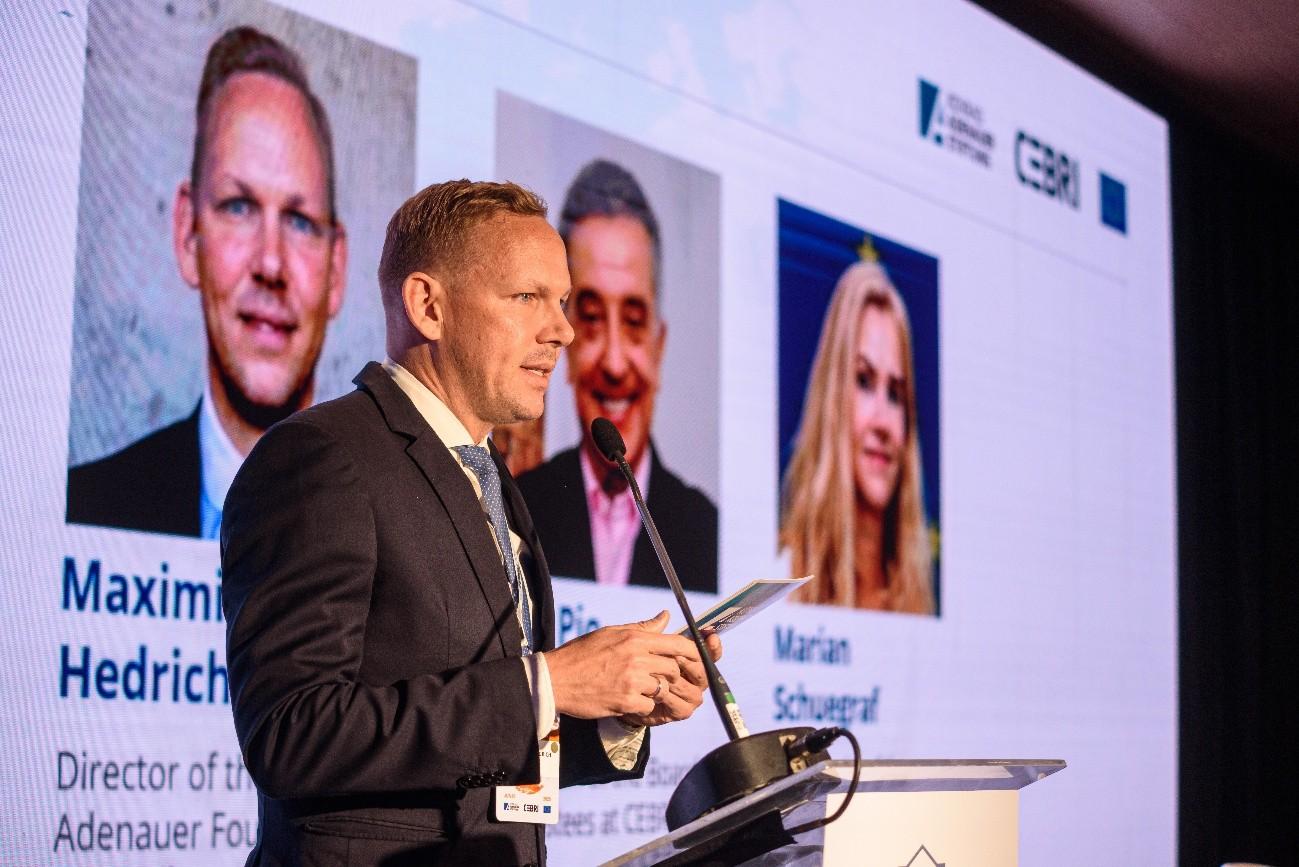

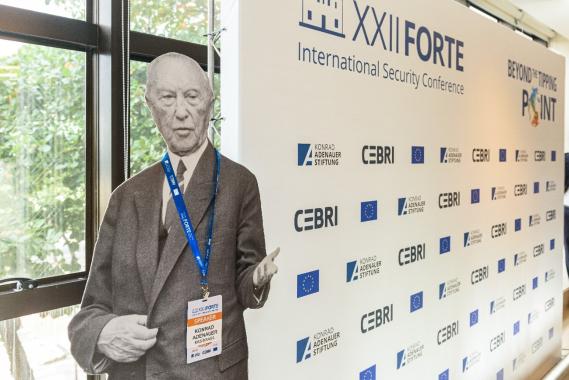
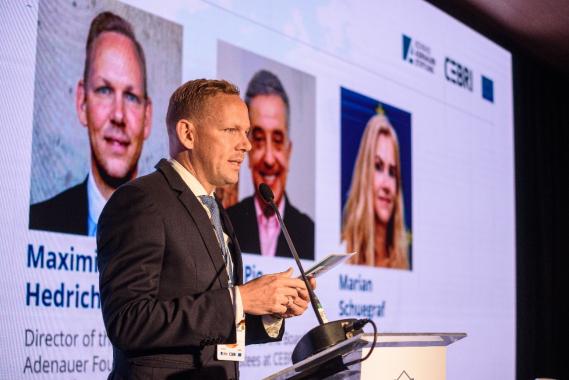

The Director of the Brazil Office of the Konrad-Adenauer-Foundation e.V., Maximilian Benjamin Hedrich, warned of the effects that climate change is already having on the current security architecture. Even a rise of 1.5°C in the global average temperature acts as a multiplier for existing conflicts, the struggle over resources, and the challenges facing established institutions.
Keynote: “Climate meets security: threat multiplier and global issue?”
Roland Theis, Member of the German Parliament (CDU), opened the conference with insights into how climate change is challenging our security. He highlighted how Belarus exploits the growing number of climate refugees by deliberately channeling migration flows and directing them toward the West.
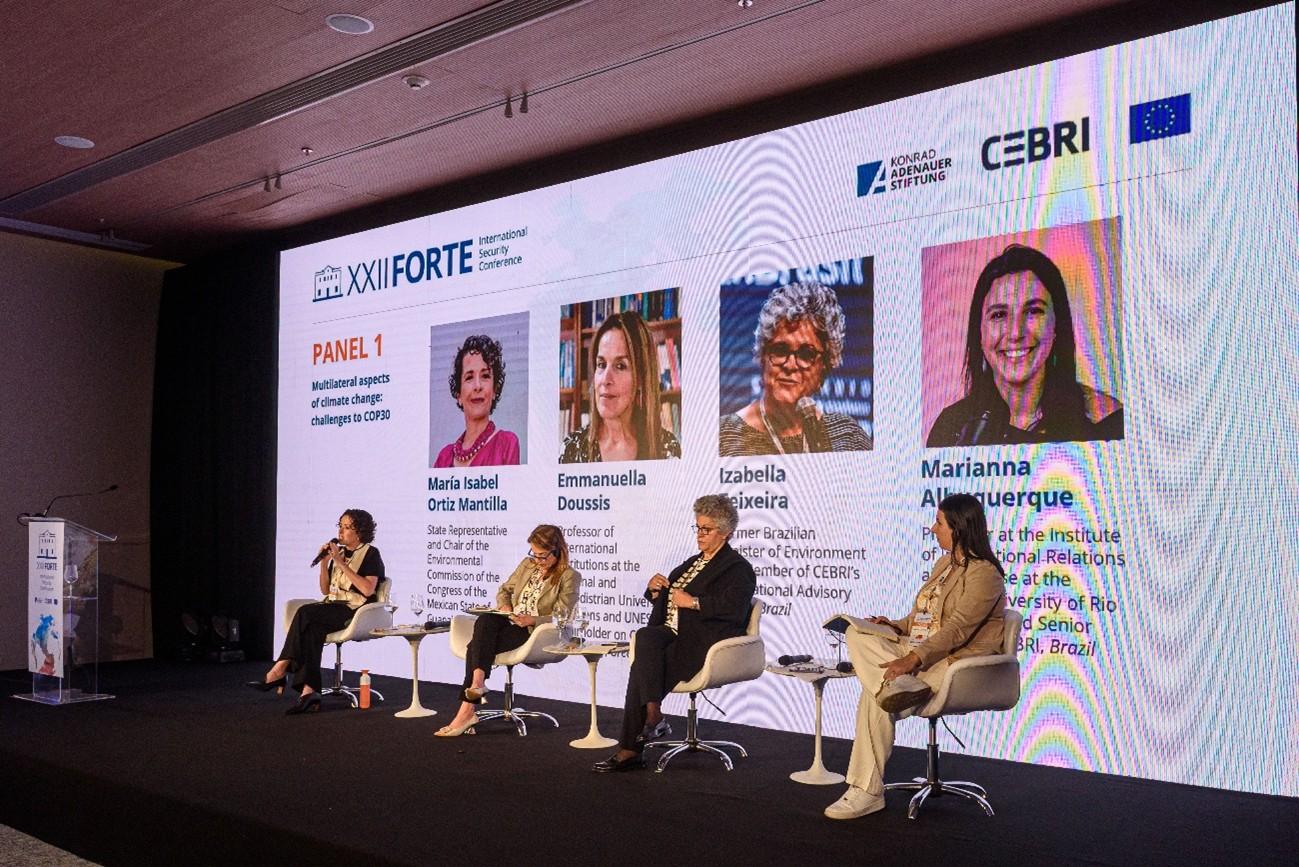
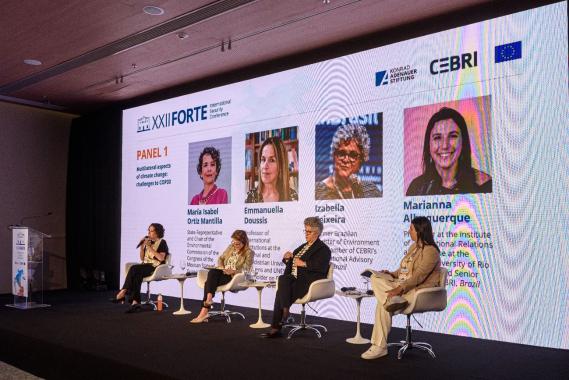
Panel 1 – “Multilateral aspects of climate change: challenges to COP30“
Five months before the COP30 World Climate Conference in Belém, Brazil has the opportunity to leverage its high international standing to drive improvements in global climate protection efforts. Former Brazilian Environment Minister Izabella Teixeira emphasized the need for concrete policy initiatives to follow the conference.
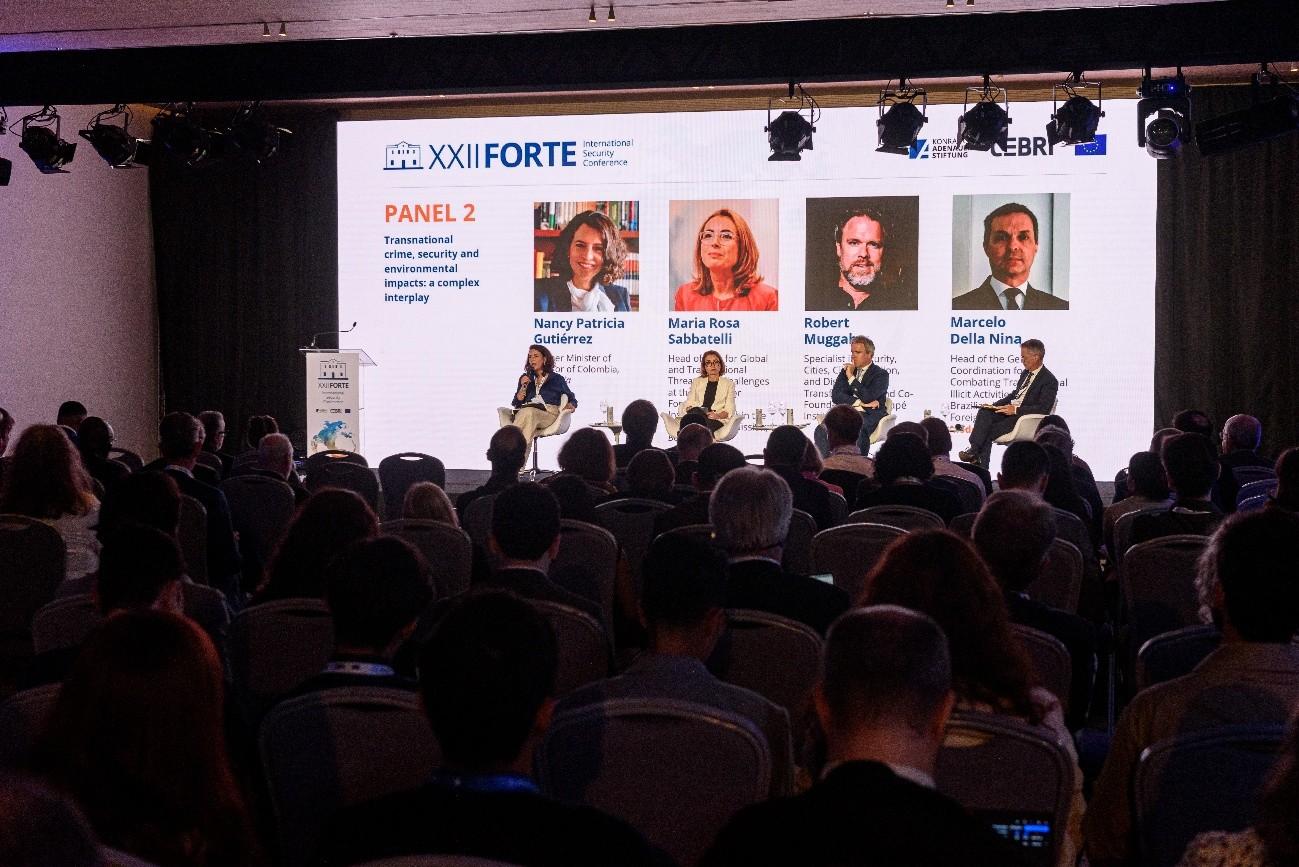
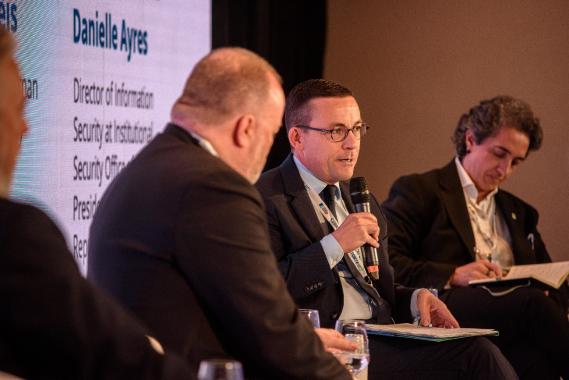
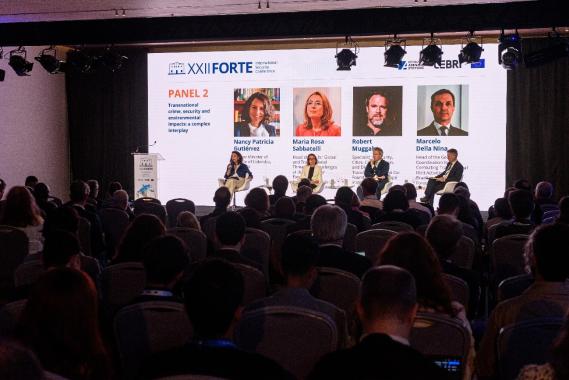
Panel 2 – “Transnational crime, security and environmental impacts: a complex interplay “
The impenetrable web of relationships between transnational organized crime, the erosion of security, and the rising number of environmental crimes left the audience with a bitter aftertaste. Whether it concerns the use and dumping of chemicals for drug production, the corruption of security forces through drug money, human trafficking, illegal logging, or the contamination of entire regions with mercury used in clandestine gold mining—the lines between these issues are fluid. Another highly relevant aspect was introduced by Robert Muggah, who noted that it is likely artificial intelligence will soon be effectively employed to combat organized crime in the remote Amazon region, for instance by identifying smuggling route patterns in advance.
Panel 3 – “The new geopolitics of energy: resources, security and power“
The Russian war of aggression against Ukraine has most recently illustrated how dangerous dependence on fossil fuels can be for the security of entire countries. For a long time, Europeans were largely unwilling to confront the Kremlin's increasingly aggressive foreign policy. The construction of dams, which can be used to artificially restrict access to water, also holds significant potential for conflict.
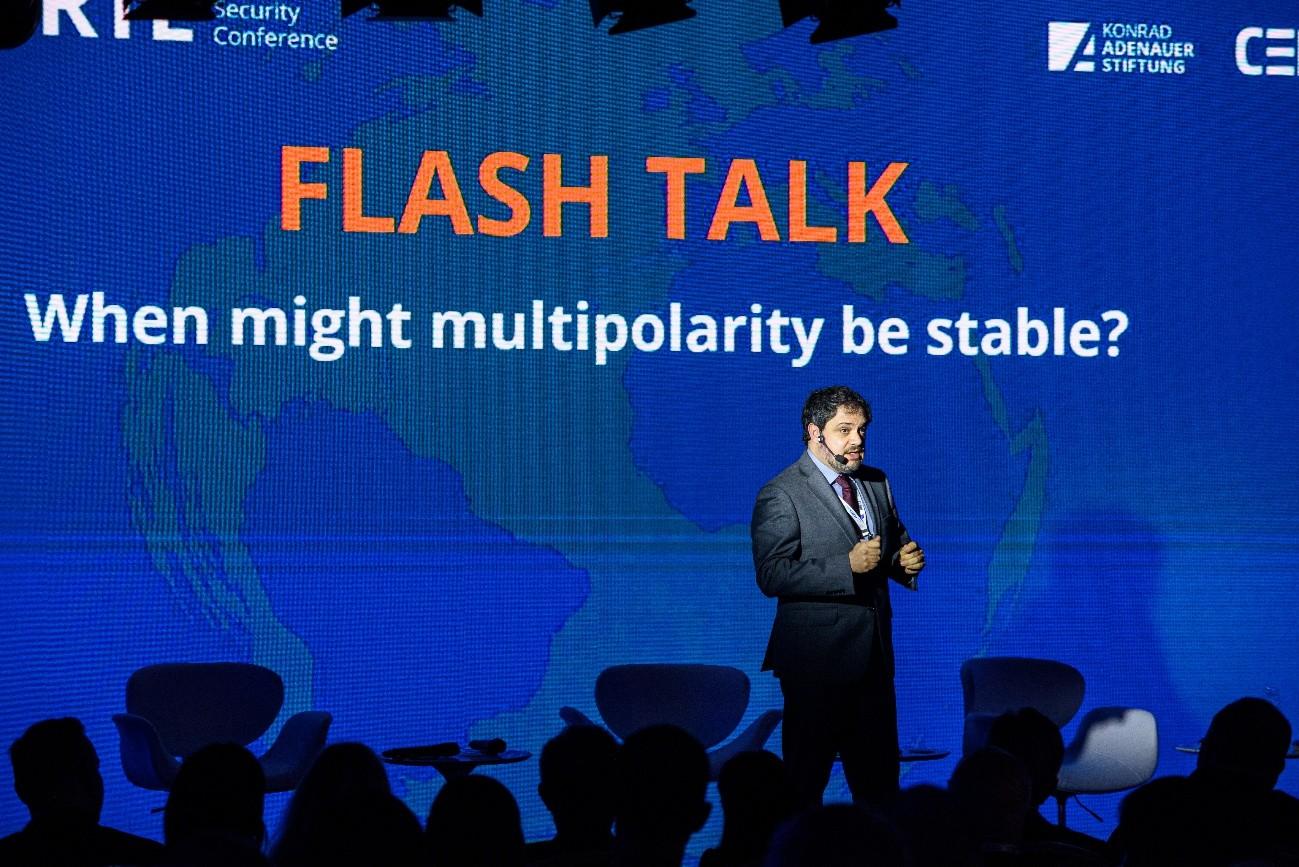
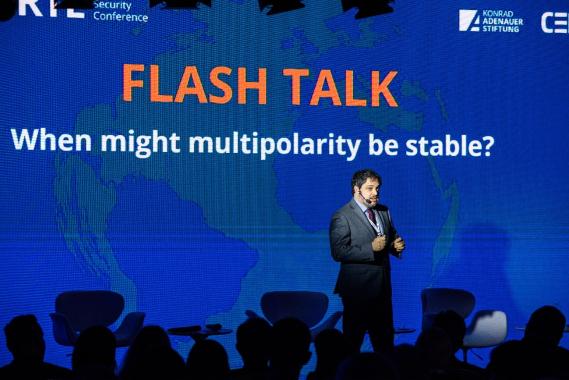
Flash Talk I – “When might multipolarity be stable?“
For the first time in its more than 20-year history, the Forte Conference introduced the Flash Talk format—and did so with great success. In engaging 20-minute presentations, Matias Spektor and Elena Lazarou captivated the audience with their dynamic and free-flowing speeches. Professor Spektor outlined the factors required to build a stable multipolar system…
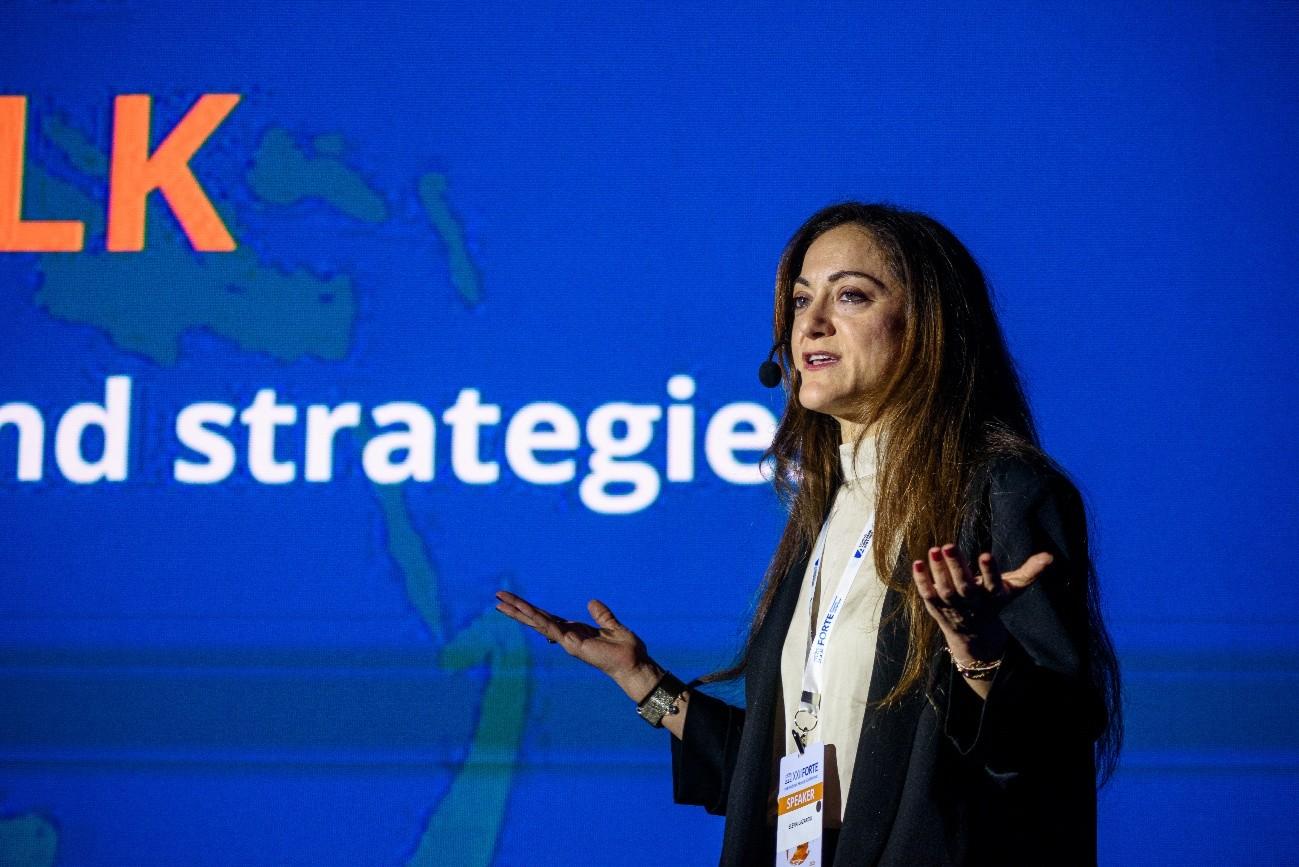
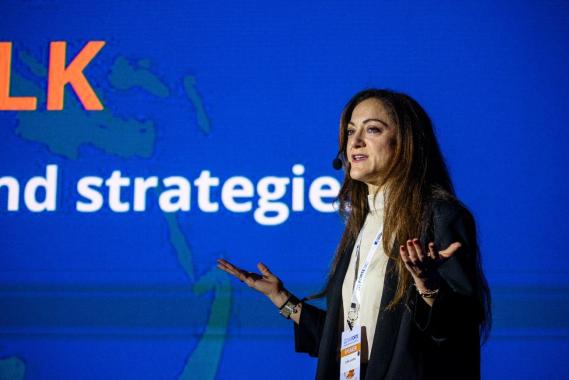
Flash Talk II – “Global power shifts: trends and strategies”
… Elena Lazarou, for her part, emphasized the strong ties between Europe and Latin America, grounded in their shared preference for soft power.