










Asset Publisher

Publications

Asset Publisher

IMAGO / TheNews2

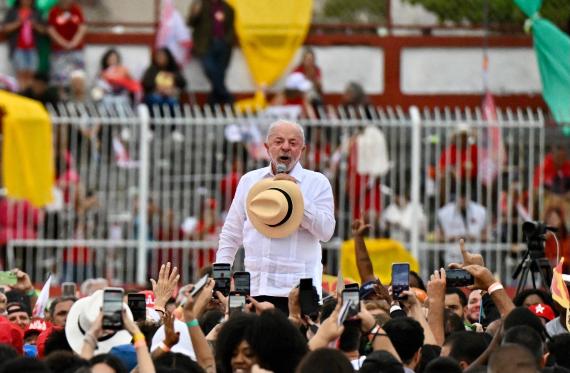
“A Lot of People in Brazil Want a Political Middle Ground”

An Interview with Maximilian Hedrich

Brazil is heading into pivotal elections shaped by antagonistic political camps and a fragmented centre. While economic concerns and security issues dominate, a convincing alternative between left and right remains elusive. What dynamics are shaping the vote, and what does that mean for Europe?

IMAGO / Christian Ohde

The EU–Mercosur Agreement

Fresh Momentum for European–Latin American Relations

The EU–Mercosur Agreement is as hailed as a milestone as it is contested. Between economic opportunities, criticism and global competition, much is at stake for businesses, agriculture and the EU’s international role. Can the deal deliver growth without deepening political and environmental tensions?

Brazil in Focus 06/2026

What the Polls Say About the Senate Elections / Digital Sovereignty Starts with Infrastructure: Assessing the Expansion of Data Centers in Brazil

Download and read the new issue of the “Brasil em Foco” series for free. This June’s issue highlights two key issues for Brazilian democracy in 2026. In the first article, an overview of Senate election polls points to the rise of right-wing parties and significant losses for currently dominant parties, showing how the 2026 election could reshape the balance of power between the executive and legislative branches over the next eight years. The second article analyzes the expansion of data centers in the country and highlights the gap between Brazil’s energy potential and its actual data processing capacity, revealing the risks of digital sovereignty that is merely rhetorical if it is not accompanied by its own infrastructure and a regulatory framework capable of translating this competitive advantage into benefits for the domestic market.

Defense industry and new technologies

Cadernos Adenauer 2/2026

The latest edition of the Cadernos Adenauer series presents a collection of articles that explore some of the key aspects of the intersection between the defense industry and new technologies, offering readers insights into how this sector is reinventing itself in the face of digital and scientific transformations, with a particular focus on the economic, social, and political impacts within the Brazilian context.

Rewiring Power: Technology and Geopolitics in a Fragmented World

Policy Papers

The publication Policy Papers 2026, which covers the themes of the 23rd International Security Conference at Forte, is available for free download.

Outlook for the 2026 elections

Cadernos Adenauer 1/2026

The first 2026 edition of Cadernos Adenauer brings together eight chapters dedicated to the key issues that will shape the Brazilian political landscape in this election year. The opening chapter offers insights into what to expect from the electoral process, highlighting trends and possible scenarios for the election. The volume then addresses recent changes in electoral legislation and their practical impacts, the tax challenges that directly influence the economy and politics, and the fight against misinformation—an issue increasingly essential to the health of democracy. The volume is rounded out by analyses of party coalitions and federations, campaign financing, and the structural obstacles facing the Brazilian economy. The edition also devotes a chapter to environmental issues, examining how this topic fits into the strategies of parties and candidates, and concludes with a reflection on the role of international politics in the domestic electoral context—offering the reader a comprehensive and multifaceted view of the factors that will shape the 2026 elections.

Brazil in Focus 05/2026

What are we seeing? / How are election polls conducted? / Election misinformation: the most dangerous narrative remains alive and sophisticated

The May edition of the “Brasil em Foco” series highlights three critical fronts in national politics in 2026. The Senate’s rejection of a Supreme Court nominee exposes tensions between the executive, legislative, and judicial branches, revealing the influence of political interests over technical criteria. At the same time, the debate over election polls highlights both their relevance to campaigns and public opinion and their methodological limitations in a polarized and digitalized environment. Meanwhile, the persistence of election misinformation poses a continuous threat to democratic trust, now amplified by the use of generative artificial intelligence, requiring robust institutional responses to preserve the integrity of the electoral process.

Brazil in Focus 04/2026

Does the PSD Really Offer a Third Way for Brazil? / Cabinet reshuffle and strategy in an election year / An assessment of the election window

The latest issue of the Brasil em Foco series is now available, featuring three analyses of topics in Brazilian politics. Humberto Dantas’s article discusses the PSD’s attempt to build a “third way” in the 2026 elections. Despite the party’s regional strength and Gilberto Kassab’s leadership, the choice of Ronaldo Caiado—who is linked to the Bolsonaro movement—poses challenges in attracting “neither-nor” voters. Polls indicate that polarization is likely to persist. Joscimar Silva analyzes the changes in the ministries: in March and April 2026, Lula carried out a major cabinet reshuffle, with nearly half of the ministers leaving their posts to run for office. Executive secretaries took over, ensuring continuity of policies and pre-election initiatives. The strategy strengthens the government, secures programs, and expands the presence of former ministers in state and national races. Henrique Curi analyzes the 2026 electoral window, which closed on April 3, when more than 22% of congressmen switched parties. The PL emerged stronger, driven by Flávio Bolsonaro’s candidacy, while the PT remained stable. Governors and ministers also left their posts to run for office.

Brazil in Focus 03/2026

The Electoral Fund – Justifications, Amounts, and Rules / Underrepresentation of Women in Brazilian Politics: Between Care, Time, and the Limits of Democracy

The latest issue of the Brasil em Foco series features two articles that explore complementary aspects of Brazilian democracy. Humberto Dantas analyzes the creation and evolution of the Electoral Fund, highlighting how its centralization within political parties and the increase in funding amounts have failed to eliminate practices such as slush funds, self-financing, and the influence of illicit funds, thereby keeping campaign finance a central challenge to the legitimacy of elections. Patrícia Rangel, meanwhile, discusses the underrepresentation of women in politics, linking it to the gendered division of labor and the burden of care work, which limits their public participation. Despite quotas and financing rules, progress remains modest, and equality remains more formal than real. Taken together, the texts conclude that Brazilian democracy faces structural dilemmas: dependence on financial resources for electoral success and the persistent exclusion of women from positions of power, both factors that undermine its full legitimacy.

Brazil in Focus 02/2026

The PSD and the difficult thesis of the “third way” / Electoral governance and the Brazilian model / The return of Congress and the agenda for 2026

Download and read the three articles that make up the February edition of the Brasil em Foco series for free. The first article analyzes the difficulty of consolidating a “third way” in the 2026 elections, highlighting Gilberto Kassab's PSD. Although the party has strength at the state and municipal levels, it faces challenges in terms of national unity, candidate selection, and competition in the face of the consolidated polarization between the PT and PL. The second article explains electoral governance as a set of rules and institutions that regulate elections. It highlights the Brazilian model, Independent-Specialized, with the TSE and TREs autonomous from the Executive. Created in the 1930s to combat fraud, it concentrates administrative and judicial functions, but faces criticism for accumulating broad powers. The text that closes this edition analyzes the 2026 legislative agenda, marked by reduced time due to holidays, the World Cup, and elections. It highlights priority issues such as public safety, artificial intelligence, taxation of data centers, and fiscal balance. Congress will need to demonstrate maturity and commitment in the face of political, economic, and institutional challenges.

Asset Publisher

Country Reports

Short political reports of the KAS offices abroad

The Konrad-Adenauer-Stiftung is a political foundation. Our offices abroad are in charge of over 200 projects in more than 120 countries. The country reports offer current analyses, exclusive evaluations, background information and forecasts - provided by our international staff.

Event Reports

The Konrad-Adenauer-Stiftung, its educational institutions, centres and foreign offices, offer several thousand events on various subjects each year. We provide up to date and exclusive reports on selected conferences, events and symposia at www.kas.de. In addition to a summary of the contents, you can also find additional material such as pictures, speeches, videos or audio clips.

Cadernos Adenauer

Journal about politics, economy and society

The Cadernos Adenauer Series (ISSN 1519-0951) focuses on issues related to the development of a democratic society. Articles are published on a variety of subjects in the fields of politics, the social situation, economics, international relations and law. Cadernos Adenauer aims to contribute to the dissemination of information and the broadening of public debate on issues of national and international importance. To get to the complete overview, please switch to Portuguese.

Brazil in Focus

Newsletter on current issues of Brazilian politics

Brazil in Focus is a periodic publication that seeks to analyze in a more succinct way the central themes of Brazilian politics. Since 2020,  the bulletins have been shorter and published monthly, maintaining the political scientist, professor Humberto Dantas, as its principal author and organizer.

Brazil-Europe series

Yearbook on European-Brazilian Relations

The Konrad Adenauer Foundation in Brazil publishes an annual anthology on European-Brazilian relations. It contains analyses and recommendations for action on relevant topics in the context of dialogue between Europeans and Brazilians. The publication series is addressed to politicians, academics and the interested public.

Asset Publisher