




 KAS Ghana
 KAS Ghana
 KAS Ghana
KAS Ghana
KAS Ghana
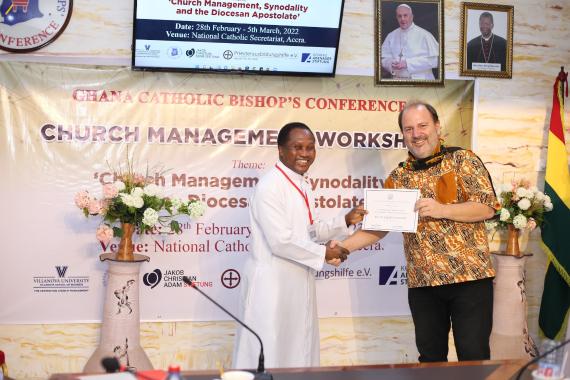
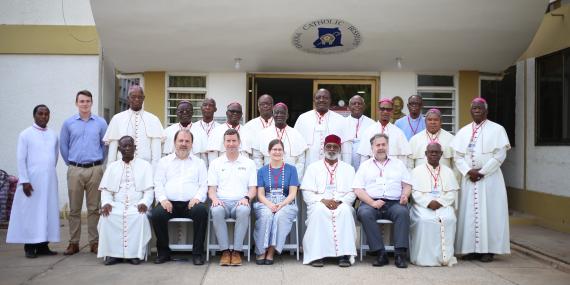
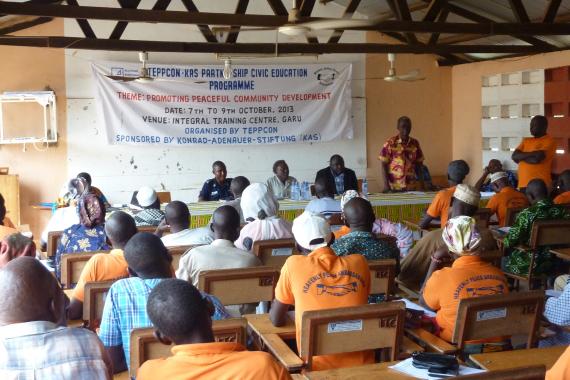
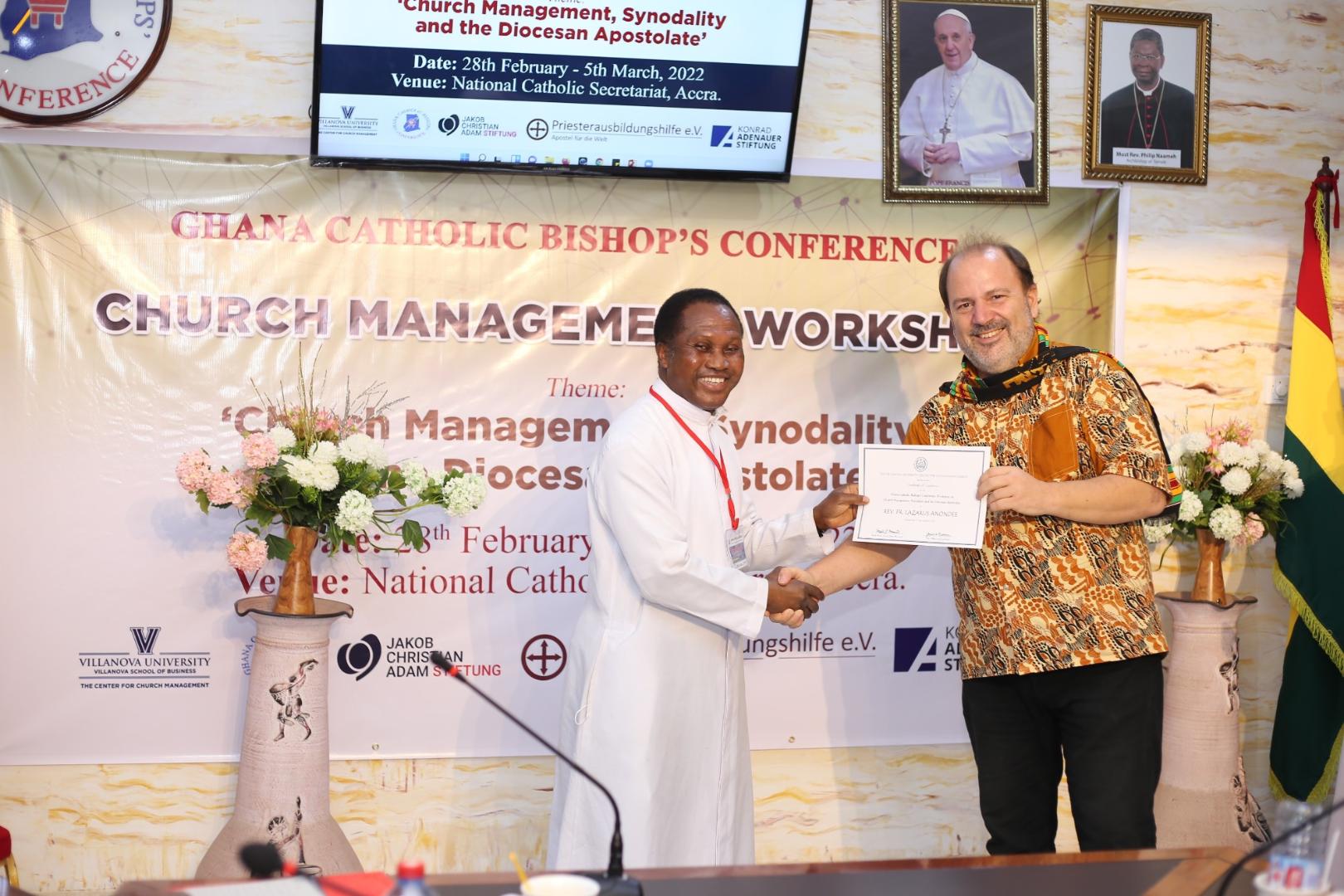
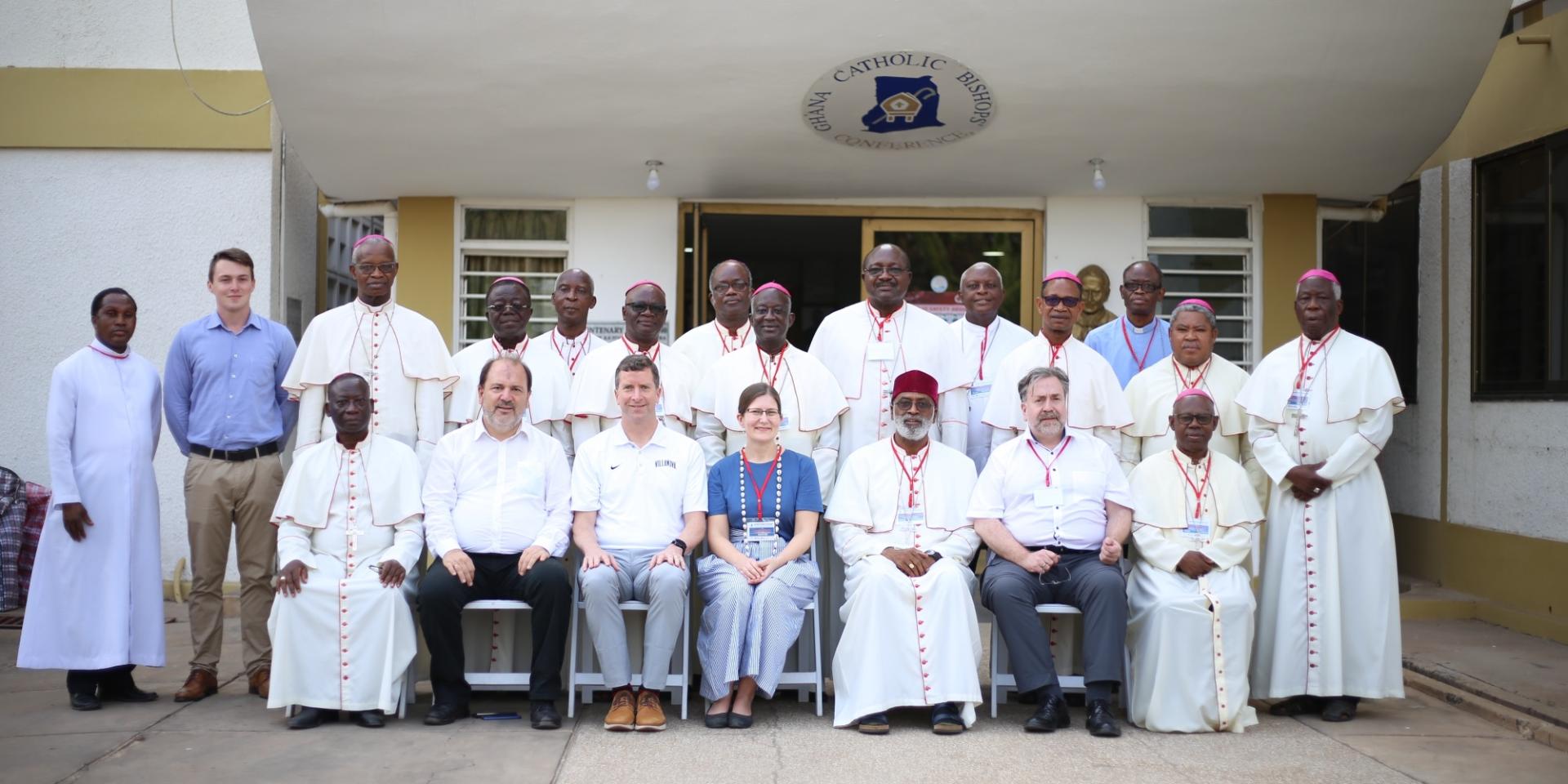
The Ghana Catholic Bishops’ Conference was among KAS Ghana’s earliest partners and has remained an important partner throughout the Foundation’s history in the country. This long-standing cooperation reflects the particular role that churches and other faith-based organisations play in Ghanaian society. Deeply rooted in communities across the country, they are not only religious institutions but also influential social actors, trusted by large parts of the population and able to reach people far beyond formal political structures.
Over the decades, KAS has worked with its Catholic and other faith-based partners on a wide range of issues. These have ranged from Catholic Social Teaching and civic and political education to questions of democratic participation and, more recently, social cohesion, peace and security. While the specific topics have evolved alongside Ghana’s political and social development, the underlying idea has remained consistent: faith-based organisations can serve as important multipliers and bridges between communities, civil society and political institutions.
In recent years, social cohesion, peace and security have become increasingly important areas of cooperation. Particularly in regions affected by local tensions and conflict, churches can play an important role as conveners and mediators. Their presence within communities and the trust placed in them can facilitate dialogue between actors who might otherwise struggle to engage with one another – including community leaders, traditional authorities, political actors and other stakeholders.
For KAS, cooperation with faith-based organisations therefore forms part of a broader approach to strengthening democratic and peaceful societies. Democracy and social cohesion depend not only on functioning state institutions, but also on trusted actors capable of building bridges, facilitating dialogue and helping communities address conflicts constructively. Working with partners such as the Ghana Catholic Bishops’ Conference allows KAS to connect political dialogue with structures that are deeply embedded in Ghanaian society and have accompanied the country’s development for generations.
An important part of KAS Ghana’s long-standing cooperation with the Catholic Church has been its work with Justice and Peace (Justitia et Pax), a structure of the Ghana Catholic Bishops’ Conference with a strong grassroots presence across the country. Its extensive local networks provide access to communities far beyond Ghana’s major urban and political centres and have made Justice and Peace an important partner for activities promoting democratic participation and peaceful elections.
Ahead of Ghana’s 2020 general elections, KAS and Justice and Peace organised MP platforms across the country, creating spaces in which parliamentary candidates from different political parties could engage directly with voters, present their positions and respond to questions from their constituencies. The aim was to bring political debate closer to citizens and strengthen direct interaction and accountability between candidates and the communities they sought to represent.
Another major area of cooperation was election observation. In 2016, around 7,000 people across Ghana were trained as election observers, equipping citizens with the knowledge and practical skills needed to observe electoral procedures and contribute to transparent, peaceful and credible elections. The nationwide grassroots structures of Justice and Peace were particularly valuable in reaching communities throughout the country.
The cooperation illustrates an important dimension of KAS Ghana’s approach to democracy promotion: democracy needs strong institutions at the national level, but it must also be experienced and practised locally. Through partners such as Justice and Peace, KAS can connect national democratic processes with communities across Ghana, creating opportunities for citizens to engage directly with political actors and empowering them to play an active role in safeguarding democratic processes themselves.