






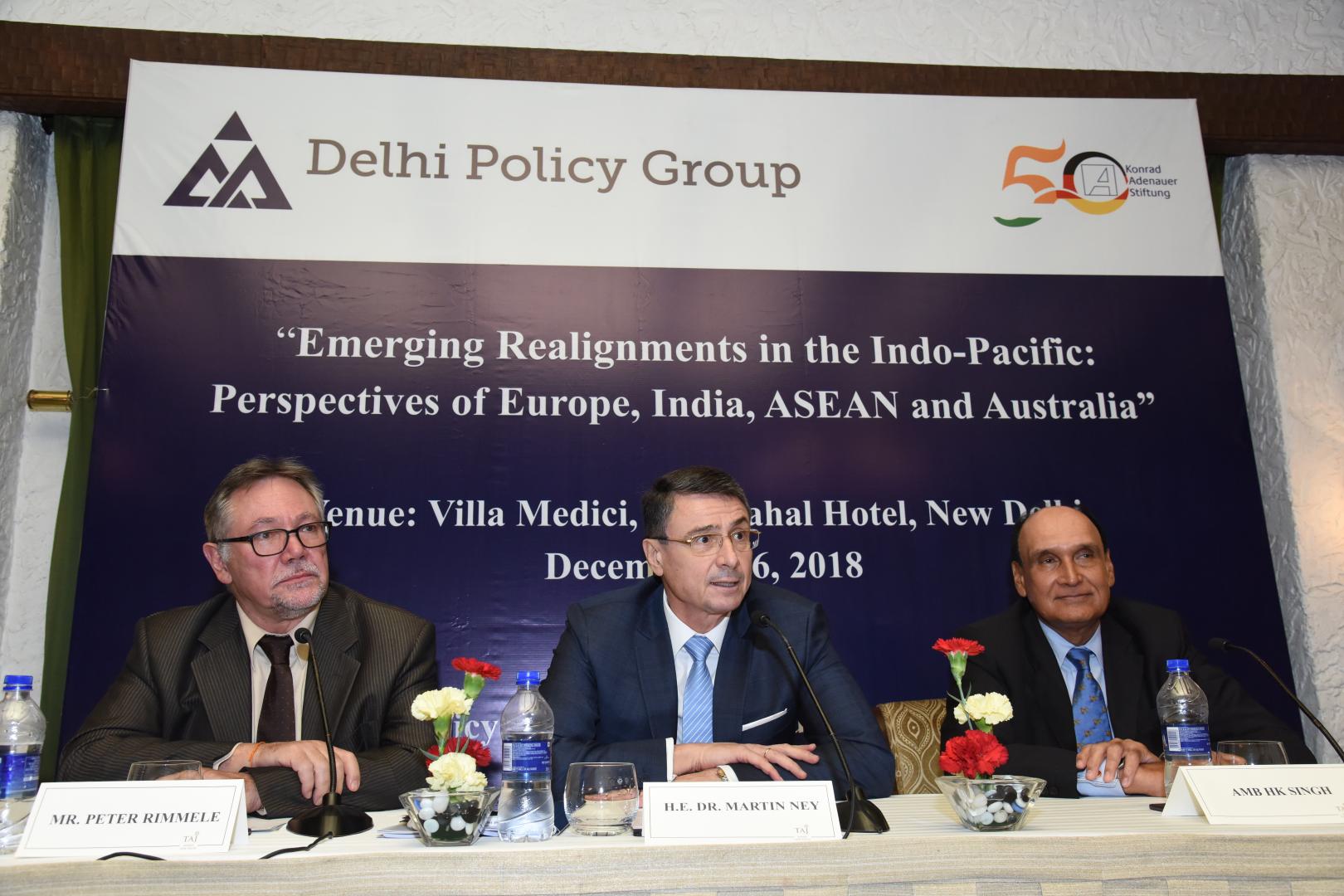
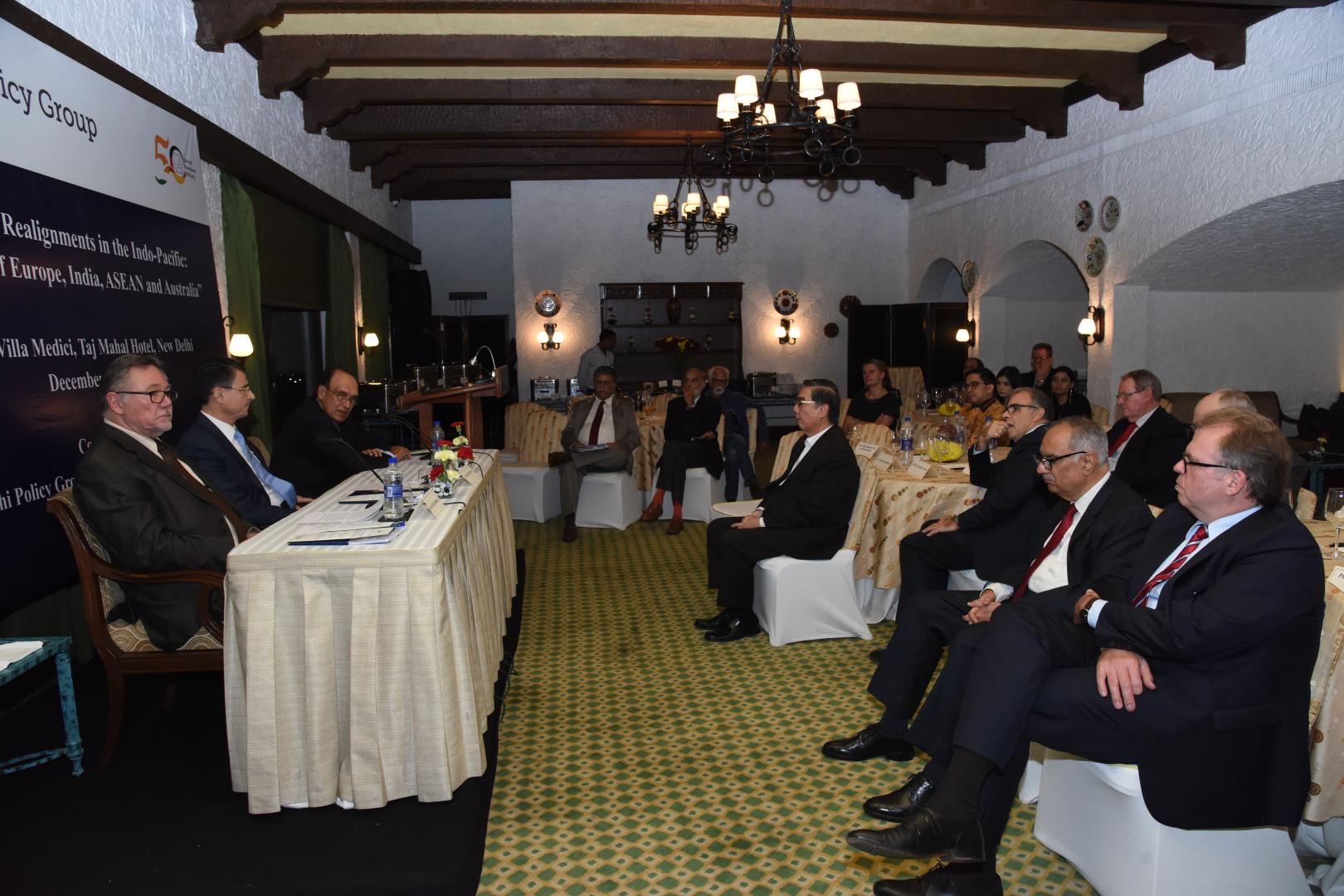
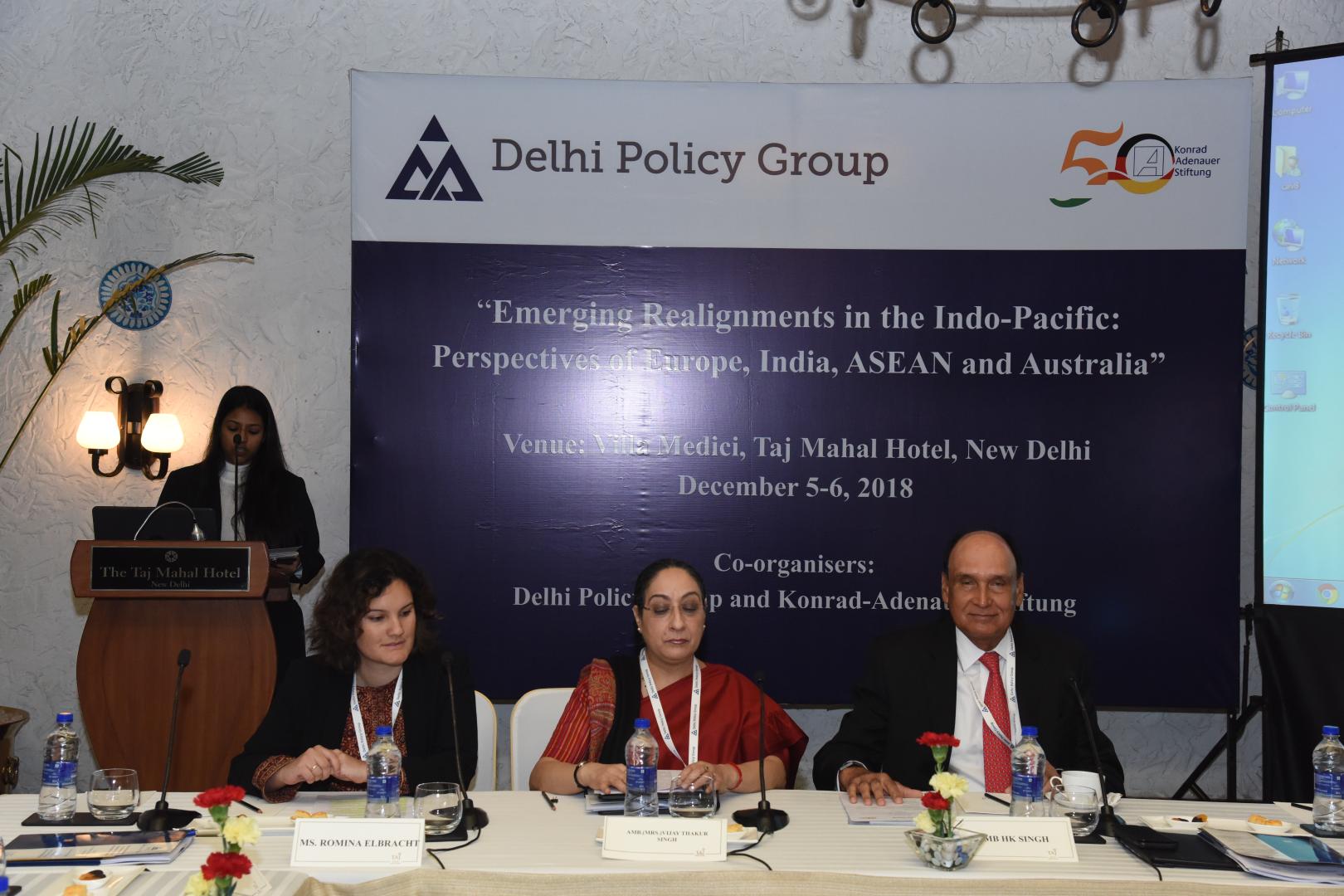
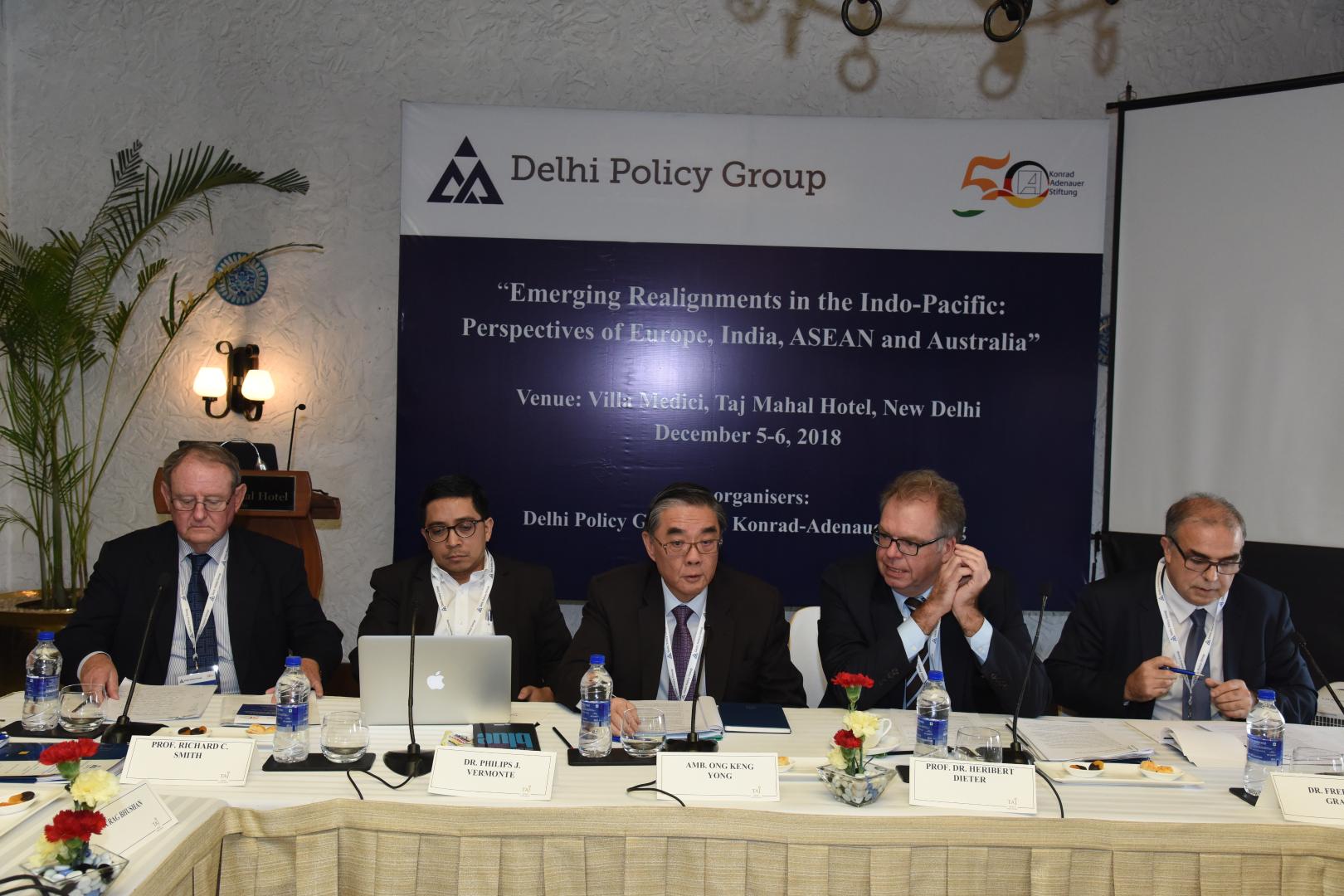
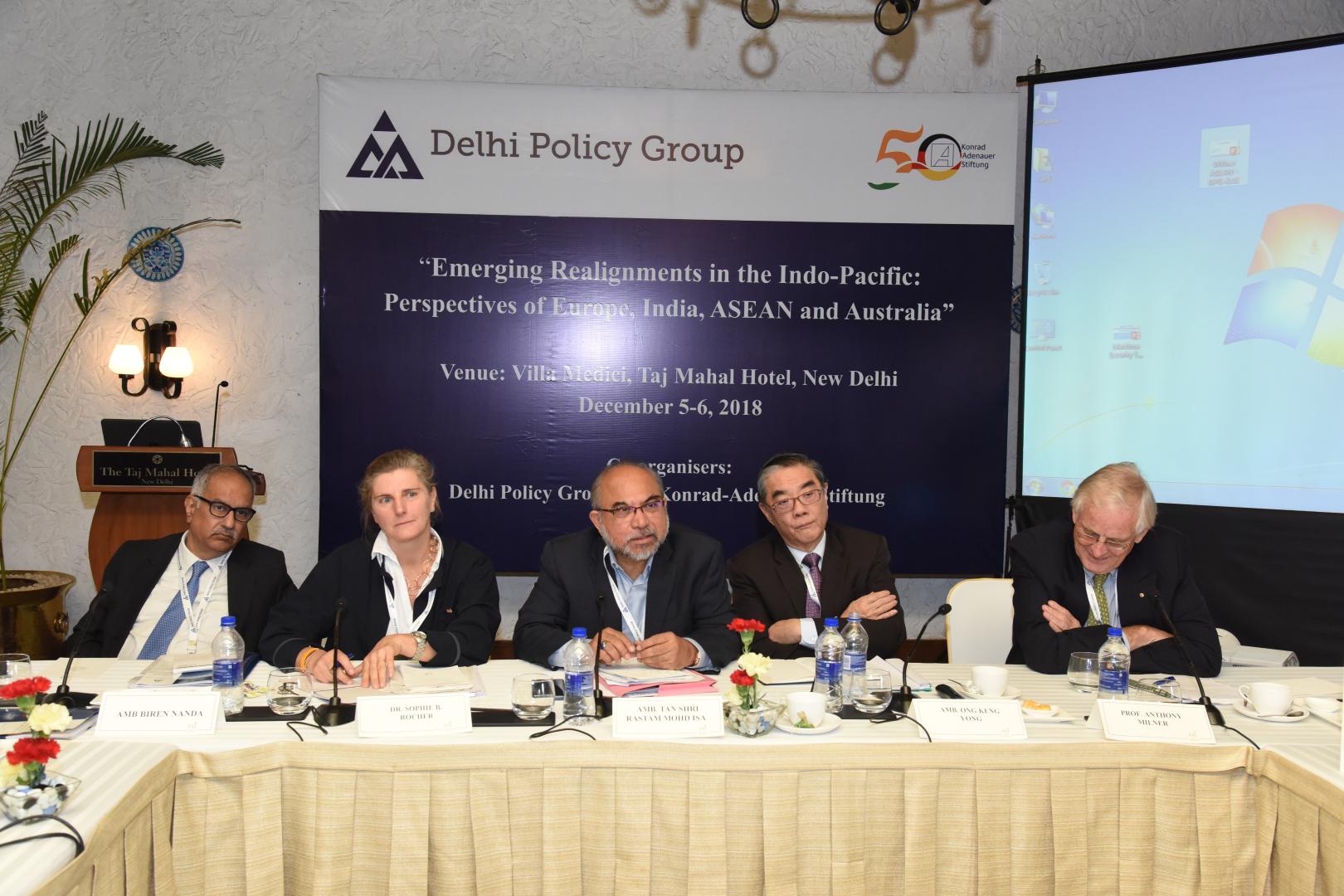
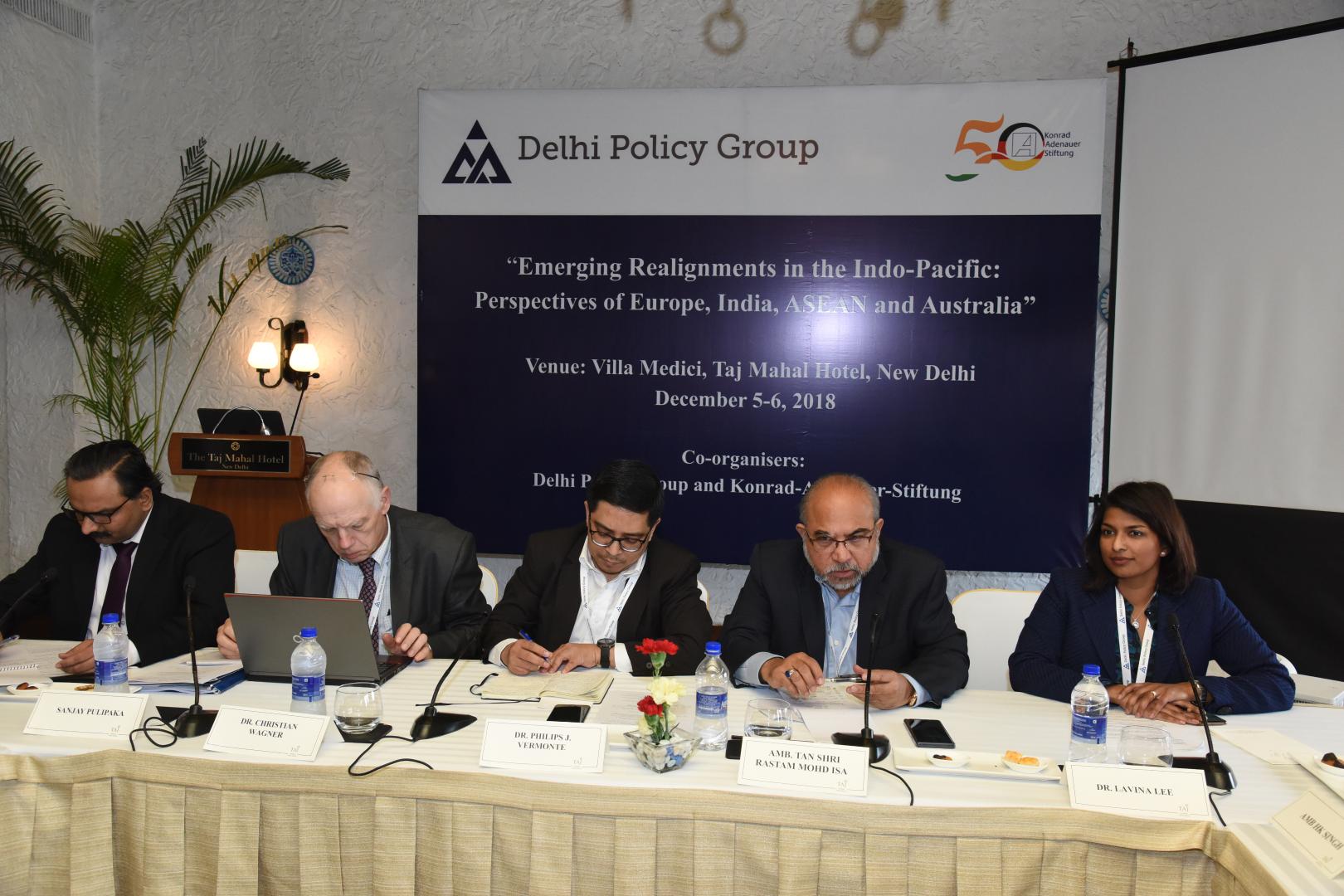
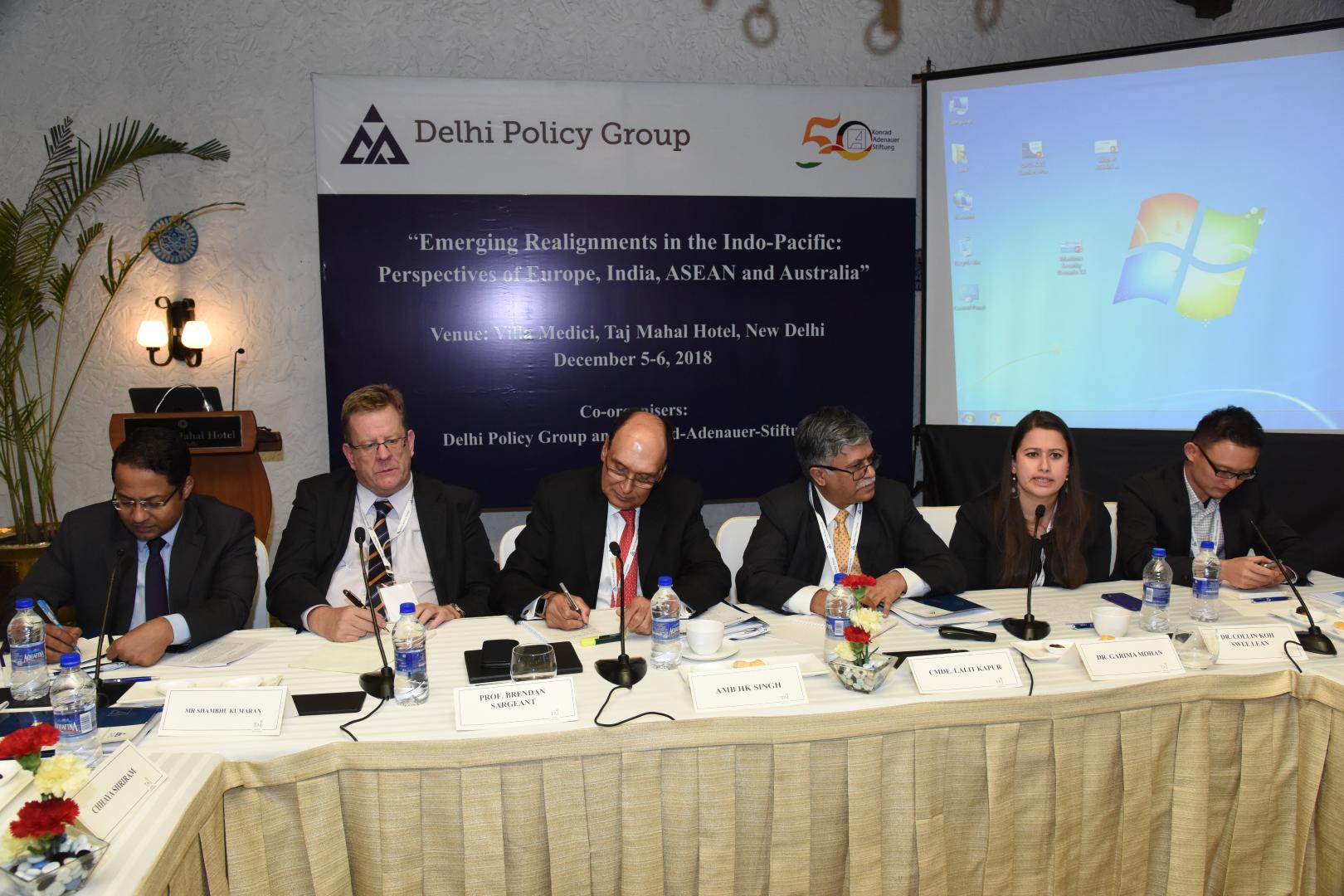
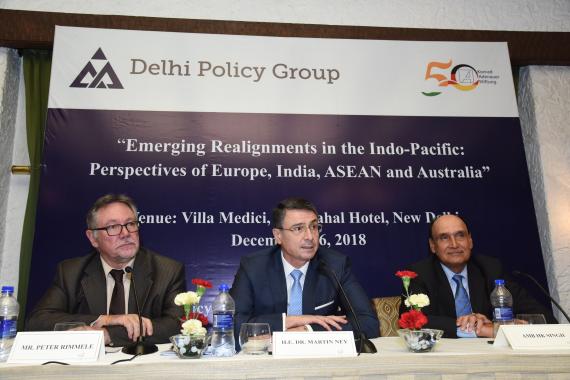
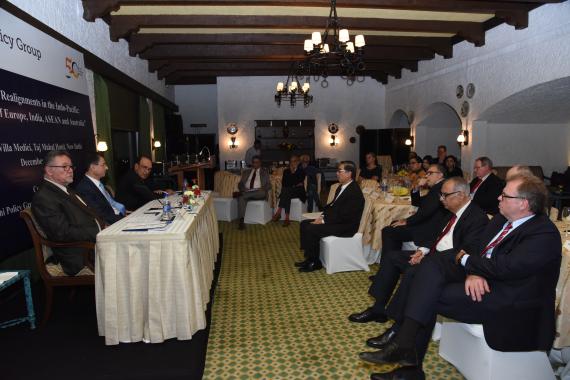
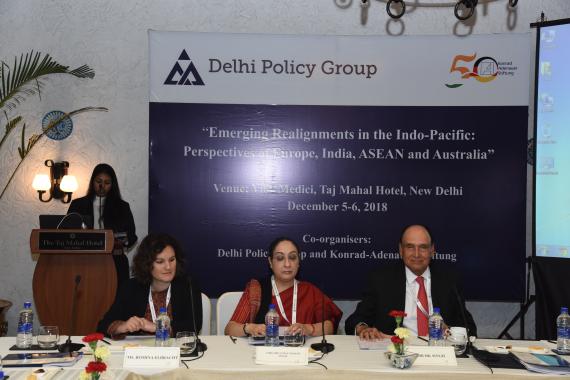
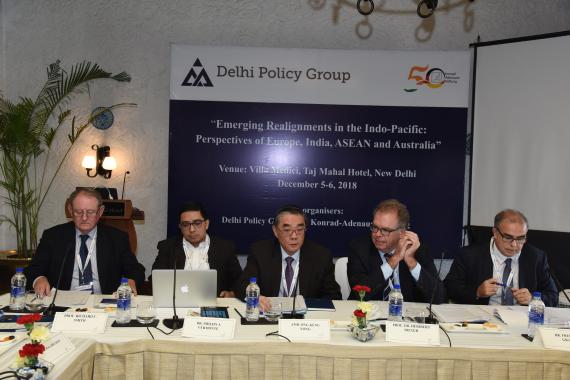
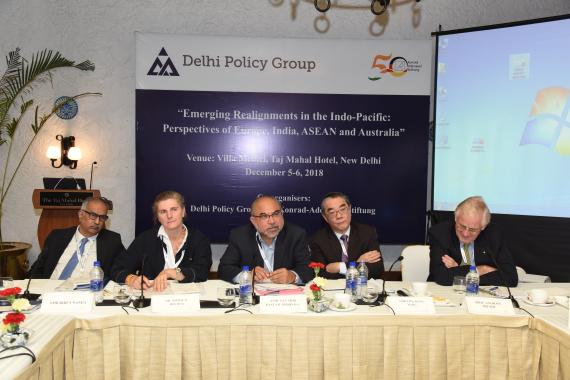
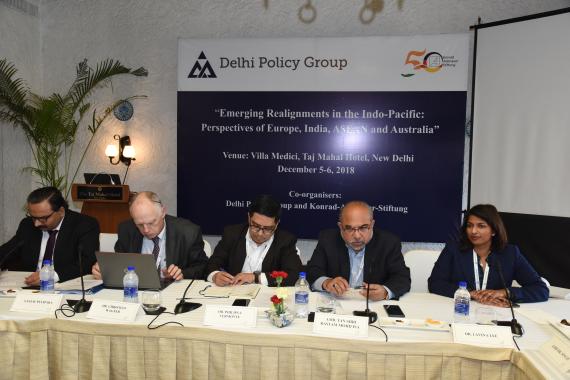
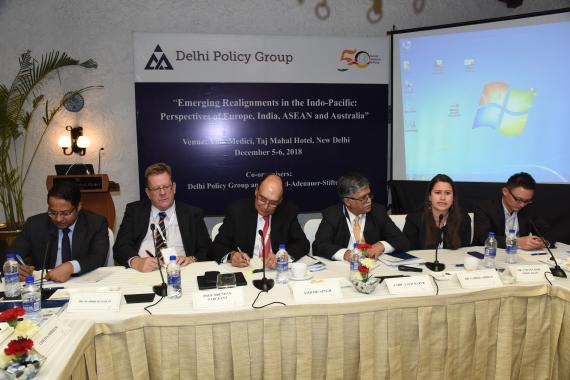
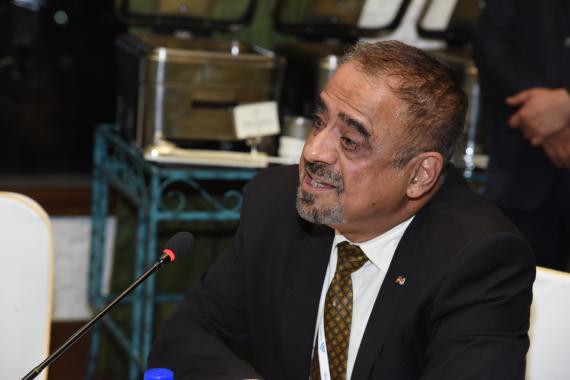
The event addressed the changing security paradigm in the Indian Ocean, the challenges within ASEAN, competing visions of connectivity initiatives and the maritime security scenario in the Indo-Pacific. Due to the increasing relevance of the Indo-Pacific region such events are said to be of contemporary interest for all participants.
Germany for instance would aim at strengthening its regional alignments with both India and the ASEAN countries and also the recently launched EU strategy demonstrates the importance of a special relationship the EU and India could have. An exchange of perspectives among partners, being facilitated at the conference, was therefore of great value to Germany as well as the EU. Not only was it mentioned that political and economic ties needed to be strengthened but these ties would need to spill-over to security and defense cooperation. In addition, the changing political landscape reflecting the current changes of economic power was emphasized and the Indian Ocean was described as a connecter of the global economy. The world seemed to have understood that “it cannot do things without India anymore”. Speakers described the Indo-Pacific as a political entity which needed to preserve its free and open character. Therefore there was a need to foster multilateralism, regionalism and a rule-based order.
The participants got introduced to India’s maritime heritage, the range of security interests in the Indo-Pacific, PM Modi’s SAGAR vision for the region and its objectives and the centrality of ASEAN in any architecture for enhancing peace and security in the region.
The first session broached the issue of “The Changing Strategic Paradigm in the Indian Ocean Region”. Despite the fact that the US would increasingly act unilateral, the EU’s impact on the region was greater than assumed by many, whereas the Chinese dominance was described as not inherently given. Rather, other states, such as France and the UK could represent a powerful balance of power. Nonetheless and for this to occur, countries such as Germany, which acted rather hesitant when it came to naval operations outside its own borders, needed to evolve a stronger interest in the Indo-Pacific region. The participants agreed that existing institutions for preserving peace and security had failed to cope with emerging challenges. Likewise there was concord that the way ahead for the region laid in continuing with the democratic approach, involving open trade, respect for sovereignty, freedom of navigation and overflight, freedom from coercion, respect for international law and peaceful resolution of disputes. However, the opinions how this was to be achieved still differ. Regarding China two opposing views emerged, as one could see varying levels of concern about the security implications when engaging with China economically: One focused on the need to safeguard against an assertive China, while the other focused on trying to ‘socialize’ the rising giant.
The second session (“Whither ASEAN?”) focused on ASEAN and the expectations from it, both internal and external. Internally there was legitimate concern of antagonizing China, whereas participants from West of the Malacca Straits were much more critical of ASEAN’s failings on the security front. There was a feeling that ASEAN rules were perhaps not suited for the Indo-Pacific, particularly if the concept was extended to include the East Coast of Africa. It was concluded that ASEAN had stopped working on many inner-ASEAN issues and that for it to regain its reputation, it had to adapt to new realities and a changing world order.
In the third session the concept of connectivity was discussed. It became obvious that the concept was understood very differently or even from competing viewpoints when looking at China compared to other Indo-Pacific states. A new connectivity approach that should not be underestimated was the new EU strategy on India that raised valid points to deepen Indo-European relations. Other visions talked about were America’s nascent Indo-Pacific Infrastructure Initiative, Japan’s Partnership for Quality Infrastructure, the EU’s connectivity strategy, India’s regional connectivity projects and the Asia Africa Growth Corridor. Convergence could be found about the fact that massive investments were required to improve connectivity infrastructure in the region, and that China had taken the lead.
A “Maritime Security Scenario” was in the focus of the fourth session. As described by one participant, challenges in the Indo-Pacific environment arose from various types of sources as for example from sources outside mankind’s control, such as natural disasters, as well as by non-traditional challenges (piracy, transnational crime…) generated by sub-state and non-state actors. Another important factor would be nation states who were subverting established international maritime law for their own interests and benefit, leading to contested spaces on the high seas. The massive increase in use of the oceanic domain had generated a need for governance to provide security to all stakeholders, and such governance required effective cooperation. Architectures for such cooperation were, however, poorly developed, particularly in the Indian Ocean.
The conference concluded that both the EU and India could mutually benefit from a more contextualized maritime strategy. More than anything else, the need would be to foster greater understanding of each other’s perspectives on a range of issues in an informal environment, permitting detailed discussion of the issues involved. Apart from increasing interaction at the multilateral level, the need for discussion at the bilateral level between all stakeholders was expressed. A series of follow up conferences will help in fulfilling this need.