






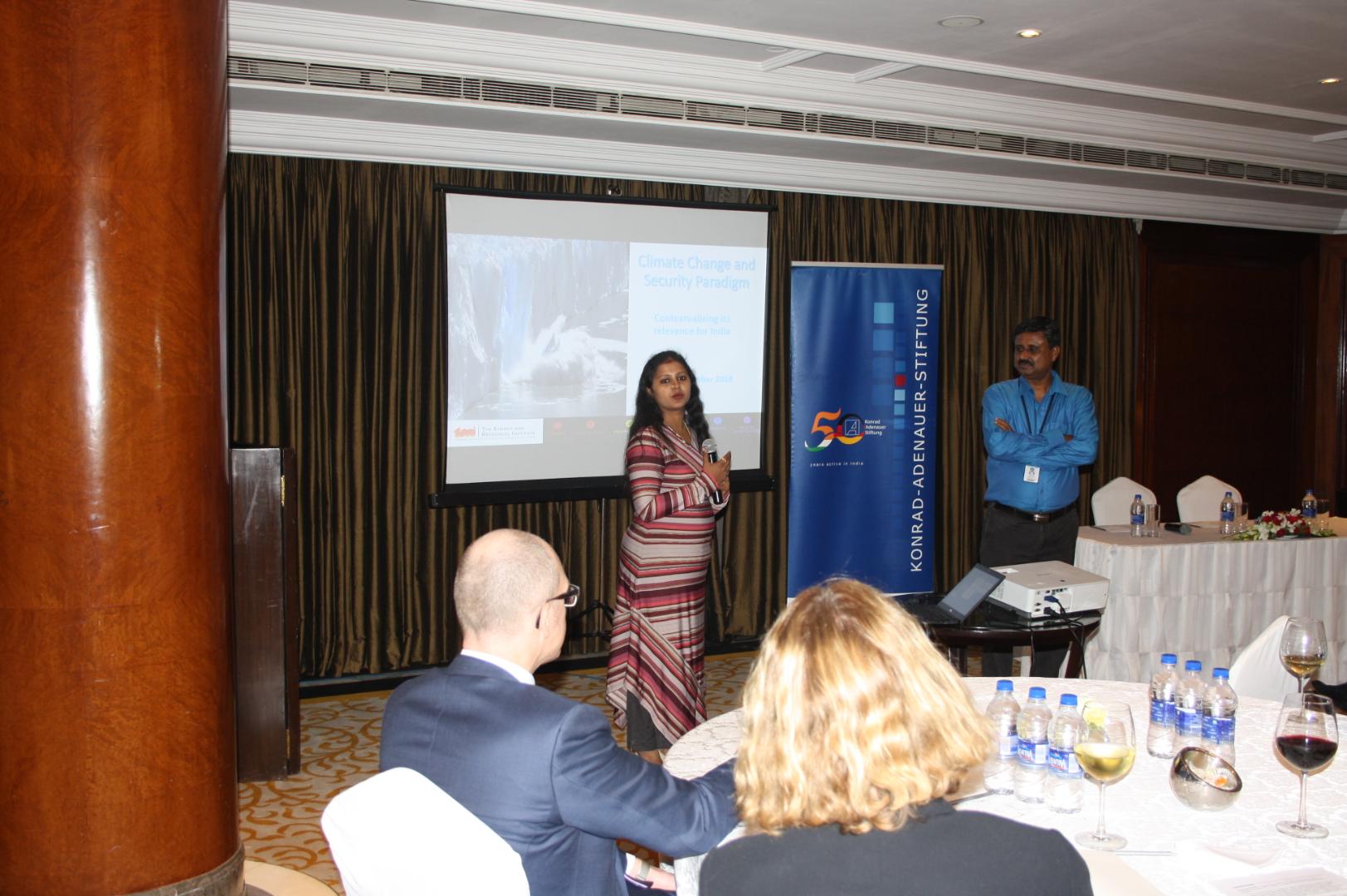
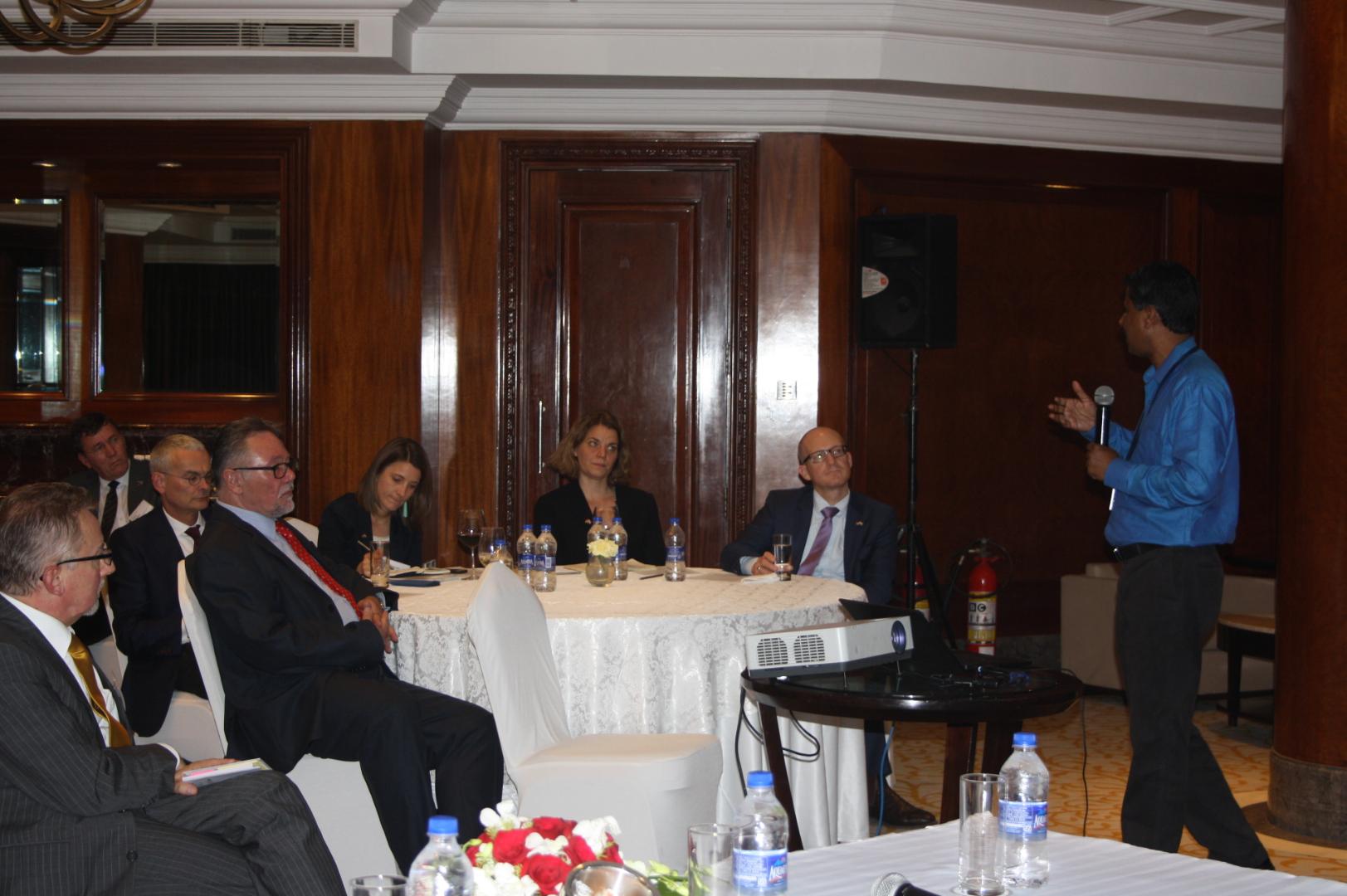


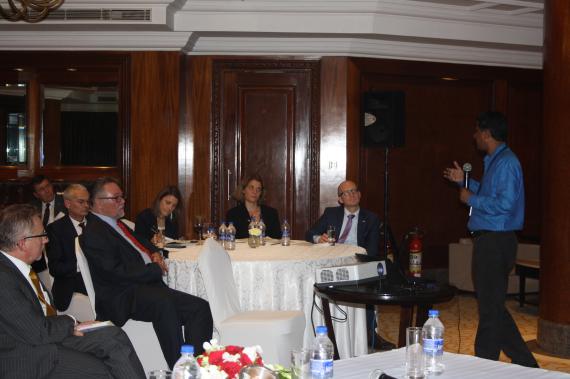

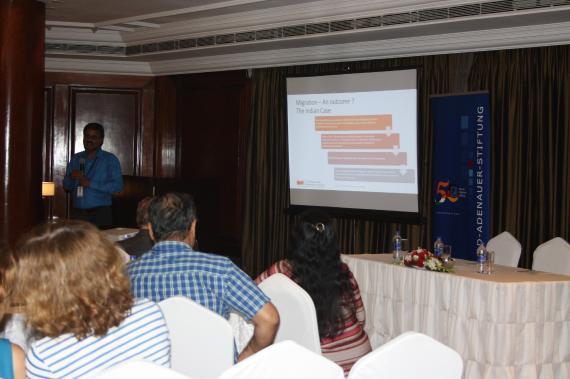
In his opening remarks, Peter Rimmele, Resident Representative of KAS India office, emphasized the now two-decades lasting fruitful partnership between KAS and TERI and the importance to delve into the synergies between climate and security challenges. Nitya Nanda, Fellow and Associate Director at TERI, explained that climate change has not been sufficiently considered as a direct threat to global or national security so far. Nonetheless, it has the potential to alter existing global and national security architectures and deflect the impact of any climate-related security threat to an issue targeting the nation (eg. Resources, environmental degradation, extreme weather events).
One important issue is the sharing of transboundary river water, and the internal dynamics of water sharing from the same river domestically. This can contribute to a dangerous clash of interests. Climatic events that have transboundary impact could also act as catalyst for international migration, which can become problematic itself. Swati Ganeshan, Fellow at TERI, elaborated in this regard, that the interactive relationship between climate change and migration is still a lacuna within the existing literature and that the real impact is still to be researched thoroughly.
According to Mr. Nanda, integrating climate and environmental data into national security frameworks will be crucial to managing the effects of climate change effectively. Another challenge in this regard is the consistent effort to integrate natural resource management and environmental conservation into traditional peacekeeping efforts. Here, the linkages between traditional and non-traditional security challenges become visible. E.g. the Defense forces have emerged as the core initiator of rescue and relief efforts during major climatic events in India. During the Uttarakhand floods in 2013 and the recent Kerala floods, around 23,000 people were rescued by Navy and Army operations.
Furthermore, the melting of glaciers has proven to transform borders such as in the case of EU- Switzerland, Italy and Austria. Maritime security has also become a critical issue. In India, rapid industrialization and increasing population are stressing are contributing to increased land, water and air pollution. Climate change is having devastating impacts on communities’ lives, livelihoods and food security across South Asia. Therefore, international cooperation is a key enabler for developing countries and vulnerable regions to strengthen their action.
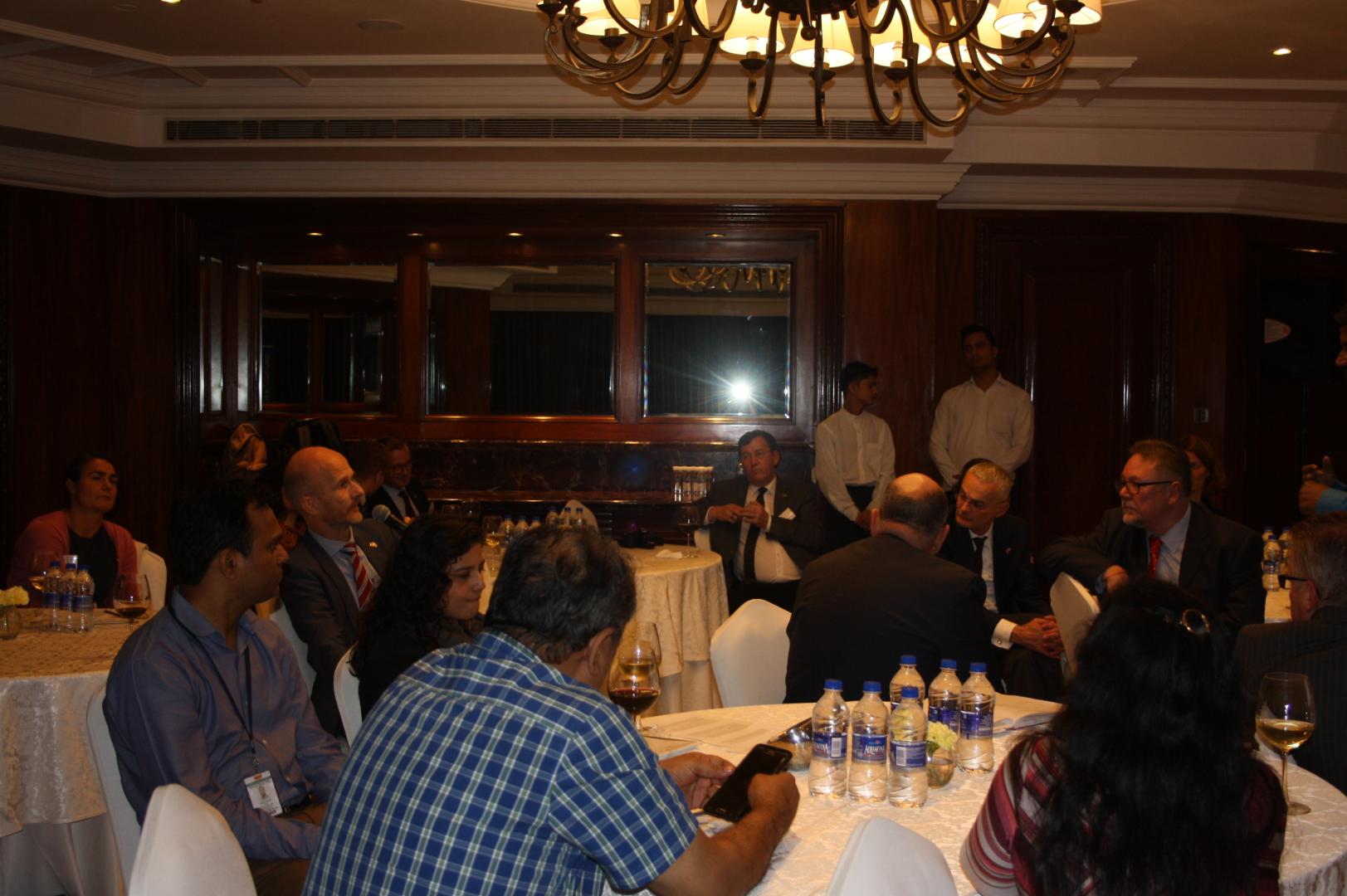
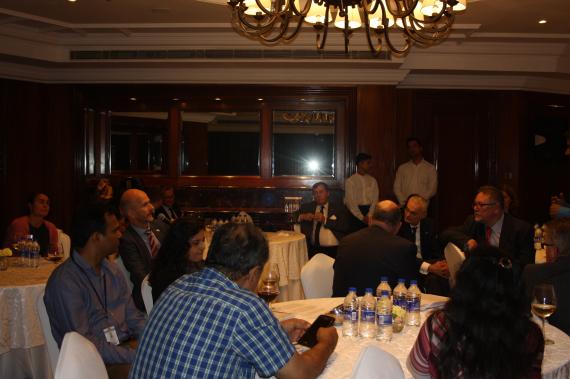
In the interactive session at the end of the program, the participants asked the speakers whether a perfect water-sharing scheme could be developed at all and how likely it would be that in 2030, all Indian cars would be run electrically. While the latter was not a certainty, it was concluded that the good news for India consisted of 1) the newly developed Blue Economy Roadmap that wants to bring sustainable maritime trade mechanism to the Indian hinterlands 2) the focus on solar energy which gives hope to reduce local pollution and 3) the promotion of so-called “green jobs”. The event ended by closing remarks from Peter Rimmele and Pankaj Madan, who thanked everyone for a lively discussion on a crucial topic.
Gap in literature: Understanding the intersections between climatic and economic drivers of migration and the mobility of risks across the rural-urban continuum.