





Asset Publisher

Country Reports

Short political reports of the KAS offices abroad

Publications

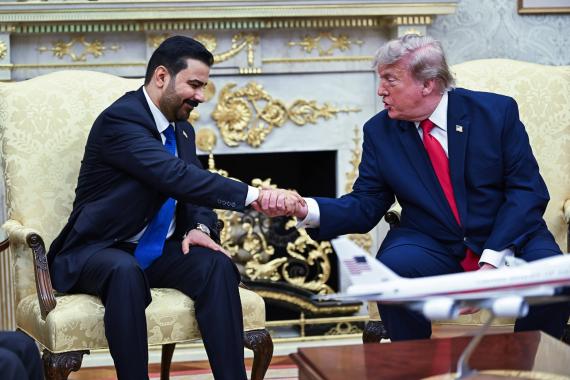
IMAGO / Newscom / AdMedia

Iraq’s New Government Between Domestic Constraints and External Pressures

Leading without a Base?

Iraqi Prime Minister Ali al-Zaidi took office in May 2026 as a surprise candidate – with no political party, no seats in parliament and a cabinet left incomplete, in the middle of a war that pits Iraq’s two key part-ners, the US and Iran, against each other and has closed the Strait of Hormuz. So far, his lack of a politi-cal base appears to have worked in his favour rather than against him, however. What this means for his capacity to govern is a different question, and the answer seems to depend on the file: an advantage wherever power runs through the executive, a handicap wherever it must be assembled vote by vote.

Konrad-Adenauer-Stiftung e. V.

Zwischen Reform und Realität – Politische Partizipation von Menschen mit Behinderung in Jordanien

Inklusion weltweit – aktueller Stand aus Jordanien

Jordanien hat in den vergangenen Jahren wichtige Reformprozesse angestoßen, um politische Teilhabe auszubauen und Menschen mit Behinderungen stärker in gesellschaftliche und politische Strukturen einzubinden. Neue gesetzliche Grundlagen, institutionelle Entwicklungen und internationale Initiativen prägen diesen Wandel und setzen Impulse für mehr Inklusion. Gleichzeitig stehen diese Entwicklungen in einem Kontext, in dem bestehende Strukturen, gesellschaftliche Rahmenbedingungen und laufende Umsetzungsprozesse die tatsächliche Teilhabe weiterhin limitieren. Vor diesem Hintergrund bewegt sich die politische Partizipation von Menschen mit Behinderungen in Jordanien im Spannungsfeld zwischen Reformanspruch und Realität.

Smarterpix/ Ale_Mi

Perceptions of Jordanian Foreign Policy: Change and Continuity

Surveys show shifts in foreign policy priorities and partnerships while maintaining the basic orientation of Jordanian foreign policy

In the context of regional instability, Jordanian foreign policy remains shaped by a pragmatic approach and a focus on maintaining security and stability. At the same time, economic challenges are leading to an increasing public expectation for specific foreign policy results for Jordan’s economy. While the US and Saudi Arabia continue to lead the field of Jordan’s partner countries, confidence in the US’s stabilizing role in the region is shrinking. The image of Germany is recovering compared to the previous year, despite criticism in the context of the Gaza war.

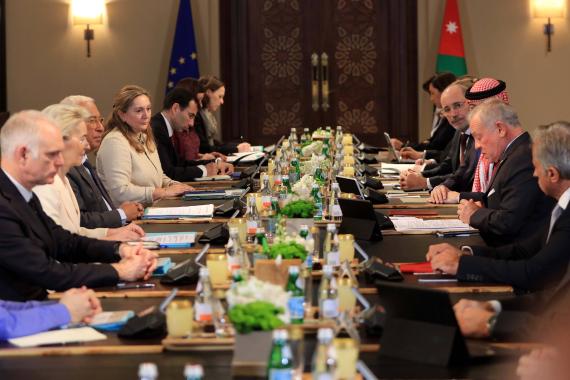
IMAGO / Xinhua

EU-Jordan Summit

A Symbolic Step for a Strategic Partnership

With the first bilateral summit between the EU and Jordan, both sides sent a signal of their intention to deepen the partnership at a time of heightened regional instability in the Middle East. Through its support for Jordan, the EU aims to strengthen the country in its stabilising role in the region and to contribute to Jordan’s internal stability, particularly by supporting economic resilience and growth. For the EU, the deepening of relations also provides an opportunity to position itself as a reliable partner and actor in the Middle East against the backdrop of an increasingly unpredictable US foreign policy.

KAS

Special edition - Country reports with a difference

International comparison of accessibility

This publication provides research, compiled by some of our overseas offices, on the current situation of political participation for people with disabilities, in their respective countries. We hope that their reports will increase awareness of the sadly often persistent inequalities that remain and motivate all of us to pay greater heed to the issue of inclusion.

IMAGO / APAimages

Regional Implications of the Fall of Assad

How do Jordan and Iraq React?

The capture of Damascus by rebel groups led by the Islamist HTS militia ended more than five decades of the Assad regime’s rule. Amman and Baghdad view the new rulers with scepticism, fearing Syria’s destabilization and fragmentation. However, Jordan also sees an opportunity to foster constructive neighbourly relations. In Iraq, mistrust of Syrian interim president Ahmad Sharaa runs deep. Nevertheless, a pragmatic approach toward the new leadership is emerging - one that should ideally be embedded regionally and internationally.

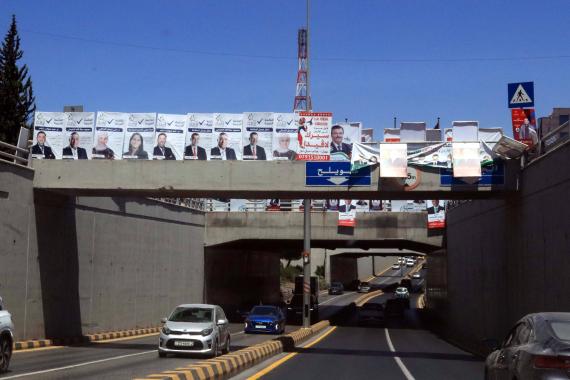
Imago / Xinhua

Daring More Democracy in Jordan

In the Shadow of the War in Gaza, the Hashemite Kingdom Elects a New Parliament

Jordan seems more than ever committed to encourage its citizens to participate in politics – although in a carefully crafted way and under strict state supervision. The parliamentary elections on September 10 are a milestone in the “political modernization” that King Abdullah initiated three years ago – and a sparkle of hope for more democracy.

IMAGO / APAimages

The Jordanian Paradox

Participation and control

Jordan wants to enable more political participation and strengthen parliamentarism. The legal course has been set. At the same time, the scope for critical expression of opinion is narrowing, most recently as a result of a new law to combat cybercrime. But the country's modernization can only succeed if the state has confidence in its citizens.

Ibrahim Owais / flickr / CC BY-SA 2.0 / creativecommons.org/licenses/by-sa/2.0/

Jordanien als Partner deutscher Nahostpolitik

Die neue diplomatische Dynamik im Nahen Osten sollte Deutschland gemeinsam mit Jordanien nutzen. Für eine Verstetigung der Partnerschaft bedarf es jedoch demokratischer Fortschritte im Haschemitischen Königreich.

Jordanien kommt als traditionellem Verbündeten des Westens und einem der stabilsten Länder der Region eine Schlüsselrolle im Nahen Osten zu. Deutschland sollte außenpolitisch eng mit Jordanien zusammenarbeiten und damit die Bemühungen um regionalen Dialog unterstützen, die mit der neuen US-Administration wieder an Fahrt gewinnen. Gleichzeitig sollte die jordanische Führung hinsichtlich ihrer demokratischen Reformbemühungen ermutigt und beim Wort genommen werden. Nur wenn diese auch ernsthaft umgesetzt werden, kann sich Jordanien zu einem langfristigen Wertepartner der deutschen Außenpolitik entwickeln. Letztlich braucht auch die deutsche Entwicklungszusammenarbeit, deren Mittel für Jordanien in den letzten Jahren stark erhöht wurden, rechtsstaatliche und partizipative Strukturen vor Ort, um nachhaltig wirken zu können.

https://www.needpix.com/photo/1899539

Jordaniens Parlamentswahlen in Krisenzeiten

Stagnation des demokratischen Prozesses

Inmitten einer zweiten Corona-Welle hat Jordanien am 10. November 2020 regulär Parlamentswahlen abgehalten. 100 der 130 Parlamentarier ziehen neu in das jordanische Unterhaus ein. Bei historisch niedriger Wahlbeteiligung sank der Anteil von Parteipolitikern und Frauen im Parlament, das stattdessen von Vertretern der Stämme und Familienverbünde, regierungsfreundlichen Geschäftsleuten und ehemaligen Offizieren geprägt sein wird. Reformakteure vor allem aus der urbanen Mittelschicht haben das Vertrauen in das Parlament verloren. Politischer Protest wird damit weiterhin eher in Berufsverbänden, auf der Straße oder in den sozialen Medien seinen Ausdruck finden. Weder in der Innen- noch der Außenpolitik Jordaniens sind als Folge der Wahlen größere Veränderungen zu erwarten.

Showing 1 to 10 of 106 entries.

Asset Publisher

About this series

The Konrad-Adenauer-Stiftung is a political foundation. Our offices abroad are in charge of over 200 projects in more than 120 countries. The country reports offer current analyses, exclusive evaluations, background information and forecasts - provided by our international staff.

Order details

Editor

Konrad-Adenauer-Stiftung e.V.