




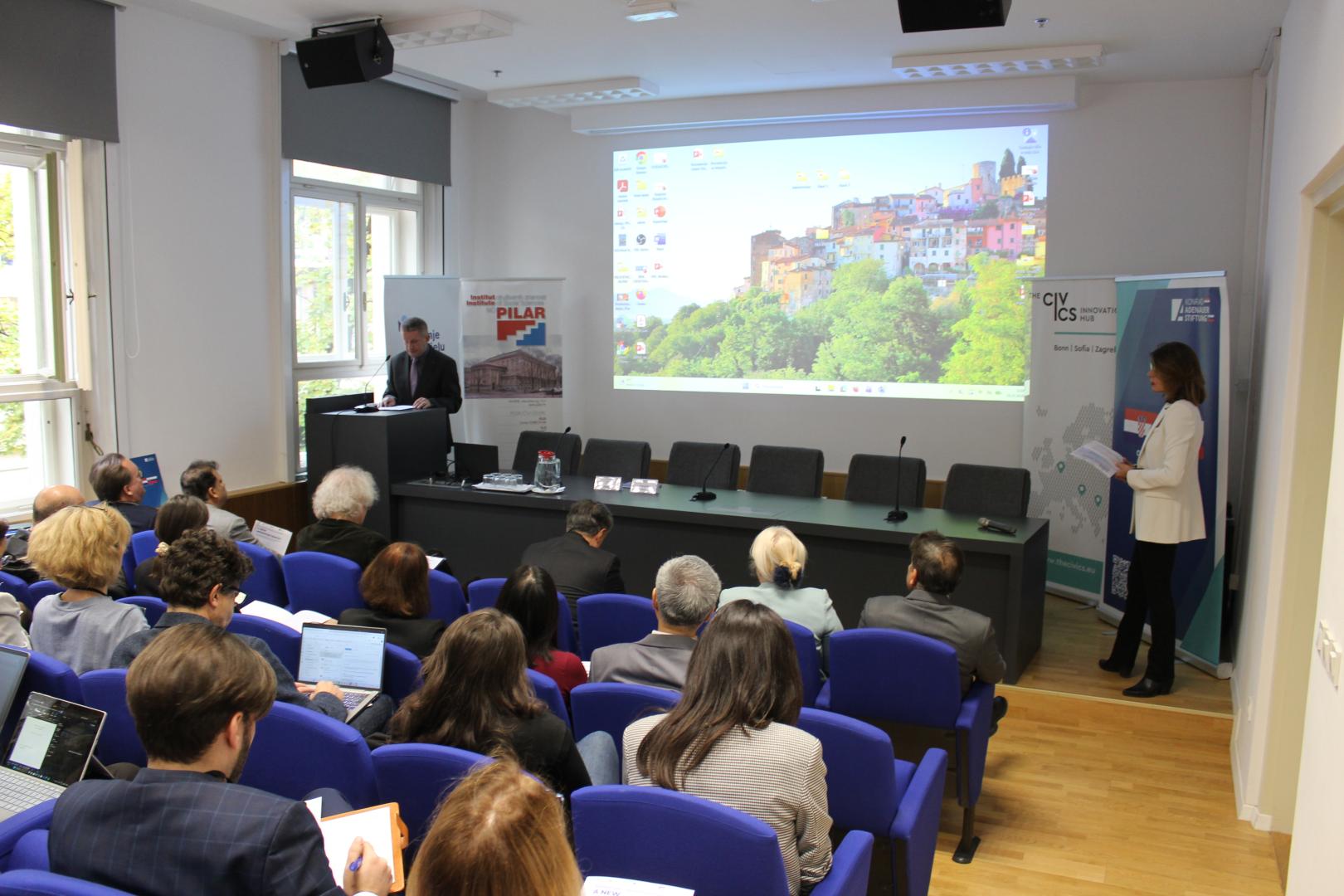
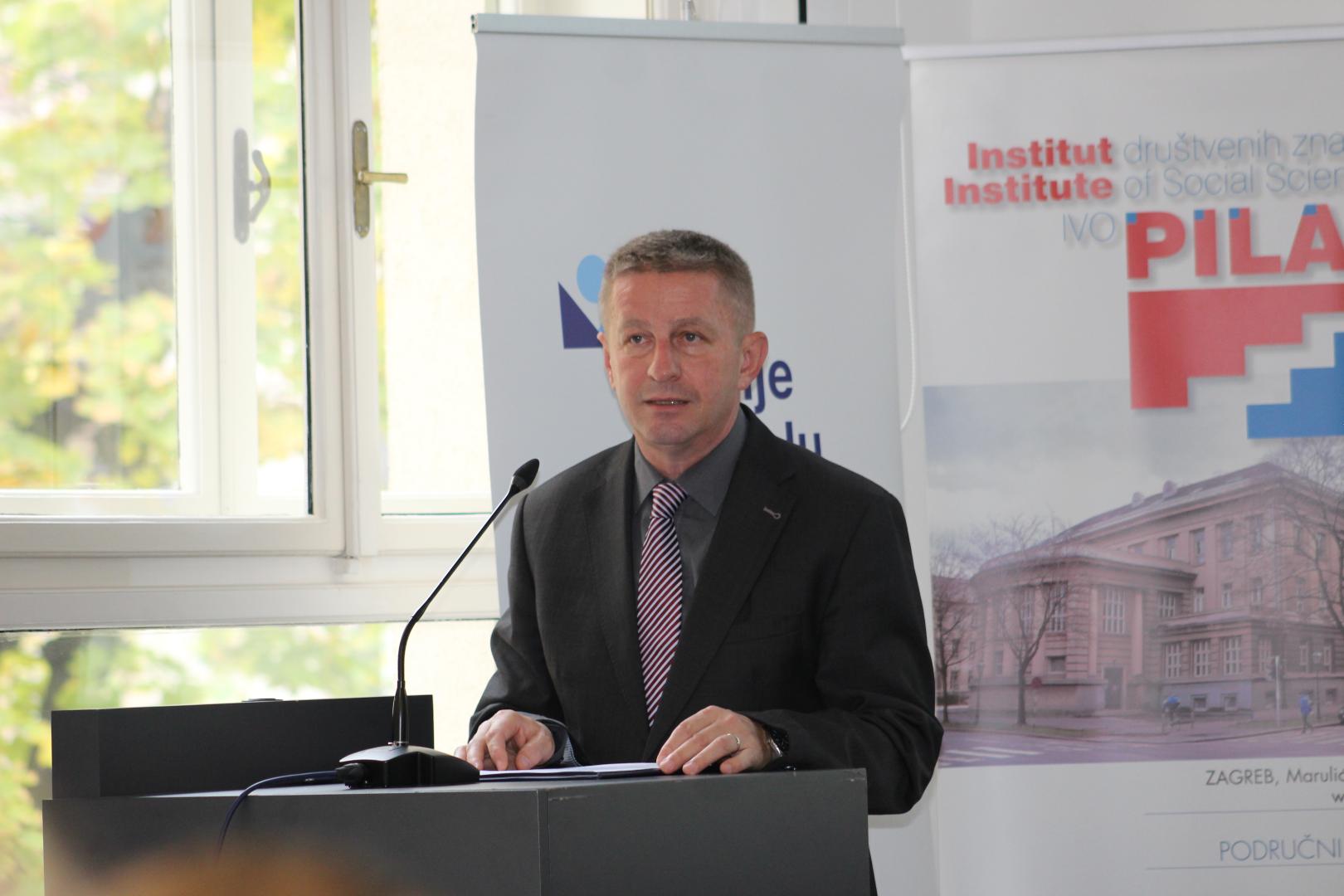
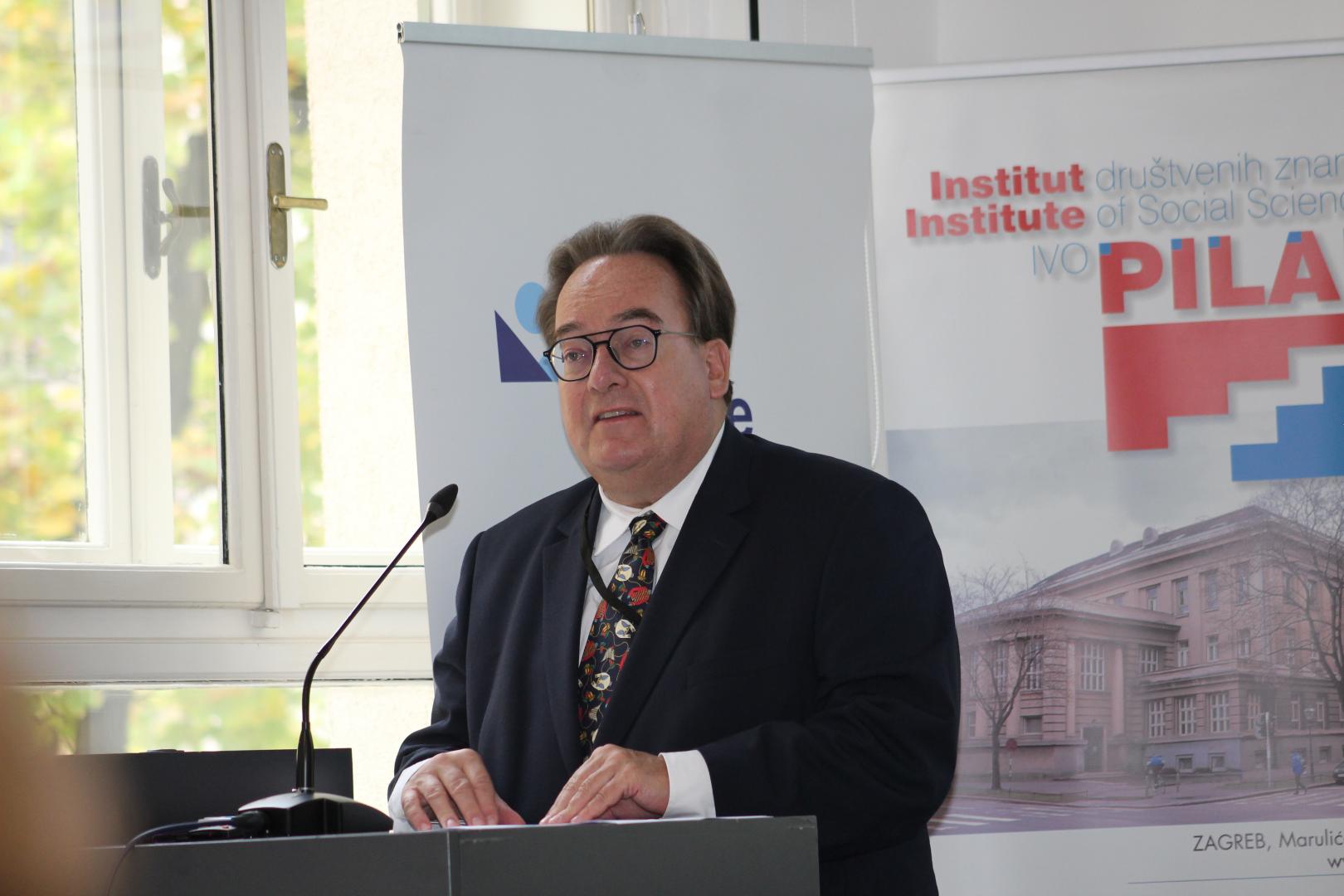
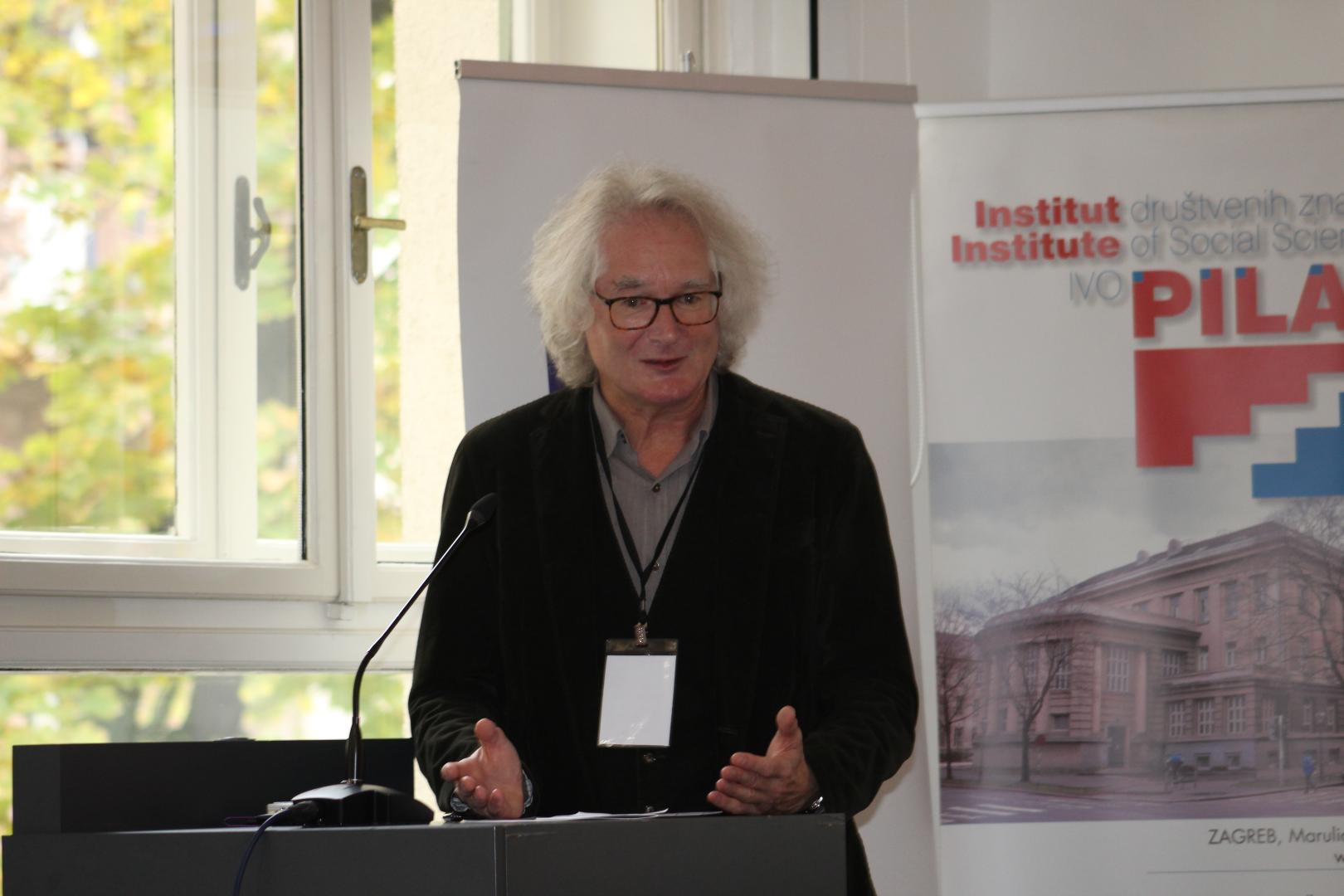
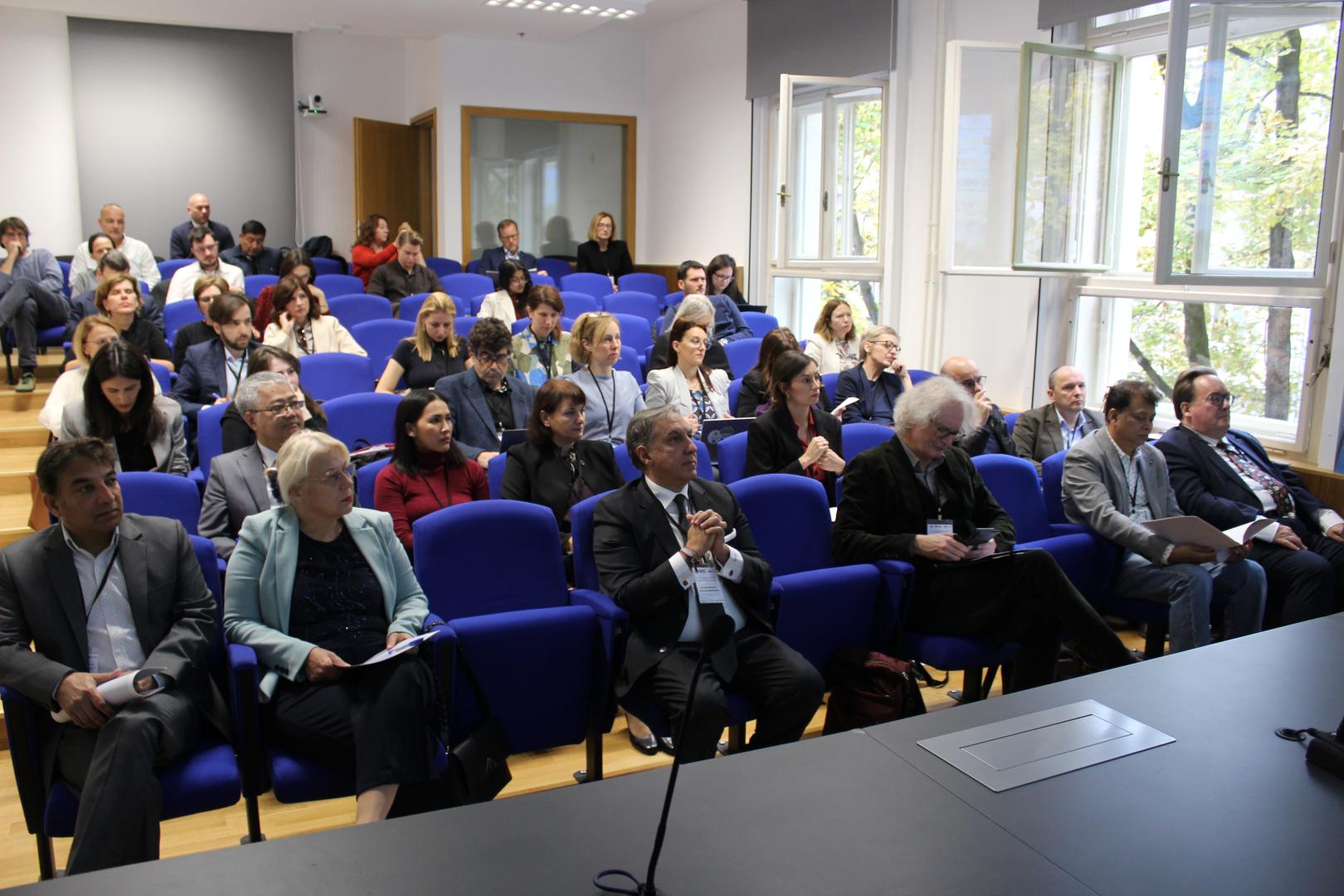
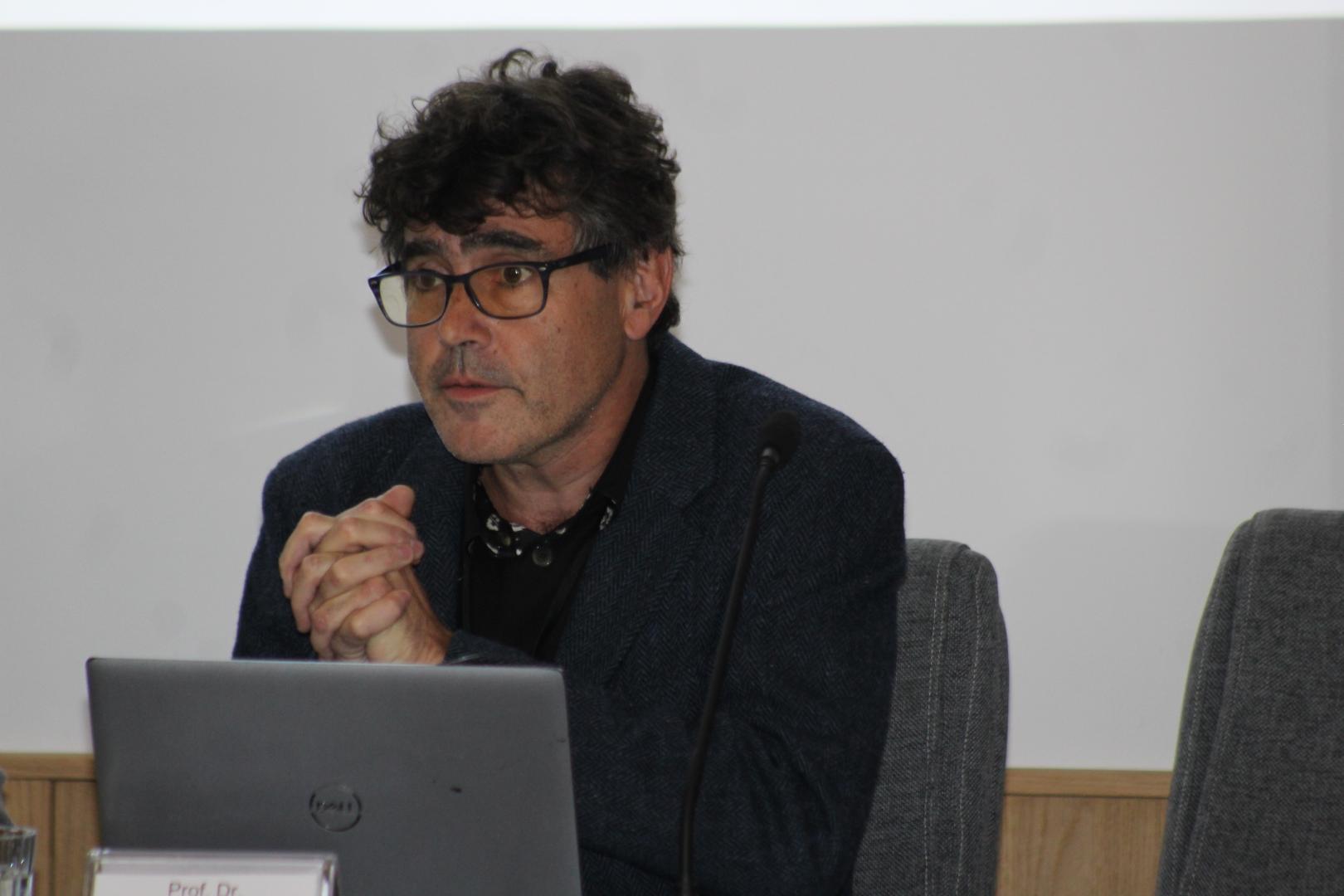
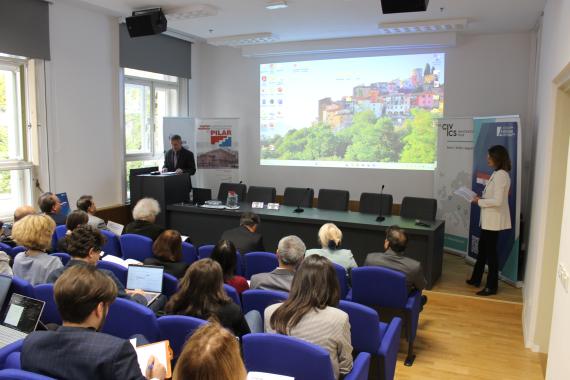
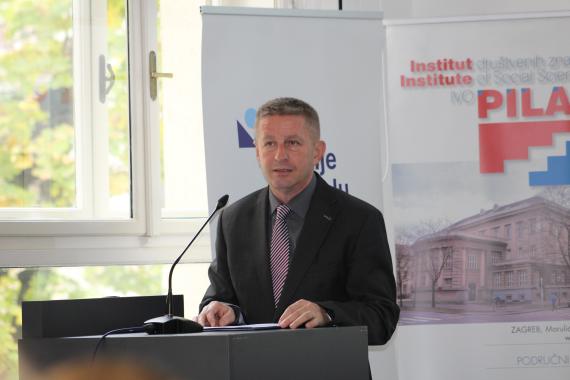
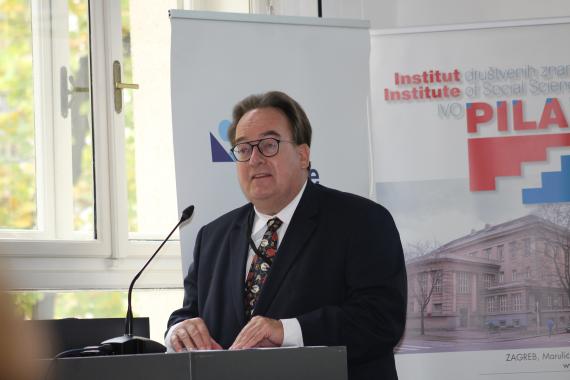
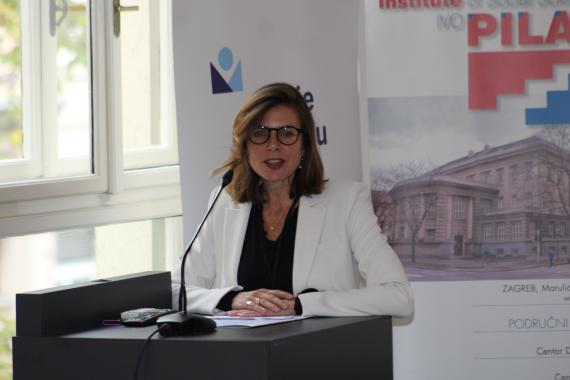
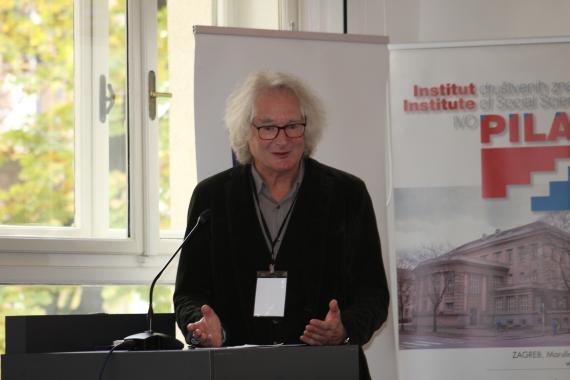
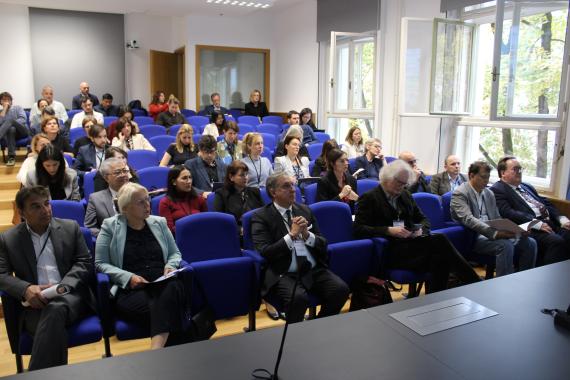
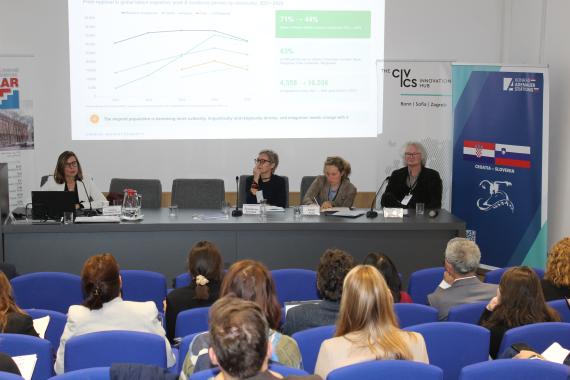
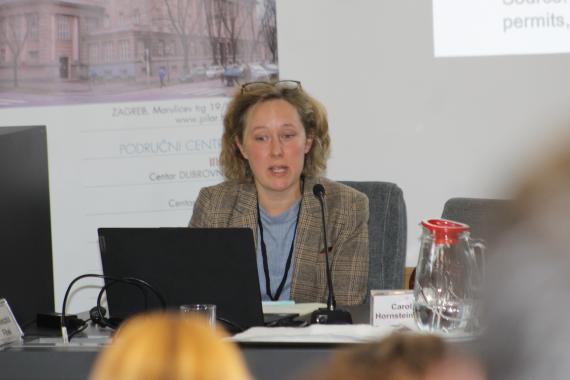
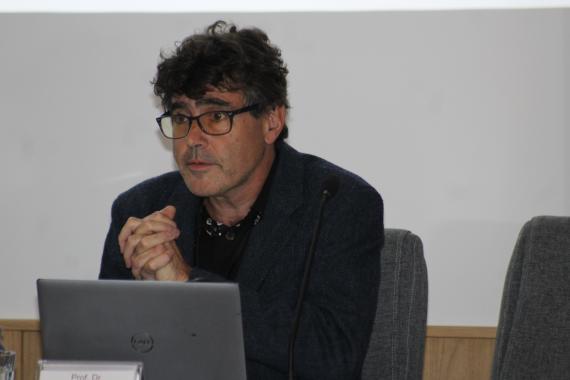
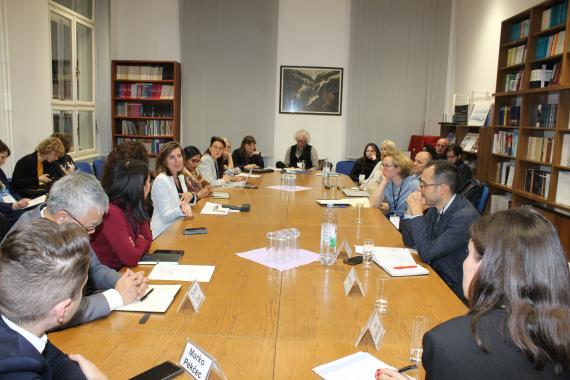
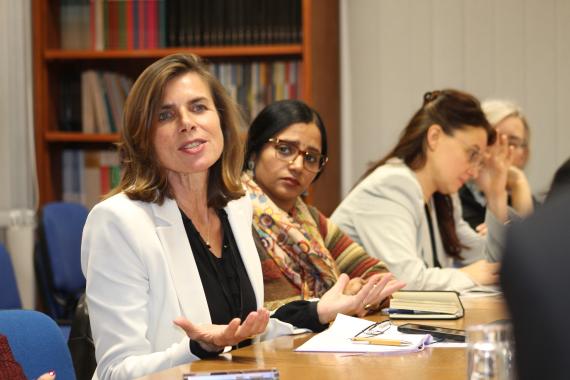
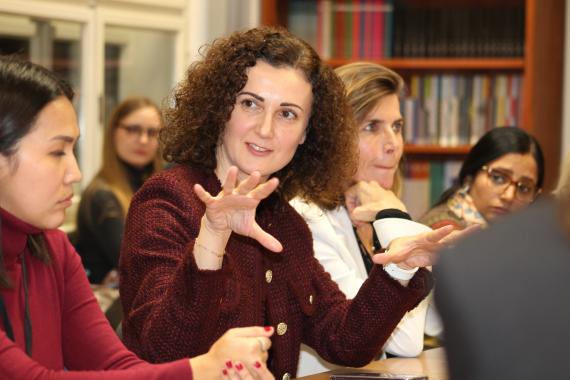
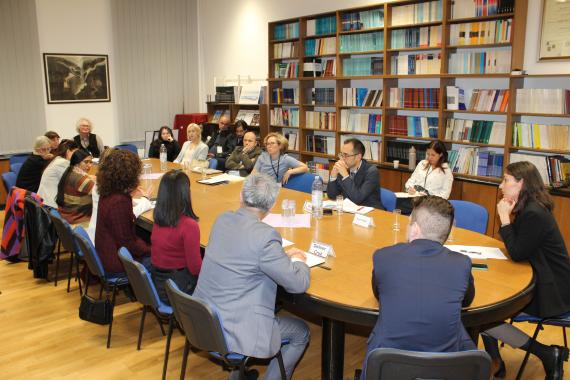
The conference was opened by Prof. Dr. Željko Holjevac, Director of the Ivo Pilar Institute, and Dr. Norbert Eschborn, Director of the KAS Croatia-Slovenia Office. Dr. Eschborn emphasised that Croatia had evolved from a country of emigration into an important destination for migrant workers. This transformation offers new economic opportunities but also calls for forward-looking migration and integration policies. Sustainable migration governance, he argued, can only be achieved through international cooperation and evidence-based approaches. The conference aimed to contribute to this process by providing a platform for academic exchange and policy dialogue. It offered an opportunity to explore how the economic interests of destination countries could be reconciled with the needs of countries of origin and the rights of migrant workers. Alongside the recruitment of urgently needed labour, particular attention was paid to employment conditions and the long-term prospects of migrant workers.
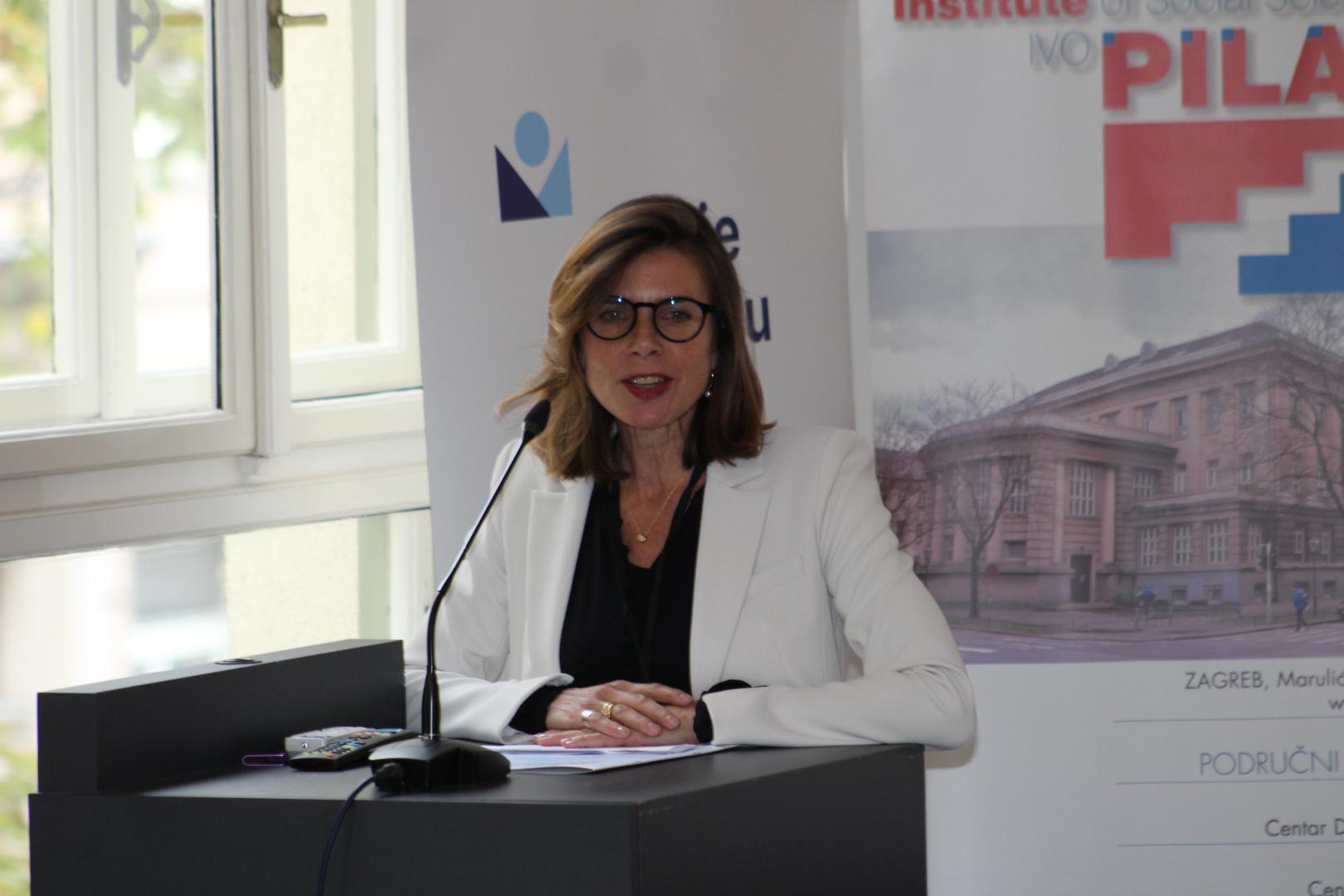
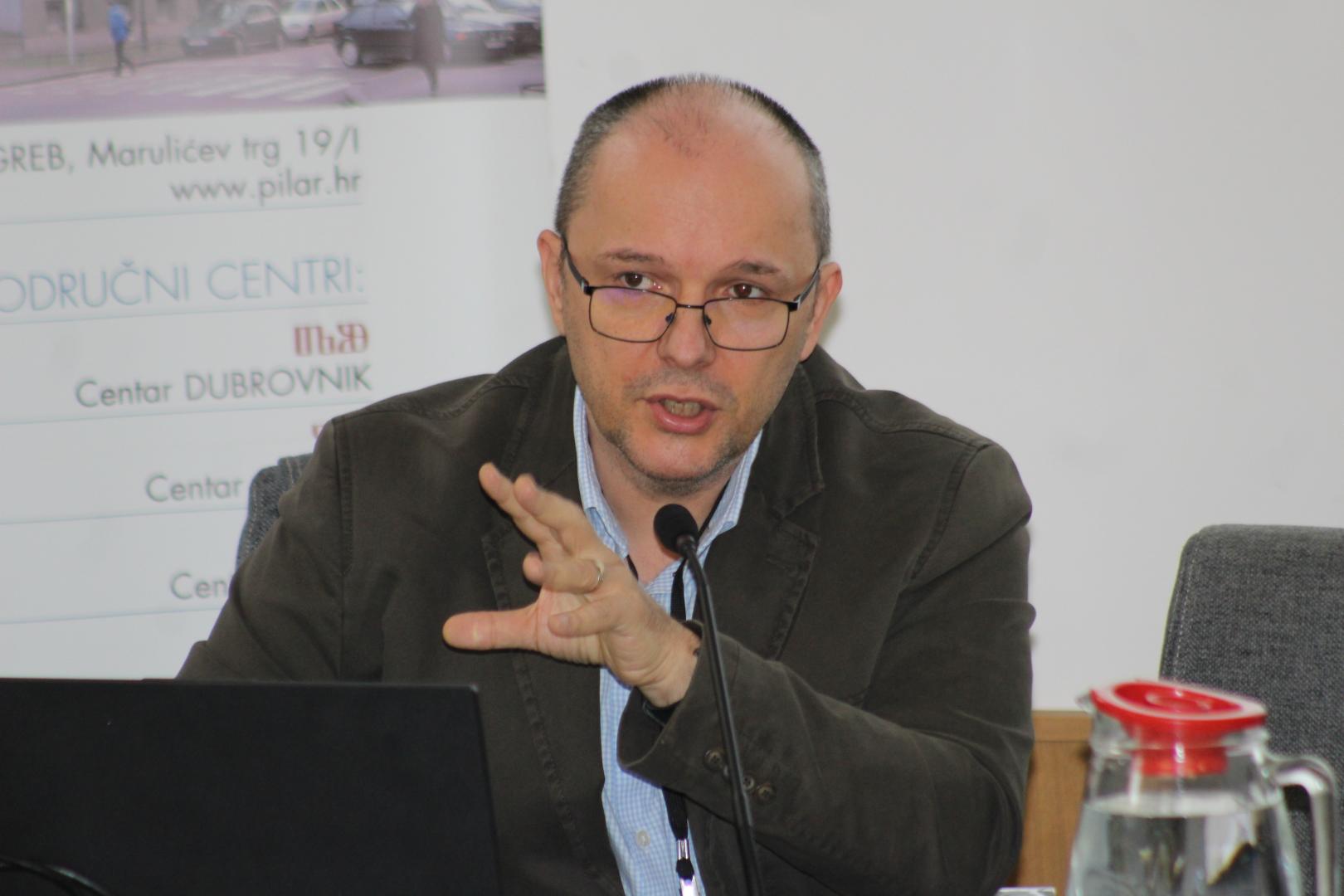
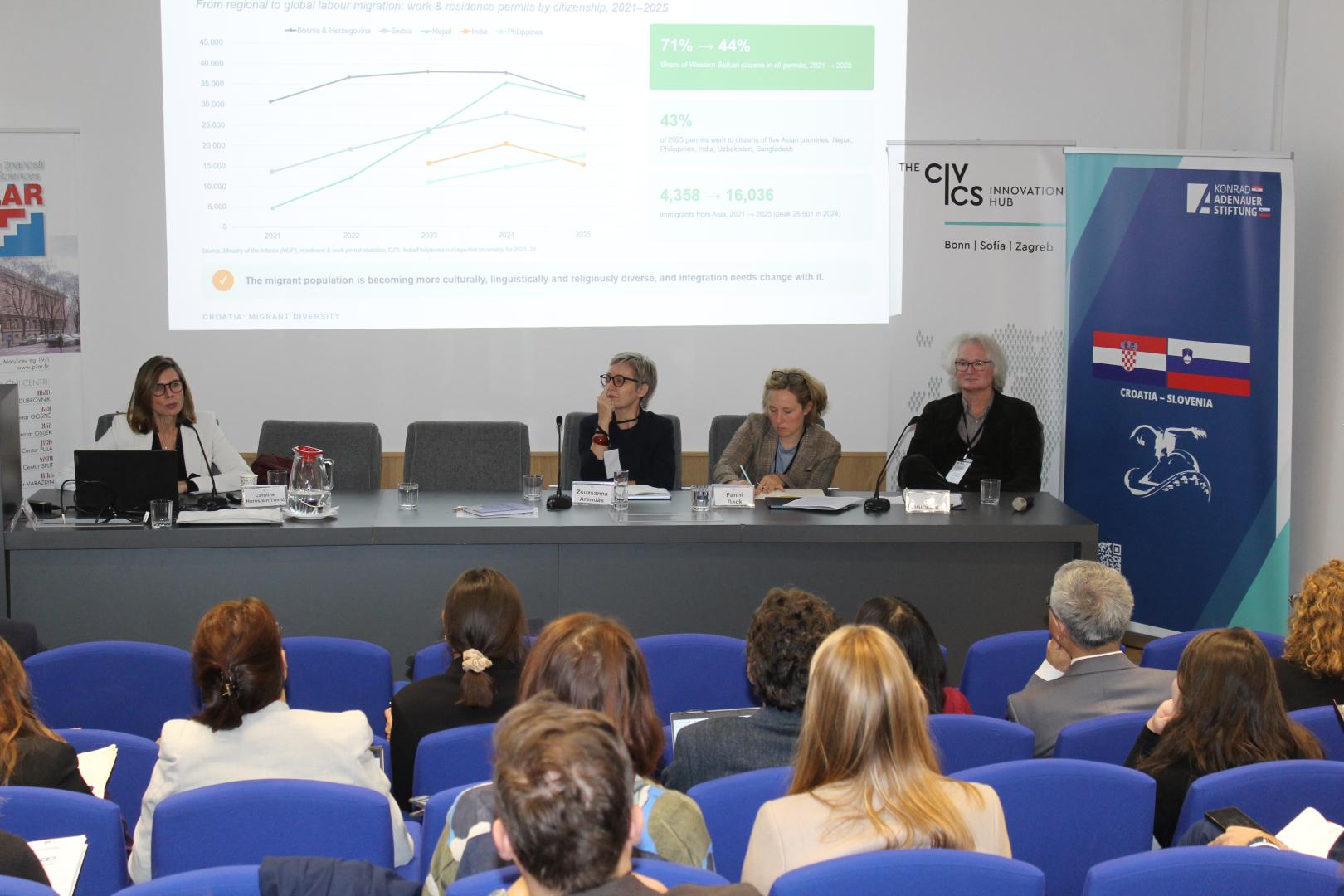
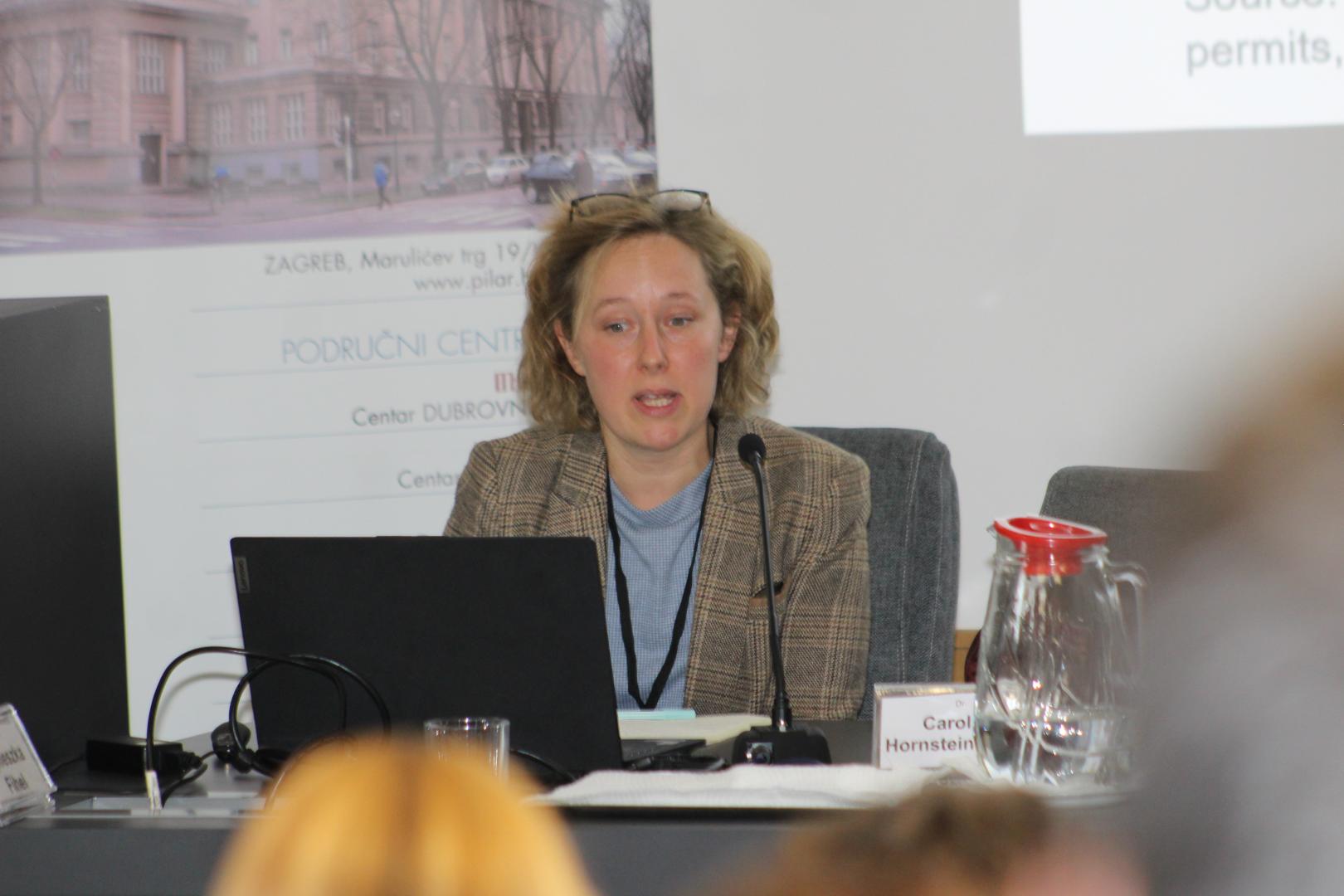
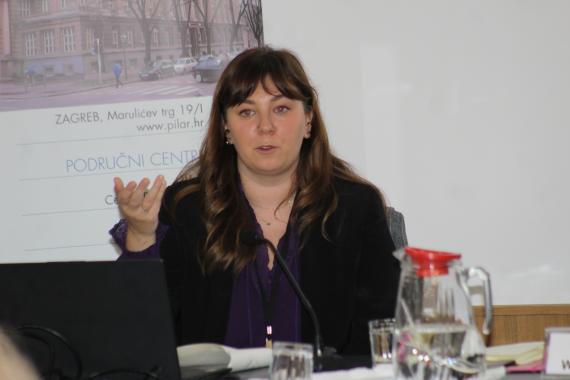
In their introductory remarks, Dr. Caroline Hornstein-Tomić, Senior Researcher at the Ivo Pilar Institute, and Prof. Dr Ulf Brunnbauer of the Leibniz Institute examined the emergence of a new migration space. Demographic trends underscore the growing importance of this issue: in 2024, all the countries examined recorded higher immigration than emigration. While Croatia, Austria and Czechia were able to offset their natural population decline through net migration, the populations of Hungary, Poland, Romania and Slovakia continued to shrink. Drawing on the example of Croatia, Dr. Hornstein-Tomić explained how labour shortages, an ageing population and the emigration of working-age people have increased demand for foreign labour. Since 2022, immigration has exceeded emigration. In 2025, more than 170,000 residence and work permits were issued, although this figure does not correspond to the number of individual people. Foreign workers have become indispensable, particularly in tourism, hospitality and construction, and increasingly in manufacturing and transport as well.
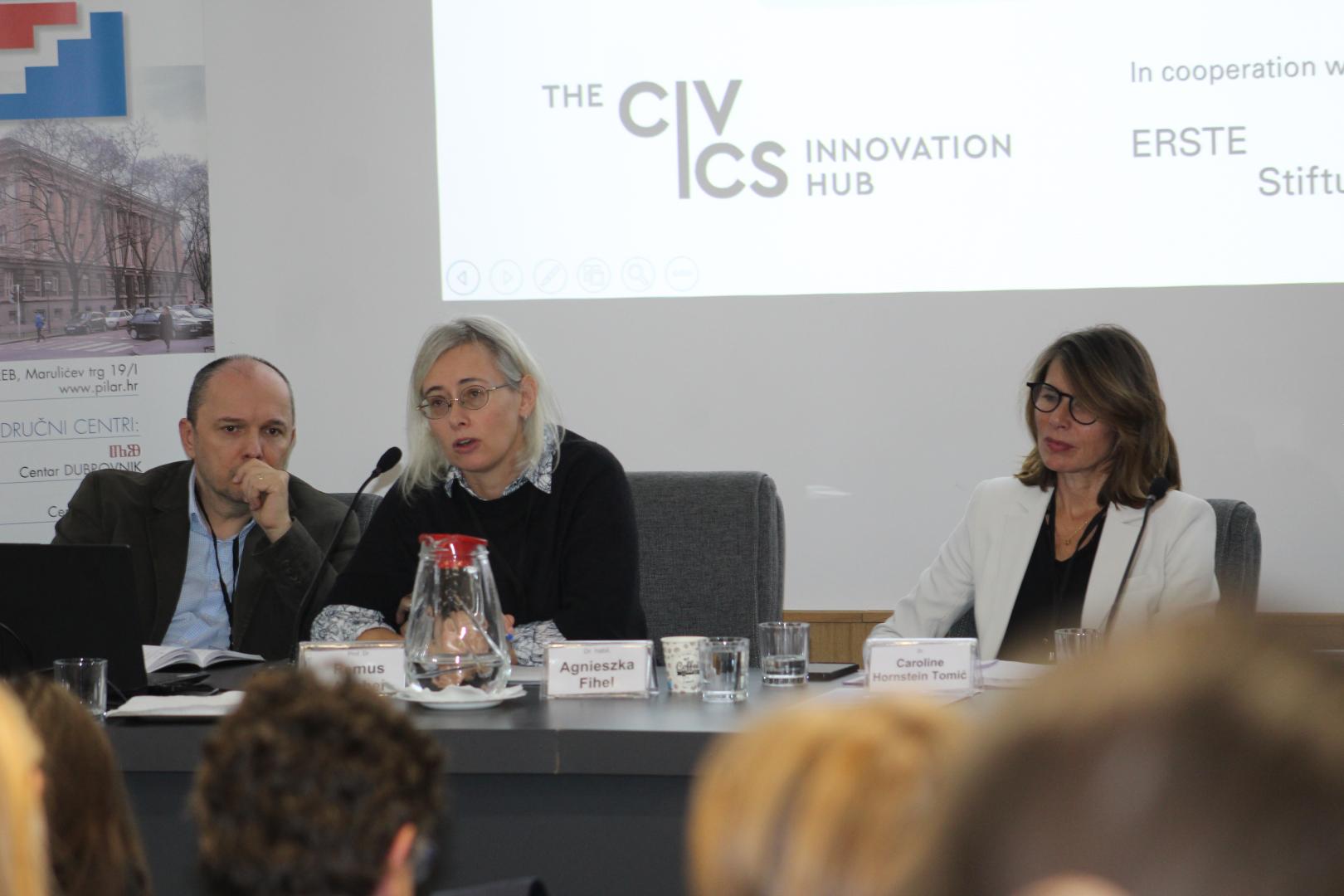
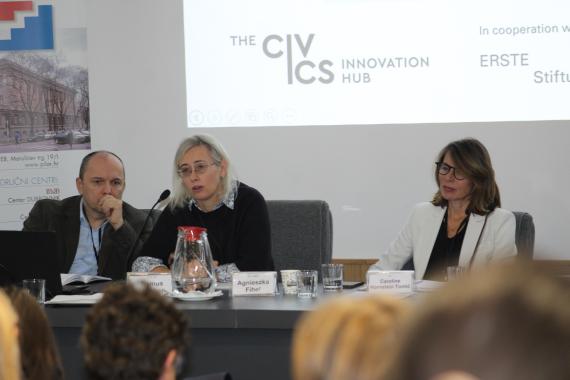
The presentations in the first panel highlighted the different approaches adopted by Romania, Poland and Hungary in response to growing labour migration. Prof. Dr Remus Anghel and Dr habil. Agnieszka Fihel examined developments in Romania and Poland, while Dr Fanni Beck analysed Hungary’s approach to labour migration. In Poland, approximately 1.29 million foreign nationals were registered in the social security system at the end of 2025. Alongside Ukrainian workers, the number of migrants from India, the Philippines, Nepal and Colombia have also increased. However, restrictive visa policies, lengthy administrative procedures and shortcomings in labour inspection continue to hamper effective migration management. Hungary, too, relies on foreign workers because of its ageing population and the expansion of its automotive and battery industries. At the same time, economic demand for labour stands in contrast to migration-critical political rhetoric, limited residence opportunities and restrictions on family reunification. These developments highlighted the growing gap between labour market needs and political approaches to migration governance.
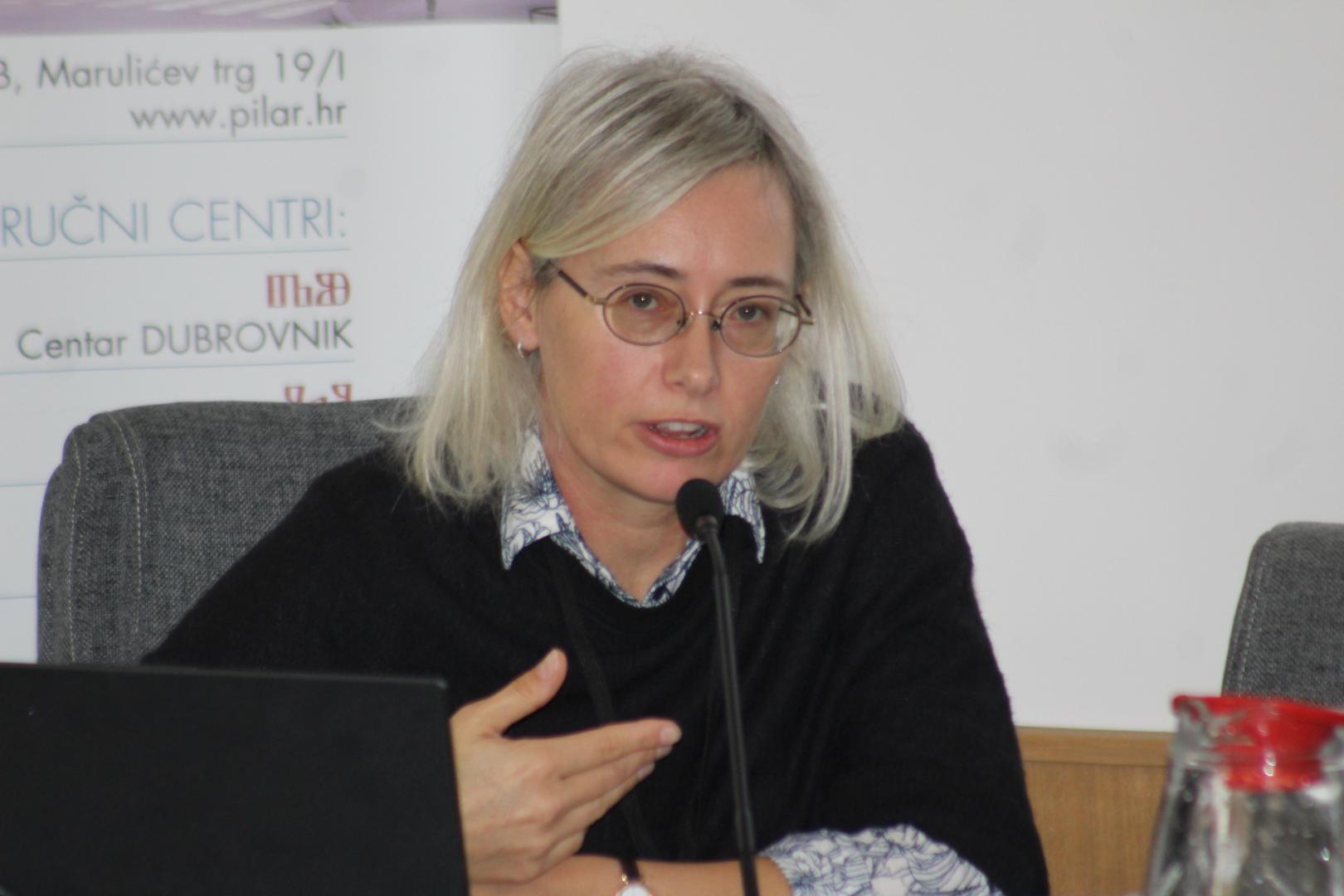
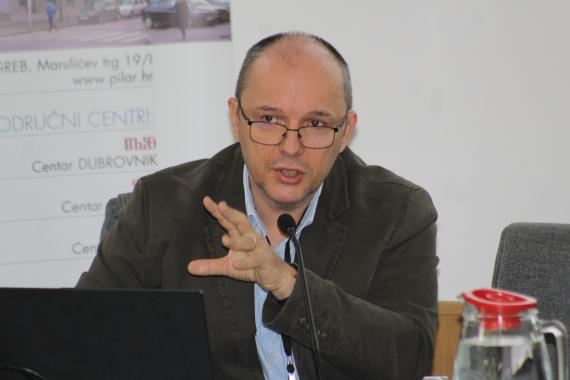
Dr. Zsuzsanna Árendás of the Centre for Social Sciences in Budapest and the CEU Democracy Institute examined labour migration from non-EU countries to Slovakia, focusing on the employment of Indian workers in the automotive industry. In August 2026, a total of 121,443 non-EU nationals were employed in Slovakia, including 11,611 Indian citizens. As these figures cover all economic sectors, the precise proportion of Indian workers employed in the automotive industry cannot be determined. Dr. Árendás showed that recruitment, frequently organised through employment agencies and temporary staffing companies, can create significant dependencies for migrant workers. Recruitment fees, unclear contractual arrangements, accommodation costs and limited opportunities to change employers can all weaken workers’ bargaining power. Migrants are also frequently perceived as outsiders in their everyday lives. For this reason, she argued, residence regulations, employment relationships and actual working conditions must be examined together rather than in isolation.
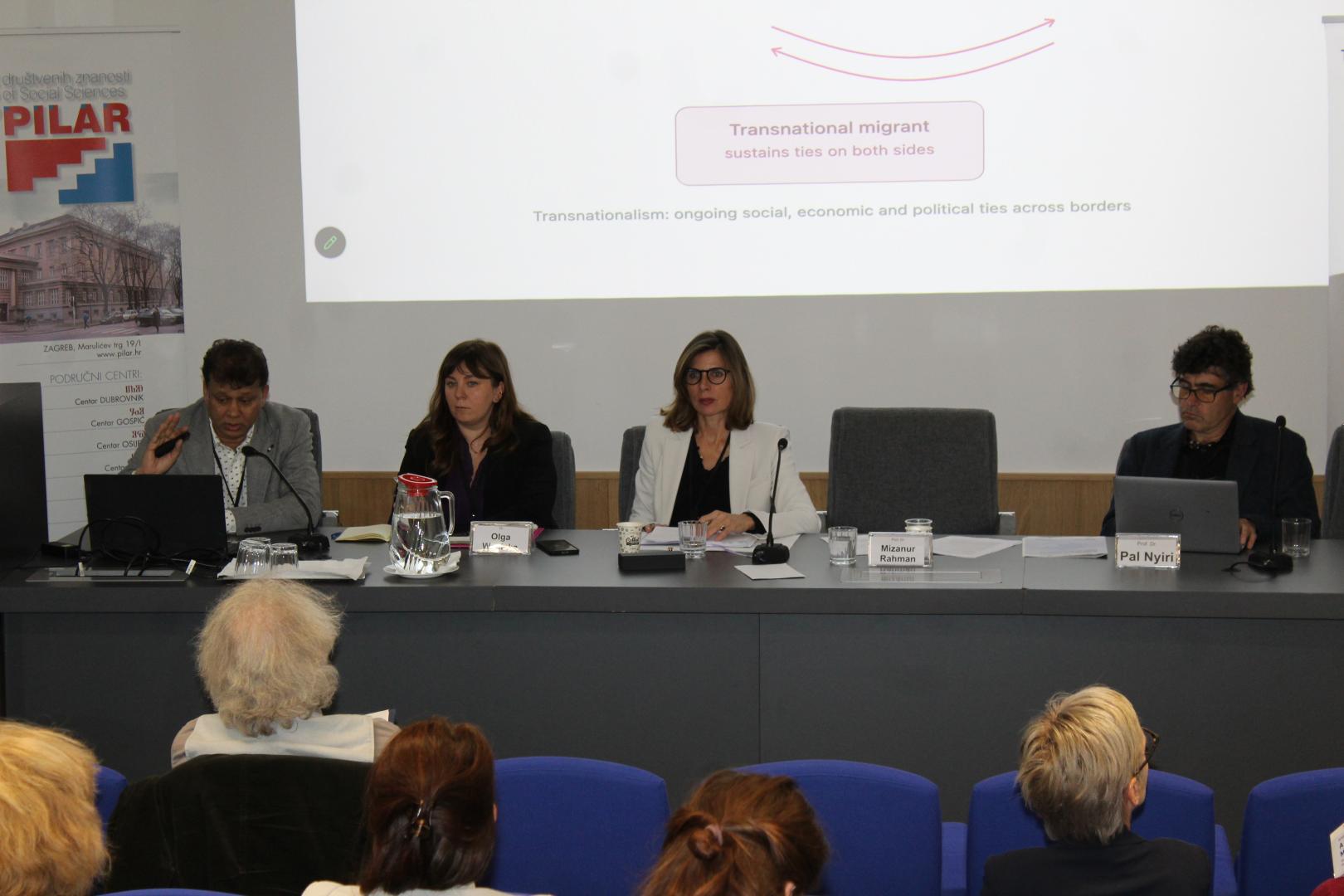
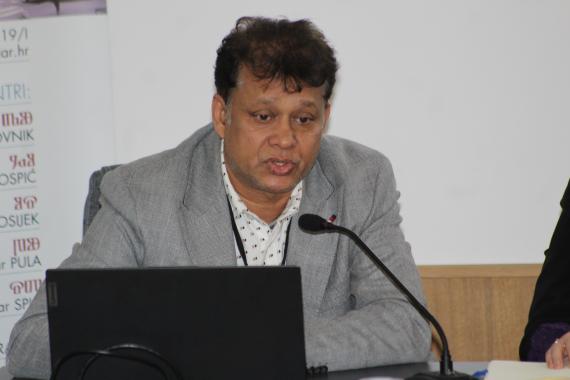
The second panel shifted the focus to countries of origin and the transnational connections linking Asia and Europe. Prof. Dr. Mizanur Rahman from University of Qatar examined migration from Bangladesh to Central and Eastern Europe, highlighting the role of the Gulf states as intermediate destinations. Migrant workers often gain their first professional experience, accumulate savings and establish recruitment contacts in the Gulf before continuing their migration to Europe. Rahman also drew attention to the substantial increase in remittances sent to Asia. Between 2019 and 2024, for example, remittances from Croatia rose from €28 million to approximately €201 million, while those from Poland increased from €46 million to around €177 million. At the same time, he highlighted significant gaps in the available data on migration and financial flows. He stressed that migrants should not be viewed solely as workers or remittance senders, as high recruitment costs, indebtedness and insecure residence status can place considerable strain on their lives.
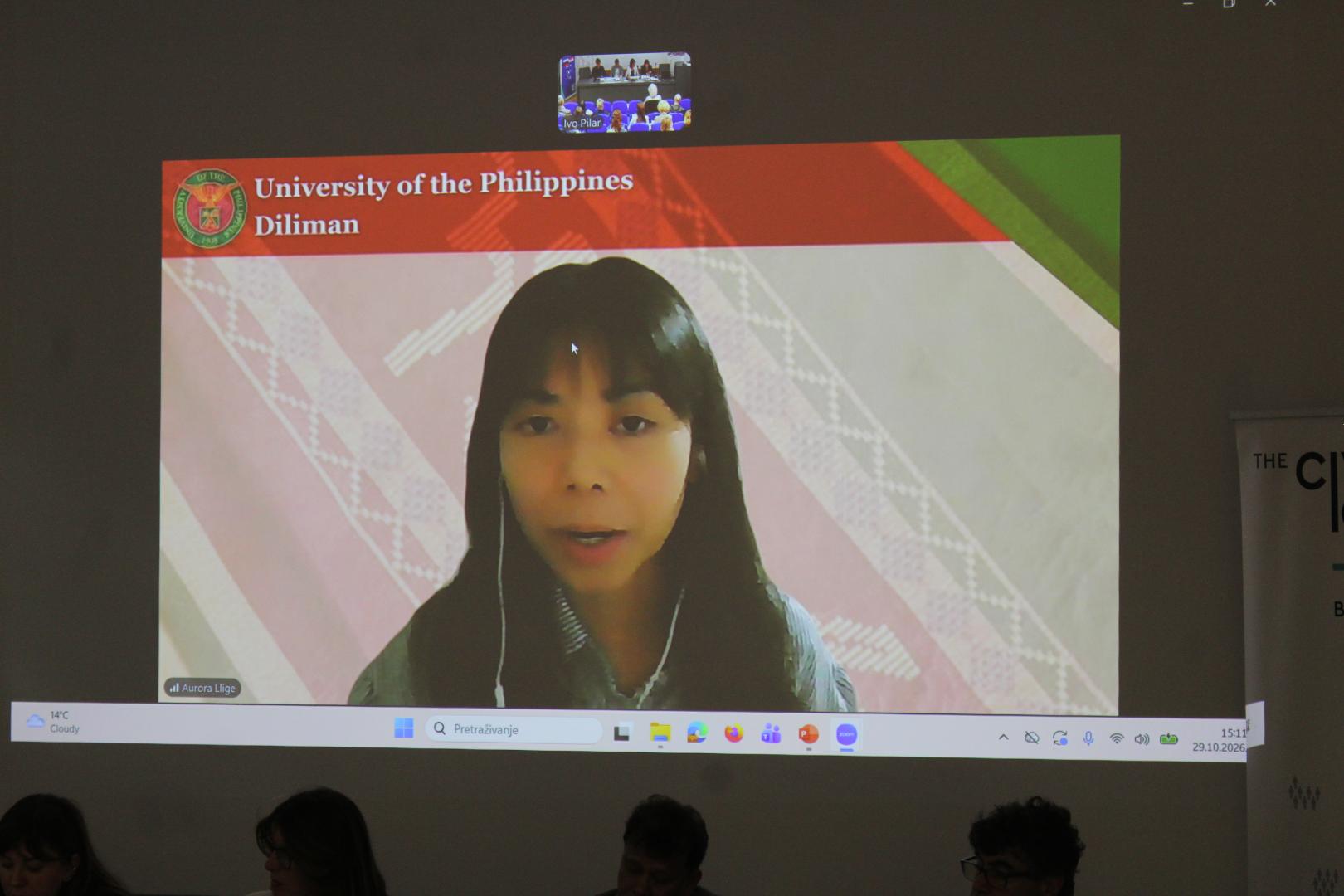
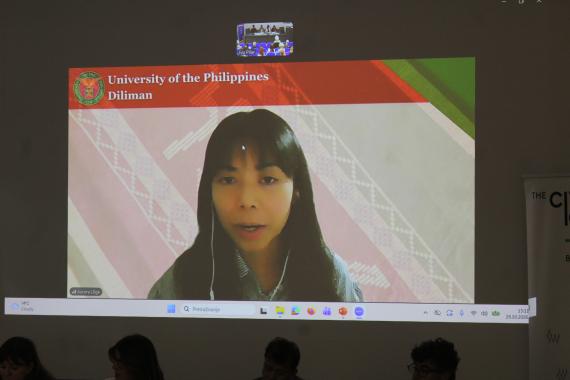
In her online presentation, Dr. Aurora S. Llige of the University of the Philippines discussed the Philippines’ role as a country of origin for international labour migration. Remittances sent by Filipino migrant workers reached approximately US$35.6 billion in 2025. The Philippine government has also strengthened its efforts to protect migrant workers through the Department of Migrant Workers, bilateral agreements and skills development programmes. Initiatives such as BaLinkBayan and the Balik Scientist Program further encourage members of the Filipino diaspora to contribute to development projects and facilitate knowledge transfer. Dr Olga Wanicka of Kozminski University in Warsaw presented the Link4Skills research project. She highlighted the sharp increase in work permits issued to Filipino workers in Poland, from approximately 2,000 in 2018 to nearly 38,000 in 2024. Nevertheless, language barriers and difficulties in recognising foreign qualifications continue to prevent many migrants from finding employment that matches their skills and professional experience. Wanicka therefore emphasised the importance of transparent recruitment procedures, fair working conditions and better use of migrants’ existing qualifications and competencies.
Further country analyses demonstrated that these challenges extend well beyond Croatia. In Romania, the population declined from 22.8 million in 1992 to approximately 19 million in 2021. At the same time, around 243,000 non-EU nationals held valid residence permits in 2026, of whom approximately 190,000 were employed. Workers from Nepal, Sri Lanka and India are particularly active in construction, manufacturing and hospitality. Researcher Dr Remus Gabriel Anghel drew attention to shortcomings in migrant integration and in the protection of foreign workers against exploitation and discrimination. Croatia faces similar challenges, with institutional frameworks and societal structures struggling to keep pace with the rapid growth in immigration. The country case studies showed that public debate is often dominated by security concerns and fears of social change, while the perspectives and experiences of migrants themselves receive comparatively little attention.
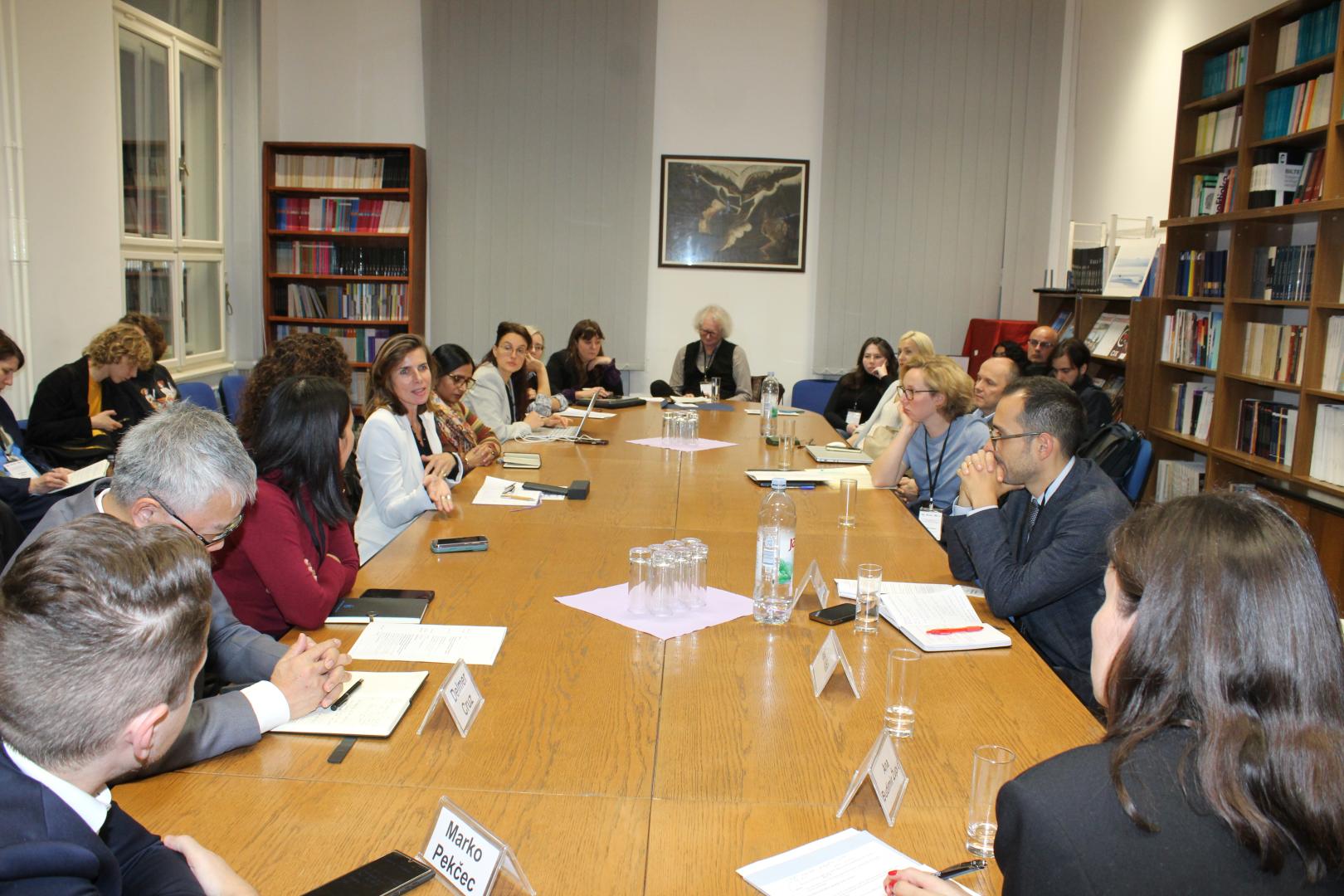
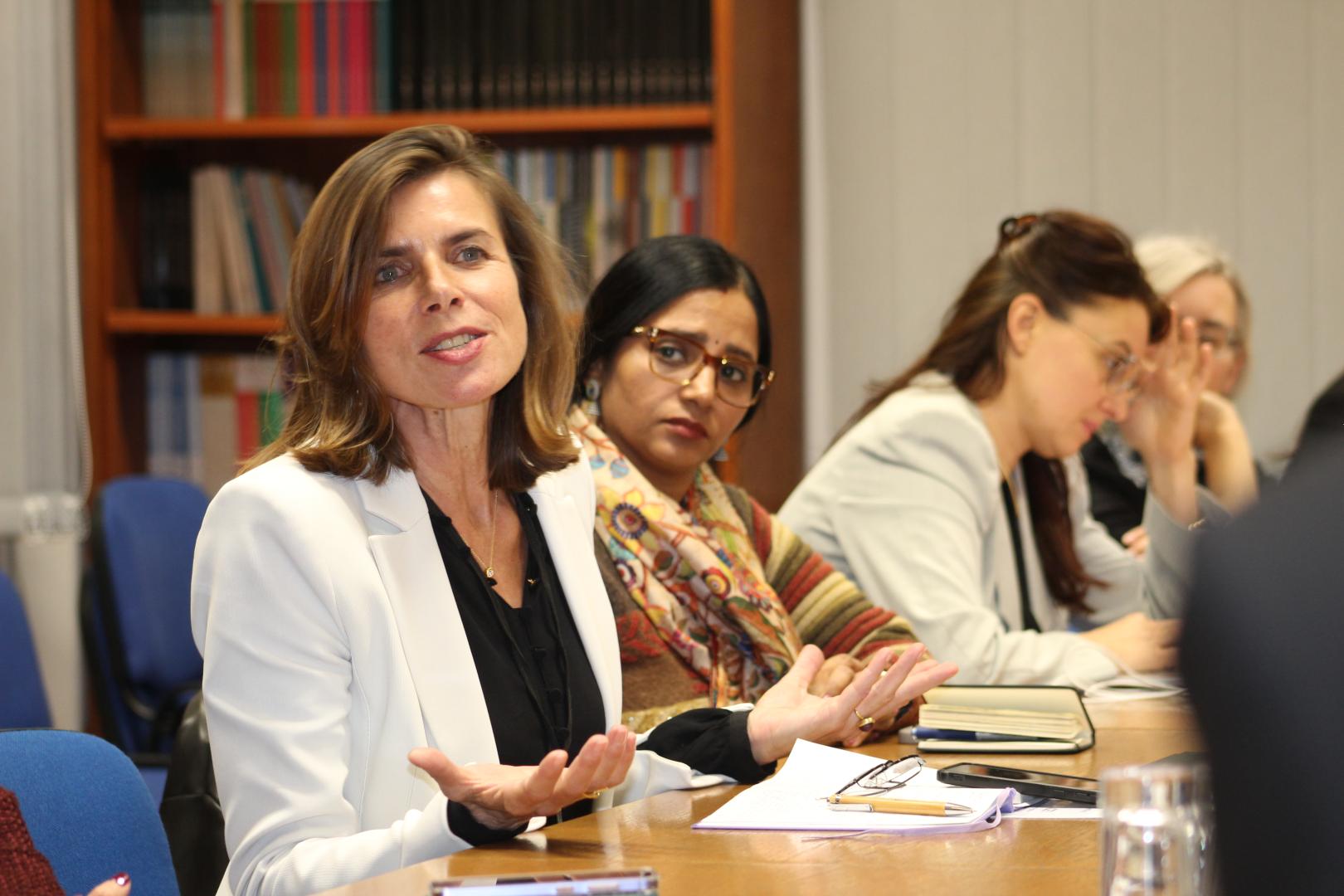
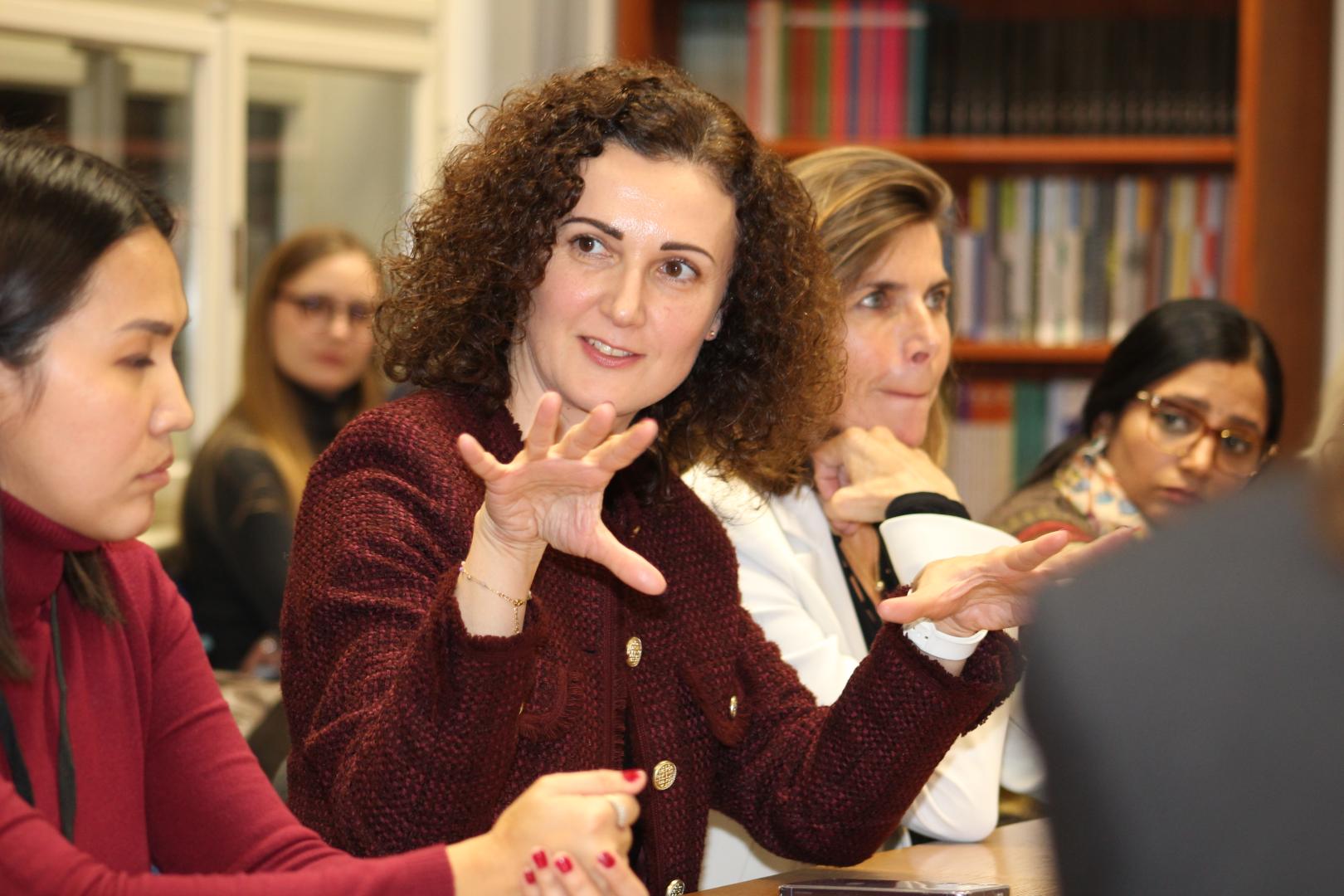
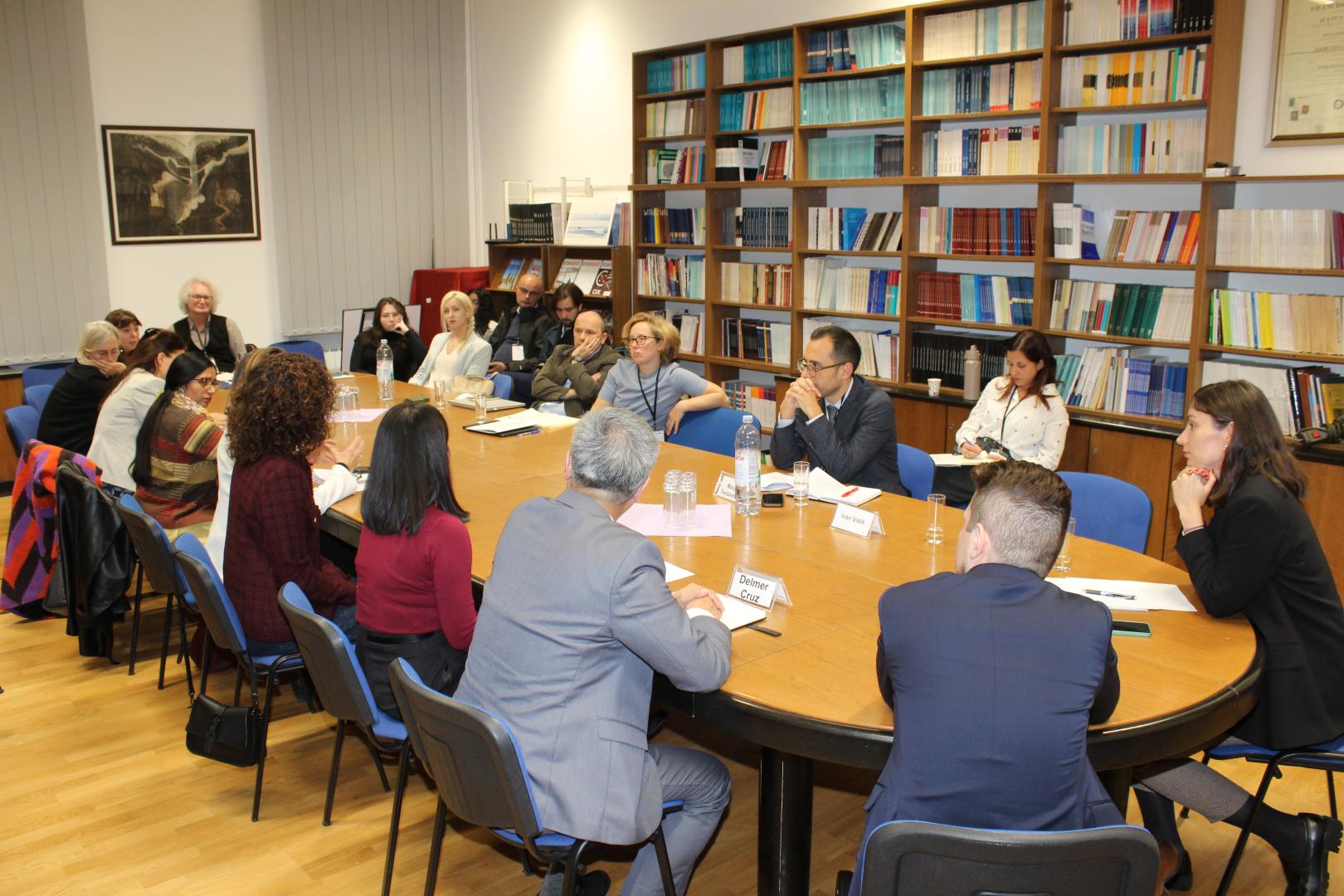
The conference concluded with an international roundtable discussion on improving coordination between countries in the development and implementation of migration policies. Participants included representatives of government, business, academia and international organisations, among them Croatia’s ministries responsible for the interior and labour, the Philippine government’s Migrant Workers Office, the World Bank Group, Manpower and the International Organization for Migration (IOM). The discussion demonstrated that sustainable labour migration requires far more than recruiting additional workers. Fair recruitment practices, decent working and living conditions, secure residence arrangements, and access to education, healthcare and language training are all essential. Equally important is cooperation between countries of origin and destination, as well as between policymakers, businesses, researchers and migrant communities.
The conference “A New Migration Space?” highlighted that international labour migration is set to become increasingly important for Central and Eastern Europe. For this development to be sustainable in the long term, the rights and needs of migrant workers must be given equal consideration alongside destination countries’ economic demand for labour.