







Asset Publisher

Facts and Findings

Selected contributions to the series with international relevance

Publications

Adobe Stock / Shutter B

Priorities for an Interest-Driven German Foreign Economic Policy

From Values to Reality

Germany’s foreign economic policy is under pressure: geopolitical instability, growing dependencies on China, and stalled trade agreements threaten prosperity and strategic autonomy. This paper calls for an interest-driven realpolitik: concluding trade agreements faster and more pragmatically, diversifying raw material partnerships, clearly separating trade promotion from development policy, and strengthening the defence industry. Only then can Germany remain economically and strategically capable of action,

IMAGO / Bihlmayerfotografie

Thank you for your service! – Levers for a Combat-Ready Bundeswehr

How can defence be ‘de-socialised’?

Personnel shortages, outdated equipment, and an over-civilianized force are undermining Germany’s ability to defend itself. The Bundeswehr needs more than money: structural reforms, a renewed military mindset, and societal support are essential. Measures such as a mandatory “Bundeswehr Week”, employer incentives for reservists, a shift back to core military tasks, and a Combat Readiness Score aim to make Germany’s military capable of fighting – before it's too late.

stock.adobe.com/A2Z AI

India's importance for Germany's science and innovation

From Bangalore to Berlin: Indian students strengthen STEM fields and contribute to securing skilled labor

India is becoming increasingly important to Germany as a geopolitical partner and hub of innovation, especially due to its young population, strong economic growth, and technological progress. With around 50,000 individuals, Indian students form the largest international group in Germany, particularly in STEM fields. Many stay after graduation and work in highly skilled professions. To better harness their potential, more English-language degree programs, faster visa processes, affordable housing, language support, practical training opportunities, and strong integration networks are needed.

IMAGO / Eibner

Climate policy-motivated sabotage – Extreme forms of action in the name of the climate

How left-wing extremist forms of action are increasingly expanding their thematic focus to include the climate crisis

Climate protection is being exploited in some cases for acts of extremist sabotage. Left-wing extremist groups use violence to target infrastructure, businesses and government institutions. This article analyses three categories of action and highlights international networks – such as the transnational Switch Off network. Also it provides detailed recommendations for politicians, security authorities, academics and civil society on how to protect legitimate protest and effectively counter further radicalisation.

IMAGO / Kyodo News

Suddenly in the Lead – Germany’s New Role in Global Health

On the new opportunities for Germany’s foreign, economic and security policy

Germany has assumed a leadership role in global health following the U.S. withdrawal. This new responsibility offers opportunities for foreign policy influence, security resilience, and economic strength. Germany’s high international standing is based not only on financial contributions but also on its position in science and innovative industry. Strengthening and institutionalizing this role could benefit Germany.

Adobe Stock/ 1xpert

The European Union – stabilised internally, confronted externally

Results of the Panorama Analysis 2025

The Panorama Analysis 2025 provides a comprehensive insight into the current development of the European Union and its environment in a year-on-year comparison. The analysis presents a multithematic assessment of the current situation in the areas of innovation and competitiveness, the attitudes of member states towards the EU, and the global environment. By using qualitative and quantitative indicators, it provides sound insights into current trends and developments.

Titelbild mit der KI Adobe Firefly generiert, Konrad-Adenauer-Stiftung e.V.

Criminal responsibility limits in Europe: Insights into the legal situation and juvenile delinquency

How European countries deal with criminal responsibility limits and what conclusions can be drawn for the German debate

The discussion about lowering the criminal responsibility threshold in Germany to less than 14 years of age is controversial. Proponents argue that earlier criminal interventions are necessary to prevent criminal careers. Critics warn against stigmatization and point to alternatives such as preventive and educational measures. A comparison of models in countries such as the UK, Sweden and Switzerland shows different approaches and their implications. This analysis sheds light on key challenges and perspectives for Germany.

Titelbild mit der KI Adobe Firefly generiert, Konrad-Adenauer-Stiftung e. V.

No Fear of Numbers: Why Math Belongs in Early Childhood Education

Strengthening Educational Opportunities Through Early Support

Early math education strengthens logical thinking, STEM skills, and social participation. Even toddlers develop a sense of patterns, quantities, and structures when supported by skilled early childhood educators. Introducing mathematical learning in preschool not only improves future career opportunities but also promotes equity, democratic understanding, and a sense of agency. To achieve this, we need strong structural support, professional development, more qualified staff, and political commitment.

PantherMedia /Joerg Hackemann

A new approach to combating anti-Semitism

Plea for the inclusion of the fight against anti-Semitism in the Basic Law

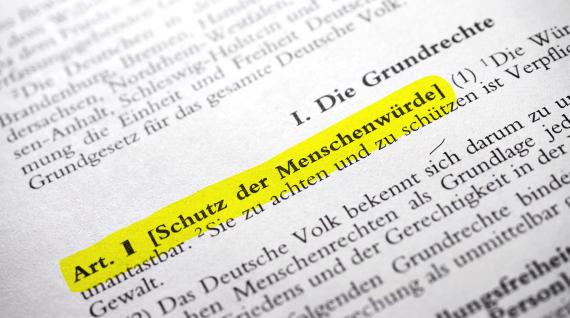
Since the coronavirus pandemic, the associated conspiracy myths and the pogrom of 7 October 2023, antisemitism has posed a permanent challenge to the state. A major problem in the fight against antisemitism is not the lack of laws and state objectives, but the lack of law enforcement. For this reason, the office of the Federal Government Commissioner for Anti-Semitism should be replaced by that of the Bundestag Commissioner for Anti-Semitism, modelled on the Bundestag Commissioner for the Armed Forces and enshrined in the constitution.

Titelbild mit der KI Adobe Firefly generiert, Konrad-Adenauer-Stiftung e. V.

What Canada and Singapore teach us about promoting basic skills at an early age

High-quality early childhood education for equal opportunities and educational success

Early childhood education strengthens foundational competencies, promotes social participation and educational success, and generates high social returns. Canada and Singapore demonstrate how successful systems can emerge through mandatory educational plans, high quality standards, public funding, and targeted support for disadvantaged children. Germany should strategically expand early childhood education, introduce mandatory curricula, and strengthen quality development as well as evidence-based governance.

Asset Publisher

About this series

The series informs in a concentrated form about important positions of the Konrad-Adenauer-Stiftung on current topics. The individual issues present key findings and recommendations, offer brief analyses, explain the Foundation's further plans and name KAS contact persons.

 

Order details

Editor

Konrad-Adenauer-Stiftung e.V.