


Asset Publisher

Country Reports

Short political reports of the KAS offices abroad

Publications

UN Photo / Manuel Elías

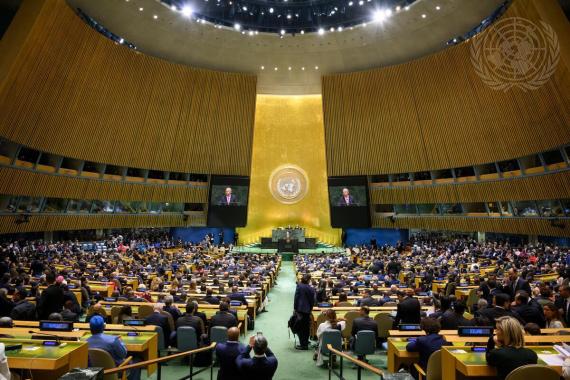
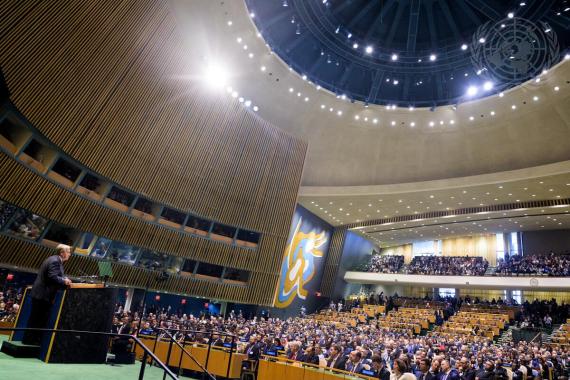
Reflection, Reckoning, and Resolve at UNGA80

Eighty years on, can the United Nations channel its founding spirit to tackle the challenges of our time?

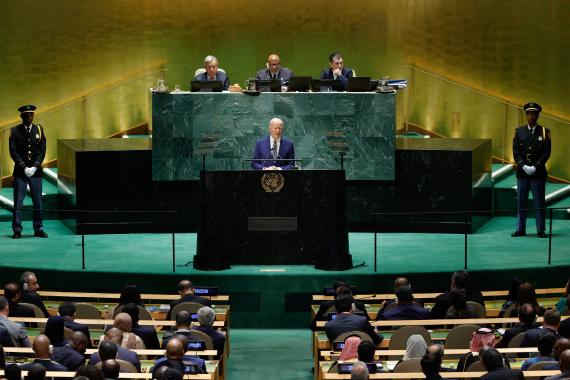
In a flurry of diplomatic motorcades, more than 140 leaders and dignitaries from around the world descended on United Nations (UN) headquarters in New York City for the High-Level Week of the 80th session of the General Assembly (UNGA) from 22-30 September. Business was not as usual. Ahead of its 80th anniversary on October 24, the UN finds itself in the throes of an existential crisis. In an era of rapid change and turbulence, the organization has been slow to respond and adapt, raising questions as to its effectiveness and relevance. Accordingly, the tone at UN80 was markedly less celebratory for an organization on the brink of a major milestone and more sobering in its honest stock-taking of the many global challenges left unresolved, unaddressed, and unmitigated. How will the UN navigate its next decade?

UN Photo/Manuel Elías

The Future of Sustainable Development in Flux

As the global development landscape reorganizes, multilateral cooperation must remain at its core

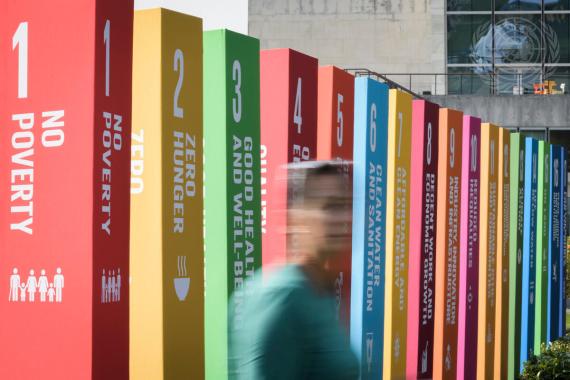
One decade after their adoption, the Sustainable Development Goals remain off track amid growing insecurity, dwindling financial commitment, and eroding trust in multilateralism. As time runs out for the 2030 Agenda, can the international community meet the moment with the urgency and unity needed?

UN Photo/Loey Felipe

2024 High-Level Political Forum: The SDGs Caught in Geopolitical Tensions

Seeing the visible signs of fragmentation on common issues in the UN’s foremost platform for advancing the Sustainable Development Goals (SDGs)

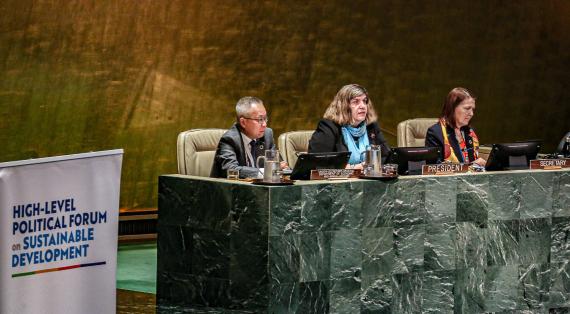
The United Nations (UN) High-Level Political Forum (HLPF) on Sustainable Development is an annual forum under the auspices of ECOSOC for the review of progress on the Sustainable Development Goals (SDGs). This year, the Forum convened at UN Headquarters in New York from 8-17 July 2024. Taking place under the theme "Reinforcing the 2030 Agenda and eradicating poverty in times of multiple crises: the effective delivery of sustainable, resilient and innovative solutions”, this year's Forum reviewed 5 SDGs: SDG 1 (no poverty), SDG 2 (zero hunger), SDG 13 (climate action), SDG 16 (peaceful institutions), SDG 17 (partnerships). While the HLPF does not tend to make global headlines in the same way that the UN General Assembly does every September, the Forum remains the UN's primary gathering for high-level representatives to draw global attention to their national and political commitment to the 2030 Agenda, and in turn, to the multilateral system. The Forum consisted of a three-day Ministerial segment with speeches from 115 Ministers, Vice-Ministers, Permanent Representatives and others. Further, more than 250 high-level special events, Voluntary National Review (VNR) labs, side events and exhibitions took place in person and online.

IMAGO / Xinhua

Summit of the Future

Disillusionment instead of optimism

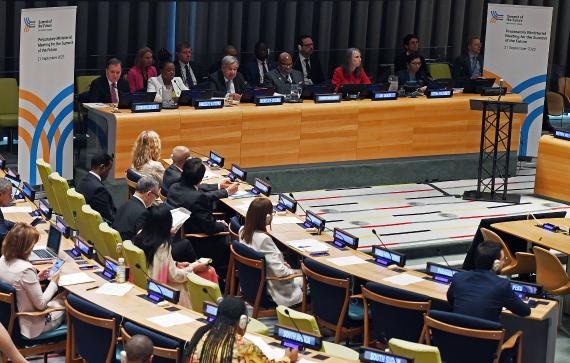
The multilateral system with the United Nations at its center is facing a crisis of confidence. A profound reform is needed. However, prospects are low in an increasingly polarized world order. Germany plays a special role in the run-up to the Summit of the Future.

IMAGO / UPI Photo

Busy Week at the East River

Ukraine, SDGs, climate change, and financing for development: The High-Level Week in New York showed the urgent need for reform and action to restore trust in multilateral solutions.

The High-level Week of the 78th UN General Assembly (UNGA78) unfolded amid a fraught backdrop of converging conflicts and crises, including an ongoing war, stalled development gains, and escalating climate change. Russia’s war in Ukraine and the UN’s inability to end it has struck a blow to the multilateral system, undermining its credibility. A multi-trillion dollar financing gap threatens hard-won progress towards the 2030 Agenda and the promise of a better, sustainable future for all. Meanwhile, the climate crisis—the existential threat of our time—steadily worsens in the absence of bold policies and initiatives.

Effective multilateral solutions to these global challenges are needed more than ever. However, in a time of deepening geopolitical division, the global community is struggling to respond to the urgency of the moment with the requisite political will and ambition. Drawing from the High-level Week discussions, this report will examine three of the most-pressing challenges for the UN system, underscoring where multilateral action has fallen short, where progress—however incremental—has been made, and what further steps are needed.

IMAGO / ZUMA Wire

High-Level Political Forum on Sustainable Development 2023 – a blueprint for the SDG Summit?

How can we build on the momentum from the HLPF for a successful SDG Summit?

In July 2023, Member States came together to assess progress on the 17 Sustainable Development Goals (SDGs) at the United Nations (UN) High-Level Political Forum (HLPF) on Sustainable Development. As we reach the halfway point to the deadline of achieving the 2030 Agenda, the HLPF discussions concentrated on the key policy areas in which accelerated progress is needed. At this critical inflection point, only 12% of the 140 SDG targets are on track and the UN Secretary-General’s latest SDG Progress Report issues a dire “Rescue Plan for People and Planet” to put the world on a better path. The SDG Summit, taking place from 18-19 September 2023 in New York, will be an opportune moment to reverse our current trajectory and redouble efforts towards SDG implementation. This country report offers a synthesis of key themes from the HLPF and prospective outlook on the SDG Summit.

One year after Russia's invasion: What is the state of international solidarity with Ukraine?


Challenging the Nuclear Status Quo

In a time of rising nuclear risks, the non-nuclear weapons states are making a stand and calling for meaningful progress in nuclear disarmament

During the 77th United Nations (UN) General Assembly, member states and civil society gathered on September 26 to mark the International Day for the Total Elimination of Nuclear Weapons. Commemorated annually since 2014, the Day provides the international community with both an opportunity to reflect on the existing global nuclear order and platform to mobilize greater efforts towards achieving a nuclear weapons-free world. Calling attention to the threat nuclear weapons pose to humanity, the Day seeks to educate and raise awareness among leaders and the public as to the catastrophic consequences of using nuclear weapons and the urgent need to eliminate them. Amid rising geopolitical tensions and a worsening security environment, the Day has taken on greater importance—a reminder that nuclear disarmament remains a distant goal and nuclear diplomacy has a long way to go.

Ein Gipfel zur Zukunft unser Bildungssysteme

Die Pandemie ist ein herber Rückschlag für die Erreichung des globalen Bildungsziels

Wenige der Nachhaltigen Entwicklungsziele (SDGs) wurden so heftig von COVID-19 zurückgeworfen wie das vierte Ziel zur Hochwertigen Bildung—mit dramatischen Folgen. Die Pandemie führte zur historisch größten Unterbrechung der Bildung von fast 1,6 Milliarden Schülern oder 90% aller Kinder weltweit. Die Vereinten Nationen schätzen, dass als Folge von Unterrichtsausfällen zwei von drei Kindern im Alter von zehn Jahren nicht mehr in der Lage sind, eine einfache Geschichte zu lesen und zu verstehen. Im September lud der Generalsekretär der Vereinten Nationen daher am Rande der alljährlichen Generalversammlung zu einem hochrangigen Gipfel, um die Zukunft unserer Bildungssysteme zu gestalten und die globale Bildungskrise anzugehen.

Konrad-Adenauer-Stiftung e. V.

Weltpolitik gestalten

Ghanas Vorsitz im Sicherheitsrat der Vereinten Nationen

Anlässlich der Präsidentschaft Ghanas im Sicherheitsrat der Vereinten Nationen im Monat November besuchte Staatspräsident Nana Akufo-Addo am 9. und 10. November New York. KAS New York in Kooperation mit dem KAS Büro in Ghana organisierte in diesem Kontext ein Dialogprogramm zur Frage: wie können gewählte Mitglieder des Sicherheitsrates geopolitischen Einfluss nehmen? Die teilnehmende Justizministerin, Regionalministerin Bono, Rektorin der University of Ghana, sowie der Rektor des Institute of Management and Public Administration und der Direktor der Forschungsabteilung im Präsidialamt hatten die Möglichkeit, nicht nur Einblicke in UN Prozesse zu nehmen, sondern auch ihre Kontakte und Netzwerke in die Vereinten Nationen hinein zu erweitern.

Asset Publisher

About this series

The Konrad-Adenauer-Stiftung is a political foundation. Our offices abroad are in charge of over 200 projects in more than 120 countries. The country reports offer current analyses, exclusive evaluations, background information and forecasts - provided by our international staff.

Order details

Editor

Konrad-Adenauer-Stiftung e.V.