



Asset Publisher

Event Reports

Publications

The Situation in Afghanistan and Way Forward

Five Years After the Taliban’s Return to Power

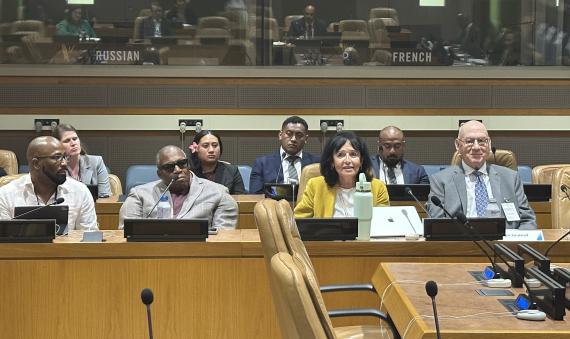
Five years since the Taliban’s return to power, Afghanistan faces a deepening humanitarian and economic crisis, severe human rights restrictions, particularly against women and girls, and a political crisis due to the absence of an inclusive government. As the international community considers its engagement with Afghanistan, what has failed and what must be done? 

Humanitarian Concerns of the Maritime Security Agenda

Workshop with Member States

Civilians caught in geopolitical conflict at sea, migrants crossing some of the world's most dangerous routes, seafarers trapped in forced labor or abandoned without pay: the humanitarian side of maritime security is pressing and easy to overlook. 

Human Dependency and the Future of the Multilateral System: The Institutional Transition to the Intelligence Age

Side Event of the 2026 United Nations High-Level Political Forum for Sustainable Development (HLPF)

As the UN80 reform and the transition toward a post-2030 agenda unfold in parallel, artificial intelligence (AI) is redefining knowledge work, the core function of the multilateral system. How can we ensure humans remain essential in each of these transformations?

Findings from the Workshop Series: Strengthening Transregional Cooperation on AI Governance

Strategic Input Note

As the United Nations Global Dialogue on AI Governance gets underway, the KAS New York Office, Cepei, and the Canadian Council for the Americas are highlighting the findings of a three-part workshop series held between March and April 2026 to strengthen transregional cooperation on AI governance among Latin America and the Caribbean, Europe, and Canada.

Antarctica as a Model for Peace: Lessons for Global Commons in Times of Great Power Competition

Lunch Roundtable Discussion

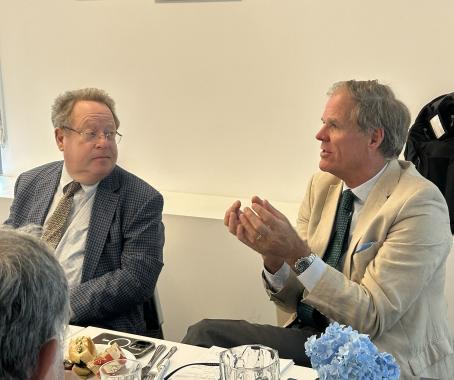
How can lessons from Antarctica help inform the peaceful governance of global commons in an age of renewed great power competition?

Terrorist Exploitation of Armed Conflicts for Digital Content

Report Launch and Presentation

The latest report from the Global Internet Forum to Counter Terrorism (GIFCT) and Konrad Adenauer Foundation (KAS) New York Office examines how terrorists and violent extremists are exploiting conflicts in Afghanistan, the Sahel, and Ukraine to develop online materials that can be used to incentivize further violence and exacerbate grievances.

Safeguarding the Future Role of Civil Society in the HIV Response: Opportunities and Challenges

Breakfast Roundtable with Civil Society

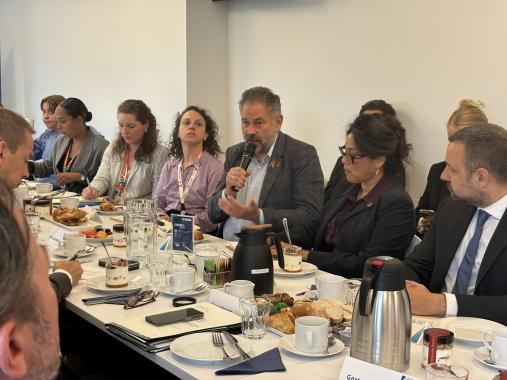
Civil society has been at the heart of the global HIV response for decades, reaching communities most affected by HIV/AIDS, advancing human rights, challenging stigma and discrimination, and holding governments and international partners accountable. Yet today, hard-won gains are under growing pressure from shrinking civic space, funding constraints, geopolitical shifts, and persistent barriers to care.

New Technologies and the Transformation of the Maritime Security Agenda

Breakfast Workshop with UN Member States

New technologies are driving major transformations in surveillance and information-sharing, weapon systems, and maritime critical infrastructure. With these transformations, however, come a host of challenges for maritime security, made even more complex by the growing role of non-state actors and the blurring of boundaries between commercial activity, dual-use technology, and armed conflict at sea.

Financing Resilient SIDS Economies: UN–IFI Coordination on Debt Sustainability and Investment

New York–Washington Dialogue

For Small Island Developing States, debt, climate vulnerability, and investment are not separate challenges. They are deeply connected and addressing them requires stronger coordination between New York and Washington, the UN system, the World Bank Group, Member States, and external partners.

Fostering Partnerships with Small Island Developing States for Strengthened Ocean Governance

High-Level Lunch Roundtable

For small island developing states (SIDS), achieving Sustainable Development Goal 14—focused on the conservation and sustainable use of oceans, seas, and marine resources—is not merely a policy objective, but a matter of survival. As the deadline for the 2030 Agenda looms, urgent action is needed to accelerate implementation of SDG 14 and ensure effective ocean governance for our future.

Showing 1 to 10 of 50 entries.

Asset Publisher

About this series

The Konrad-Adenauer-Stiftung, its educational institutions, centres and foreign offices, offer several thousand events on various subjects each year. We provide up to date and exclusive reports on selected conferences, events and symposia at www.kas.de. In addition to a summary of the contents, you can also find additional material such as pictures, speeches, videos or audio clips.

Order details

Editor

Konrad-Adenauer-Stiftung e.V.