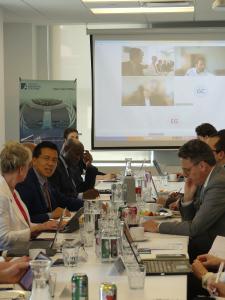
The workshop gathered representatives of the United Nations, Member States, international financial institutions, multilateral development banks (MDBs), the private sector, think tanks, and experts to exchange views on how to strengthen collaboration between IFIs and the UN system, feeding into preparations ahead of the upcoming 4th International Conference on Financing for Development (FfD4) in Seville.
Key takeaways from the discussion include:
- The UN and IFIs have taken positive steps to strengthen collaboration over the years. However, renewed commitment is needed to find new approaches to collaboration, focusing on the design of partnerships.
- To tackle global challenges like climate change and debt, IFIs and MDBs must act as both providers and connectors, promoting transparency, accountability, and inclusive partnerships.
- A preventive approach to debt is needed. There is also a growing intersection of debt sustainability and sustainable finance to meet development goals.
- Collaboration should be enhanced between African governments, IFIs and Regional MDBs, while ensuring that reforms are government led, regionally coordinated and multilaterally backed.
- Rising borrowing costs, deteriorating credit quality, and limited market access are straining emerging markets at a time of massive investment needs. Addressing this requires robust sovereign debt strategies, stronger institutions, and resilient capital markets to ensure funding flows to critical areas like health and climate finance, not just debt servicing.
- Geopolitical tensions and aid freezes have stalled progress on closing the climate finance gap, making it even more urgent to mobilize private capital.
- There is major potential for involving the private sector more systematically to lower borrowing costs and enhance debt sustainability.
- Partnerships must remain outcome-focused. More can be done to strengthen institutional alliances and collaboration at the level of country platforms and joint analysis between the UN and World Bank.
- FfD4 presents a critical opportunity to align debt sustainability with development goals in a pragmatic way. Governments together with the UN system, IFIs, and international partners must do their part to advance a collective action agenda moving ahead.