








The multilateral system is under unprecedented strain, increasingly tested by rising and intractable conflict, polarization, and geopolitical tensions. The existential threat posed by climate change steadily worsens, while new and rapidly advancing technology introduces new global risks. In this fraught and uncertain landscape, the international community finds itself in gridlock. Multilateral cooperation is needed more than ever, but trust among countries is giving way to the rising tide of isolationism and protectionism.
Small- and medium-sized states—which comprise the majority of UN membership—can play a pivot role in championing and strengthening multilateralism. As they grow in number, their collective diplomatic, political, and economic clout can help to advance an international rules-based order.
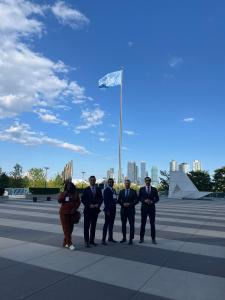
To that end, the Konrad Adenauer Foundation (KAS) New York Office hosted a delegation of parliamentarians from around the world from 2-5 September, 2025 to explore the role of small- and medium-sized states in strengthening the multilateral order. Members of the delegation included:
- Inna Hengari, Member of Parliament of the Republic of Namibia (National Assembly)
- Dr. Kavinda Jayawardena, Member of Parliament of the Democratic Socialist Republic of Sri Lanka
- Spyridon Koulkoudinas, Member of the Hellenic Parliament
- José Luis Satdjian, Member of Parliament of Uruguay (General Assembly)
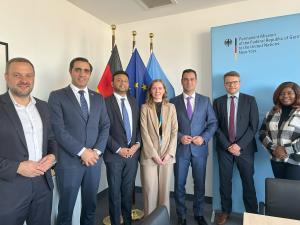
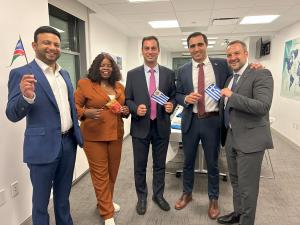
Together with representatives of the United Nations (UN) system, Member States, and think tanks, the delegation discussed wide-ranging issues relating to international peace and security, sustainable development, and global governance, as well as the challenges and opportunities facing multilateral cooperation. As part of their program, the delegation enjoyed a series of engaging and informative meetings meetings with the UN Youth Office, UN Environment Programme (UNEP), UN Department of Economic and Social Affairs (UN DESA), UN Office of Counter-Terrorism (UNOCT), UN Office for Digital and Emerging Technologies (UN ODET), the Executive Office of the UN Secretary-General (EOSG), the Inter-Parliamentary Union (IPU) New York Office, Permanent Mission of the Federal Republic of Germany to the United Nations, Permanent Mission of Greece to the United Nations, Permanent Mission of Uruguay to the United Nations, Permanent Mission of the Republic of Singapore to the United Nations, Securil Council Report, Coalition for the UN We Need, and the National Committee on American Foreign Policy (NCAFP).
Key takeaways from their discussions included:
- Parliamentarians can play an important role in communicating to their constituents why the UN and multilateralism matter. This is especially critical as the public’s trust in multilateral institutions is faltering.
- In times when geopolitical divisions are hindering progress on global challenges, small- and medium-sized states are driving multilateral action, from the Pact for the Future to the UN High Seas Treaty to UN80 mandate implementation review.
- Small- and medium-sized countries are among the greatest advocates for the multilateral system and most outspoken defenders of international law. As they comprise most of the UN Member States, there is strength in numbers and coalition-building.

Topics
Kenya’s Global Player Ambitions
The Pact for the Mediterranean as a Building Block for Diversifying European Partnerships
The EU’s Partnership Policy in Transition
Controversial First Steps of the Radev Cabinet
Czechia's defense and Ukraine policy under the new Babiš government – a first impression