





Asset Publisher

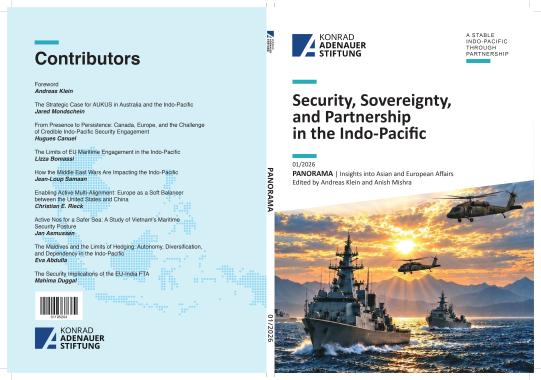
Publications

Asset Publisher

IMAGO/ITAR-TASS

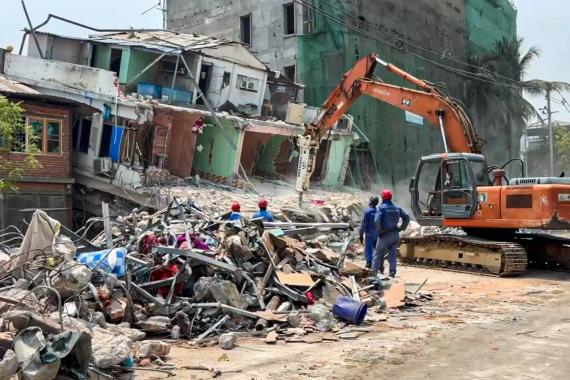
Assessing Myanmar’s Earthquake Response

Mechanisms for current and future humanitarian missions

The 2025 earthquake has reflected not only the fragility of Myanmar’s infrastructure but the deep fractures of its political and humanitarian landscape. In a nation where aid is weaponized, civil war fragments the state, and conscription pushes the flight of an entire generation, traditional humanitarian responses fall short. As the military junta continues to manipulate disaster for its own survival, international actors must rethink their approach. While it is an almost impossible task to bypass the military leaders entirely, especially for international agencies like the UN, relying on information from the Myanmar Diaspora and Civil Society Organisations helps: with who to engage on the ground, which funds and networks to support financially (even from abroad) and opening up the possibility of land border for aid delivery, point to alternative means of humanitarian assistance for current and future missions.

Sri Lanka after the elections: Governance in a Time of Crisis

Issue of Special Report (ISAS-NUS)

Read the latest, special report on Sri Lanka after the elections: Governance in a Time of Crisis. A great and informative read for everyone interested in the country that is much embedded in geopolitical competition in the region, covering both domestic and foreign issues.

Theint Mon Soe, Zuma Press, picture alliance

On the Political Situation in Myanmar

A Country against the Military

Early February 2025 will mark the fourth anniversary of the military coup against the democratically elected government of Myanmar. Armed resistance has formed in large parts of the country and is spearheaded by the People’s Defence Force and several ethnic armed organisations. Resistance and opposition movements have gained momentum in a series of military victories; albeit debates about a “post-military” state are premature.

E-health Development in Asia and Europe

The integration of digital technologies into healthcare, known as e-health, has revolutionised how we manage and deliver medical services. This Panorama Issue “E-health Development in Asia and Europe” delves into this rapidly evolving field, offering a comprehensive exploration of digital healthcare initiatives across two continents.

IMAGO / Newscom / Singapore Press Holdings

Change of leadership in Singapore

Lawrence Wong takes over as Prime Minister from Lee Hsieng Loong

On May 15, former Finance Minister and Deputy Prime Minister Lawrence Wong (51) will take over the reins of government in the island republic of Singapore. He succeeds Lee Hsieng Loong (72), who has led the city state since 2004, as only the fourth head of government in the country's almost sixty-year history since its founding in 1965. The handover of office has been prepared for a long time. Lee had already announced his intention to step down as Prime Minister in 2022. On 5 November last year, he made it clear that he would hand over his office to his deputy Lawrence Wong in November 2024 at the latest. In mid-April, the surprising announcement was made that Wong would be sworn in as the new prime minister on 15 May. The handover of office to Lawrence Wong, who is twenty years younger, marks the start of a generational change. Lee Hsieng Loong, the eldest son of state founder Lee Kuan Yew, is retiring from the front row of politics. Lee will nevertheless remain in the government cabinet in an advisory capacity as Senior Minister.

Report on International Summer School on Climate Change

The International Summer School Program on “Climate Change and Renewable Energy in South Asia” was organized by the Consortium of South Asian Think Tanks (COSATT) in collaboration with the Regional Programme Energy Security and Climate Change Asia Pacific (RECAP) of Konrad-Adenauer-Stiftung (KAS) in Nepal from 4-9 December, 2023. The program aimed to convene students, researchers, and speakers from diverse South Asian countries to delve into the intricate relationship between climate change and the promotion of renewable energy sources.

Adobe Stock / One Dragon

Myanmar three years after the coup: where is the country heading?

A landmark year for Myanmar - new dynamics, alliances and scenarios for a "post-war state"

February 1 marks the third anniversary of the military coup (Tatmadaw) against the democratically elected government led by Aung San Suu Kyi. Peaceful protests in the country continue to be bloodily suppressed and the humanitarian situation is catastrophic. Refugee movements, particularly to Thailand and India, and fighting on the Chinese border are turning the conflict in Myanmar into a supra-regional risk that the ASEAN community has so far done little to counter. Armed resistance has formed in large parts with the People's Defense Force. Since October last year, this has been supported by a number of powerful, highly armed ethnic organizations in the west, north and northeast of the country. The military appears vulnerable for the first time. Debates about a "post-junta" state are gaining momentum, although the ideas of the actors involved in the struggle (democratization vs. expansion of territorial claims) could not be more different. Myanmar is facing a landmark year full of dynamics.

Pakistan Floods

Underlining the Need for Regional Cooperation for Disaster Risk Management in South Asia

The prevalence of natural disasters in South Asia, coupled with the impact of climate change, underscores the need for the region to prioritise collective action for disaster risk management. KAS RECAP, together with the Islamabad based Centre for Strategic and Contemporary Research brings forward this in-depth analysis of the handling of the devastating floods in Pakistan in 2022 and current disaster risk management approaches across South Asia.

To My Future Self

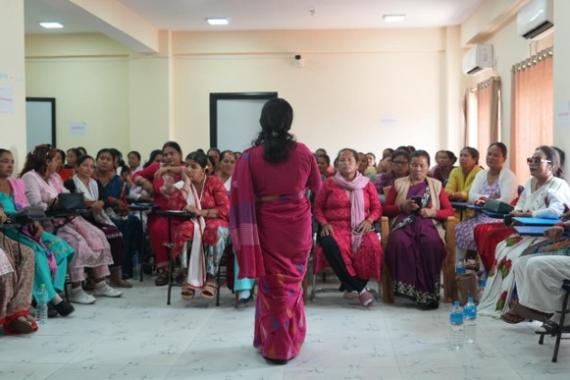
The KAS scholarship Programme; Facilitator for Female Empowerment

In order to mitigate and learning all the progress and move forward it is imperative that stakeholders work together for the promotion of women’s active participation in state and society. Women’s qualifications and self-confidence are necessities for them to be competitive and to take over leadership in politics and the economy.

Repair and Reuse (R&R): Exploring the feasibility of R&R business model in Hong Kong

Encouraging a circular economy in Hong Kong involves advocating for repair and reuse (R&R) to combat e-waste and furniture disposal. The research from BEC highlights the advantages of repair and reuse for both businesses and communities, offering actionable recommendations for integrating these aspects into business models.