There are currently no events planned.
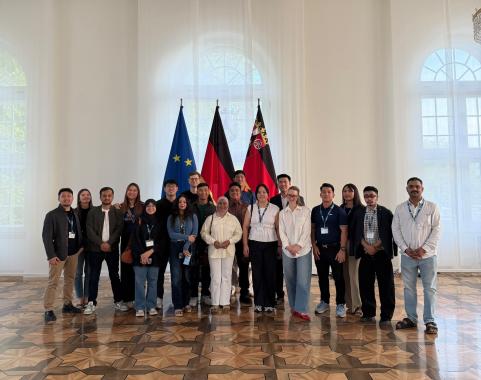
KASYP 16.4: Political Parties in European Parliamentary Democracy
KASYP 16 Module 4
The concluding module of KASYP Batch 16 takes participants to Germany for a week of political exchange, institutional learning and international dialogue. Bringing together perspectives from Asia and Europe, the programme offers young political leaders an opportunity to experience democratic institutions in practice, engage with their counterparts, and reflect on their own roles in shaping the future of democratic societies.
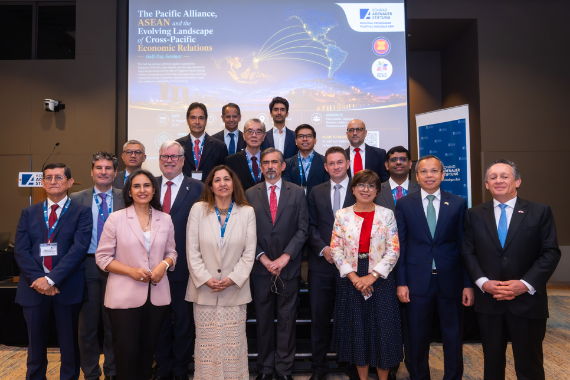
The Pacific Alliance, ASEAN and the Evolving Landscape of Cross-Pacific Economic Relations
Konrad-Adenauer-Stiftung Regional Programme Political Dialogue Asia
This seminar examines opportunities for deeper cooperation in trade, connectivity, and economic diversification, as well as Singapore’s role in strengthening relations between ASEAN and the Pacific Alliance.
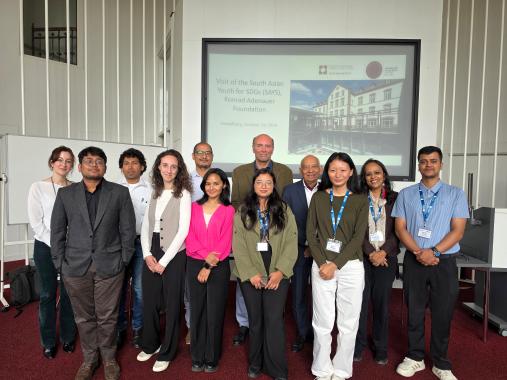
KASYP 17 Module 02: Political Parties in Election Campaigning
Konrad Adenauer School for Young Politicians (KASYP)
The second module aims to provide participants with the understanding and skills of electoral campaigning and its many tools as well as the importance of providing organized electoral choices to citizens through political parties, and training on democratic leadership (second session on co-ownership).
AI Governance in the Indo-Pacific: Competition, Sovereignty and Strategic Adaptation
ISAS-KAS Panel Discussion on “AI Governance in the Indo-Pacific: Competition, Sovereignty and Strategic Adaptation.”
The discussion will explore how governments and policymakers in the region are balancing innovation and regulation, openness and sovereignty, and economic pragmatism with strategic autonomy. It will also consider whether ASEAN’s soft-law and development-oriented approach to AI governance could offer a meaningful model for the Global South, while assessing the opportunities and challenges facing Singapore as a global AI hub.
Climate Change as a Security Threat in Small Island States
Climate Change as a Security Threat
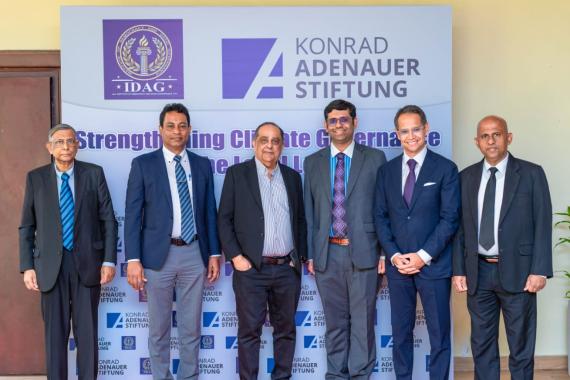
Strengthening Climate Governance at the Local Level: Residential Capacity Building Workshop
KAS-IDAG Workshop
The Konrad Adenauer Stiftung, in partnership with the Institute of Democracy and Governance (IDAG), and the Sri Lankan Western Province, Ministry of Local Government, Economic Promotion, Power & Energy, Environmental Affairs, Water Supply & Drainage and Tourism successfully conducted a two-day residential workshop for local government officials from Kalutara District, Western Province, Sri Lanka. The workshop provided a platform to strengthen climate governance, enhance local policy-making capacity, and promote sustainable development through international cooperation. This initiative reflects a shared commitment to building sustainable and resilient local institutions through development cooperation between Germany and Sri Lanka.
KASYP 16 – Module 3: Local Governance and Development, Ulaanbaatar Mongolia
Connecting local realities with regional perspectives through dialogue, practice, and political exchange
KASYP Batch 16 gathered in Ulaanbaatar for Module 3 on local governance and development, combining academic input, hands-on simulations, and direct engagement with policymakers. The programme offered participants a practical and comparative understanding of governance challenges and solutions across the region.
KASYP 16.3 Module: Local Governance and Development – Mongolia
Exploring decentralisation, citizen engagement, and effective local governance in democratic societies
Through expert lectures, comparative discussions, and interactive simulations, participants will examine key concepts of decentralisation, fiscal governance, and citizen engagement. The programme also includes sessions on the structure and competences of local governments, financial arrangements at the local level, and the challenges of implementing effective local governance systems in different political contexts. The participants will also present and discuss governance experiences from their respective countries, allowing for peer learning and comparative insights across Asia and Europe. Practical exercises, including a policy simulation addressing urban governance challenges, will encourage participants to apply theoretical knowledge to real-world governance scenarios. The module further features learning visits and dialogues with Mongolian political actors and institutions, including meetings with representatives of political parties, local government authorities, and members of parliament. These exchanges aim to provide participants with firsthand insights into Mongolia’s governance system and ongoing decentralisation reforms. By combining academic input, practical policy exercises, and institutional exchanges, the module seeks to deepen participants’ understanding of how effective local governance can contribute to democratic resilience, responsive policymaking, and sustainable development.
Bangladesh After the 2026 Election: What Comes Next?
ISAS-KAS PANEL DISCUSSION
Bangladesh’s parliamentary election of 12 February 2026 marks a major moment in the country’s post-uprising transition. Held alongside a referendum on constitutional reform, the vote took place in a context shaped by institutional strain, shifting alliances and competing visions of governance and national identity. Yet it also represents a renewed turn to electoral politics and an opportunity to rebuild stability after nearly two years of uncertainty following the collapse of Sheikh Hasina’s government and the interim administration led by Muhammad Yunus. This panel brings together scholars and practitioners to reflect on whether this moment can lay the groundwork for a more stable, inclusive and forward-looking political order in Bangladesh after the 2026 vote.
Women Parliamentarians and Security: Identifying Threats Through a Gender Lens
Asian Women Parliamentarian Caucus E Meets
The Konrad-Adenauer-Stiftung (KAS) Regional Programme Political Dialogue Asia announces the next session of the Asian Women Parliamentarian Caucus (AWPC) e-Meets, to be held on 25 February 2026