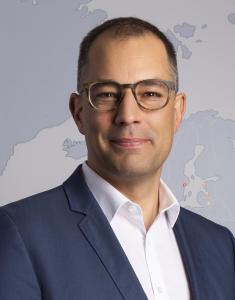
Please find below the speech of the Secretary General of the South Asian Association for Regional Cooperation, H.E. Ahmed Saleem, on the occasion of the launch of "SAARC: Towards Meaningful Cooperation" and "Towards A More Cooperative South Asia", edited by the Centre for South Asian Studies (CSAS) and the Regional Programme SAARC of the Konrad-Adenauer-Stiftung, on 6 September 2012 in Kathmandu.
Distinguished Guests,
I am pleased to be in the midst of this distinguished gathering this afternoon for the launching of two books, namely, “SAARC: TOWARDS MEANINGFUL COOPERATION” AND “TOWARDS A MORE COOPERATIVE SOUTH ASIA” organized jointly by the Centre for South Asian Studies and Konrad Adenauer Stiftung.
My good friend, Dr. Nishchal N. Pandey, has elaborately spoken on the two books that have been unveiled just a while ago. I need not, therefore, speak much on their contents. However, I must express my appreciation to the well-known experts from all the eight countries of SAARC for contributing well-researched, well-documented and above all, very thought-provoking articles, covering various dimensions of regional cooperation in South Asia. I am particularly happy to note that these articles come from eminent personalities in the region, who have known and seen the progress of regional organization from a close angle. Speaking in precise terms, some of the contributors have held prominent positions as Foreign Secretaries and Joint Secretaries dealing with SAARC in Member States, while some specialists represent think-tanks and academic institutions across the region.
Distinguished Guests,
SAARC was established in 1985 with the noble objective of finding common solutions to our common problems in an effort to promote the welfare of the peoples of South Asia and to improve their quality of life. Although SAARC commenced cooperation in a few identified areas at the beginning, over the years, it went on embracing new areas for regional cooperation. As a result, SAARC today stands to cater to almost all the spheres of human activity.
Unlike on other occasions, let me be very frank with you today. As a career diplomat, I had the opportunity of serving in various capitals but serving in Nepal, a country my family and I simply love, in the SAARC Secretariat as the first Director from the Maldives, has always been special. I was chosen by the Maldives Parliament, to serve as the President of the Human Rights Commission of Maldives. Since retirement, I was actually enjoying life, participating in Track-II seminars and conferences that good friends like Nishchal, have been organizing. Life was too good to be true.
It was by sheer chance that I came back to Nepal as the eleventh Secretary-General of SAARC in March this year. Since I assumed office, I have visited all the capitals except Kabul, which I hope to visit next week. During my meetings with the Heads of State or Government in other capitals, they have expressed profound desire for SAARC to deliver, to start implementing the agreed projects that accrue tangible benefits to the people and to strengthen SAARC to be able to effectively cope with the emerging challenges. I bring this reference here to assert the enormous political will to see SAARC as a robust and efficient organization, amply capable of delivering on the hopes and aspirations of our peoples. However, I am afraid to mention that we tend to falter when it comes to dealing with bureaucratic processes prevalent in our region.
Distinguished Guests,
All of us are aware that the people of South Asia long for, among others, greater connectivity, easing of visa restrictions, and a common currency leading to a South Asian Economic Union (SAEU) as envisaged by our Leaders at their successive Summits. More and more people travel abroad these days and have seen the marvels of greater cooperation among the membership in the EU or ASEAN. When they look back to SAARC, they ask why this hasn’t happened in our region so far. It will be my earnest endeavor during the rest of my tenure to work as hard as I can in trying to make SAARC relevant to the people it represents. In this context, I am happy to state that as the first step, for the first time in the history of our Association, the SAARC Secretariat is undertaking a comprehensive Study on Strengthening SAARC mechanisms, including the Secretariat, Regional Centers and Specialized Bodies as South Asian University and SAARC Development Fund, among others.
Distinguished Guests,
I do believe that the South Asian civil society can play a crucial role in shaping the future and destiny of SAARC. I would like to believe that it is for this reason that the Seventeenth Summit held in Malé last November acknowledged the importance of engaging the civil society in making SAARC truly people-centric and effective. As such, since assuming office, I have accorded high priority to interacting with the civil society, academics, think-tanks and the young people representing South Asia. That is precisely why I am pleased to see the coming together of several distinguished members of the South Asian civil society on this occasion, who want to see a vibrant SAARC. After all, SAARC belongs to all of us.
I thank you very much.