



Asset Publisher

Publications

Asset Publisher

IMAGO / ZUMA Press Wire

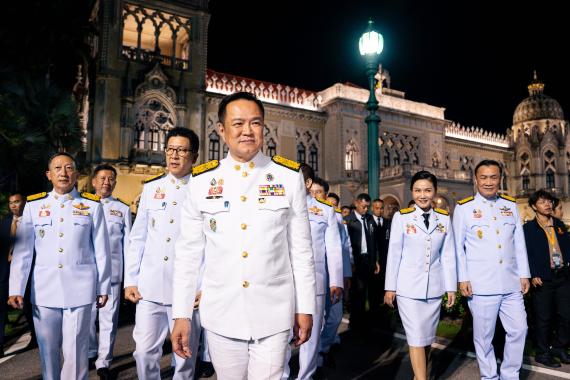
Thailand vor den Wahlen

Richtungswechsel oder Status Quo?

Am 8. Februar 2026 wird in Thailand eine neue Regierung gewählt, weniger als drei Jahre seit dem letzten regulären Urnengang. Notwendig wurden die vorgezogenen Neuwahlen durch die Amtsenthebung von Premierministerin Paetongtarn Shinawatra im August 2025, in deren Folge eine Minderheitsregierung unter Anutin Charnvirakul, dem dritten Premierminister seit 2023, geschäftsführend und befristet die Geschicke übernahm. Diese Zeit geht nun zu Ende – am 12. Dezember 2025 wurde das Parlament aufgelöst, im Januar der Wahltermin bekannt gegeben. Zudem findet am selben Tag ein Referendum zum Für und Wider einer Verfassungsreform statt, die über die grundsätzliche politische Architektur des Landes langfristig entscheidet. Was steht auf dem Spiel, welche Szenarien zeichnen sich ab und was bedeutet das für die Zukunft des Landes? Ein Überblick.

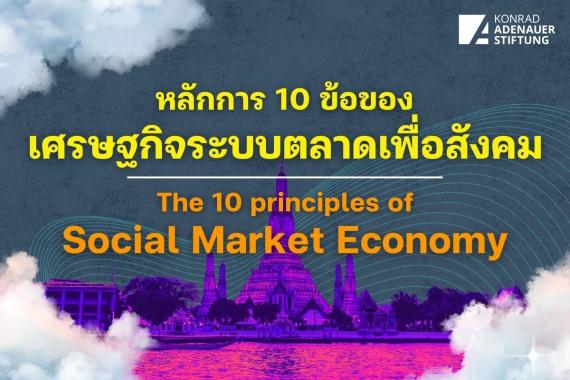
The 10 principles of Social Market Economy

The 10 principles that lay the foundation for the framework of the Social Market Economy and lead Germany to the so-called “Wirtschaftswunder” (Economic Miracle)

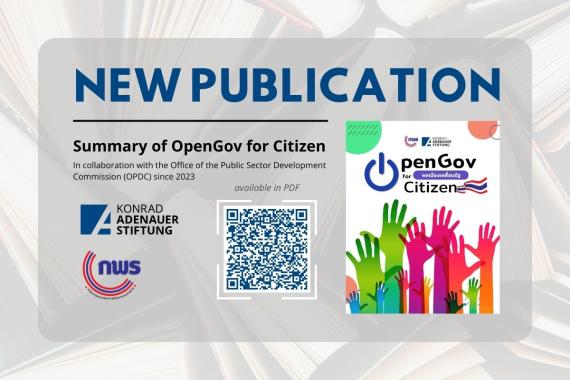
Summary of OpenGov for Citizen

In collaboration with the Office of the Public Sector Development Commission (OPDC) since 2023

This e-Book compiles proposals and results from all four “OpenGov for Citizen” events, covering a variety of policy schemes, including the development of policies to support the cost of living, welfare and quality of life for the elderly, the restoration and conservation of green spaces, the reduction of carbon emissions from industrial sectors and marine waste management.

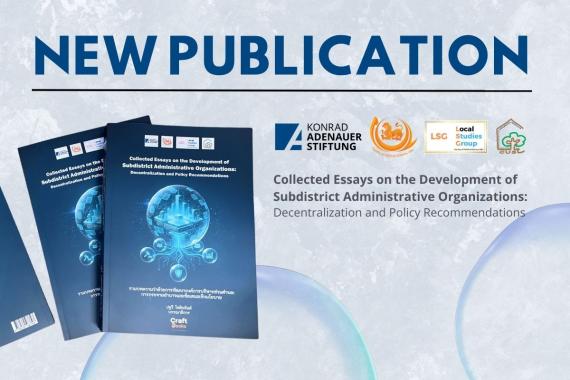
Collected Essays on the Development of Subdistrict Administrative Organizations

Decentralization and Policy Recommendations from the academic forum

Subdistrict Administrative Organizations (SAOs) are key grassroots local governments improving rural quality of life in Thailand through public services, infrastructure, health, environmental management, and local economic development. As SAO executives and councils complete their terms and approach new elections in January 2026, this transition offers a timely opportunity to reassess their roles amid changing political, economic, and social conditions, especially regarding decentralisation, central–local relations, and citizen participation.

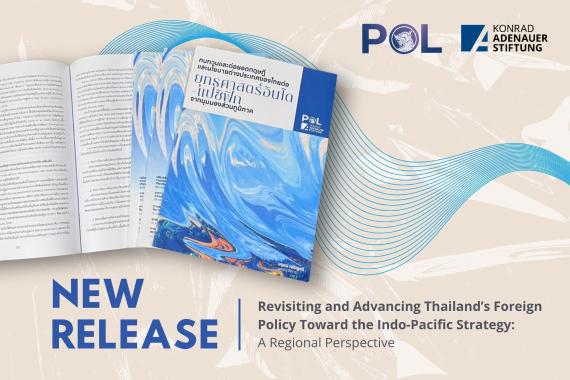
Revisiting and Advancing Thailand’s Foreign Policy toward the Indo-Pacific Strategy: A Regional Perspective

Research Report Encouraging Academic Discourse on International Relations and Policy Recommendations

The international order constitutes significant challenges and factors shaping the foreign policy implementation and the management of international relations among states. Changes in the international order—at both global and regional levels—inevitably influence countries’ perspectives, attitudes, policy positions, and policy implementation. Such transformations have also prompted academic debate on how states and international organisations adapt to these evolving conditions. In Thailand, however, existing academic research aimed at informing the development of the country’s international relations policy has tended to focus primarily on national-level foreign policy as the main unit of analysis, with limited attention to the objectives and anticipated impacts of these policies at the local level. This is despite the reality that local areas across the country are likewise affected by international relations. This gap is reflected in the relatively limited number of academic studies examining the dynamics through which international relations shape regional and local contexts. On the other hand, analyses of local-level changes driven by domestic economic, political, and security dynamics have often overlooked their interaction with the broader international order.

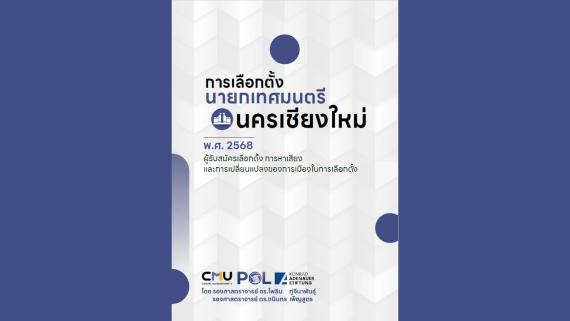
The 2025 Chiang Mai Mayoral Election

Case Studies on Candidates, Campaigning, and Changes in Thailand’s Local Elections and Decentralisation

One key aspect of political decentralisation in Thailand is through local elections. Municipal elections, particularly at the level of city municipalities, are significant and highly competitive. Chiang Mai Municipality holds historical significance as it was the first city municipality in Thailand, established in 1935. Regarding budget, the projected revenue for Chiang Mai Municipality from fiscal years 2023 to 2025 is 1.6 billion, 1.8 billion, and 1.9 billion Baht, respectively. When compared to the provincial budget, in fiscal year 2023, Lamphun Provincial Administrative Organisation had a total revenue of 394 million baht, which is approximately four times less than that of Chiang Mai Municipality (Lamphun Provincial Administrative Organisation, 2022). Given this budgetary significance of Chiang Mai Municipality and the involvement of national politics in local elections, this research implemented by research team at the Faculty of Political Science and Public Administration of Chiang Mai University with the support of KAS seeks to examine candidate selection processes, election campaigns, political family influence in Chiang Mai, and voter decision-making factors in the 2025 Chiang Mai mayoral election. This study aims to contribute to the broader understanding of decentralisation in Thailand with Chiang Mai as a case study.

Thai News Pix/Arnun Chonmahatrakool

Change of Government in Thailand

New Elections in Spring

Thailand has a new government – at least an interim one: On September 5th, 2025, the Thai parliament elected Anutin Charnvirakul from the conservative Bhumjaithai Party (BJT) as the new Prime Minister. The new cabinet was appointed on September 19. Charnvirakul succeeds Paetongtarn Shinawatra of the Pheu Thai Party (PTP), who – like her predecessor Stretta Thavisin – was removed from office by Thailand’s Constitutional Court after only one year in power. This makes him the third head of government since the last regular parliamentary elections in May 2023. The next change is already on the horizon: His election was tied to the condition that new elections and a referendum on constitutional reform must be initiated within four months. That means the clock is ticking until January 2026. What are the reasons behind these events? How will they affect the future government and the Thai party landscape? And most importantly: What’s next for this Southeast Asian country marked by political instability and uncertainty?

Lesson and A New Direction from the 2025 PAO Elections

Thailand's Local Administration and Decentralisation

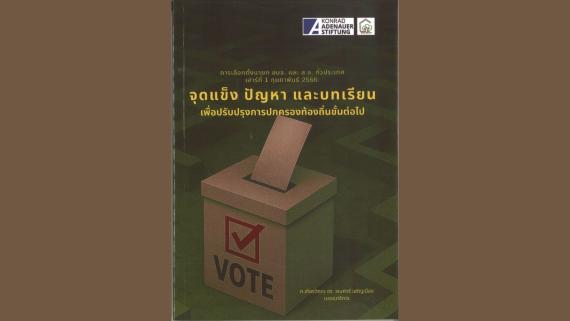
Although the elections for Provincial Administrative Organization (PAO) Presidents and Councillors across the country took place last February, they were accompanied by observations and debates on various issues, such as holding the election on a Saturday, ensuring citizens had adequate access to vote, the campaign strategies as a power test between opposition and government parties, and the level of public participation—particularly among youth and the younger generation.

Developing Institutionalised Deliberation for Inclusive Social Protection Systems

Research on Thailand's Social Protection Policy Implementation and Development

The social protection system is a crucial mechanism that promotes equality, reduces poverty, and manages people's risks to ensure inclusive national development. In today's era of increasing inequality, an aging population, and diverse vulnerabilities, comprehensive social protection has become a fundamental pillar in promoting justice and social cohesion. The concept of comprehensive social protection is based on the principle that everyone, regardless of their economic and social status, should have access to mechanisms that help maintain their standard of living and livelihood. This inclusivity is particularly important for marginalised and vulnerable groups who often face structural barriers that hinder their access to assistance.

SDGs | The Depth of Field

Challenges of the Implementation of SDGs in Thailand and Southeast Asia

This book is a curated collection of photo-essays reflecting on the implementation of the Sustainable Development Goals (SDGs) in Thailand and Southeast Asia, highlighting both achievements and shortcomings. Through compelling visuals and stories, it invites readers to reflect on the progress made, consider the path ahead, question the Goals themselves at times, and ultimately commit to change.