



Asset Publisher

Publications

Asset Publisher

IMAGO / Anadolu

Presidential election in Ireland continues political tradition

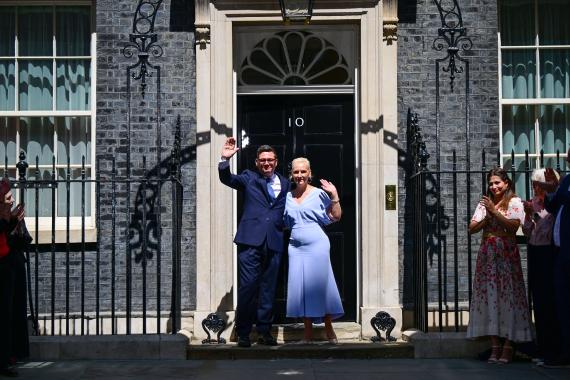
Clear election victory for Catherine Connolly

 Left-wing politician Catherine Connolly becomes the tenth president of the Republic of Ireland. In the 2025 Presidential Election, the independent Member of Parliament, whose candidacy was supported by a broad coalition of left-wing parties and movements, won a clear victory with 63.4 percent of the vote against Heather Humphreys, former minister and candidate of the liberal-conservative Fine Gael (FG/EPP) party. She received only 29.5 percent of the vote on a disappointing election day. Jim Gavin, candidate of the right-wing liberal party Fianna Fáil (FF/ALDE), who had already dropped out of the race as the third candidate several weeks before the election, received 7.2 percent of the vote. The high number of invalid votes was striking, having increased tenfold compared to the last Presidential Election, and can be seen as an expression of dissatisfaction with the electoral system and the two remaining candidates. 

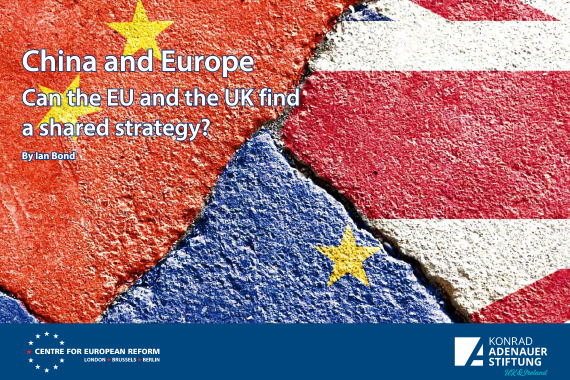
China and Europe:

Can the EU and the UK find a shared strategy?

The EU, the UK, and several European countries have developed strategies to deal with China, yet Beijing’s rise, its support for Russia’s war effort in Ukraine, and the growing unreliability of Donald Trump’s United States as an economic and security partner have sharpened the dilemmas facing European policymakers. Trade between China and Europe—including the UK—now accounts for more than one-third of global trade, with the balance heavily in China’s favour and its surplus widening. Despite repeated expressions of concern from Brussels and London, these imbalances remain unaddressed. The challenge for Europe lies not only in the sheer size of its trade deficit, but also in its dependence on China for a wide range of critical goods. China’s industrial overproduction continues to undercut European manufacturers both in their domestic markets and abroad.

IMAGO / Bestimage

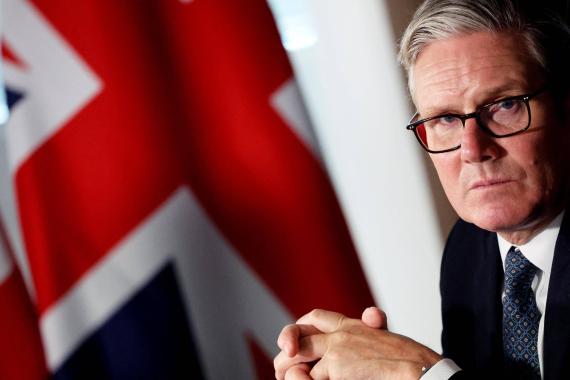
Keir Starmer's first year

First-year political record and German-British friendship treaty

One year after taking office, Prime Minister Keir Starmer surprises with a foreign policy record that even sceptics acknowledge. He has succeeded in repositioning the UK as a global and European player - with initiatives to support Ukraine, to build and expand European defense capabilities and through international trade agreements. One of his most important successes is undoubtedly the rapprochement with Europe. At the beginning of his term of office, Starmer announced a “Brexit reset” in order to advance cooperation with European partners. Relations with Germany in particular are a high priority. During the first official visit by Federal Chancellor Friedrich Merz on July 17, a comprehensive bilateral agreement will be signed with Germany - the most far-reaching agreement that the UK has ever concluded with a single European country. Starmer himself speaks of a “generational treaty”. Domestically, however, the balance sheet is mixed. The Prime Minister is under pressure - from his own party, from an increasingly dissatisfied electorate, and from the opposition. The right-wing populists from Reform UK are a particular concern. His government policy sometimes seems contradictory: pragmatic in its implementation but often lacking a discernible guiding principle. Since taking office, Starmer has shown considerable ideological flexibility - a course that is causing friction within the party. Even before the election, he had already led Labour towards the political center; in many areas, his government is now following the agenda of its Conservative predecessors. This change of course is particularly evident in migration policy, but is also reflected in other areas: deregulation of environmental protection in some areas, cuts to the welfare state and a significantly increased defense budget at the expense of international development cooperation. On the occasion of the first anniversary of the Starmer government, one might provocatively ask whether Labor are the better conservatives.

Publication Update

Towards British-German leadership for a new era of European geopolitics!

In the worsening geopolitical environment in Europe, the United Kingdom (UK) and Germany are pivotal. There is no other option than for the continent’s two largest economies to combine forces in the face of Russia’s unrelenting aggression. The Trinity House Agreement is the starting point, but the two allies can do much more to strengthen the North Atlantic Treaty Organisation (NATO), particularly as the United States (US) prioritises meeting the growth of Chinese power in the Indo-Pacific. Britain and Germany should redouble their efforts in amplifying support for Ukraine, cooperating on European nuclear deterrence, and challenging the growing alignment between authoritarian states.

Redefining Influence

The UK's Strategic Role in a Changing World Order

This short paper will explore how developments in the economic, security and strategic domain are fundamentally altering the geopolitical for advanced democracies, and affecting their capacity to respond effectively to them. It will propose opportunities for British leadership to address these challenges, including the United States’ recalibration of its international role, which harness the UK’s unique national strengths, instruments, and relationships.

The right road: The future of the European centre-right

Authors: Bartek Staniszewski, William Prescott, Joe Harrison and Ryan Shorthouse

For much of the postwar era, centre-right political parties dominated European parliaments. European centre-right parties in the time since the Second World War benefited from and presided over strong economic growth, rising living standards and relatively generous social security systems. But today they are struggling, facing challenges to their political survival and the national interest. It is time to reboot and reunify the centre-right across Europe to defeat both the populist left and the statist centre-left. This report seeks to better define and shape the centre-right across Europe. It details the philosophy, principles and history of the European centre-right before providing distinctive priorities – the ten Cs – and effective policies so the centre-right can return again to be the engine of peace and prosperity across Europe.

IMAGO / Avalon.red

The Art of the Deal: The Brexit Reset is taking shape

A new chapter in the Euro-British partnership

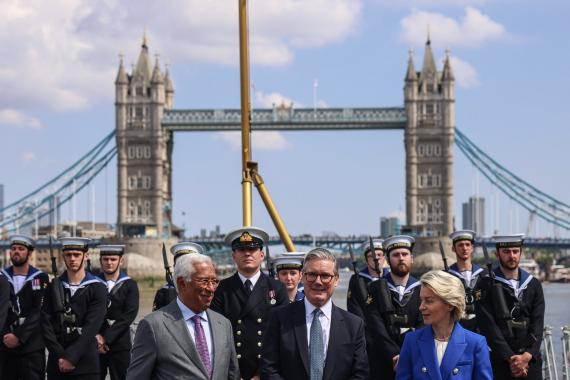
Almost ten years ago, Prime Minister David Cameron called for the Brexit referendum. In June 2016, a narrow majority (51.9%) of the British population voted in favor of exiting the EU. Cameron's resignation was followed by five prime ministers who had to deal with the consequences of this historic vote. On Monday 19 May 2025, Prime Minister Keir Starmer, together with Commission President Ursula von der Leyen and Council President Antonio Costa, finally hosted the first official EU-UK summit after Brexit to announce a new strategic partnership between the UK and the EU.

Maximising UK-German Defence and Security

With a new German government taking office in May 2025, this Policy Brief examines how the UK and Germany can maximise their new relationship to ensure that it delivers the most value to each of them and to European security.

Will EU enlargement create new models for the EU-UK relationship?

Russia’s full-scale invasion of Ukraine is reshaping European politics. One consequence is the new momentum behind EU enlargement. Three years after Russia’s invasion, Ukraine and Moldova have joined Albania, Montenegro, North Macedonia, Serbia and Türkiye in the process of negotiating accession to the EU. Another effect of Russia’s invasion is greater pressure for closer EU-UK cooperation, particularly in defence.

Country Report

Can Great Britain Save the West?

British Prime Minister Keir Starmer is pursuing a dual strategy: he aims to take a leadership role in Europe's security and defence repositioning while also convincing the Trump administration to remain militarily engaged in Europe. The United Kingdom is to act as a bridge between an increasingly unpredictable White House and a Europe unsettled by Trump's rapprochement with Russia. This was the context of his visit to Washington at the end of February, as well as the summit he convened in London with leading heads of state and government under the title "Securing our Future."