

Asset Publisher

Country Reports

Short political reports of the KAS offices abroad

Publications

José Antonio Kast ist gewählter Präsident Chiles

Zum Ergebnis der Stichwahl in Chile

Am Sonntag, den 14. Dezember wählte Chile einen neuen Präsidenten. In der Stichwahl standen sich zwei Kandidaten gegenüber, die an entgegengesetzten Positionen des politischen Spektrums verortet sind: José Antonio Kast, Kandidat der ultrakonservativen Partei Partido Republicano, und Jeannette Jara, kommunistische Kandidatin des Linksbündnisses Unidad por Chile. Aus der ersten Wahlrunde vom 16. November, bei der insgesamt acht Kandidaten für das Amt des Präsidenten antraten, waren Jara und Kast als Sieger hervorgegangen, jedoch ohne die notwendige absolute Mehrheit. In der darauffolgenden Stichwahl am 14. Dezember fiel nun die endgültige Entscheidung zugunsten Kasts.

IMAGO / Xinhu

Mayor election in Bucharest: An unexpected, clear victory with a bitter aftertaste

PNL candidate Ciprian Ciucu wins the Bucharest mayoral election, but populists are applying pressure.

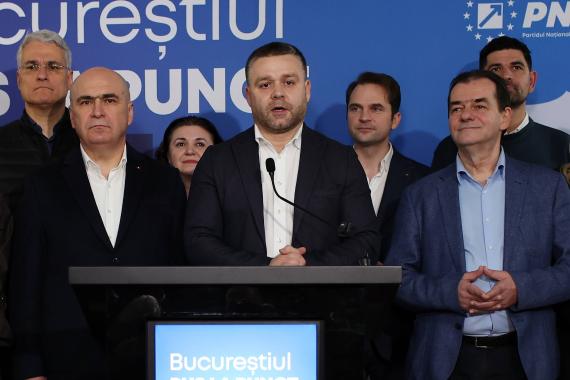
With a serious yet relieved expression, Bucharest's future mayor, Ciprian Ciucu, appeared before the press on Sunday evening after the polls closed at 9 p.m. He presented himself as the winner, but at the same time found words of humility. He said he wanted to prove to those who had not voted for him that the right person has been chosen. The election was seen as an important test of sentiment for the national governing parties. The Bucharest election was one of 14 municipal elections in Romania on December 7. The election campaign in Bucharest dominated national news coverage—not unusual, given that two mayors of the capital have been elected president since the beginning of democratization in 1989. An early by-election had become necessary in the capital after Nicușor Dan, the previous mayor, had to leave office at the end of May when he was elected president.

IMAGO / SNA

Putin visits New Delhi

Between photo shoot and unpleasant topics

On December 4, Russian ruler Putin is expected in New Delhi for the first time since the beginning of the invasion of Ukraine. India and Russia are linked by a long-standing friendship, but for the Modi administration, this state visit is not a matter of course. As the world's largest democracy and emerging world power, India must be concerned about its international reputation while keeping its own interests in relation to Russia in mind. For Putin, there is an opportunity in India to present himself on the international stage and demonstrate his ability to act

Enduring Partnership or Ambitious Agenda?

Read the article by Dr. Lilit Klein, Insights into International Order from Canada and the EU’s Security and Defence Partnership.

Take a look at what drives this unprecedented security cooperation between two prominent middle powers, and what insights does it offer into an evolving international order shaped by changing strategic commitments?

Canada’s Arctic in the geopolitical spotlight: USA vs. China

Read how Canadian Arctic is becoming a geopolitical hotspot where the USA and China are seeking to gain influence using different strategies, written by Ms. Pauline Springer.

The Canadian Arctic is becoming a geopolitical hotspot where the USA and China are seeking to gain influence using different strategies. For Canada, this means growing dependence in terms of security policy and the danger of creeping influence—with direct consequences for sovereignty and indigenous communities in the north.

IMAGO / Xinhua

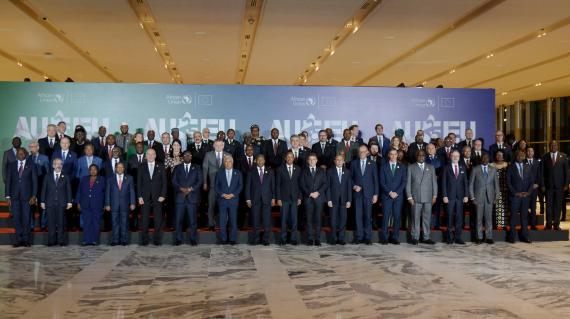
7th AU-EU Summit

A fresh start for a partnership on equal terms

The 7th Joint Summit of the African Union (AU) and the European Union (EU) on November 24-25 in the Angolan capital Luanda took place under complex circumstances: On the one hand, the summit marked the 25th anniversary of the strategic partnership between the EU and the AU. On the other hand, the summit took place at a time when relations between the two continents are not free of tensions. In a global environment in which political and economic power is shifting worldwide and fundamental rules of the world order are being questioned and undermined, the summit offered a window of opportunity to restart relations in a way that does justice to the roles and expectations of both sides. Overall, the summit succeeded in sending out initial positive signals for such a fresh start, the sustainability of which will of course depend on the implementation of the promises made. Existing differences and dilemmas – including on the issues of migration and dealing with democratic backsliding – will not disappear overnight, however.

IMAGO / Kyodo News

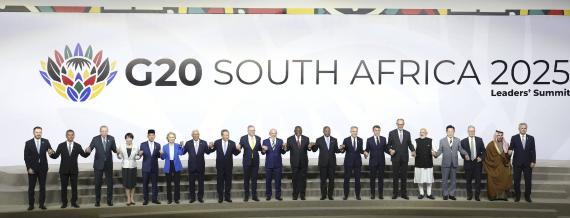
South Africa’s G20 Presidency

A Signal for Multilateralism

The South African G20 summit was a prestige boost for the country at the Cape. South Africa proved itself a capable host, a skilful negotiator, and a determined advocate of multilateral solutions. However, the presidency faced the challenge that the United States, in particular, increasingly boycotted the format over the course of 2025 and stayed away from the summit itself. In addition, new developments in the war in Ukraine as well as the sobering outcome of the COP30 negotiations shaped international reporting and overshadowed the summit.

IMAGO / Branislav Racko

Resignation of deputy prime minister sparks dispute among governing parties

Further tensions within Fico's coalition government are to be expected. Meanwhile, the government is taking action against the anti-corruption authority.

Slovak Deputy PM Peter Kmec (Hlas-SD) resigned amid a scandal over about €200m in EU R&D funds, after media linked selected projects to a party donor and a presidential adviser. The case deepens rifts in Fico’s Smer–Hlas–SNS coalition, as Hlas demands equal standards for Smer ministers and hints at a crisis. At the same time, Fico’s plan to replace the independent whistleblower office raises fresh rule-of-law concerns. It is expected that both developments will have significant impact on political situation in Slovakia during the last parliamentary session at the end of the year.

Konrad-Adenauer-Stiftung e. V.

Inclusion and employment of people with disabilities

Inclusion worldwide – current status in Croatia

Disability is a global, social, and health challenge that affects many people. People with disabilities often face barriers such as limited access to education, services, and employment. Although progress has been made in Croatia, integration into the labor market and society remains insufficient. Structural barriers, prejudice, and lack of mobility make participation difficult. In addition, few people with disabilities attain higher education. In 2022, the “Law on the Register of Persons with Disabilities” was passed to collect relevant data and plan policy measures. Nevertheless, the figures show that further reforms are needed to achieve true equality and inclusion.

VMRO-DPMNE

Local elections in North Macedonia: Convincing victory for ruling parties

Vote of confidence for the government one year after the parliamentary elections

The ruling parties achieved a major victory in the local elections in North Macedonia. Both Prime Minister Hristijan Mickoski’s VMRO-DPMNE and the Albanian partners in the VLEN party alliance won the most mayoral offices and municipal council seats nationwide.

Asset Publisher

About this series

The Konrad-Adenauer-Stiftung is a political foundation. Our offices abroad are in charge of over 200 projects in more than 120 countries. The country reports offer current analyses, exclusive evaluations, background information and forecasts - provided by our international staff.

Order details

Editor

Konrad-Adenauer-Stiftung e.V.