



Asset Publisher

Further publications

Asset Publisher

IMAGO / SNA

Putin visits New Delhi

Between photo shoot and unpleasant topics

On December 4, Russian ruler Putin is expected in New Delhi for the first time since the beginning of the invasion of Ukraine. India and Russia are linked by a long-standing friendship, but for the Modi administration, this state visit is not a matter of course. As the world's largest democracy and emerging world power, India must be concerned about its international reputation while keeping its own interests in relation to Russia in mind. For Putin, there is an opportunity in India to present himself on the international stage and demonstrate his ability to act

IMAGO / Xinhua

7th AU-EU Summit

A fresh start for a partnership on equal terms

The 7th Joint Summit of the African Union (AU) and the European Union (EU) on November 24-25 in the Angolan capital Luanda took place under complex circumstances: On the one hand, the summit marked the 25th anniversary of the strategic partnership between the EU and the AU. On the other hand, the summit took place at a time when relations between the two continents are not free of tensions. In a global environment in which political and economic power is shifting worldwide and fundamental rules of the world order are being questioned and undermined, the summit offered a window of opportunity to restart relations in a way that does justice to the roles and expectations of both sides. Overall, the summit succeeded in sending out initial positive signals for such a fresh start, the sustainability of which will of course depend on the implementation of the promises made. Existing differences and dilemmas – including on the issues of migration and dealing with democratic backsliding – will not disappear overnight, however.

IMAGO / Kyodo News

South Africa’s G20 Presidency

A Signal for Multilateralism

The South African G20 summit was a prestige boost for the country at the Cape. South Africa proved itself a capable host, a skilful negotiator, and a determined advocate of multilateral solutions. However, the presidency faced the challenge that the United States, in particular, increasingly boycotted the format over the course of 2025 and stayed away from the summit itself. In addition, new developments in the war in Ukraine as well as the sobering outcome of the COP30 negotiations shaped international reporting and overshadowed the summit.

NongAsimo, stock.adobe.com

Three years of ChatGPT – an interim assessment

Where do we stand and what does the future hold for the European economy?

ChatGPT has spread rapidly in Germany in the private sphere, primarily among younger people. Companies, on the other hand, are more hesitant and exploratory in their use of the technology as artificial intelligence. The decisive factors here are not only the technical characteristics of ChatGPT, but also product features such as transparency and specifications. For Europe, therefore, it is not a question of replicating ChatGPT with a delay. Rather, it is important to develop its own models or adapt non-European ones so that they are better suited to institutionalised structures as products.

IMAGO / Branislav Racko

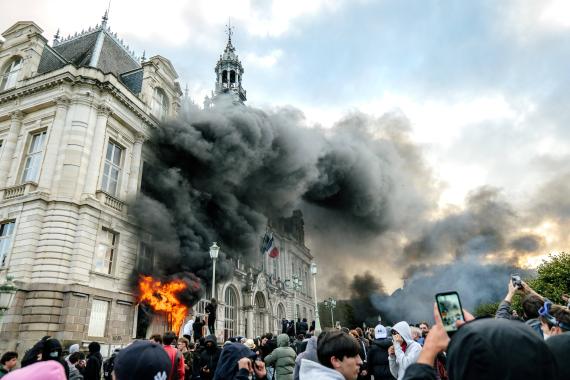
Resignation of deputy prime minister sparks dispute among governing parties

Further tensions within Fico's coalition government are to be expected. Meanwhile, the government is taking action against the anti-corruption authority.

Slovak Deputy PM Peter Kmec (Hlas-SD) resigned amid a scandal over about €200m in EU R&D funds, after media linked selected projects to a party donor and a presidential adviser. The case deepens rifts in Fico’s Smer–Hlas–SNS coalition, as Hlas demands equal standards for Smer ministers and hints at a crisis. At the same time, Fico’s plan to replace the independent whistleblower office raises fresh rule-of-law concerns. It is expected that both developments will have significant impact on political situation in Slovakia during the last parliamentary session at the end of the year.

Konrad-Adenauer-Stiftung e. V.

Inclusion and employment of people with disabilities

Inclusion worldwide – current status in Croatia

Disability is a global, social, and health challenge that affects many people. People with disabilities often face barriers such as limited access to education, services, and employment. Although progress has been made in Croatia, integration into the labor market and society remains insufficient. Structural barriers, prejudice, and lack of mobility make participation difficult. In addition, few people with disabilities attain higher education. In 2022, the “Law on the Register of Persons with Disabilities” was passed to collect relevant data and plan policy measures. Nevertheless, the figures show that further reforms are needed to achieve true equality and inclusion.

IMAGO / ZUMA Press Wire

Power games at sea

When maritime law erodes: The Baltic Sea, the South China Sea and Europe's security vulnerability

In the wake of global power shifts, the world's oceans are increasingly becoming the focus of authoritarian power politics. Countries such as Russia and China are deliberately undermining maritime law in order to strategically shape maritime spaces, a practice known as “lawfare.” In the Baltic Sea, acts of sabotage reveal Europe's vulnerability, while in the South China Sea, China demonstrates how law becomes a question of power. Both cases illustrate that when maritime law is undermined, Europe's security, capacity to act, and rules-based order are jeopardized.

VMRO-DPMNE

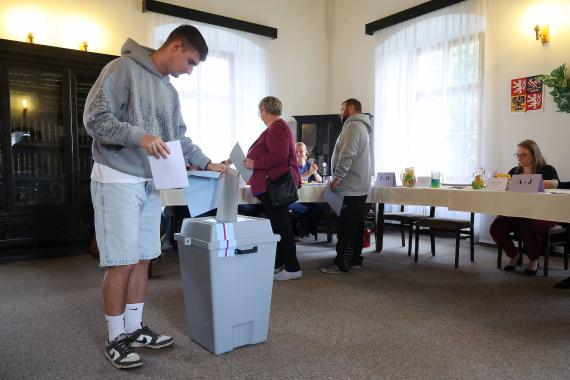
Local elections in North Macedonia: Convincing victory for ruling parties

Vote of confidence for the government one year after the parliamentary elections

The ruling parties achieved a major victory in the local elections in North Macedonia. Both Prime Minister Hristijan Mickoski’s VMRO-DPMNE and the Albanian partners in the VLEN party alliance won the most mayoral offices and municipal council seats nationwide.

KI M365 Copilot

Global Governance in Crisis

Does the G20 Still Play a Role in Times of Geopolitical Fragmentation?

For many years, the G20 has suffered from thematic overload, institutional weaknesses, and growing geopolitical tensions. Yet it is an indispensable format for global governance and must therefore regain its legitimacy and effectiveness. This can only succeed if it focuses on its core mandate, develops the troika into a multi-year planning body, strengthens the OECD as a quasi-secretariat at institutional level and gears its working methods more strongly towards realisable outcomes. Germany should work towards this together with its partners.

KAS Ecuador

No new constitution for Ecuador

Defeat in constitutional referendum forces President Noboa to reflect

In a referendum, the Ecuadorian people have rejected President Daniel Noboa's proposal to convene a constitutional assembly by a surprisingly clear margin. Three other constitutional amendments proposed by the head of state were also rejected. The result is a bitter defeat for Noboa, but also an opportunity to change his style of government, which is often perceived as lacking transparency.