
Asset Publisher

Further publications

Asset Publisher

SmarterPix / siraanamwong

Setting Clear Limits to Industrial Policy

Prosperity Emerges Through Competition

In the current debate on Germany’s economic future, industrial policy is gaining prominence. However, the Konrad-Adenauer-Stiftung’s analysis warns against inflated expectations: government interventions aimed at promoting specific sectors or companies often lead to losses in prosperity, stifle innovation, and create dependencies. Industrial policy should only be used in clearly justified exceptional cases and must always be market-oriented. Competitiveness and prosperity arise from open markets – not from permanent subsidies.

IMAGO / YAY Images

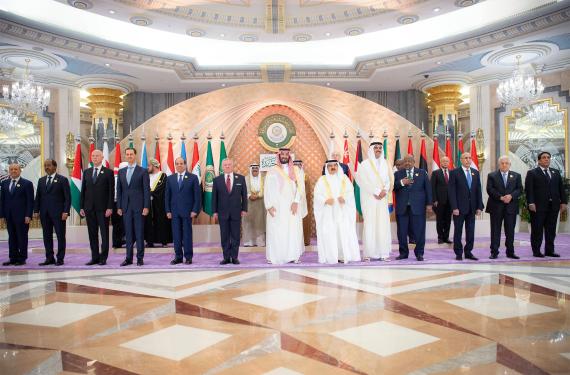
Resolution 2797

A historic step in the Sahara conflict

On 31 October 2025, the UN Security Council adopted Resolution 2797 on the Western Sahara conflict. In Morocco, thousands of people celebrated on the streets, as the resolution represents a historic change of course. For the first time, Morocco's autonomy plan is explicitly supported as a fundamental solution to the conflict. The neutrality of the United Nations is thus shifting in favor of the Moroccan position. In Morocco, this step was celebrated as a diplomatic success; King Mohammed VI spoke of a "new and victorious chapter" on the way to a final solution to the Sahara question.

IMAGO / Anadolu

Presidential election in Ireland continues political tradition

Clear election victory for Catherine Connolly

 Left-wing politician Catherine Connolly becomes the tenth president of the Republic of Ireland. In the 2025 Presidential Election, the independent Member of Parliament, whose candidacy was supported by a broad coalition of left-wing parties and movements, won a clear victory with 63.4 percent of the vote against Heather Humphreys, former minister and candidate of the liberal-conservative Fine Gael (FG/EPP) party. She received only 29.5 percent of the vote on a disappointing election day. Jim Gavin, candidate of the right-wing liberal party Fianna Fáil (FF/ALDE), who had already dropped out of the race as the third candidate several weeks before the election, received 7.2 percent of the vote. The high number of invalid votes was striking, having increased tenfold compared to the last Presidential Election, and can be seen as an expression of dissatisfaction with the electoral system and the two remaining candidates. 

IMAGO / Anadolu Agency

Javier Milei triumphs in Argentina's midterm elections

The Lion is back

Contrary to all election forecasts, President Javier Milei and his party La Libertad Avanza (LLA) achieved an impressive victory in the parliamentary midterm elections. On 26 October 2025, half of the seats in the national Chamber of Deputies and one third of the Senate were up for election. LLA won 40.74% of the votes cast, while the Peronists, their main challengers, only managed 31.66%. The election victory comes as a surprise, as the libertarian government has been in its deepest crisis since taking office on 10 December 2023 in recent weeks and months.

IMAGO / MediaPunch

Local Elections, National Significance

November Elections in Several U.S. States are Decisive for Political Parties

Neither the President nor any members of Congress are up for election this year. But on November 4, important decisions will be made at the state and local levels—offering a key opportunity to gauge the political mood of the country.

IMAGO / Scanpix

Local elections in Estonia

Setback for the ruling parties – tailwind for the opposition

Estonia elected its local representatives on October 19, 2025, following a week of early voting with nationwide e-voting. A total of 1,003,673 people were eligible to vote, of whom 593,818 (59.2 percent; as of October 20, 2025) took part in the election. In addition to numerous local alliances, the most important nationwide parties also ran in the election. The election was marked by a tense domestic political climate and noticeable economic pressures. The conservative Isamaa party was the clear winner. In Tallinn, the Center Party remained strong in predominantly Russian-speaking districts, while new and smaller forces fragmented the field. Nationwide, Isamaa benefited from significant momentum, while the Reform Party and EKRE lost considerable support.

IMAGO / SNA

Surprising majority

Slovakian Parliament passes conservative constitutional amendment

On Friday, September 26, 2025, the National Council of the Slovak Republic passed an amendment to the constitution on cultural and ethical issues. The amendment introduces several conservative principles. This makes Slovakia the first EU country with a constitutional ban on surrogacy. The National Council also considered a controversial passage on the primacy of national law over EU law in matters of national identity. The decision came as a surprise after some opposition MPs voted for the amendments without prior notice. The amendment will enter into force on November 1, 2025.

IMAGO / AFLO

Double Turning Point

Japan’s Lower House Elects Sanae Takaichi as Prime Minister

For the first time in Japanese history, a woman is leading the government of the island nation. Takaichi is considered a conservative hardliner who, only in early October, was elected LDP party leader on her third attempt. Expectations within the party for her are as high as they are numerous. In addition, she must align the LDP after 26 years with a new coalition partner, the Innovation Party.

IMAGO / epd

Transatlantic partnership taken further: Why now is the moment for German-Brazilian relations

In light of geopolitical tensions and a crumbling world order, Germany and Brazil are rediscovering their partnership – as equal democracies with shared interests

For decades, Germany and Brazil have enjoyed a close partnership based on economic cooperation, but which now extends far beyond this. Both countries share fundamental values: democracy, social responsibility, multilateral cooperation and the conviction that global challenges can only be overcome by working together. In a world increasingly characterised by geopolitical power shifts, threatening foreign economic policies and the erosion of international norms, German-Brazilian relations are gaining strategic depth.

IMAGO / Anadolu Agency

Rodrigo Paz's election victory heralds a new era

At the height of the economic crisis, Bolivia decides on a change of course in domestic and foreign policy

After what seemed like an endless 150 days of campaigning, the outcome is now clear. Former opposition senator and mayor Rodrigo Paz will lead Bolivia as president from November 8 with a clear mandate from the voters. There is no time to lose. The Andean country's economy has collapsed, and the population is suffering from fuel shortages and skyrocketing food prices. The patience that the Bolivian electorate has shown until the conclusion of the presidential elections amid the dramatic economic crisis has now been exhausted, and quick solutions are expected. At the same time, there are already signs that governing could be difficult for the new president despite favourable majority conditions in parliament.

Showing 121 to 130 of 4,061 entries.