

Asset Publisher

Further publications

Asset Publisher

Smarterpix / FreeProd

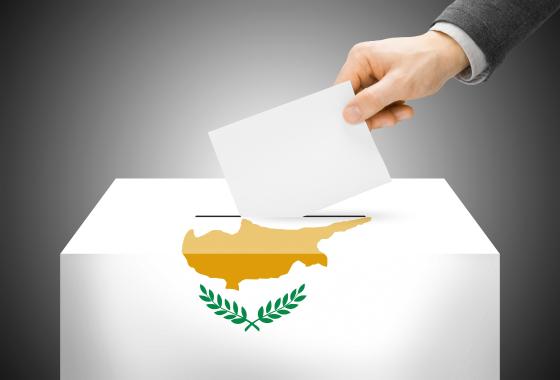
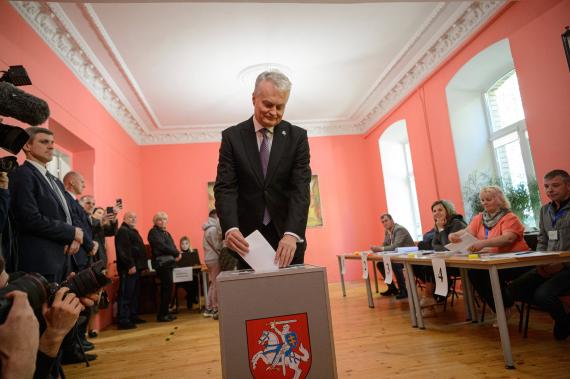
The second round of the 2026 local elections in France

A focus on alliances and tactics

The second round of the 2026 local elections once again highlights the growing disinterest among many citizens in local elections. With an estimated turnout of around 57%[1], significantly lower than in 2014 (62.1%), many view party politics with scepticism or detachment. Furthermore, the political situation since the dissolution of the National Assembly in 2024 has left many with a sense of uncertainty and stagnation. Against this backdrop, it remains to be seen whether the 2027 presidential election will be able to mobilise the electorate more strongly again. For the parties, the same applies once again: after the elections is before the elections. They must carefully analyse the results and voters’ reactions to coalitions and alliances, and take these findings into account when selecting future candidates for the presidential elections – including across party lines.

IMAGO / Sven Simon

More AI for Defence and Resilience

New Ideas for an Agile and Future-proof German Military

Technological advances, a new global situation with an acute threat to NATO's eastern flank, hybrid and cognitive attacks on Germany and its allies, and changing communication conditions are challenging the Bundeswehr. However, artificial intelligence is not only a driver of these developments, but also a response to them. This requires an AI strategy that specifically addresses key issues and actively uses the possibilities offered by AI in accordance with ethical guidelines in order to adapt the Bundeswehr's capabilities to enable effective deterrence.

SmarterPix / SynthEx

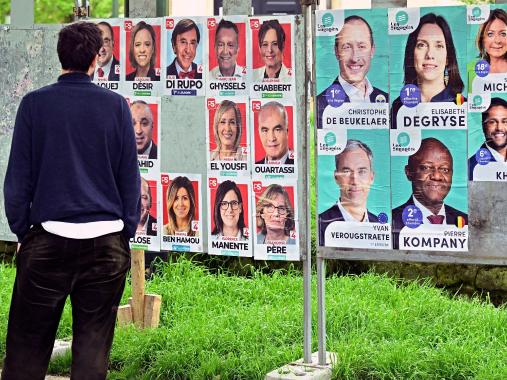
The first round of the 2026 local elections in France

Rassemblement National and La France Insoumise on the rise

The first round of the 2026 French local elections took place in around 35,000 French municipalities and reveals a further shift in the country’s political landscape. Particularly striking is the gains made by two forces on the political fringes: the right-wing populist Rassemblement National (RN) and the far-left La France insoumise (LFI). Both parties made considerable gains in numerous towns and cities and appear to be benefiting from growing public dissatisfaction with the traditional parties. This was also reflected in voter turnout: depending on the projection, between 41.5 % and 44 % of voters stayed away from the polling stations – more than ever before outside of times of crisis. Voter abstention was particularly high in small municipalities, which often have only one electoral list, and in socially disadvantaged regions. In cities where the outcome was too close to call, such as Paris or Lyon, turnout rose slightly. Nevertheless, the trend of declining voter turnout over the years is confirmed – despite attempts by the state to mobilise voters. It is worth noting that a mayor of a municipality is actually the most popular political figure in France.

Konrad-Adenauer-Stiftung e. V.

South Africa’s Path to Inclusion: Successes and Limitations

Inclusion worldwide – current status in South Africa

South Africa is at a crucial point in its inclusive development. Despite legal progress and growing political attention, around 5 per cent of the population continues to face barriers to education, employment and participation. At the same time, developments such as the recognition of South African Sign Language and international sporting successes demonstrate the potential that arises when barriers are actively broken down. Dialogue formats and practice-oriented approaches have proven to be effective. However, ensuring the equal participation of people with disabilities requires the continuous commitment of all social actors.

KAS

“The All-New Kazakhstan”: Reforming the Reform

Constitutional and Parliamentary Reforms in Kazakhstan

Kazakhstan is facing its second major reform package of this decade. Reactions have been mixed.

IMAGO / Depositphotos

Spillover into the South Caucasus?

What further escalation in the Iran war could mean for Armenia and Azerbaijan

The US-Israeli attack on Iran also exacerbates (geo-)political risks for the South Caucasus. Azerbaijan has been particularly exposed to drone attacks, and Armenia could face consequences like an influx of refugees, economic uncertainties, and threats to energy infrastructure. Europe must be ready to act, as an escalation would intensify rivalries, threaten partners, and directly affect our energy and security interests.

IMAGO / ZUMA Press Wire

General Election in Nepal

How GenZ changes the country’s political landscape

Nepal’s early general election on March 5, 2026, marked one of the most significant shifts in the country’s political landscape since the adoption of the 2015 Constitution.[1] The election followed a period of intense political instability triggered by the youth-led GenZ protests of September 2025, which ultimately led to the resignation of the government of former Prime Minister KP Sharma Oli.[2]

IMAGO / SNA

Congo-Brazzaville: Before the election remains after the election

The 2026 presidential elections in the Republic of Congo under the shadow of systemic competition

The Republic of Congo is exploiting the systemic competition between the EU, China and Russia to maximise its scope for action in terms of financing, infrastructure and security. While the EU remains a natural partner on environmental and transformation issues, deficits in the rule of law, accountability and electoral integrity limit the depth of cooperation. China is rapidly delivering large-scale infrastructure in exchange for resource commitments; Russia fills normative gaps with a discourse of sovereignty and non-interference and anchors energy and security policy agreements. No politically transformative results are to be expected from the 2026 presidential elections; rather, the strategic relevance lies in the continuation of an authoritarian-stabilised order that presents itself as a guarantor of peace and development. In this constellation, the focus for European actors is shifting from short-term election observation to medium- and long-term levers: green industrialisation, critical raw materials and logistics corridors, governance safeguards, youth-centred employment and a realistically calibrated mix of principledness and pragmatism.

IMAGO / ZUMA Press Wire

Columbia elects a fragmented parliament

Strong Results for the Government Camp and “Uribismo” Reshuffle the Deck for the Presidential Election

The parliamentary elections in Colombia have reshaped the political landscape. Unclear majorities characterize the new Congress. Colombians were also called upon to select candidates for the presidential elections through primaries. Here, the center‑right camp gained new momentum thanks to the unexpectedly strong performance of Paloma Valencia. Yet behind the election results lies much more: a country caught between demands for reform, security crises, and growing mistrust in institutions.

IMAGO / ZUMA Press Wire

War in the Middle East

How countries in the region are responding to the escalation between Israel and the U.S. with Iran

The American-Israeli attack on Iran and the massive backlash have plunged the entire region into a renewed state of emergency. From Israel to North Africa to the Gulf, governments are taking sides, societies are divided, and diplomatic tensions are growing. This report, from the Konrad Adenauer Foundation's offices in the Middle East and North Africa, provides an overview of the political lines, security risks, and regional dynamics.

Showing 61 to 70 of 4,058 entries.