

The triumph of the HTS militia and the regime change in Damascus on December 8, 2024 marked not only the end to the over 50 years of Assad dictatorship, but also signals the transition to a new Syria, although no one knows exactly what it will look like. Both Jordan and Iraq, countries that have always been historically and culturally linked to Syria, had not expected the sudden end of the Assad regime. In this context, it is all the more important to sound out the perspectives and options for action of both states.
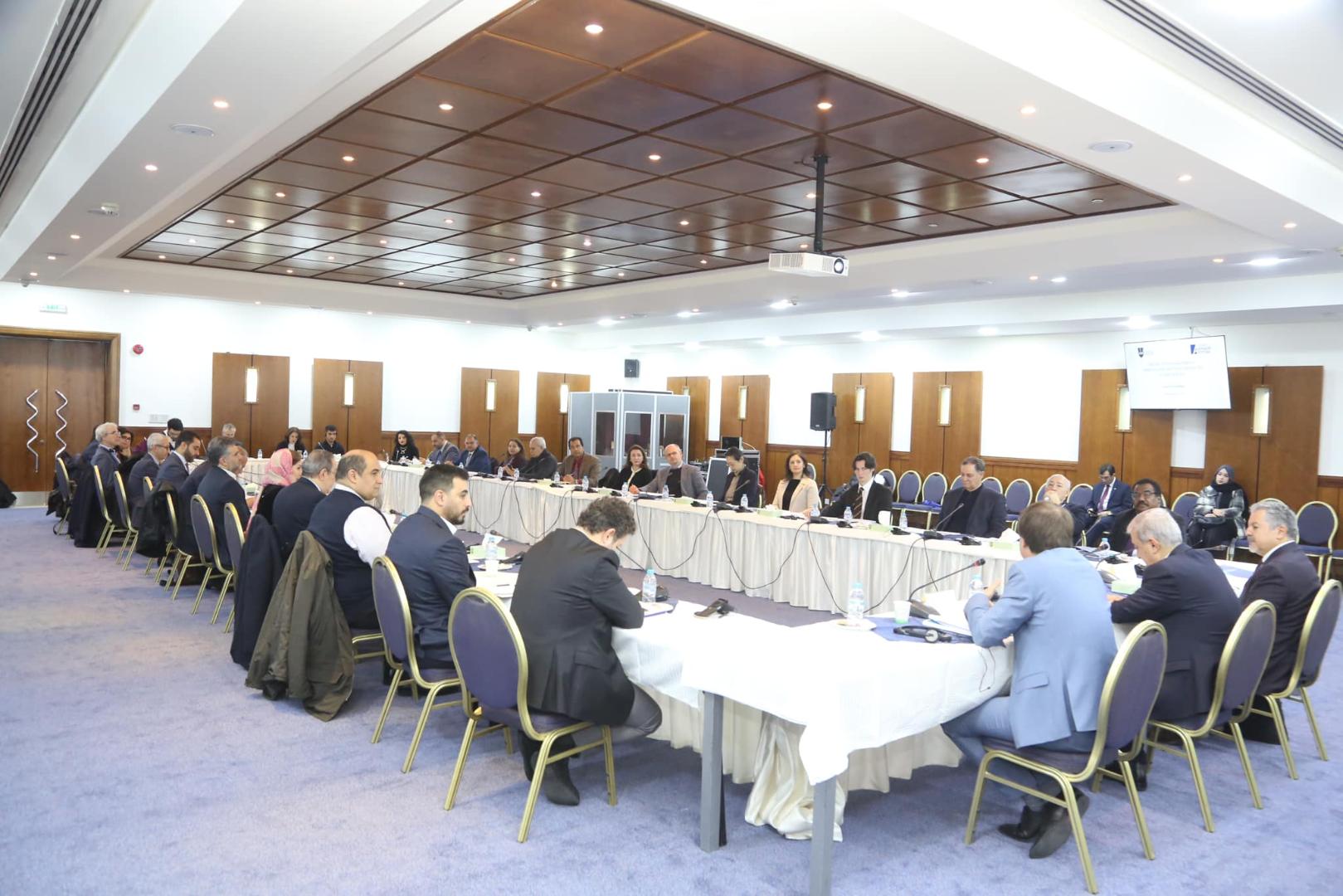
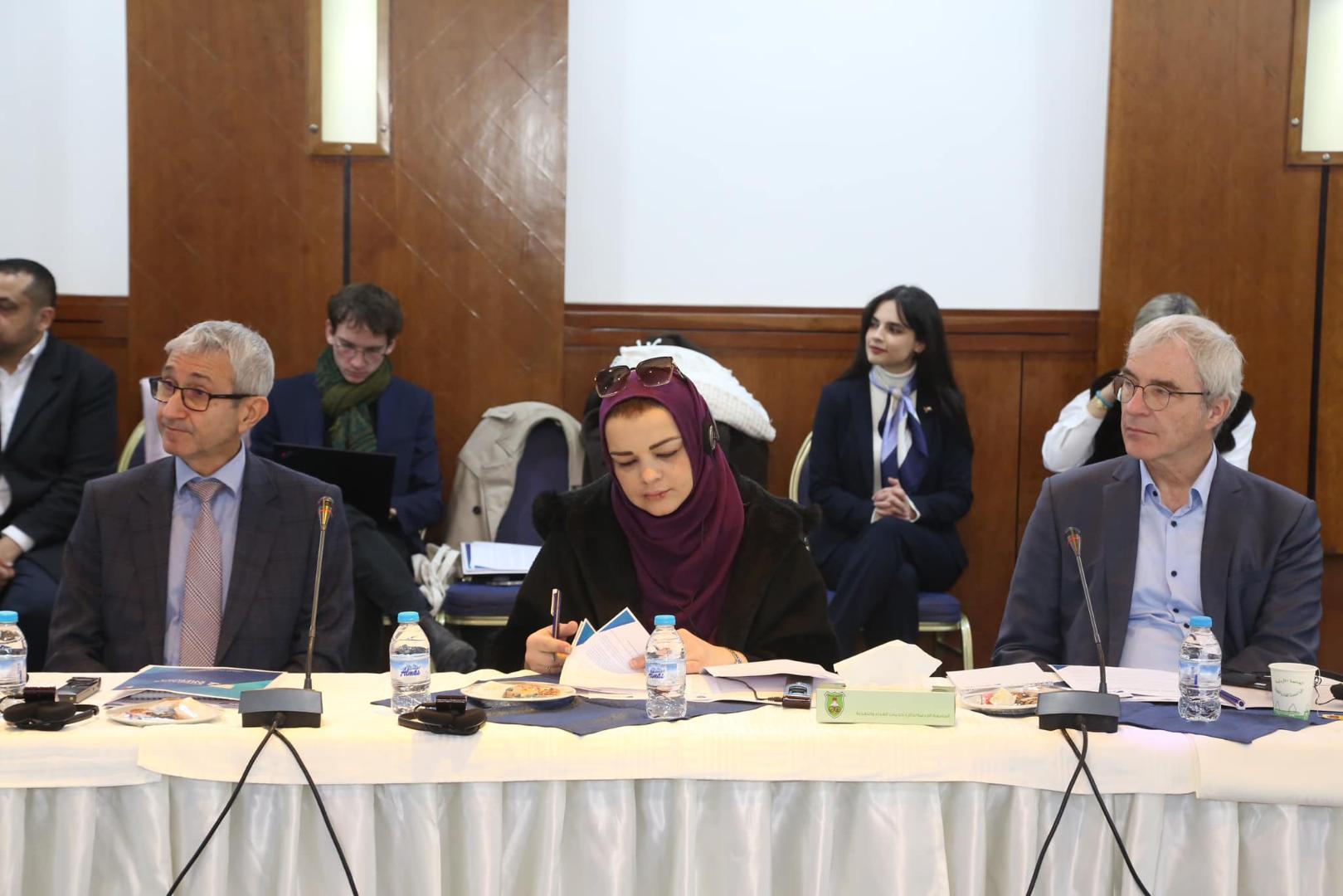
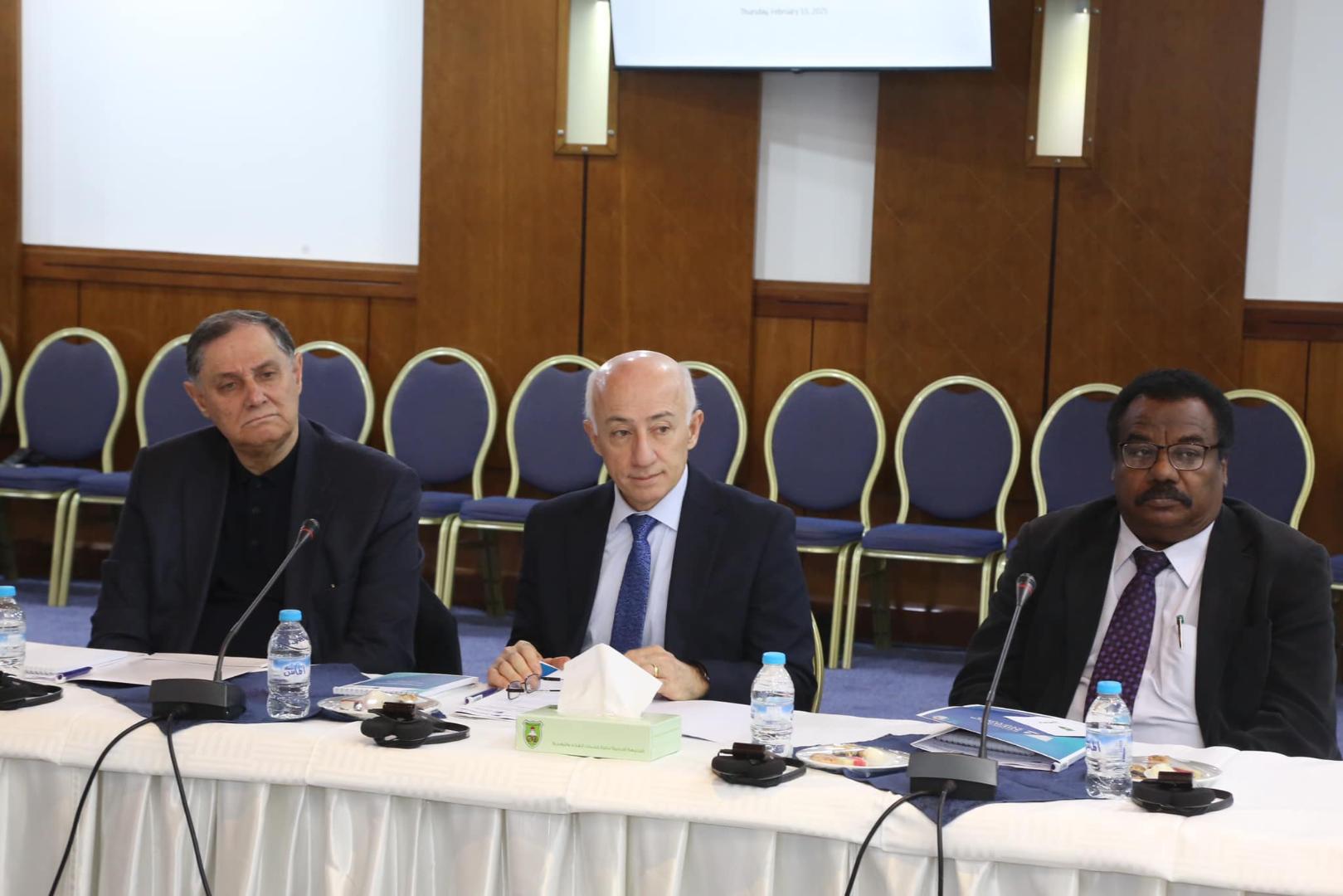
In light of this, KAS Jordan, in cooperation with the Center for Strategic Studies (CSS) at the University of Jordan, organized a roundtable attended by experts and political advisors from Syria, Jordan and Iraq, as well as diplomats and representatives of international institutions. The roundtable was thematically divided into two sections, with the first part of the event focusing on Jordan's relationship with the new situation in Syria, followed by perspectives from Iraq. Central topics were border security, the past and future of the new leadership around Al-Sharaa, as well as the role of foreign actors in Syria. During the discussion, it became clear to what extent the positions of Jordan and Iraq differ with regard to the regime change in Damascus. While both states recognize the new leadership in Damascus, Jordan is much more open to far-reaching cooperation with the new rulers, while the Iraqis are more suspicious of Al-Sharaa.
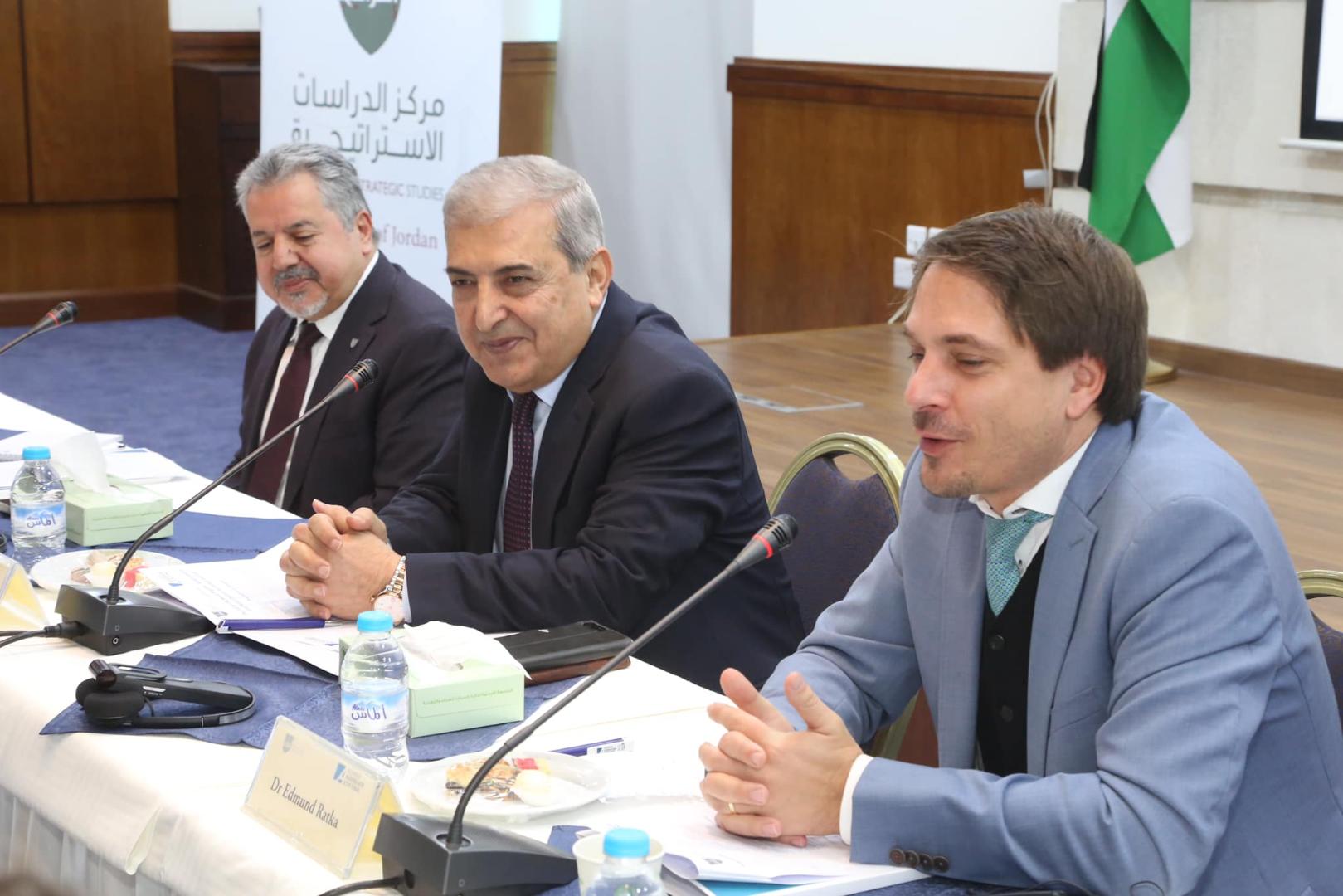
The roundtable was opened by the head of the CSS, Dr. Hasan Al-Momani, and the head of KAS Jordan, Dr. Edmund Ratka. They emphasized the common historical and cultural heritage of Jordan, Syria and Iraq as the “heart of the Levant”. They also emphasized the advantages of looking at development in the three countries together rather than in isolation and focusing on the individual states. The first panelist, a Syria expert, also emphasized how unexpected the regime change in Syria had been and named three major challenges facing his home country following the fall of Assad. Firstly, the security challenge due to the lack of authority of the new central government, secondly the challenge posed by foreign forces in Syria, and finally the economic challenge (particularly due to widespread poverty and outdated infrastructure). The speaker called on Syria's neighbors to participate in the reconstruction, as this also represents an opportunity. He admitted that Ahmed Al-Sharaa was “not easy to read” but emphasized the importance of giving the new Syrian leadership the benefit of the doubt for the time being. He also expressed the widespread feeling among Syrians of finally “having their country back”, which is why many of them wanted to return to their home country.
A participant from Jordan also pointed to the shared heritage and positive historical landmarks of the Levantine states, such as the short-lived yet significant Syrian National Congress in 1920. He also praised the relatively bloodless transfer of power in Syria and called for it to remain that way. Another Jordanian speaker said that the fall of Assad opened up three different alternatives for the future of Syria: a democratic regime, which he described as the least likely option, a continuation of the civil war, or a dictatorship. He was also critical of the role of the USA and Israel. According to him, Israel was not interested in a strong and unified state in Syria while the USA was strongly linked to Israel in its foreign policy. Another participant agreed with this rather pessimistic assessment of Syria's future. The speaker from Syria, on the other hand, emphasized that the developments in Syria so far are a reason for hope and that an early end to the sanctions, which he believes is quite likely, could further improve the situation.
This was followed by the part of the panel that dealt explicitly with the positions and consequences for Jordan. According to the Jordanian speakers, the main challenges for their country, in addition to the huge influx of refugees, were the smuggling of drugs and weapons from southern Syria and the threat posed by IS and pro-Iranian militias. Both expressed cautious optimism regarding the new leadership in Damascus and said that the previously mentioned challenges could be solved in cooperation with the new rulers. In this context, one of the two speakers referred to the positive impressions of Ayman Safadi, the Jordanian Foreign Minister, during his visit to Syria. Turkey's strong influence on HTS was described as partially problematic, but one of the speakers pointed out that Turkey, like Jordan, was interested in a stable Syria.
The speakers' presentations prompted a large number of questions and comments from the floor. Discussions included the possible consequences of the Jordanian leadership's rapprochement with the Assad regime in recent years, whether the triumph of HTS meant a resurgence of political Islam and the role of foreign fighters in Syria. According to one of the panelists, Jordan's past attempts at rapprochement with Assad did not pose a major problem for the new leadership in Damascus, as it was “looking forward” and not so much into the past. With regard to a possible resurgence of political Islam, another participant said that this was not a given due to the triumph of HTS. Al-Sharaa's relations with the Muslim Brotherhood were ambivalent and there were also strong secular forces in Syria.
He also emphasized that HTS should not be equated with groups such as the Taliban or ISIS. On the one hand, the group is ideologically much more moderate and has undergone a major transformation in recent years; on the other hand, the group's agenda is primarily limited to national goals in Syria, in contrast to that of ISIS. This national focus is also reflected in the fact that around 90% of the fighters are Syrian, while foreign fighters play a clearly subordinate role.
However, the relatively optimistic assessment of many participants regarding the future of Syria was not shared by everyone. Among other things, several participants suggested that Syria would not automatically be united by the fall of Assad, particularly in view of the country's ethnic and religious diversity. One of them stressed that the many visits Interim President Al-Sharaa was receiving did not mean that he had full control over the country.
In addition, several participants from Jordan were critical of the role of the West in the region. On the one hand, they called for an independent approach by the Arab states instead of relying too much on the West. On the other hand, the support or non-intervention of Western states in face of Israel's current Syria policy was criticized. The Israeli military strikes in Syria and the occupation of further Syrian territories on Mount Hermon would make the political transition to Assad even more difficult.
Overall, the majority of Jordanian participants were in favor of supporting the new regime in Damascus. One of the speakers also suggested that, in the context of the regime change, it might be advisable to concentrate first on creating stable conditions in Syria before focusing on democratic structures based on the rule of law, which the speaker summed up in the simple formula “order before justice”.
The following panel on Iraq's perspective on the new developments in Syria consisted of three speakers. Similarities between the two countries were also emphasized on this panel, as well as the fact that Syria and Iraq had been separated by “colonialism and dictators”. The two countries had experienced a “hot and cold relationship” in recent years, fluctuating between increasing closeness and hostility. Iraq had also not been prepared for the sudden change and many Iraqis were “cautious and skeptical” about the new conditions in their neighboring country. In particular, reference was made to the problematic image of former al-Qaeda fighter Ahmed Al-Sharaa among many Iraqis, whose hands, according to one of the speakers, “have Iraqi blood on them”.
In addition, all speakers pointed out that the perspective on the change of power in Syria differed greatly between the various groups in Iraq. While many Iraqi Sunnis were positive about the transfer of power, opinion among the Shiites was not united and was generally more skeptical. The Kurds, who welcomed the fall of Assad in principle, were also concerned about Turkey's strong influence on the HTS militia. The central government in Baghdad has so far adopted a cautious stance towards the new rulers in Damascus, which is reflected in the limited diplomatic contacts to date, among other things. Nevertheless, the Iraqi government is interested in stable conditions in its neighboring country and has been willing to participate in regional initiatives on the future of Syria, such as the Aqaba summit, from the outset. It was also emphasized that Iraq, unlike other countries in the region, had already tried as best it could to stay out of the internal Syrian situation during the civil war.
The speakers agreed that Iraq's main concerns regarding the developments in Syria were of a security nature. The Iraqis' greatest concern was a resurgence of ISIS. In particular, the unclear future of the Al-Hol camp, where ISIS members and their families live, including many Iraqis, was described as a potential risk. The freezing of American aid and the withdrawal of US soldiers could further exacerbate the already precarious situation around the camp. The repatriation of the Iraqis currently in Al-Hol and other camps was described as an important goal. In summary, all speakers emphasized that, despite skepticism, they hoped for cooperation with the new Syrian leadership. However, one of the Iraqi panelists also emphasized that Al-Sharaa must “prove himself” in order to dispel the mistrust within the Iraqi population. A participant from the plenum responded that it was important to take al-Sharaa's positive signals towards Baghdad seriously. The panelist replied that al-Sharaa's problematic past should not be denied. Instead, the ruler should prove himself and show to what extent he is prepared, for example, to allow Shiite shrines in Syria to be visited freely. Furthermore, the panelist emphasized that it is a great fallacy to assume that Shiite Iraqis are automatically on the side of Iran because of their religious affiliation.
Also during this panel the role of foreign actors was discussed controversially. In this context, one panelist emphasized that there was no natural alliance between Israel and the Kurds. The same panelist also emphasized the extent to which Iraq, Syria and Jordan are driven by global power dynamics. One of the main problems in this context was the lack of “leadership” among the Arab states. In summary, although all panelists were in favor of cooperation with the new government in Damascus, it became clear that the Iraqi perspective on developments in Syria is characterized by much more restraint and concern than the Jordanian perspective.
The expert seminar showed that, despite their different approaches, both Jordan and Iraq are willing to cooperate with the new leadership around Al-Sharaa and that the primary interest of both states is stability in the region. It also became clear that both states prefer a regional approach with the support of the West, but not an approach dictated by the West.
The roundtable is part of the long-standing cooperation between KAS Jordan and CSS. Expert roundtables like this will continue to shed light on the geopolitical situation and policy options for Jordan and its partners in key foreign policy areas.