




February 22, 2022, marks a turning point that extends far beyond Ukraine and Europe and reveals the vulnerability of fundamental international principles. With Russia’s violation of international law through its attack, not only was the existing international order shaken, but trust in multilateral cooperation was also sustainably damaged. In this situation, the United Nations takes on particular importance. Since their founding on October 24, 1945, they have served as a central forum for states to engage in dialogue, develop common rules, and find collective responses to global crises. The basis for this is the UN Charter, complemented by central bodies such as the General Assembly, the International Court of Justice, and the Security Council.
On September 18, 1973, the Federal Republic of Germany, together with the former GDR, was admitted to the United Nations. This was no ordinary date, as on this day the Federal Republic once again became part of international diplomacy and understanding between nations. Over the years, the Federal Republic of Germany developed into an important actor in the multilateral system and the fourth-largest contributor of assessed contributions.[1] In addition to these assessed contributions, there are other payments. In 2022, Germany paid around 6.8 billion euros, and in 2023, approximately 5.1 billion euros to the UN system. Overall, Germany is thus the second-largest contributor[2].
Indeed, German foreign policy after the Second World War was strongly shaped by multilateralism. For example, in a landmark ruling in 1994, the Federal Constitutional Court decided that the Bundeswehr may participate in armed missions abroad, provided these take place within a system of collective security[3]. The United Nations, and particularly the Security Council, play an important role in this regard within German security and foreign policy. The Bundestag also has a central function that goes far beyond the usual participation of other national parliaments. Foreign missions must be debated in the Bundestag and subsequently approved by a majority vote. Although this constitutionally defined procedure often leads to longer decision-making processes than those of our partners, it enables acceptance of missions within society and protects them against domestic opposition.
As a central component of the international order, the UN faces considerable challenges today more than ever. At the same time, this criticism must not obscure the fact that the UN remains indispensable. Especially in times of escalating conflicts, they provide one of the last remaining spaces for dialogue, diplomacy, and international cooperation. Not without reason has the German Foreign Minister, Dr. Johann Wadephul, recently described the UN as a place “of peace, human rights, and development[4].”
Germany actively supports necessary reforms to make the United Nations more resilient and capable of acting in the future. In 2025, Germany assumed the chair of the UN Peacebuilding Commission and seeks to strengthen this advisory body as a bridge institution, thereby counteracting fragmentation within the UN. Attention was paid to the implementation of key UN agenda topics, for example, the interplay between climate and security, which Germany continues to advance. The creation of “synergies between the Peacebuilding Commission and the Security Council [or] the role of the peacebuilding architecture in ending peace operations.[5]" is also an important concern in this regard.
Germany is also engaged in the Donor Support Group of the United Nations Office for the Coordination of Humanitarian Affairs, particularly regarding donor coordination [6]. As the second-largest donor of humanitarian aid, Germany has a special role here[7].
The UN80 initiative launched by António Guterres, which aims, among other things, to improve the UN’s liquidity, is supported by Germany. In this context, the German government is attempting to attract additional UN institutions to Bonn, underscoring Germany’s interest in strong engagement. Already today, more than 30 UN institutions with over 1,000 employees are based in Germany. Increasingly, it is evident that some countries’ willingness to pay is declining. It is therefore all the more important that Germany continues to lead by example and maintain its financial commitment.
Germany also participates in military terms. For example, the maritime component of the UNIFIL mission has been led by a German admiral since 2021. Within the former MINUSMA mission, which was long considered one of the most dangerous German deployments, Germany also played an increasingly important role. Between 2013 and 2023, approximately 20,000 Bundeswehr soldiers were deployed there, at times also with the Heron-1 drone and helicopters[8]. Germany thus particularly relieved France, which had requested support from European partners following the 2015 Paris attacks on the basis of the EU mutual assistance clause (Art. 42-7 TEU).
It is therefore a central concern of Germany to advance, within the G4, the project of better reflecting the world of the 21st century within the United Nations. Indeed, there is not a single African country in the Security Council, although many of its decisions concern that continent. The statements by Federal Chancellor Merz at the EU-Africa summit in Angola, advocating for two African seats on the Security Council, are therefore highly commendable [9]. Brazil, as an important South American country, India, with over one billion inhabitants, and Japan and Germany should receive permanent seats on the UN Security Council. Germany has already been elected to the Security Council five times as a non-permanent member. A sixth term from 2026/2027 is an important goal of German foreign policy, which would enable it to support reforms even more strongly and further position itself as a committed advocate of multilateralism. The different continents, as well as the largest contributors, must be better represented in this body.
The problems and challenges in multilateralism are significant given the current global situation, even if they have never been a given. All the more important that we, as a global community, stand together. Although the Security Council has adopted important resolutions in recent years, such as condemning Iranian attacks on neighboring states or decisions on Sierra Leone that have sustainably changed the country, its weaknesses must be clearly named: the Security Council no longer reflects today’s balance of power, but in some ways preserves the world order of 1945.
It is therefore all the more welcome that Germany and France reaffirmed their close cooperation across all UN institutions within the framework of the Aachen Treaty of 2019 (Articles 5 and 8) and coordinated their positions on the Security Council more closely. It must be the clear goal of Europeans to speak with one voice in the Security Council and jointly address current challenges.
Another central organ of the United Nations that should be mentioned here is the International Court of Justice in The Hague. Its aim is to resolve disputes between states in accordance with international law. A major problem is that, unlike in Germany, not all states accept this court's general jurisdiction. Important countries such as France or the United States are members of the ICJ but do not automatically recognize its jurisdiction as binding. Germany’s task in this regard should be to advocate more strongly for this institution.
We cannot demand respect for international principles on the one hand while withdrawing from responsibility for reviewing our own compliance on the other. In this context, the warning of the chief prosecutor of the Nuremberg Trials, Robert H. Jackson, gains particular significance: “We must never forget that the standards by which we judge these defendants today are the same by which history will judge us tomorrow. If we pass these defendants a poisoned chalice, we put it to our own lips as well[10]”.
Germany is a committed partner within the United Nations. It is in our interest to maintain and expand this commitment. Even in the context of the Zeitenwende, Germany has declared a stronger willingness to assume responsibility, but this must now be translated into concrete action.
The Alliance for Multilateralism, initiated by France and Germany in 2019, is a step in the right direction and underscores both countries’ willingness to assume responsibility together. In times of increasing geopolitical tensions, however, normative commitment alone is not sufficient and must be complemented by a capable, strategically oriented foreign policy. This initiative should therefore be further strengthened and consistently expanded, particularly through closer and more systematic inclusion of countries in the Global South, to sustainably increase its legitimacy, effectiveness, and global reach.
Even amid international tensions and growing doubts about multilateralism, the United Nations must remain a central organ of international cooperation. Nevertheless, the current international context must not serve as an excuse for failing to implement reforms. Germany, therefore, faces two important tasks. On the one hand, it must remain a driving force for reforms and use its diplomatic structures to convince as many other countries as possible. On the other hand, it must maintain its current financial commitment and have the courage to assume even greater responsibility. Germany’s efforts within the G4 initiative are an important step in this regard, which must be accompanied by concrete action and strong commitment. Germany must move more from the role of a shaper to that of a driver. This builds trust among our partners and shows that we are serious about multilateralism.
About the Author
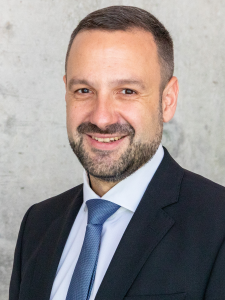
Member of the German Bundestag, Coordinator of the CDU/CSU parliamentary group in the Committee on the Affairs of the European Union and in the Subcommittee on International Order.
Footnotes
[1] Auswärtiges Amt, Hintergrund: Beiträge zum Haushalt der Vereinten Nationen, Stand März 2025
[2] Deutscher Bundestag, Auswärtiges — Unterrichtung — hib 524/2024, Deutschland zweitgrößter Beitragszahler im Rahmen der VN, 23.07.2024
[3] Bundesverfassungsgericht, Verlautbarung der Pressestelle des Bundesverfassungsgerichts, Pressemitteilung, Nr. 29/1994, Datum: vom 12. Juli 1994
[4] Deutscher Bundestag, 21. Wahlperiode, 38.Sitzung, Berlin am Freitag, den 07.November 2025
[5] Dr. Annika Hansen und Alischka Kugel, ZIF Berlin
[6] Deutscher Bundestag, Drucksache 21/3928, Regierungsbefragung, 30 Januar 2026
[7] Stand 2024 betrug der deutsche Anteil an der humanitären Hilfe 2.2 Milliarden Euro, Auswärtiges Amt
[8] Bundeswehr, Auslandseinsatz beendet: Die Bundeswehr bei MINUSMA, Dezember 2023
[9] Die Zeit (dpa), Vereinte Nationen – Wadephul für durchgreifende Reform des UN-Sicherheitsrats, 02.01.2026
[10] Supreme Court of the United States, Remarks of the Chief Justice American Law Institute Annual Meeting, May 17, 2004