




United Nations Day, on 24 October, marks the anniversary of the entry into force in 1945 of the UN Charter. For eighty years, the UN has worked to build peace, address poverty and hunger, promote and protect human rights, and create a more sustainable and equal world.
The UN is an ideal, but this doesn’t make it an illusion. For eight decades it has been an engine for turning ideals into action. Slowly, incrementally, what seemed impossible became a reality. The UN expanded as newly independent states joined, viewing active membership as a vital marker of sovereignty.
We have seen huge strides in addressing gender inequality, including through the agreement 30 years ago of the Beijing Declaration and Programme for Action. Through the Millennium Development Goals, over one billion people emerged from extreme poverty. And our world realized that only through cooperation could common global challenges really be addressed – reversing through the Montreal Protocol the critical depletion of the earth’s ozone layer, and adopting the Paris Agreement in 2015. Our collective ideals can shape reality and transform our world.
This year also marks a decade since the adoption of the Sustainable Development Goals. Perhaps the most ambitious idea yet – a lattice of commitments across the economic, social, and environmental dimensions of our world. Seventeen Goals that embrace the complexity of reality- recognizing that there can be no sustainable development without peace, and no sustained peace without development. An agenda that, in its pledge to leave no one behind and to reach the furthest behind first, places the promotion and protection of human rights at its core.
But today, as we mark 80 years of the United Nations, there is a sense that our engine of ideals has stalled. The understanding of the UN as a place where countries can come together to exert their sovereignty while seeing the perspectives of others and the benefits of multilateral cooperation has fractured. Driven by fear, by mistrust, by the need to apportion blame – for economic hardship, for health pandemics, for climate impacts. Despite these challenges, the UN system has striven to reverse this trend and continue to deliver positive impact.
Since 2015, the UN has worked with member states to reform the development and resident coordinator systems; to deliver an international financial architecture that is fairer for all; and agree an ambitious Pact for the Future in 2024 which identifies a path for change while protecting the principles of the Charter and accelerating progress on the SDGs. But still, challenges continue to build.
The Secretary-General this year has worked tirelessly in the context of the UN80 initiative to face these challenges head-on, to remain on steady ground as gravity shifts around us. We are fundamentally, however, an organization directed by our member states, be it through the Security Council, the General Assembly, or the myriad governing boards across UN entities. This can make it difficult to be responsive and adaptable - sorely needed traits at this moment.
In addition to structural reform and fiscal consolidation, the UN is taking other steps to respond in real time to the real world. This could be called relationship reform, an impactful revolution based on changing how we talk to each other. SDG17 is often referred to in shorthand as “Partnerships for the Goals”. This Goal is deeply rich, outlining 19 different targets across finance, technology, capacity-building, trade, and systemic issues. It references the complementary nature of multistakeholder partnerships that can mobilize and share knowledge, expertise, technology and financial resources, to support the achievement of the SDGs.
SDG17 is the keystone of the activities of the UN Office for Partnerships, a lean team within the UN Secretariat where we work on building relationships. We strive to create different kinds of conversations which facilitate understanding and insight, among UN bodies, member states, private sector and civil society.
We work to catalyze momentum, trying to show what is really possible when we work together. Taking as our starting point the broad and diverse conceptualization of partnerships in SDG17, the Office builds networks that support gender equality and women’s leadership, that give direction for the responsible use of AI for the benefit of all, that address the mental health challenges facing those in humanitarian settings. Through the UN Democracy Fund, for many years the Office for Partnerships has connected with small civil society organizations globally to help them grow and engage, supporting good governance and political participation. Together with the UN Foundation, we continue to create and facilitate meaningful engagement and alignment between UN entities and civil society, philanthropic organizations and private sector networks in support of the Sustainable Development Goals.
These activities are the substance of the relationship reform the Office is working towards. And over the last three years, since the landmark SDG Summit in 2023, through last year’s Summit of the Future and this year’s General Assembly high-level week, we have created a partnerships platform at the UN.
This September we launched the Goals Lounge, to convene and curate events with partners that focus on building a new and supportive ecosystem for action. Convened by UN Deputy Secretary-General Amina Mohammed and hosted by the UN Office for Partnerships, the Goals Lounge brings together leaders, innovators, and changemakers to again position the UN as an engine for turning ideals into action.
During our September programme, the Lounge featured 28 sessions and 135 speakers, including 15 current and former Heads of State. These included a convening at Leaders level of the Women Rise for All network, which connects and strengthens the impact of women’s leadership in advancing the SDGs. We also hosted the Secretary General’s annual SDG Advocates meeting – 17 leaders from government and business to entertainment and activism, who have committed to using their global platforms to inspire action, influence policy, and mobilize support for a more sustainable and equitable world.
Importantly the Lounge saw a number of major announcements from our key partnerships. Among them, is the Greentree Acceleration Plan—a $13.2 million investment to advance mental health in humanitarian settings. We also hosted the launch of AI Commons, part of the Evidence Synthesis Infrastructure Collaborative, bringing together investments of $126 million from global funders to accelerate SDG progress through stronger data and evidence sharing. We also deepened existing initiatives in September, with the city of Gothenburg being named as the newest Sustainable Lifestyle Hub as part of the UN Fashion and Lifestyle Network.
Packing a huge amount of ideas and outcomes into our schedule, other sessions included a deep dive discussion on the value and values of multilateralism, a conversation with our partners the Planetary Guardians on vital signs for a healthy planet and the latest report on planetary health, and dialogues focused on youth by youth. Importantly, throughout the week we highlighted the work of the UN system, including a session on “The Security We Need”, co-hosted with the UN Office for Disarmament Affairs, on rebalancing military spending for a sustainable and peaceful future.
Looking ahead, the Goals Lounge will continue to convene and create programmes and conversations throughout the year. Next week we are hosting an event focusing on building trust, with Jimmy Wales, the founder of Wikipedia. Trust is fundamental to all effective partnerships. It leads to openness and honesty, it lets us lean on each other for support. Through existing and future global partnerships, the UN can continue to be an engine transforming ideas into action. Our ideals power our progress – and a better world is the result we can create.
About the Author
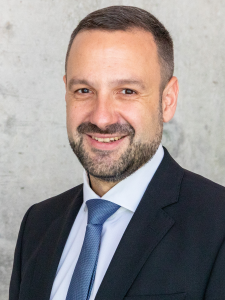
John Gilroy is the Chief of Service, Trust Funds and Programmes, in the UN Office for Partnerships Team. In this role he leads the teams managing the UN Democracy Fund and the UN’s relationship with the UN Foundation. He also works on incubating new partnerships and initiatives.
John has over twenty years of experience with the Irish Foreign Ministry, with a strong focus on multilateralism and sustainable development. Over two postings at the Permanent Mission of Ireland to the UN and four years as Deputy Director of UN Policy in Dublin, he has worked across all three pillars of the UN, including during Ireland’s UN Security Council term in 2021-2022. John has a deep knowledge of the SDGs, having contributed to their agreement during the 2030 Agenda negotiations in 2014 - 2015, and leading the Irish team that delivered consensus on the 2023 SDG Summit Political Declaration. Most recently John was Deputy Director of Ireland's Human Rights Unit. He has extensive experience working on Ireland's ODA programme, Irish Aid, and was previously posted to the Irish Embassy in The Hague.