When we talk about water, it is never only about water.
Beyond its elemental role in sustaining life, water is the literal and metaphorical lifeblood of every aspect of humanity and nature. Water security shapes food systems and energy production, it supports public health and economic activity and sustains the natural systems on which all development depends.
This broader understanding is reflected in the theme of this year’s World Water Day campaign—"Where water flows, equality grows"— which highlights that access to safe water and sanitation is an enabler of gender equality and the opportunities that flow from it.
For millions of people, particularly women and girls, access to water impacts who can attend school, who can participate in the workforce, and who has the time and security to contribute fully to society. When water and sanitation services are close to home, girls are more likely to stay in school, families avoid preventable disease, and women gain time to pursue education, employment, and leadership.
These everyday realities contain a wider truth: that water connects social equity, economic development, and environmental stability. Increasingly, policymakers are recognizing that water is not a sectoral issue but a systemic one — shaping outcomes across food security, energy systems, climate resilience, and human wellbeing.
Water as a systemic driver
The global water cycle does not respect political borders or economic categories. Nearly 60 per cent of the world’s freshwater flows through transboundary river basins. And climate change is altering rainfall patterns across entire regions, with around 50 per cent of the global population living under moderate to severe water stress.
Drought can disrupt agriculture and energy systems, and drive conflict around water use, not only cross-border but also locally within basins. Floods can destabilize economies and displace populations across borders. As climate pressures intensify and more ecosystems become degraded, water is becoming a central factor in economic and social resilience.
Investments in practical solutions can bring real change and impact. For example, in Bangladesh, a government initiative, funded by IFAD and the Asian Development Bank, built roads 800 mm above flood levels in 12 coastal districts, ensuring farmers can still access markets and sell their products despite rising sea levels and the monsoon. Income from crop sales increased by 70 per cent even in the rainy season. In another IFAD-backed project in arid areas of Egypt, farmers raised their crop productivity by 30 per cent thanks to solar pumping units, which increased water availability.
When water governance is strong and holistic, societies are more resilient and economies more stable. When it is weak and disjointed, pressures cascade across food, energy, health, and economic sectors, which are often governed in isolation despite their deep interdependencies around water.
The latest United Nations World Water Development Report highlights the interactions between water security and inequalities, showing that women and girls bear a disproportionate burden while remaining underrepresented in water governance and decision-making.
This thematic focus, amplified by the World Water Day 2026 campaign, reinforces a simple conclusion: holistic water security management, benefiting every person and every part of the water cycle, is no longer only a technical or environmental issue. It is an essential catalyst for progress in sustainable development, human rights, and social stability.
A governance challenge — and an opportunity
Water is emerging as a litmus test for whether multilateralism can translate institutional cooperation into visible results on the ground.
Experience shows that shared water resources can serve as platforms for cooperation, even in politically complex environments. With more than 300 transboundary river basins worldwide, countries are increasingly adopting joint institutions and agreements to manage resources, coordinate drought responses, and reduce flood risks.
These arrangements demonstrate how practical cooperation over shared water systems can build trust, support regional stability, and deliver tangible benefits for communities across borders.
In recent years, water has also moved higher on the international agenda. Governments, development institutions, and private-sector actors increasingly recognize that resilient water systems are foundational to economic growth, climate adaptation, and prosperity.
Within the United Nations system, this recognition is reflected in the United Nations System-wide Strategy for Water and Sanitation, which commits UN entities to aligning their work, breaking down institutional silos, and supporting countries through a more coordinated approach.
Yet despite our welcome of political momentum, fragmentation continues to hold us back.
The absence of a sustained multilateral process dedicated to water has contributed to a proliferation of parallel initiatives. Many were created to fill genuine governance gaps. Taken together, however, their cumulative effect has been duplication, diluted impact, and higher transaction costs for countries.
Fragmentation makes coordination harder, stretches limited financing, and weakens accountability, just as the case for coherence grows stronger.
Toward a more coherent global water agenda
There is now an increasing demand for greater alignment, efficiency, and clarity within the global water agenda.
Country-led action, backed by better coordination and stronger partnerships, can help focus priorities and deliver greater results. Better alignment can reduce duplication, clarify roles, and improve the flow of financing and technical support.
Ahead of the upcoming 2026 United Nations Water Conference, the preparatory process is bringing together governments, international organizations, development banks, academia, civil society, and the private sector to align priorities across water access, economic development, climate adaptation, and ecosystem protection.
At the same time, development institutions are increasingly integrating water security into broader economic and climate strategies. IFAD-supported programmes that strengthen irrigation and water management systems, restore watersheds, improve water-use efficiency, and promote a circular water economy for smallholder farmers demonstrate how coordinated investments in water can support food security, climate resilience, and rural livelihoods.
In the context of the UN80 reform agenda that calls for a more effective and coherent multilateral system, cooperation on water is a major opportunity to demonstrate how international institutions can translate coordination into better lives and livelihoods.
2026 is a pivotal moment for global water cooperation
This year marks an unusually dense period in global water diplomacy, with multiple international processes converging on the challenge of managing water more sustainably and equitably.
At the 2026 United Nations Water Conference in December, to be co-hosted by Senegal and the United Arab Emirates in Abu Dhabi, governments and stakeholders will assess progress, strengthen accountability, and accelerate action.
Earlier this year, during a High-Level Preparatory Meeting in Dakar for the Conference, governments and partners explored pathways to advance water access, strengthen economic resilience, protect ecosystems, and enhance international cooperation; discussions that will continue throughout the year and feed into broader multilateral processes.
In July, Sustainable Development Goal 6 (SDG 6) – water and sanitation for all – will undergo an in-depth review at the High-Level Political Forum on Sustainable Development to look at results under SDG 6 and identify priorities for the remaining years of the 2030 Agenda and what comes next.
At the same time, water considerations are being integrated into negotiations under the Rio Conventions on climate change, biodiversity, and desertification. Stronger alignment across these processes is a central plank of the UN System-wide Strategy, helping to embed water considerations within climate adaptation strategies, ecosystem restoration efforts, and land management policies.
These moments, among others, reflect a broader shift toward recognizing water as a systemic issue that connects development, environmental sustainability, and global stability.
The overarching aim is to use evidence of where we have come from to direct where we are going for the rest of the 2030 Agenda, and to position water firmly in the heart of development policy for the decades to come.
Within the United Nations system itself, UN-Water continues to serve as the principal coordination mechanism for water-related activities, bringing together UN entities and international partners to support countries through more coherent and integrated approaches.
Cooperation as a measure of success
Ultimately, the question facing the international community is not whether water matters.
The real question is whether the institutions designed to manage shared challenges can respond with the coherence and urgency that the moment demands.
Water offers a unique opportunity to demonstrate that they can.
Because water systems are inherently integrated — across borders, sectors, and communities — progress requires cooperation by design. Effective management depends on trust, institutions, and long-term collaboration.
If the international system can demonstrate tangible progress by aligning institutions, mobilizing finance, and supporting countries in managing water sustainably, it will show that multilateral cooperation remains capable of delivering practical solutions.
And in doing so, it will strengthen not only water governance but confidence in international cooperation itself.
About the Author
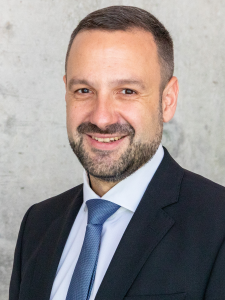
Alvaro Lario is President of the International Fund for Agricultural Development (IFAD) and UN-Water Chair. A seasoned international development finance leader, he has more than 20 years of experience across academia, private-sector asset management, the World Bank Group, and the United Nations, including as the Associate Vice-President of Financial Operations at IFAD.
Under his stewardship, IFAD became the first United Nations Fund to enter the capital markets and obtain a credit rating, enabling IFAD to expand resource mobilization efforts to the private sector.
Before joining the Fund in early 2018, he was the Treasury Capital Markets Lead and Principal Portfolio Officer at the International Finance Corporation, part of the World Bank Group, where he focused on developing local capital markets and investing in emerging markets.
President Lario received a PhD in Financial Economics from the Complutense University of Madrid after completing a Master of Research in Economics at the London Business School and a Master of Finance from Princeton University.