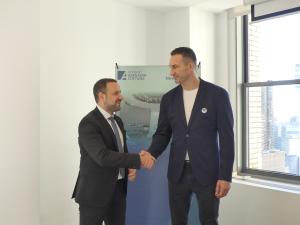
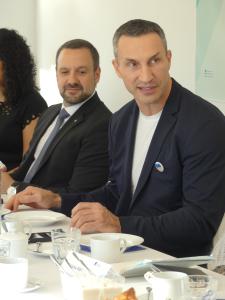
The Konrad Adenauer Foundation, New York, hosted a roundtable discussion on the abduction of Ukrainian children in Russia’s war of aggression and how such international crimes can be prosecuted under international law.
Russia's invasion of Ukraine in 2022 marked a significant escalation point in the Russo-Ukrainian War, which first began in 2014. Russia’s full escalation has led to one of Europe's most devastating modern-day conflicts since the Second World War, with global implications. The UN Independent International Commission of Inquiry on Ukraine has found evidence showing that Russian authorities have continued to commit numerous violations of international human rights law and international humanitarian law in the context of their armed aggression in Ukraine. Russian forces have also committed indiscriminate attacks against civilians, and the war crimes of torture, wilful killing, rape, and other sexual violence, which are also violations of human rights.
More critically, the Commission identified situations in which Russian authorities have transferred Ukrainian unaccompanied children from one area they controlled in Ukraine to another or to the Russian Federation. Transfers affected children who lost parents or contact with them during hostilities; who were separated following the detention of a parent; and children in institutions. Such transfers occurred in violation of international humanitarian law. Stealing children in times of war—"forced deportation," as the International Criminal Court calls it— is a war crime. The act of deportation and transfer can, in some cases, constitute a crime against humanity and a component act of genocide.
In response to such blatant violations of international humanitarian law, on March 17, 2023, the Pre-Trial Chamber II of the International Criminal Court (“ICC”) issued warrants of arrest.
Despite the gravity of these actions, gaining an understanding of the broader scope of transfers of unaccompanied children, which may violate the requirements set forth by international humanitarian law, has proved challenging, which could also affect accountability efforts at the domestic and global levels.
To make sense of these challenges and possible paths to accountability at the international and domestic levels, this roundtable discussion will convene representatives of UN member states and civil society to delve into strategies for ensuring accountability when prosecuting crimes against children.
Our keynote speaker was Dr. Wladimir Klitschko, who published a book on this matter.