Details
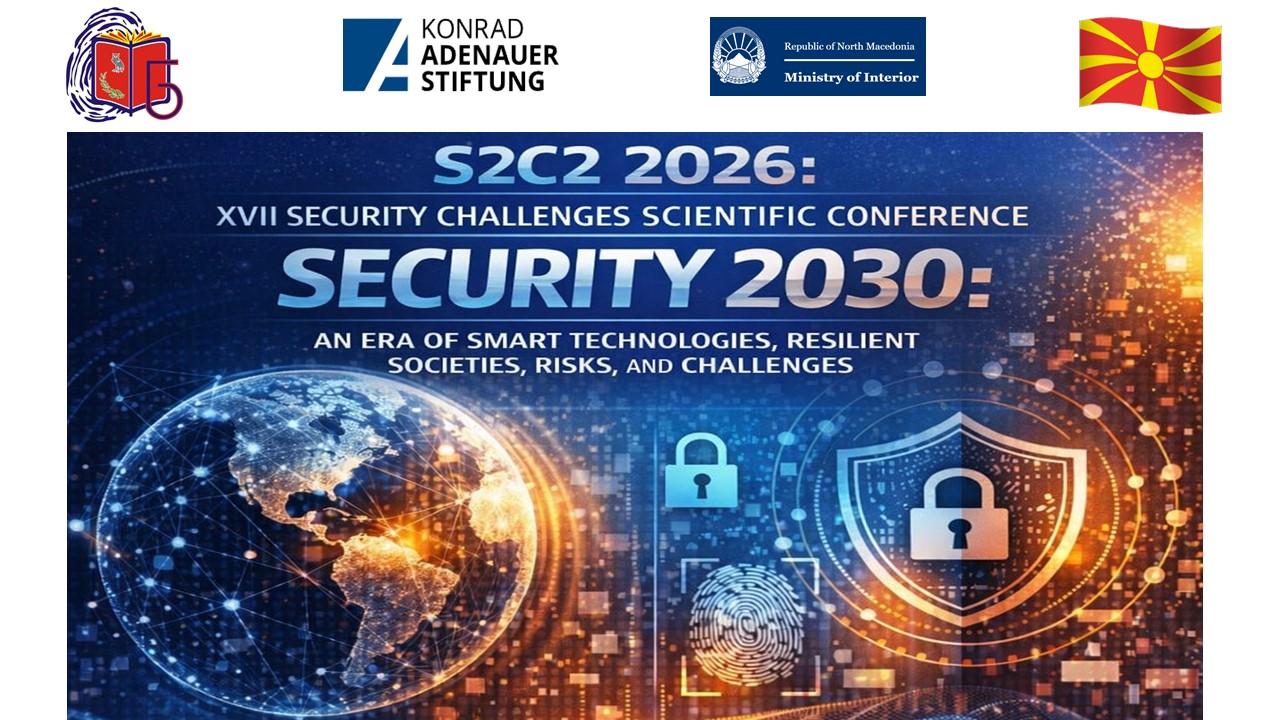
The Conference will bring together representatives of the academic and scientific community, security institutions and the public sector, as well as researchers and practitioners from the country, the region and beyond. The event will provide an opportunity to exchange scientific knowledge, experiences and perspectives on contemporary and future security challenges in the context of the rapid development of smart technologies, digitalisation and artificial intelligence.
The Conference aims to provide a platform for scientific debate, knowledge exchange and multidisciplinary cooperation regarding the transformation of security in the era of advanced smart technologies. Particular attention will be devoted to Security and Digital Resilience, Hybrid Threats and Information Security, the protection of critical infrastructure, Ethics, Law, and Regulation in the Era of Smart Technologies, as well as building Resilient and Sustainable Societies and strengthening regional and international cooperation.
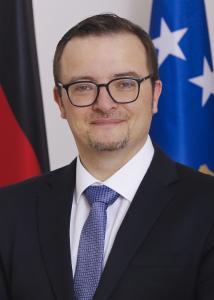
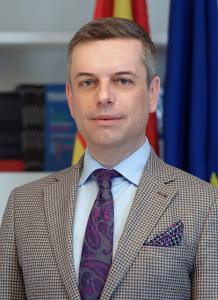
Welcoming addresses at the opening of the Conference will be delivered by Daniel Braun, Official representative of the Konrad-Adenauer-Stiftung; Pance Toskovski, Minister of internal affairs; Vesna Janevska, Minister of Education and Science; Kiril Pecakov, Mayor of Municipality Ohrid; Igor Nedelkovski, Rector of the University “St. Kliment Ohridski” – Bitola; and Jonce Ivanovski, Dean of the Faculty of Security-Skopje, University “St. Kliment Ohridski” – Bitola.
The Opening Plenary Session, dedicated to “Security 2030: An Era of Smart Technologies, Resilient Societies, Risks, and Challenges”, will feature keynote addresses by Christina Catherine Krause, Head of Department International and Security Affairs, Konrad-Adenauer-Stiftung, and Gábor Kovács, Police Major General, Dean of the Faculty of Law Enforcement, Ludovika University of Public Service, Hungary.
On the second day, parallel paper presentation sessions will focus on Policing, Investigation & Public Administration Technologies; Smart Traffic, Transportation & Urban Mobility Safety; International Cooperation, Global Security & Security Economy; Ethics, Law, Regulation & Digital Resilience; and Hybrid Threats, Information Security & Resilient Societies.
Through scientific presentations, thematic discussions and the exchange of experiences, the Conference will contribute to strengthening cooperation between the academic community, institutions and practitioners, as well as to developing contemporary approaches to addressing security risks and challenges towards 2030.
Topics
Partners